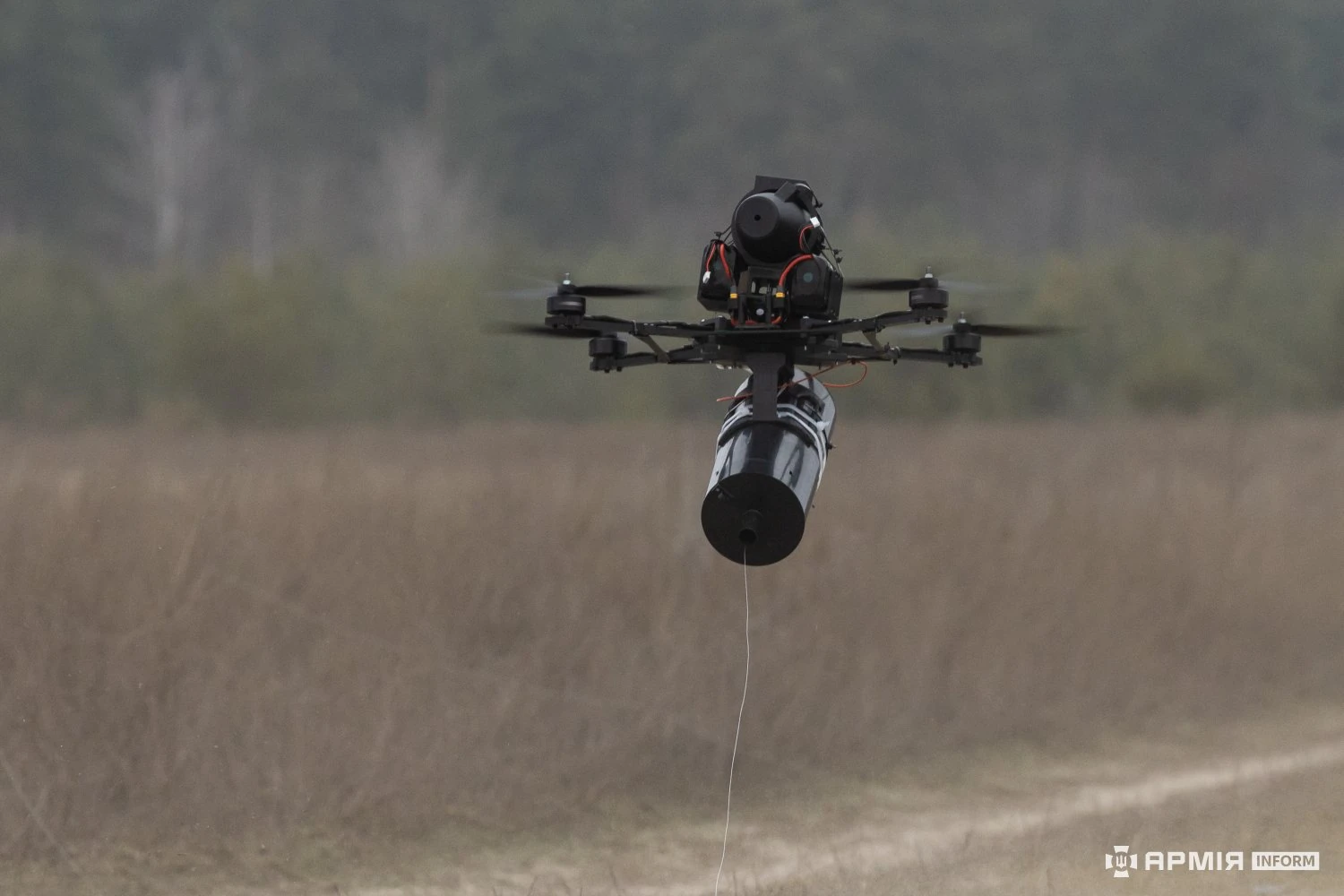
UKRAINE, KHARKIV OBLAST, May 25 — This year, Russian forces expanded the area for using first person view (FPV) drones on fiber-optic cables in the Kharkiv oblast, said Serhii Lavrentiev, a drone operator of Forpost brigade during the national telethon.
Like the usual FVP, fiber-optic drones transmit images or video back to the “base” using a thin optic wire connected to an operator’s controller to do so, making electronic warfare (EW) inefficient.
According to Lavrentiev, this year, Russians use 90% fiber-optic drones for their attacks in the combat area.
He also said that in 2025, Russians were using fiber-optic spools that were 20 or 30 kilometers (~12 or 19 miles) long. Now, they are already using cables that are 50 kilometers (31 miles) long.
“The 50-kilometer cable could reach the eastern and northern parts of Kharkiv,” said Lavrentiev.
Over the past day, Russians launched around 100 kamikaze drones, including fiber-optic drones, an aerial strike, and attacked Ukrainian positions 60 times on the Vovchansk axis. Also, the Ukrainian military killed several dozen assault troops, said Lavrentiev.
He said that the Russians’ tactics are the same every year. As soon as the ground dries out, the sun comes out, and the plants start to grow, the intensity of their infiltration increases. “Less swamp means it’s easier to cross 10 kilometers (~6 miles) of the kill zone,” said the military.
Read more
- Northern part of ring road around Kharkiv remains closed after Russian drone attack
⚡ The fifth year of the Russian full-scale invasion started, so it’s been four years since most of us here at our Kharkiv-based newsroom became war reporters. Please consider supporting our journalism via a one-time donation — or join our community.

Subscribe to news from Kharkiv, Ukraine
Most important stories from the frontline region