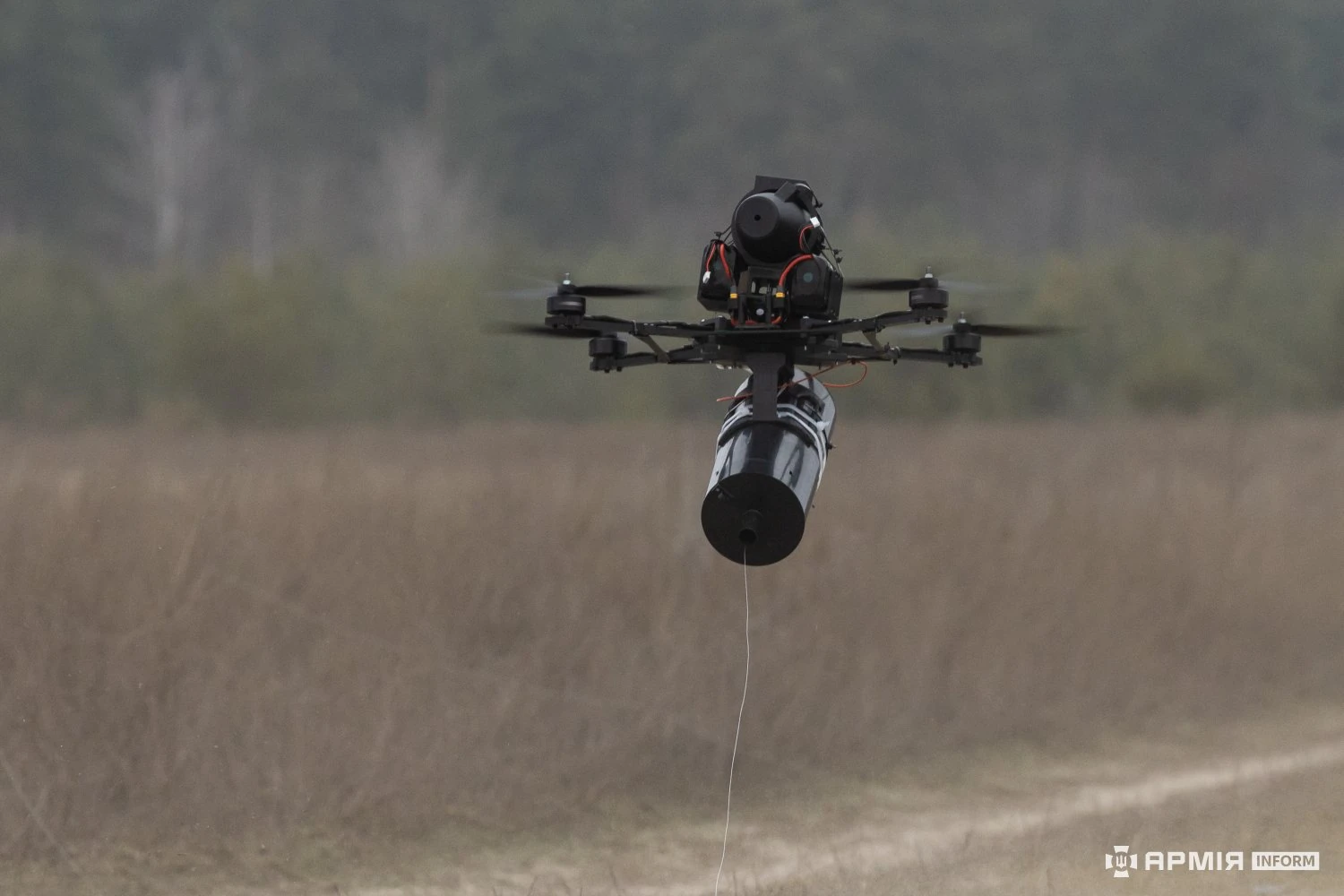
UKRAINE, KHARKIV, Jul. 21 — Russian fiber-optic first-person view (FPV) drones that attack Kharkiv have flight range of 40 kilometers (25 miles) because of their modernization, Ihor Terekhov, Kharkiv’s mayor, said during the national telethon.
The first Russian attack on Kharkiv with a fiber-optic FPV drone was in February 2026. Since July, Russians have started to use FPV drones like this to attack Kharkiv more often, targeting gas stations and civilian infrastructure.
Fiber-optic FPVs use a thin optic wire connected to an operator’s controller to transmit footage to the operator, which makes electronic warfare (EW) inefficient and the drones themselves, harder to detect.
According to Terekhov, the districts of Kharkiv located near the ring road in the northern part of the city are currently under the highest threat, as well as places near the gas stations
The mayor said that city authorities are working with the military to counter new Russian FPVs. He said, anti-drone nets and shelters across the city are what’s needed to protect people from those drones, though he didn’t specify the plans to implement these measures.
Over the past day, Russian forces attacked Kharkiv and 18 settlements in the region with one missile, artillery, 12 glide bombs, and 69 attack drones of different types.
Read more
- Attack drones hit dam in Belgorod oblast, Russia, cause floods
This summer, Russia bombs Kharkiv as much as it can, and our newsroom keeps working despite it all. If you want to support us amidst it all, please consider buying us a $5 coffee or subscribing to our community long-term.

Subscribe to news from Kharkiv, Ukraine
Most important stories from the frontline region