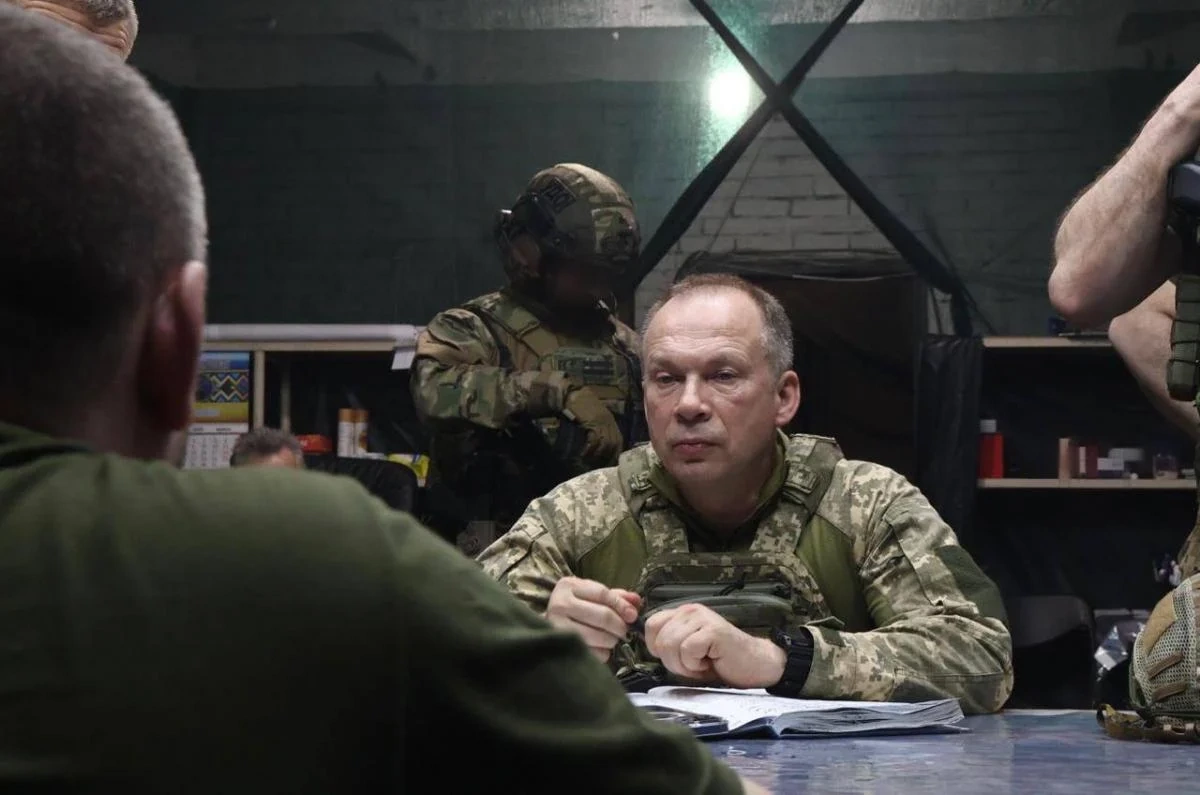
UKRAINE, Jul. 22 — Volodymyr Zelenskyy, the President of Ukraine, dismissed Oleksandr Syrskyi from his duties as Commander-in-Chief of the Ukrainian Armed Forces, the President said on his Telegram channel.
Oleksandr Syrskyi was born and received his military education in Soviet Russia. He was assigned to serve in a military unit in Ukraine, where he remained after the collapse of the Soviet Union.
In the Ukrainian army, Syrskyi built a military career and, by the time of Russia’s full-scale invasion of Ukraine in 2022, had risen to the rank of commander of the Ukrainian Ground Forces.
In 2022, Syrskyi made a name for himself by leading the defense of Kyiv and the Ukrainian counteroffensive in the Kharkiv region. But, in the winter of that same year, his leadership in defense of Bakhmut in the Donetsk oblast caused controversial reactions among military personnel and civilians, especially after Russian troops had almost surrounded the city in the spring of 2023.
In February 2024, Zelenskyy appointed colonel general Syrskyi as Commander-in-Chief of the Armed Forces of Ukraine following the dismissal of Valerii Zaluzhnyi.
Syrskyi became best known for the Ukrainian military’s surprise incursion into Russia’s Kursk oblast in the summer of 2024, which was intended to draw Russian forces away from the Pokrovsk, Kharkiv, and Sumy directions.
According to Syrskyi, in a year of the Kursk operation, Ukrainian forces killed and wounded over 77,000 Russian soldiers.
In March 2026, Russian forces gained the upper hand on the axis and forced Ukrainian troops to retreat. Zelenskyy claimed that the Kursk operation “completed its mission.” The operation was praised for bringing the war to Russian soil, but also criticized in the military, e.g., for unprepared logistics and supply chains for Ukrainian troops.
Syrskyi, according to many in the military, preferred that his subordinates carry out orders “at any cost” rather than preserve personnel’s lives.
The so-called “Syrsky regiments” — regiments that, during his tenure, expanded to the level of a division or corps (about 10,000 troops) — are most often the target of criticism.
One of the reasons is that those regiments often advance head-on onto the Russian position, using mechanized equipment (the most recent example is the 425th assault regiment called Skelia’s advance near Pokrovsk, Donetsk oblast, in March 2026).
The other is those regiments’ treatment of troops. In June, Ukrainian journalists published an investigative report into Skelia, unveiling cases of abuse, torture, and at least 26 non-combat deaths among service members.
Skelia’s command confirmed 25 of the 26 non-combat deaths, but stated that each case requires a “separate review” and official investigation.
Syrskyi himself called this incident shameful and said he thought these “negative phenomena” had been eliminated. He urged people “not to create a hysteria” about Skelia. “After all, the regiment is a combat unit; it has traditions that originated and took shape during the war,” he said.
Starting on July 16, protests broke out in various cities across Ukraine — participants spoke against Zelenskyy’s ousting of Defense Minister Mykhailo Fedorov and demanded Syrsky’s dismissal. It was confirmed that Zelenskyy fired Fedorov because of his “conflict” with Syrskyi — Zelenskyy said that they have a “complicated relationship” and communicate only through him.
Fedorov admitted that Syrskyi had blocked his attempts to reform the Ministry of Defense. “If we want to defeat the enemy asymmetrically and with minimal losses, we need to replace the Сommander-in-Сhief and the chief of the General Staff,” he said.
In his column for Militarnyi, a Ukrainian defense media outlet, Syrskyi wrote that he didn’t know anything about the conflict with the former Defense Minister.
During the protests, several military personnel reported on social media that they were being pressured and prohibited from interacting with the media, making public statements, and giving interviews regarding Syrsky’s dismissal. General Staff denied this information.
On July 18, the Financial Times, referring to a top official in the Office of the President, reported that Zelenskyy was considering Syrskyi’s resignation.
On July 20, Zelenskyy held a series of meetings with several Ukrainian commanders. According to LIGA.net, in a conversation with a representative from the Office of the President and the government, the president considered potential candidates for the position of Commander-in-Chief. The next day, Zelenskyy reported that Mykhailo Drapatyi will become the new Commander-in-Chief of the Armed Forces of Ukraine.
Read more
- ‘A blow to Ukraine’s ability to defend itself’ or ‘Who’s Fedorov?’ — What soldiers think about Minister of Defense’s dismissal
This summer, Russia bombs Kharkiv as much as it can, and our newsroom keeps working despite it all. If you want to support us amidst it all, please consider buying us a $5 coffee or subscribing to our community long-term.

Subscribe to news from Kharkiv, Ukraine
Most important stories from the frontline region