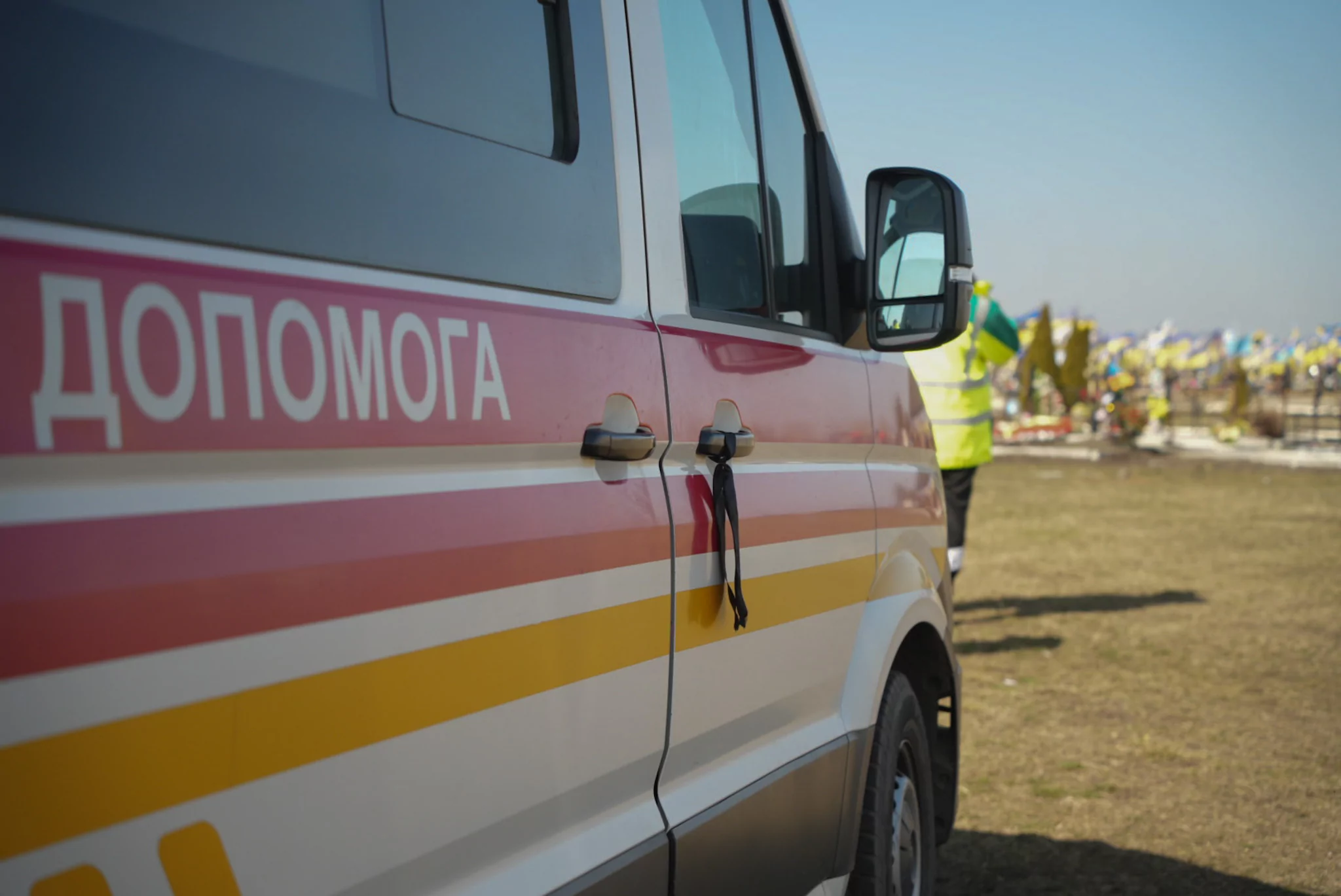
UKRAINE, KHARKIV — Russia spent most of the last two years expanding the kill zone for its drones, making communities close to the frontline unlivable and disrupting logistics supplying those who risk staying there. Incessant strikes on highways threatened many people in Kharkiv oblast — and, this year, Russia also intensified attacks on medical workers trying to save them.
On Mar. 15, a Russian drone strike killed two medics and injured the third in the Kupiansk district of the region. Their relatives, along with many people on social media, were angered. They claimed emergency medical teams don’t have sufficient protective equipment for missions to frontline areas.
After the medics’ deaths, the management of the Kharkiv Regional Center for Emergency Medical Care and Disaster Medicine and the Kharkiv Regional Military Administration promised to change their approach to protecting ambulance crews.
Over two months have passed since then, and Gwara Media journalists have learned what changes have been promised and what have actually been done to improve the work conditions for first responders.
Russian attacks on ambulances
Since the end of February 2026, the number of Russian attacks on ambulance crews in frontline communities of Ukraine has increased — this year, police reported at least five such attacks just in the Kharkiv region.
On Feb. 27, an ambulance crew went missing in the Kupiansk district. The police reported finding the vehicle with signs of a Russian FPV drone attack. It was a crew of Dmytro Kolesnyk, a 27-year-old doctor.
Albina, Dmytro’s girlfriend, told Gwara about that attack. The first drone hit the road near the vehicle, and the driver managed to evade it. The second one got stuck in an anti-drone net that was protecting the highway. The third damaged the ambulance car.
The crew, Albina said, had to grab the most valuable equipment — because if anything had happened to it, the management would have demanded explanations — and run to hide.
Concealed by the nearby forest, medics counted around 25 Russian drones flying nearby using sight and sound. They didn’t have drone detectors on them. When it got dark, the ambulance crew moved along the road toward the nearest settlement, where they got a signal and reported to the management what had happened. The ambulance was evacuated the following day.
Albina said that reports of drone attacks on ambulances first emerged back in 2025, but the management of the Kharkiv Regional Emergency Center had not responded in any way.
“A lot of people who worked in ambulance crews talked about situations where (Russian — ed.) drones were flying around, tracking them, or even attempting to hit the vehicles. But until then (Feb. 27 attack), the ambulances had somehow managed to evade the strikes,” Albina said.
‘It’s not like you can refuse’
Dmytro’s crew did not go out to the frontline areas for a long time after that because the ambulance was damaged in the attack. But, on Mar. 13, he told Albina that they would be going near Kupiansk again.
“I asked him whether the management had given them a (new) armored vehicle or any kind of protection. He said no, but supposedly the situation had improved and, in general, they were going in a different direction (than where they’ve been attacked). In the evening, I tried to tell him not to go, but he said, ‘it’s not like you can refuse,’” Albina said.
Refusing to go on the mission to frontline settlements could result in a cut to compensation bonus or strain relations with management, Albina explained.
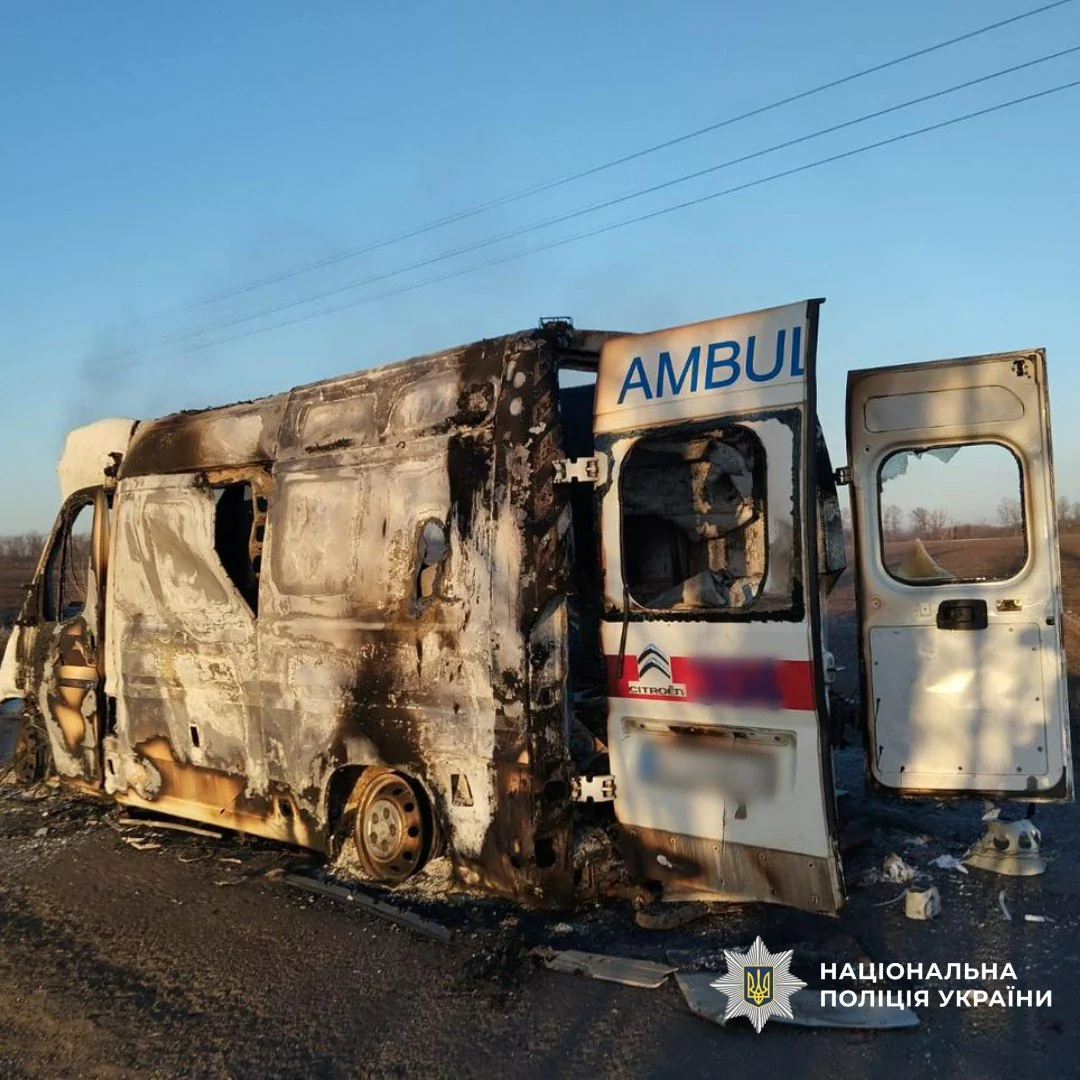
On Mar. 15, between Nova Oleksandrivka and Chervona Khvylia villages in the Kupiansk district, a Russian drone hit an ambulance of Dmytro’s crew. They were transporting injured people.
The drone strike killed Dmytro and his colleague, medical technician Oleh Zhuravlov. Paramedic Oleksandr Dudulad was injured.
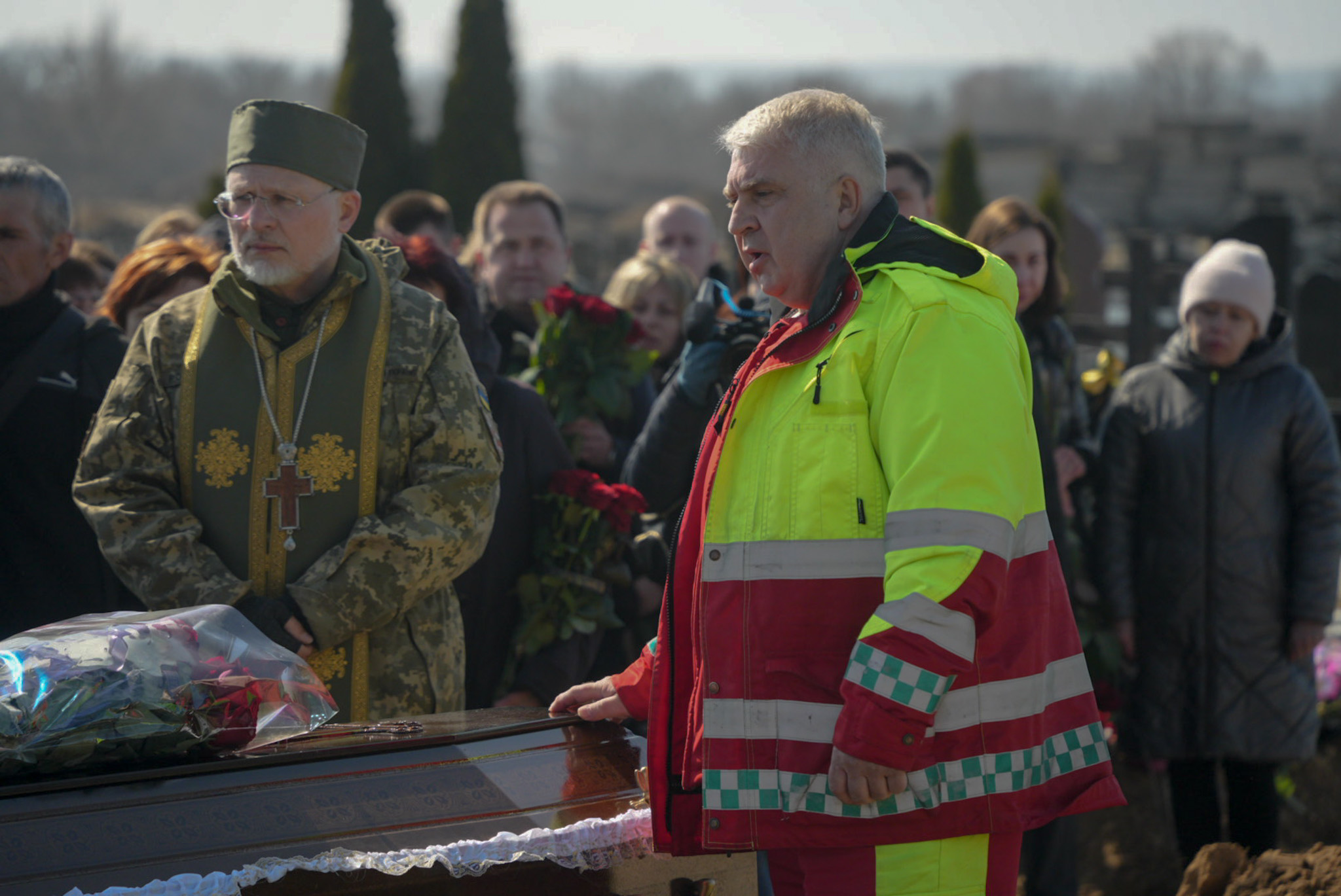
According to Mediaport, Kharkiv local media, during the farewell ceremony for Zhuravlov, Viktor Zabashta, the head of the Kharkiv Regional Emergency Center, when asked whether the crew had detectors or personal protective equipment, said, “they probably wouldn’t have helped them.”
“It was a powerful drone,” Zabashta said. “What’s there to say, it’s fate.”
The conversation with Albina for this article happened after Dmytro’s funeral.
‘Military laughs at our body armor’
After Mar. 15, an Instagram user dudnik_xen called for protection for medics in the Kharkiv region. They said that emergency medical teams lack personal protective equipment (helmets and body armor) and are forced to work in dangerous areas under constant attacks in unarmored vehicles.
The next day after Dmytro and Oleh’s deaths, Kupiansk authorities reported on other Russian attacks on ambulance crews in the district. A Russian FPV hit a medic’s car in the village of Prosianka. No one was injured.
On Mar. 19, another Russian FPV drone hit an ambulance in the village of Hrushivka, injuring the driver and a paramedic.
On Mar. 24, the Kharkiv regional police once again reported a Russian attack on an ambulance in Ploske village. There were no casualties.
In a comment to Gwara, Viktor Zabashta claimed that medics are provided with all necessary protective equipment. He called the social media posts about the issue Russian propaganda.
“Since 2022, all medics have been provided with body armor and helmets. No one has complained. I communicate with them every day, asking, ‘what do you need, what is lacking?’” Zabashta said.
Albina, on the other hand, said that Dmytro’s crew did not have any additional protection on their mission, such as drone detectors or electronic warfare (EW) systems.
“The fact that all the military laugh at our body armor is no secret,” an emergency worker, who still goes out to work in dangerous areas of the Kharkiv region, anonymously told Mediaport.
A Gwara correspondent, who worked alongside emergency medics in the Velykyi Burluk community northeast of Kharkiv, back in March, also said that they were without body armor.
Promises
Officials present at Dmytro’s funeral promised to reconsider the approach to the protection of ambulance workers operating in dangerous areas of the Kharkiv oblast.
Ihor Volchenko, deputy head of the regional health department, told journalists that it is “not easy” to provide special protection for ambulances, since they are not military vehicles. The department, he said, would also consider restricting the frontline areas where medics are allowed to operate.
Later, Oleh Syniehubov, the governor of the Kharkiv oblast, clarified that emergency medical workers without installed EW systems in their vehicles might be prohibited from going to frontline settlements in the Kharkiv region. He promised that the issue would be discussed at the defense council.
Regarding EW systems, Syniehubov said during a briefing that, as of late March, more than 15 ambulances had already been equipped with such systems. He brought up the “complexity” of providing medics with protection. Charity-financed ambulances couldn’t be modified, he said, and EW systems might conflict with ambulance equipment for intensive care.
On Apr. 20, Syniehubov reported that 10 EW systems and drone detection equipment had been given to the regional emergency medical center. He added that the negotiations to obtain 35 more.
Changes
Gwara Media asked ambulance crew workers on social media to share if there have been any safety-related improvements in their missions to the frontline areas of the Kharkiv region.
“Some movement toward our safety has started. In the near future, they (authorities) promise to provide Chuika (a Ukrainian-made drone detector) and EW systems. Management has started paying a bit more attention to protective equipment,” one emergency medical worker told us in April. They were unwilling to share their name.
“There are still no changes regarding restrictions on missions to frontline areas,” he added. As of this article’s publication, we are still not aware of restrictions like that coming into effect.
The medic also said that they had not received any additional protective equipment—their armor was bought independently.
At the same time, the acting director of the Department of Medical Services, Valeriia Soruchan, said in response to an official inquiry that all emergency medical teams — especially those working in frontline regions — are provided with everything necessary, including kevlar helmets, body armor, and personal protective equipment. Ambulances, she added, are still being equipped with EW systems.
Soruchan also claimed that the Ministry of Health had not received any requests or appeals from medics in the Kharkiv oblast regarding additional protection after the Russian drone attack that killed Dmytro and Zhuravlov.
The department’s representative noted that regional military administrations are responsible for providing all necessary material and technical resources for ambulance crews, while their use is overseen by the local head of the emergency medical center. In other words, according to Soruchan, the Kharkiv Regional Center for Emergency Medical Care and Disaster Medicine is responsible for actually purchasing the necessary equipment for ambulance protection.
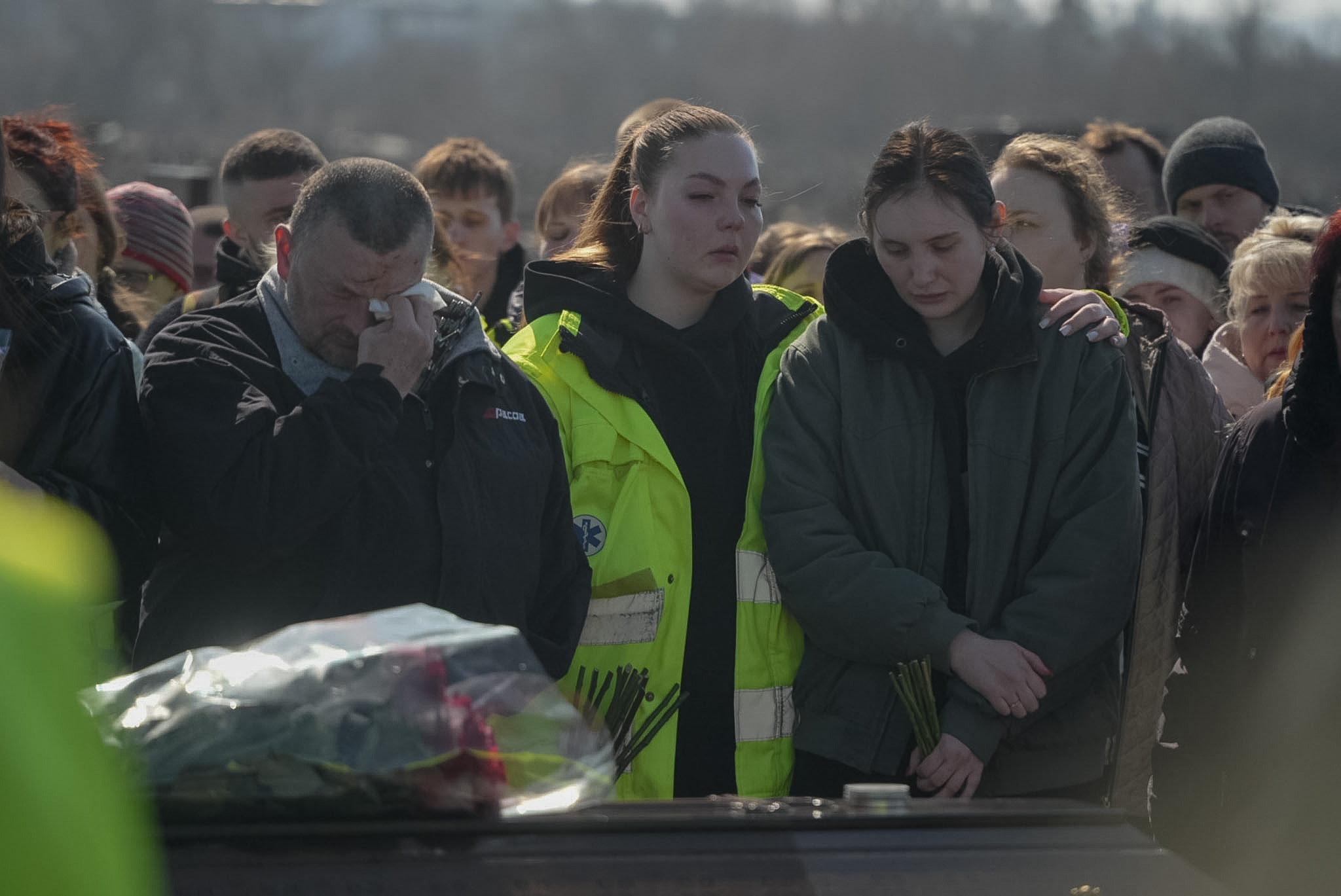
“I don’t know why Dmytro had to die for something to start changing,” Albina said to Gwara.
Medics had been concerned about inadequate protection and equipment since Ukrainian forces liberated the Kharkiv oblast in 2022, and emergency crews started to cover unoccupied territories. Albina said some workers had opposed going there: “They would be scheduled for deployment, and they would say, ‘No, I won’t go.’ And then they were pushed toward resignation,” she explained.
Such cases, Albina said, continue to this day: after the attack in March 2026, medics began refusing to go on dangerous missions without proper protection.
“These doctors were threatened with dismissal and reports. Now, some of them are on vacation, and it’s unclear whether it’s a planned vacation or (one that’s unpaid and) related to their refusal,” she said.
Read more
- ‘War doesn’t let us go’ — Mariupol family’s home damaged after Russian drone attack on Kharkiv
Hello! It’s Elza. When I asked medics if their safety improved, one of my friends replied that he was a childhood friend of the killed Dmytro. He introduced me to Albina. Their story really touched me: young Ukrainians choose such difficult professions despite the risk of death. With this article, I wanted to highlight the lack of official support for these people. Thank you for reading.


Subscribe to news from Kharkiv, Ukraine
Most important stories from the frontline region