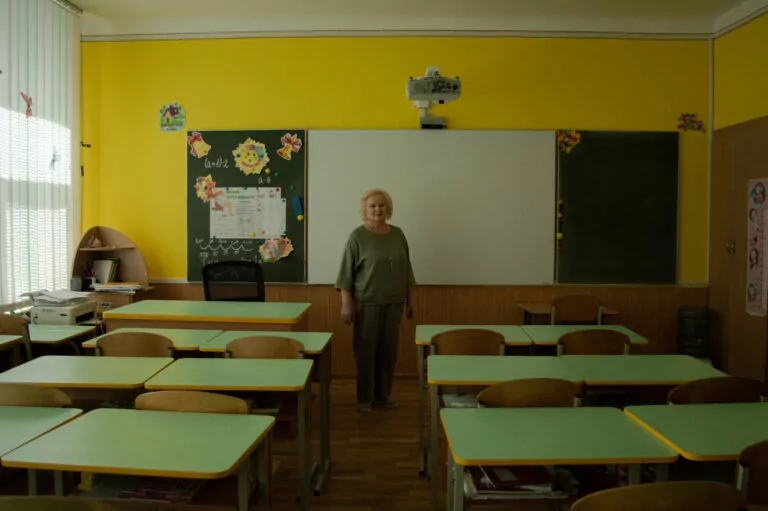
UKRAINE, KHARKIV — This summer — like every summer since Russia’s full-scale war started — sixth-year students studying “Medicine” education programs across Ukraine completed their master’s degree and passed the qualifying exams remotely. Fatima Guseynova and Nnani Adaobi Marian, who studied at the Kharkiv National Medical University, were among the recent graduates.
Both were evacuated to Germany after Russia began bombing Kharkiv in February 2022. Both decided to come back home for the graduation ceremony, scheduled for Jun. 30, and went to a celebratory photoshoot with their classmates on Jun. 29. Both were 23 when the Russian troops dropped a glide bomb near them on that day.
“Media wrote that they are foreign students, but that’s wrong. They are from Kharkiv,” said Professor Olga Kadykova from the medical university. “They just both returned home.”
Fatima Guseynova died immediately after the bombardment on Jun. 29. Her uncle, who, as university staff told Gwara, stayed in Kharkiv and hosted his niece when she was in Kharkiv, was one of the first at the scene.
Fatima’s friend Maryna, 22, spoke of the woman fondly. “She always helped, always supported and listened and gave advice on how to solve life’s problems,” she said.
University’s head Valerii Miasoiedov said that Fatima’s friends and the Azerbaijani diaspora in Kharkiv and Ukraine helped to organize the transportation of her body to the Arabgubaly village of the Kurdamir district, where her father organized a funeral.
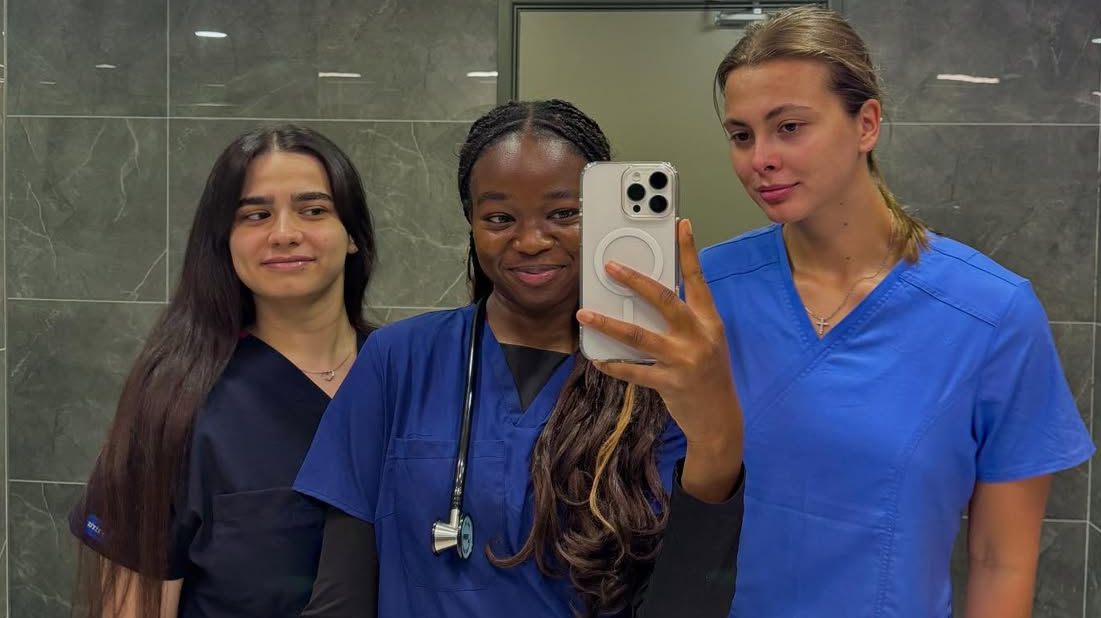
Nnani Adaobi, called Ada by her peers, got extremely severe injuries in the Russian attack, Miasoiedov told Gwara. 90% of her body was burned. She was first hospitalized at the Kharkiv clinical hospital, put into a medical coma, and then transported to Germany to get better treatment — and to get closer to her father, who also lived there since the family fled Russia’s war.
Ada’s classmate from Kharkiv 14th school opened a fundraiser to help finance her medical treatment after the attack. On Jul. 5, the Kharkiv National Medical University posted that Nnani died in a German hospital.
“Doctors fought for her life with everything they had. Everyone sympathized, helped, and hoped for recovery, but despite the clinicians’ efforts, they couldn’t save her.”
Nnani’s colleague Olga Hryhorovych, 26, told Gwara that, along with Ada, they planned to create the English pronunciation training course.
“She went to lots of internships abroad; had many interesting experiences she could share with students,” Olga said.
“Ada was the most pleasant person I’ve ever met, full of light. When I found out that she was injured, I couldn’t comprehend that something so horrifying could happen to someone so good. I still can’t believe it.”
We asked Prof. Kadykova about Fatima and Nnani. They’ve never had any academic issues, she said, completed all assignments in time, and passed the 6th year medicine exam on the first try.
She added, “Ada was more cheerful, active, and social. And Fatima was quieter, more humble. But both of them were very optimistic and beautiful. For us, (their loss) is a huge tragedy.”
Miasoiedov said that, because of the student’s death, the graduation ceremony was solemn and mournful. He added that while the university can provide students with shelter during classes, it can’t guarantee their safety while they’re moving around the city.
“There are no safe places in Kharkiv right now,” Miasoiedov said.
When the news broke — first of Fatima’s death, then of Nnani’s — the university faced criticism for not sending diplomas to their graduates via post. Gwara asked Prof. Kadykova if they plan to do that now.
“We didn’t require them to come to Kharkiv,” Prof. Kadykova said. “That was their own wish; no one forced them. Similarly, no one forced them to go to the photoshoot. That was what they wanted. How can we take the opportunity to get their diplomas in person from the kids?”
In Ukraine, medical students choose their specializations after they finish their master’s degree, and, according to Prof. Kadykova, neither Fatima nor Nnani had the chance to pick theirs. We asked Fatima’s friend, Maryna, what Fatima would want to pick. She responded: Fatima’s priority was cardiology.
Read more
- ‘I’m ready to tear Putin’s throat out’ — Russia hits Kharkiv with 7 glide bombs, killing 15-years-old boy, injuring at least 32 people (Photos)
- ‘Why did Dmytro have to die for something to start changing?’ — Kharkiv ambulance crews seek better protection from Russian FPVs


Subscribe to news from Kharkiv, Ukraine
Most important stories from the frontline region