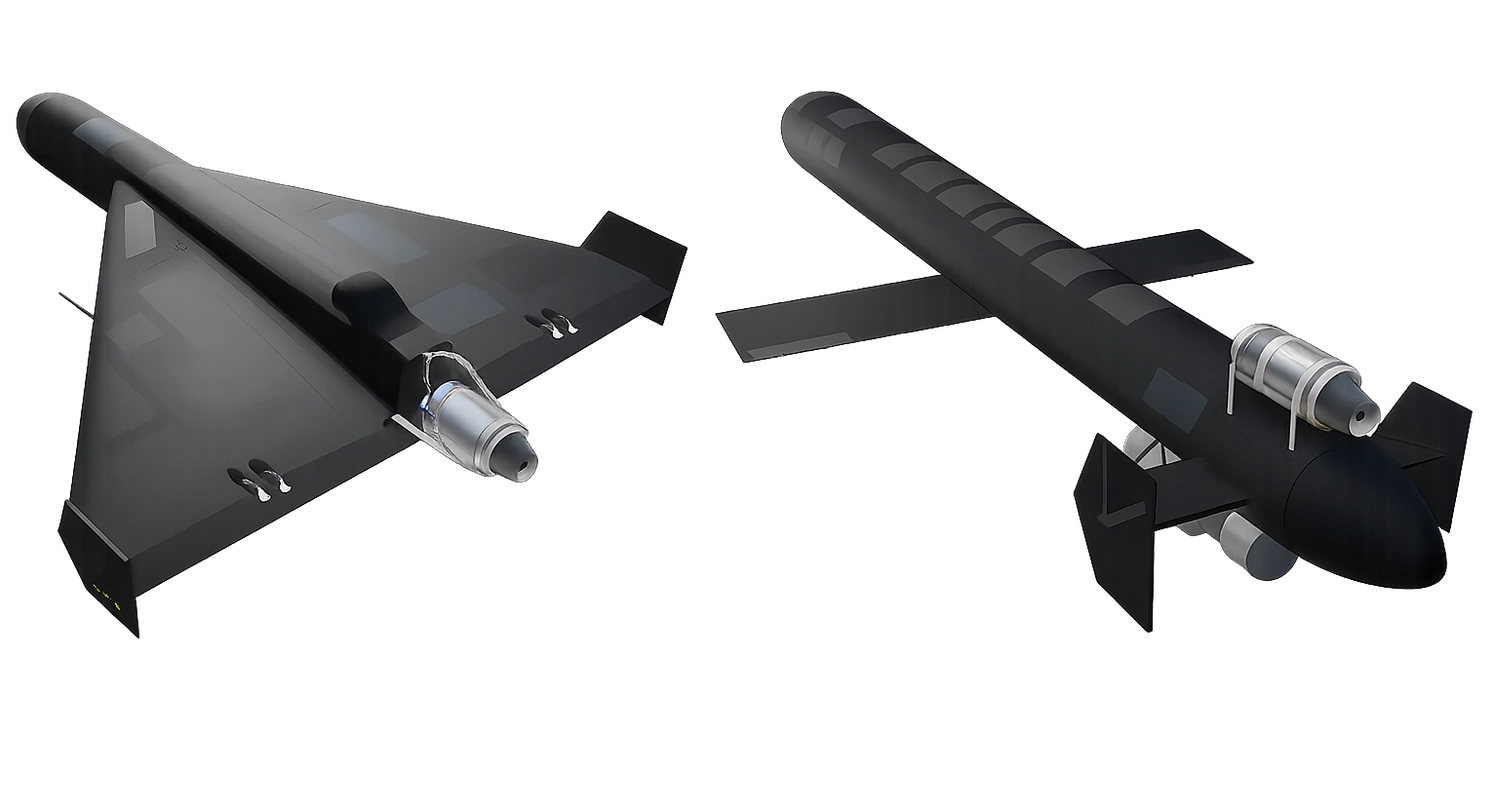
UKRAINE, KHARKIV, Jun. 3 — In April, most people in Kharkiv heard the sound of Russian new jet-powered kamikaze drones for the first time. Locals said it reminded them of the missiles flying. On Apr. 2, according to the Kharkiv city council, Russia hit Kharkiv with jet-powered Shahed-type Geran-3 drones for the first time.
Since then, Russia started including jet-powered Shahed attacks across Ukraine more often — and, while it’s possible to successfully counter these drones with interceptors, it’s tough to do in the Kharkiv oblast. A recent jet-powered drone attack on Kharkiv, on Jun. 3, severely injured a woman in the Kholodnohirskyi district, and she died from her wounds in the hospital.
Let’s look into when Russia started using these drones, what makes them more dangerous than the usual Shahed-2 variation, and how Ukraine counters them.
First applications of Russian Geran-3
The official reports on the Geran-3 attacks on Ukraine appeared in June 2025. Later, Ukraine’s main intelligence agency (HUR) said that these drones are a new Russian alternative to the Iranian Shahed-238, presented in November 2023. Geran-3 drones had a Telefly jet-powered engine that allowed them to accelerate up to 370 km/h (~230 mph), even in zones with active air defense systems.
Russian manufacturers, according to HUR, use 45 components developed in different countries to build Geran-3. Most of those components were made in the USA. Apart from the difference between engines, Geran-3 is analogous to Geran-2.
“The real scale of production for this drone will depend on the (Russia’s) ability to purchase Chinese engines and on how fast (these engines) will be manufactured and delivered (to Russia),” wrote Defense Express, a Ukrainian military portal, in their analysis of the Geran-3 drone. Militarnyi, another defense media, claimed that the U-36 serial number, which wasfound on jet-powered drone debris in June 2025, pointed to the fact that Russia still had a small-scale manufacturing for Geran-3.
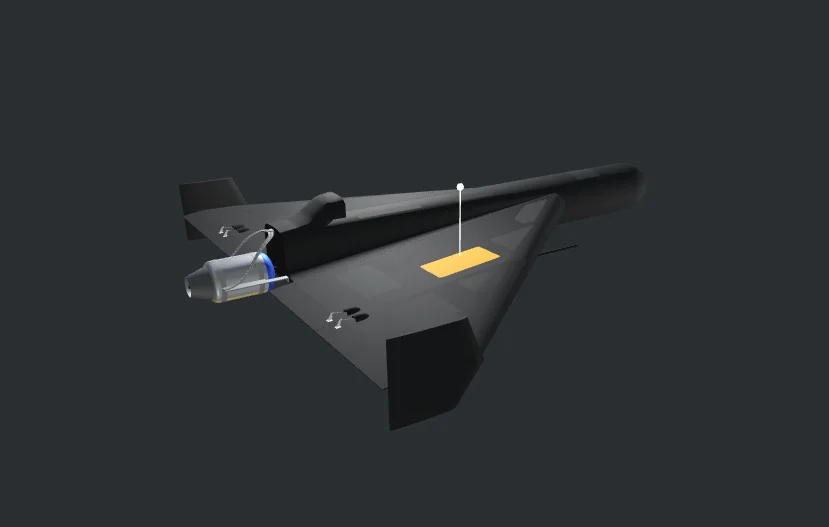
Information about Russians including jet-powered Shahed drones in mass airstrikes on Ukraine, was officially confirmed in July 2025. In August, the Air Force reported on one of the first cases of Ukrainian forces downing or suppressing them.
The following autumn, Russia started another campaign against Ukraine’s energy infrastructure. In October, Russia hit Kharkiv with what the Prosecutor’s Office presumed was the first jet-powered Geran drone, killing a person and destroying a kindergarten—though the type of weapon wasn’t confirmed officially.

During the winter, according to the President of Ukraine, Volodymyr Zelenskyy, Russia launched up to 19,000 kamikaze drones on Ukraine — Gwara’s journalists discovered only a few reports on jet-powered drones included in those attacks on the Telegram monitoring channel and the Air Force’s social media accounts.
Since April, we still see fewer of them in comparison to Geran-2 — according to the Kharkiv city council’s press service, in May, Russia didn’t hit Kharkiv with jet-powered drones at all — but the situation might change very quickly.
Danger of jet-powered drones for Kharkiv
In the summer of 2025, Militarnyi’s journalists said that because of jet-powered drones’ speed and height of their flight — up to 9,000 meters (~5.5 miles) — they’re out of range for mobile air defense groups and for interceptor drones with power-based engines.
Serhii Flash Beskrestnov, electronic warfare (EW) expert and advisor to the Minister of Defense of Ukraine, wrote that jet-powered drones “don’t have any advantages (over “usual” Shaheds — ed.) apart from high speed” in September 2025. At the same time, their flight range isn’t that long, he noted, because they’re quickly running out of fuel.
During the night of Nov. 30, Ukraine, reportedly for the first time, shot down a jet-powered drone with an interceptor drone.

“Our anti-aircraft drones managed to ‘deal’ with that speed,” Beskrestnov concluded in January, after Ukraine started utilizing interceptor drones more actively.
Beskrestnov said that, to save fuel and carry an explosive part of 50 kg (~110 pounds), Geran-3 has to stay within a speed limit of 290-330 km/hour (~180 miles/hour), although their “factory” settings are supposed to allow a speed of up to 370 km (229mph).
While kamikaze drones are capable of downing jet-powered Shaheds, the situation in Kharkiv is complicated by theproximity to Russia.
Bohdan Hladkyh, the head of the Department of Emergencies at the Kharkiv city council, told journalists on Apr. 2 that Geran-3 reaches Kharkiv from Belgorod oblast, Russia, in just 70 seconds.
As such, local air defenses have less time to react to the threat and shoot the drone down than when Russia attacks Kharkiv with S-300 missiles (those reach the city in under two minutes)
“To react in time, you have to see the drone in time. And that factor is absent in the borderlands currently,” the Air Defense unit’s soldier working in Kharkiv oblast, call sign Sport, told Gwara’s journalists on the condition of anonymity.
“Russians launch the drone at low heights, around 50 meters (~164 feet) above the surface, or above the river. It moves very quickly, so it cannot be spotted by radars.”
On Apr. 6, Oleh Syniehubov, governor of the region, told Gwara Media that the military already reported that they can take down jet-powered drones in the Kharkiv oblast, but it is challenging.
According to Sport, jet-powered drones attack Kharkiv with a speed of 450 km/hour (~279 mph). Such a speed complicates the discovery of the drone — “it appears on the radar for a second, and then it’s gone” — and creates the sound resembling a missile flight.
Future
A possible range (~1,000 km) of Geran-3 drones, according to Flash, is compromised by its fuel consumption and the weight of the explosive part. Shaheds’ forms that are used both in Geran-2 and Geran-3 are capable of carrying no more than 50 kg (110 pounds).
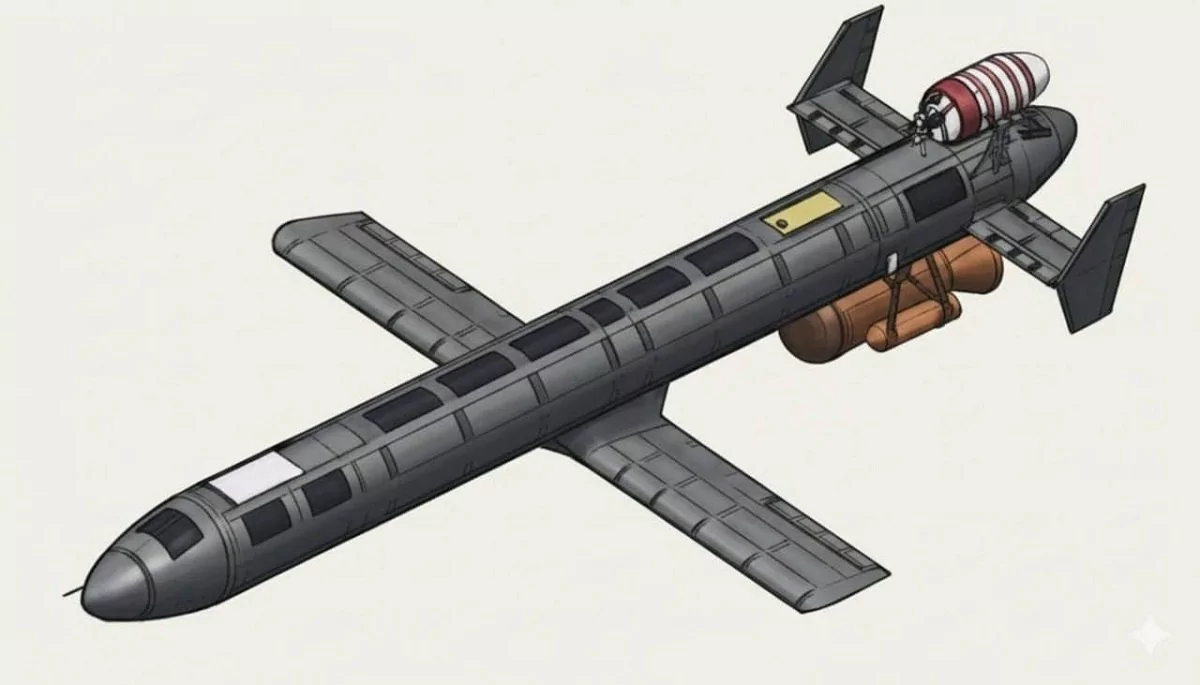
In January, Ukraine’s main intelligence agency presented the new Russian drone Geran-5. Serhii Flash called this weapon “another attempt to (create) a cheap missile” — it resembles them in shape and form. This drone, he wrote, can carry 90 kg (198 pounds) of explosives for 1,000 km (621 miles), and 50 kg (110 pounds) for 1,500 km (932 miles).
“And, of course, the speed of Geran-5 is 500-600 km/hour (310-372 miles/hour), which is unreachable both for helicopters and for interceptor attack drones in our employ. Mobile firing groups would not be able to down such drones, too: Geran-5 can fly 6 km (3,7 miles) high, and that significantly changes its capabilities,” wrote Beskrestnov, adding that Russians would be able to launch those drones from the jet planes that could be located anywhere in Russia.
The level of danger Geran-5 poses for Ukraine will be impacted by the speed of development of interceptor attack drones that take down the usual Shaheds, Beskrestnov says.
In March, Flash already reported that the efficiency of Ukraine’s attack drones will soon reach 90%, which means Russians will be switching to jet-powered Shaheds, in particular those capable of reaching the speed of 500-600 km/hour.
He urged interceptor drone manufacturers to start creating systems for countering jet-powered drones moving at such a speed as soon as possible.
Hi, my name’s Yana, and I wrote this article to tame the fear I felt hearing the sound of new Russian drones above Kharkiv. It helped, somewhat — if you heard the sound, you know it’s almost as scary as a glide bomb. If you want to support our Kharkiv-based newsroom and our efforts to do good journalism, tip us with a cup of coffee.


Subscribe to news from Kharkiv, Ukraine
Most important stories from the frontline region