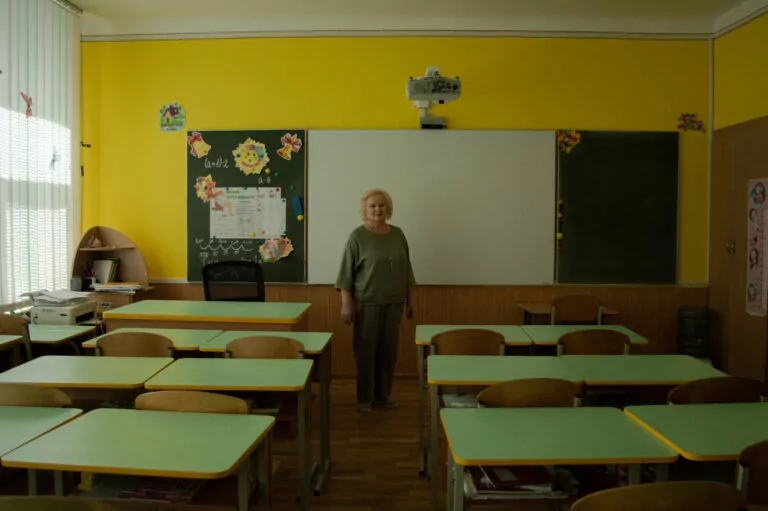
UKRAINE, KHARKIV — “Is it already Gilead?” wrote 19-year-old Lera on her protest sign, referring to a totalitarian patriarchal theocracy of The Handmaid’s Tale by Margaret Atwood. In the book, the government controls every aspect of women’s lives, including what they do with their bodies.
Lera came to the Manivets art space in central Kharkiv to prepare signs ahead of what will be the second protest of her life — against adoption of new Civil Code that was passed in the first reading in Parliament on Apr. 28.
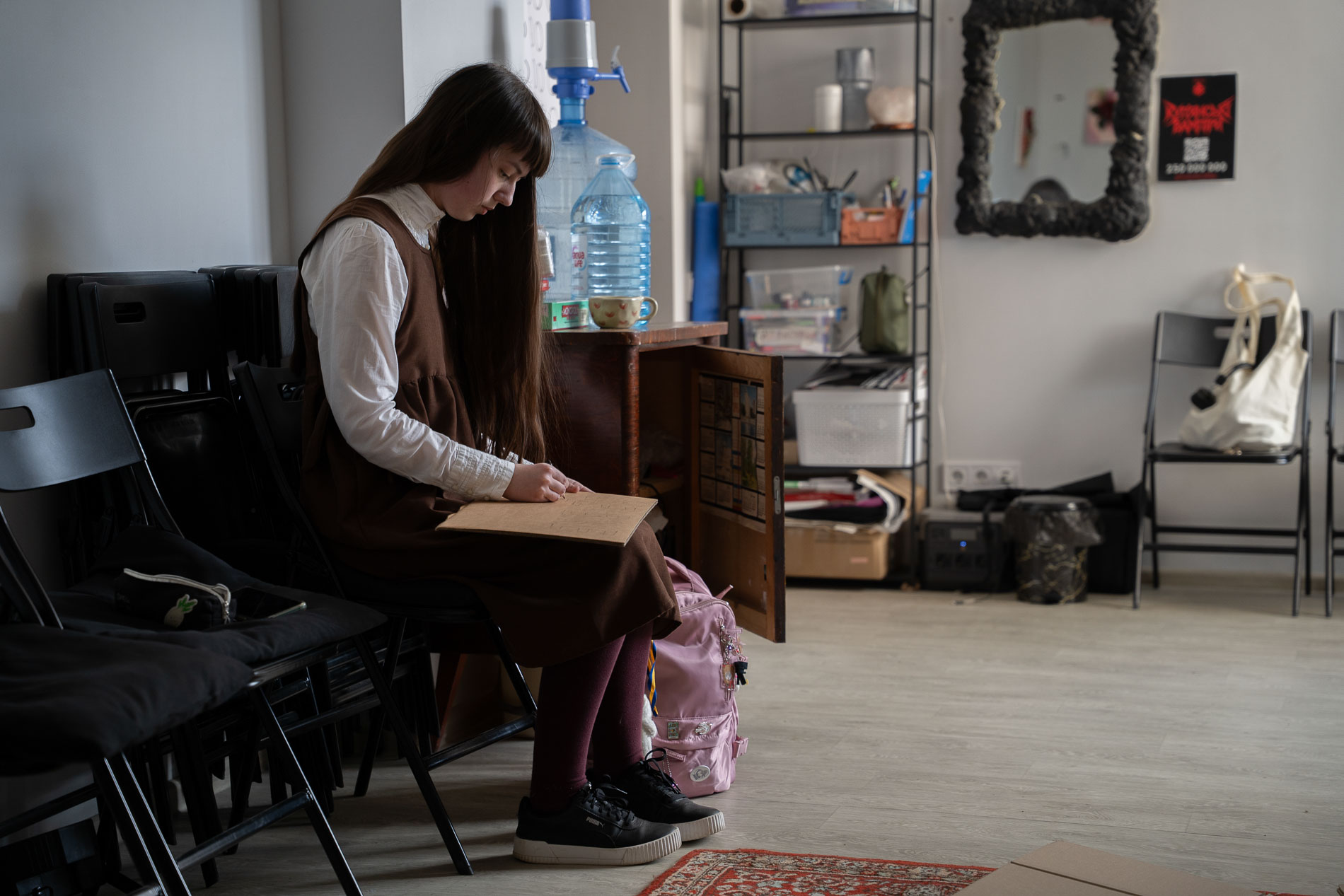
Some supplies were already available at the art space, while others, including large amounts of cardboard, were donated by Manivets’ friends and supporters. Anna, 22, a co-owner of the space, believes anyone can make a good sign for a demonstration — one just has to bring people together and give them the means to express themselves.
“Here they can think about chants for the protest or brainstorm ideas,” Anna says.
The Manivets’ space of itself feels improvised. Paintings of women’s bodies and posters calling for donations for the army are scattered throughout the room. Wooden boards serve as makeshift benches. Lera sits on one of them, quietly going through piles of markers spread across a white office table as she chooses colors for her future sign.
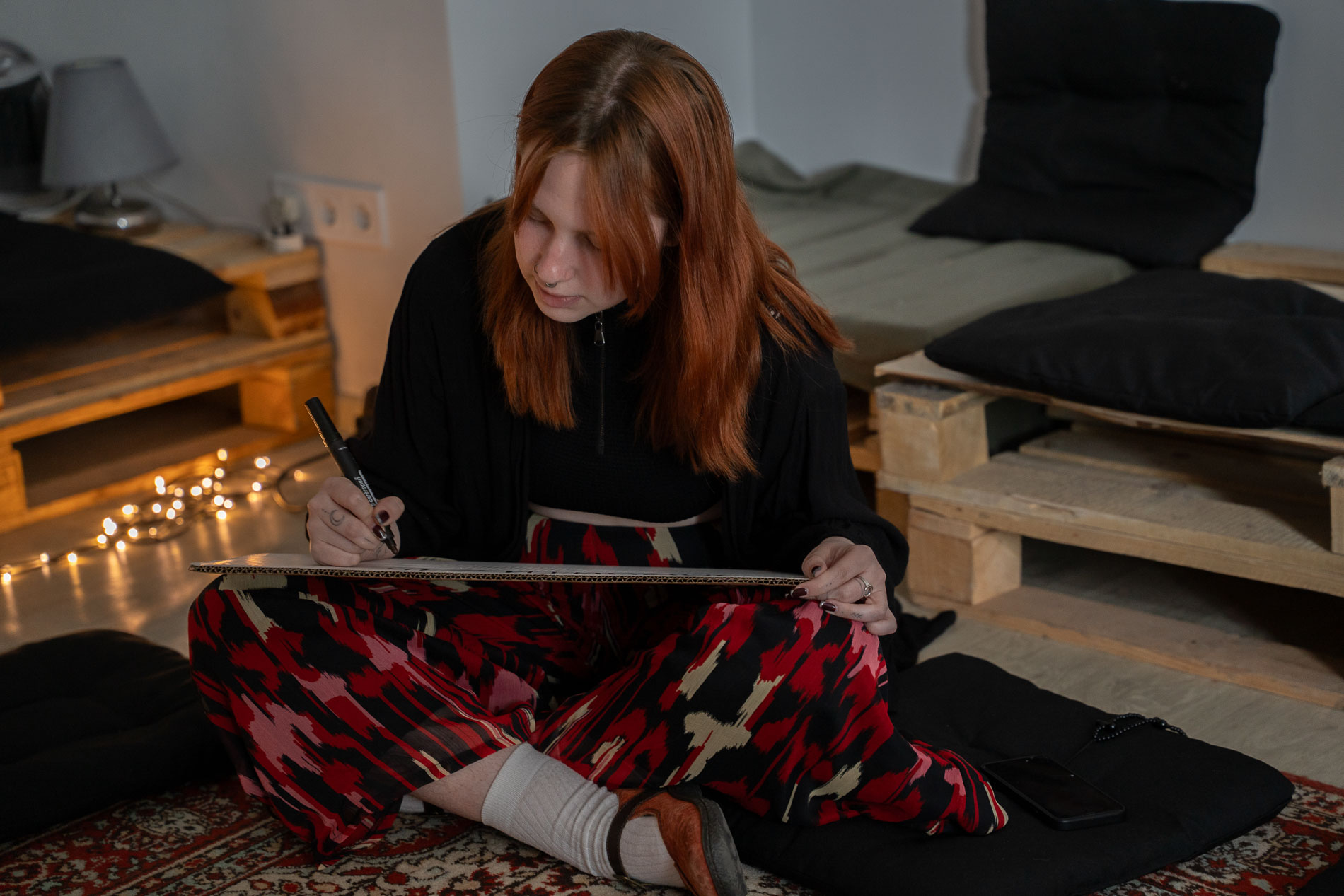
Anna plugs her phone into the speakers, filling the room with Ukrainian music. “I will not give up without a fight,” sings Sviatoslav Vakarchuk, one of the most famous singers in the country — a song that’s often played at protests here. Anna grabs cardboard and markers and sits on a worn Soviet-era carpet decorated with deep red and black ornaments — she is ready to make her sign.
Discrimination, land grabbing, and other sources of dissent
The first time Lera took to the streets was during the summer of 2025, Lera tells Gwara. That’s when Ukrainians rallied against attempts to undermine the independence of the state’s anti-corruption institutions. Tomorrow, Lera will protest against revised draft of the Civil Code (bill #15150). On Apr. 28, 254 lawmakers adopted this bill in the first reading.
“I’ve been following this scandal (related to the possible adoption of Civil Code — ed.) in Twitter since February, I guess, when they wanted to allow marriages with 14-years-old girls, if they are pregnant,” Lera shares.
There’s no marriages with 14-years-old in the current edition of the draft bill. After the first version was introduced on Jan. 22 by Ruslan Stefanchuck, the chairman of Verkhovna Rada, public outrage about this provision was the only one that forced lawmakers to delete it.
Many other provisions of the draft Civil Code were criticized, but not changed before the bill passed its first reading. Though Stefanchuk said that the new Civil Code is supposed to “harmonize” Ukrainian laws with European legal regulations and unification acts, the public, lawyers and some lawmakers criticized the draft Civil Code.
Lera says that she is now most frustrated by the fact that the draft bill’s amendments define the family as the union of man and woman only.
Under the current Family Code of Ukraine, a family is defined as people who live together and share responsibilities. This includes married couples, which under Ukrainian law must be heterosexual, as well as people of same sex who live together as a family without formal marriage.
Lera notes that during the NABU/SAPO protests in 2025, European officials criticized Zelenskyy for compromising independence of the anti-corruption agencies and reminded Kyiv that EU support relies on Ukraine’s reforms. Adoptions of bills that introduce civil partnerships have also been urged by the European Parliament, but they’ve been stuck in the Verkhovna Rada for years. New Civil Code, if adopted, will remove any legal openings same-sex couples can use to be judicially recognized. That, Lera thinks, is another parallel with a totalitarian The Handmaid’s Tale.

“Stop land grabbing,” says Anna’s sign. She’s already participated in several demonstrations, including for NABU and SAPO independence in 2025 — now, she is one of the organizers of the protest against the new draft Civil Code.
Her major concern is that the new draft Civil Code provides amendments allowing appropriation of usually invaluable state and communal lands, including forest estates and coastal strips.
Bohdan Kurchenko, an expert at the Ecodia Center for Environmental Initiatives, told Gwara that under the current system, Ukrainian authorities or local communities can reclaim appropriated state land through court.
Draft Civil Code could make this more difficult by limiting the state to just three years to challenge ownership after land is registered, he says. According to Kurchenko, many protected areas are either not fully registered or formally demarcated — that, if the new Civil Code is adopted, creates risks of illegal privatization and land grabbing.

Soft knock on the door. After Anna’s permission, Diana enters the room. The next day would be the first protest of her life. She came to Manivets partly in search of support and like-minded people.
Speaking about the revised draft of the Civil Code, Diana shares: she believes the new bill passed the first reading too quickly. The second draft Code was presented to Verkhovna Rada on Mar. 9 and was adopted in just 19 days. The document had almost 1,000 pages.
Diana says she generally supports reforms, but believes the bill in its current form required serious revisions, particularly regarding marriage and land regulations.
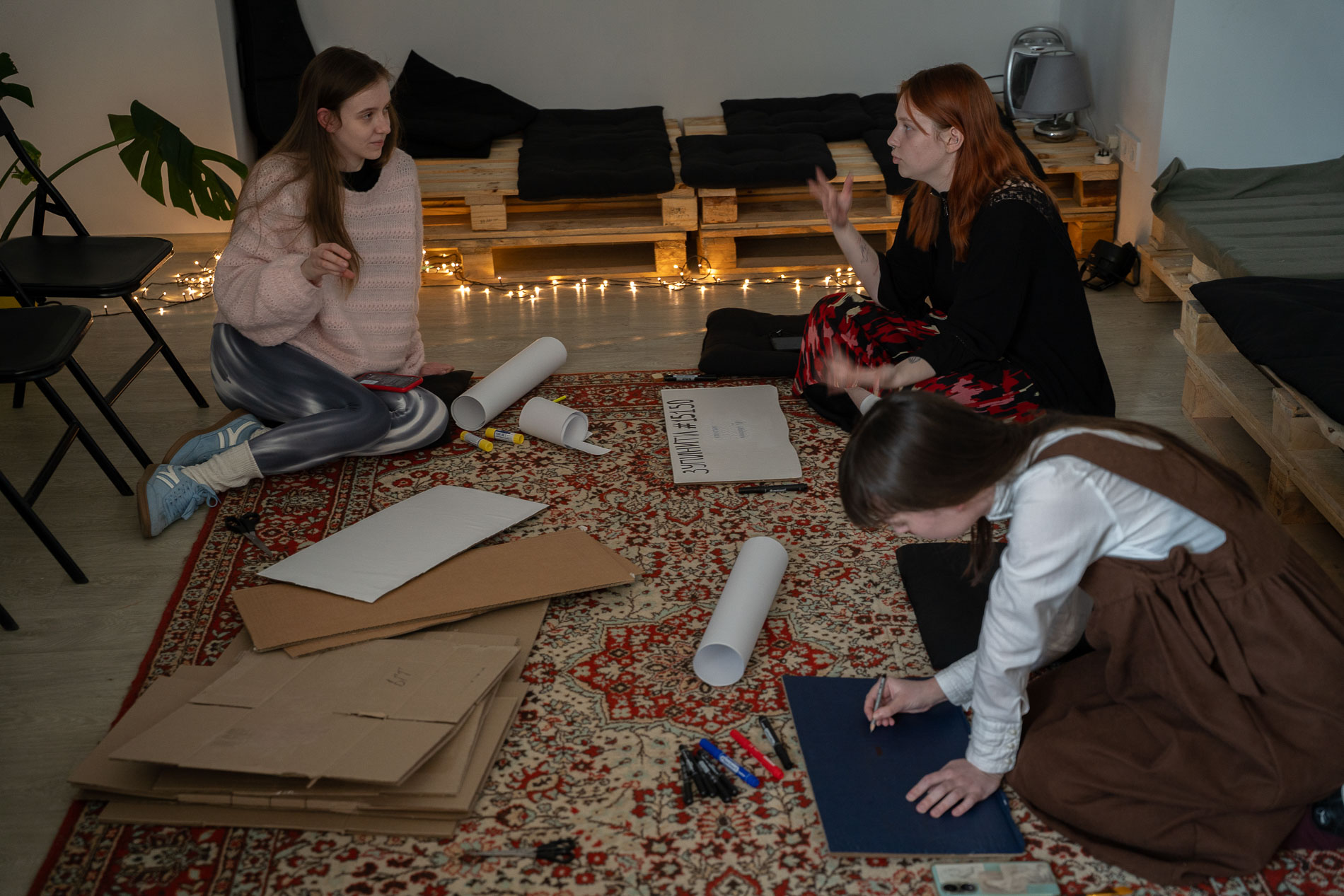
Thinking on a sign for her protest sign, Diana recalls a conversation with a serviceman who had been fighting since 2022. He told her he wanted to see civilians become more involved in shaping legislation and public life. His words reinforced her belief that Ukrainians should actively defend their rights and influence political decisions even during the war.
“Something for everyone to be unhappy about”
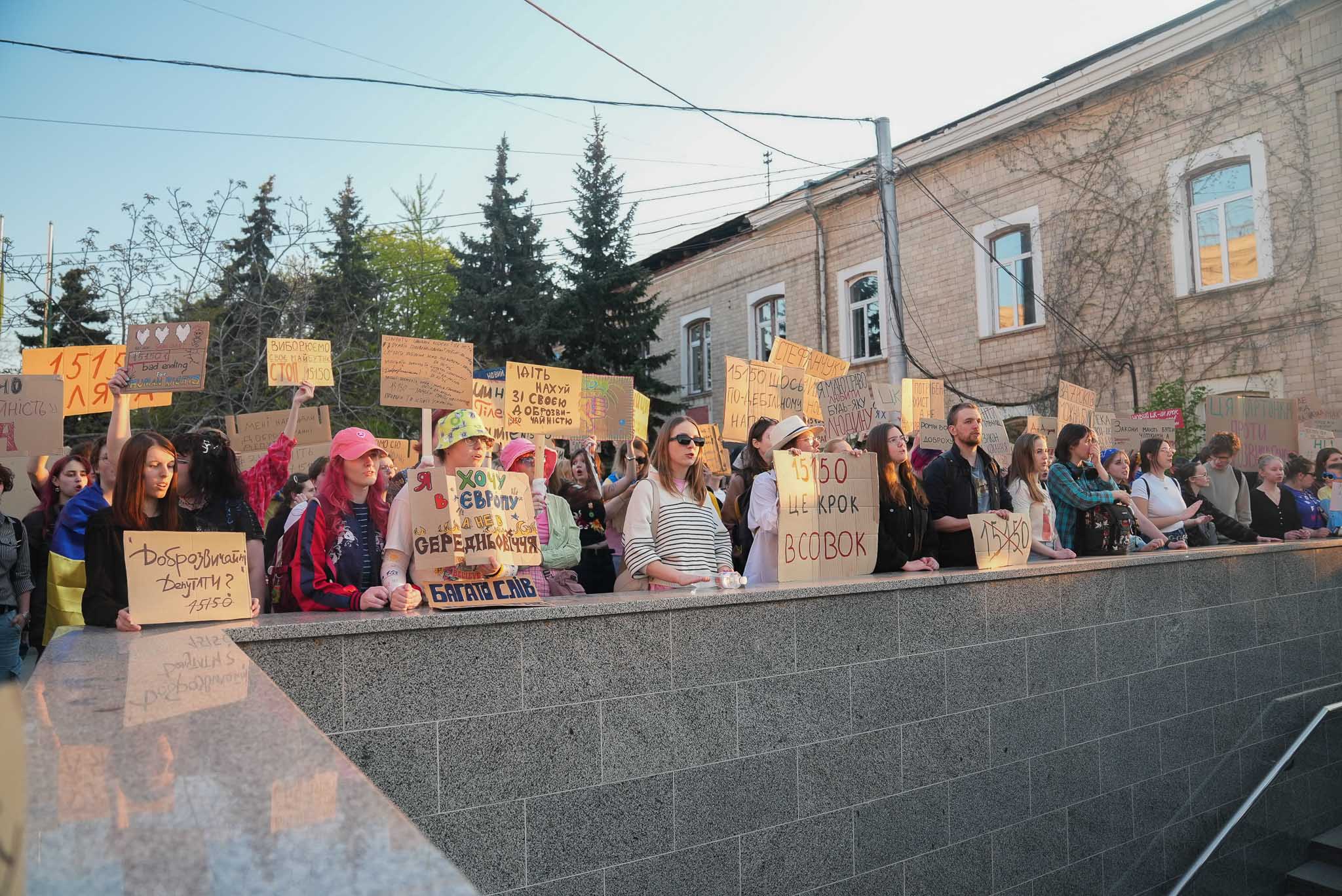
About 120 protesters surround Anna as she moves through the crowd, speaking to people about corruption, women’s and LGBTQ+ community rights, and land grabbing.
“I don’t even have polite words. I tried to prepare a speech, but I have nothing censored left,” she shouts, adding: “If this bill is adopted, people could end up acquiring land, even places like Sharivka Palace (an important historical building in Kharkiv Oblast — ed.), through corruption or other illegal means. So what are we supposed to do with it under this system?”
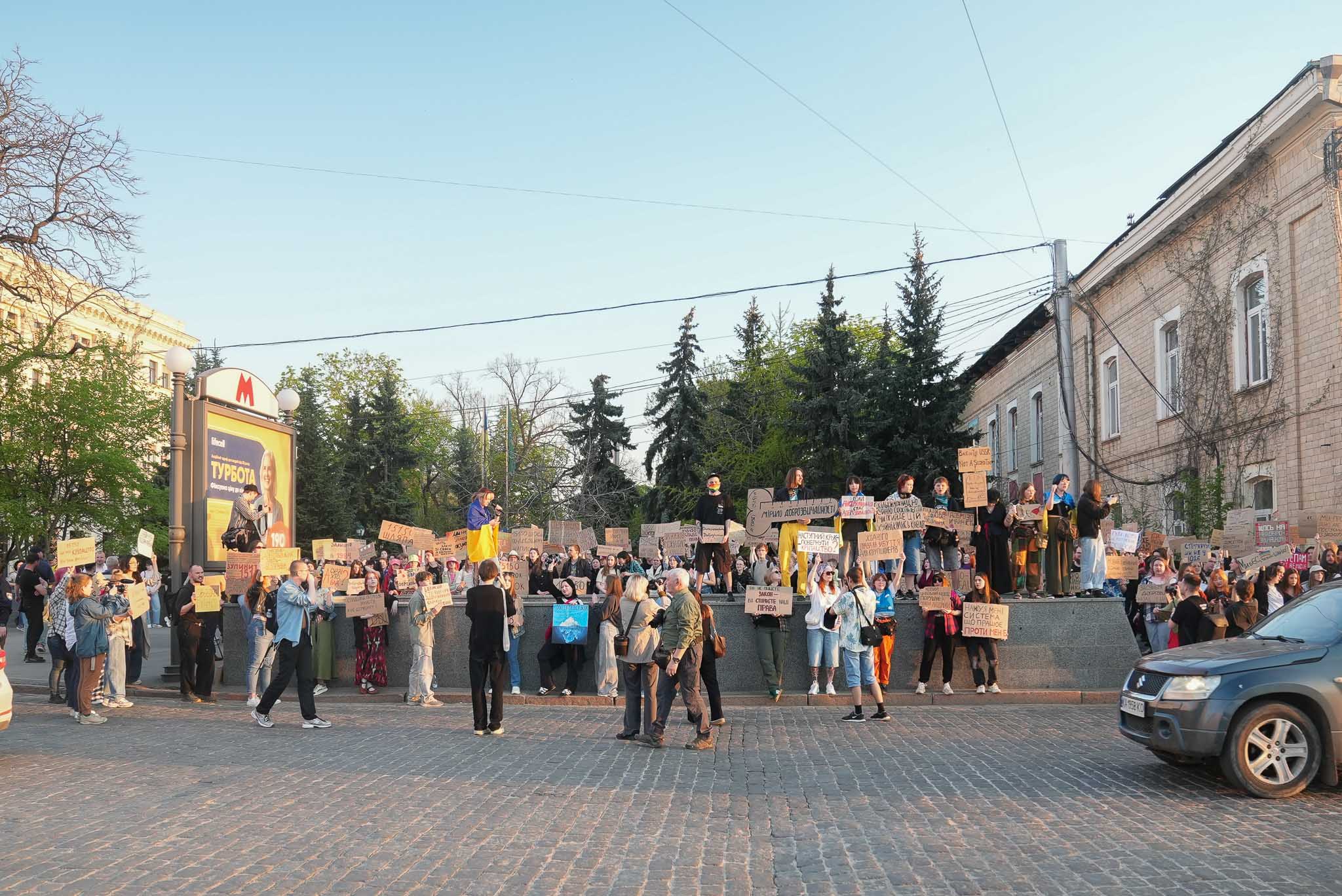
It’s May 6, protesters gathered near Shevchenko Park in central Kharkiv — the same location where demonstrations in support of NABU and SAPO took place in 2025. The crowd surrounded the subway exit, facing Freedom Square, the city’s main central square, where buildings such as the State Industrial Complex and the Kharkiv Regional Administration are located — both damaged in Russian attacks.
Protesters chant “Power to the people,” holding signs calling for adding amendments to the Civil Code.
A little off from the main crowd, Kateryna prepares her sign for the protest. “Instead of keeping women in marriages, they should be helping them safely get out of abusive ones,” she says, speaking from personal experience of being in an abusive relationship. In the new Civil Code, courts could dispute people’s decision to divorce if the divorce is contrary to “good morals.”
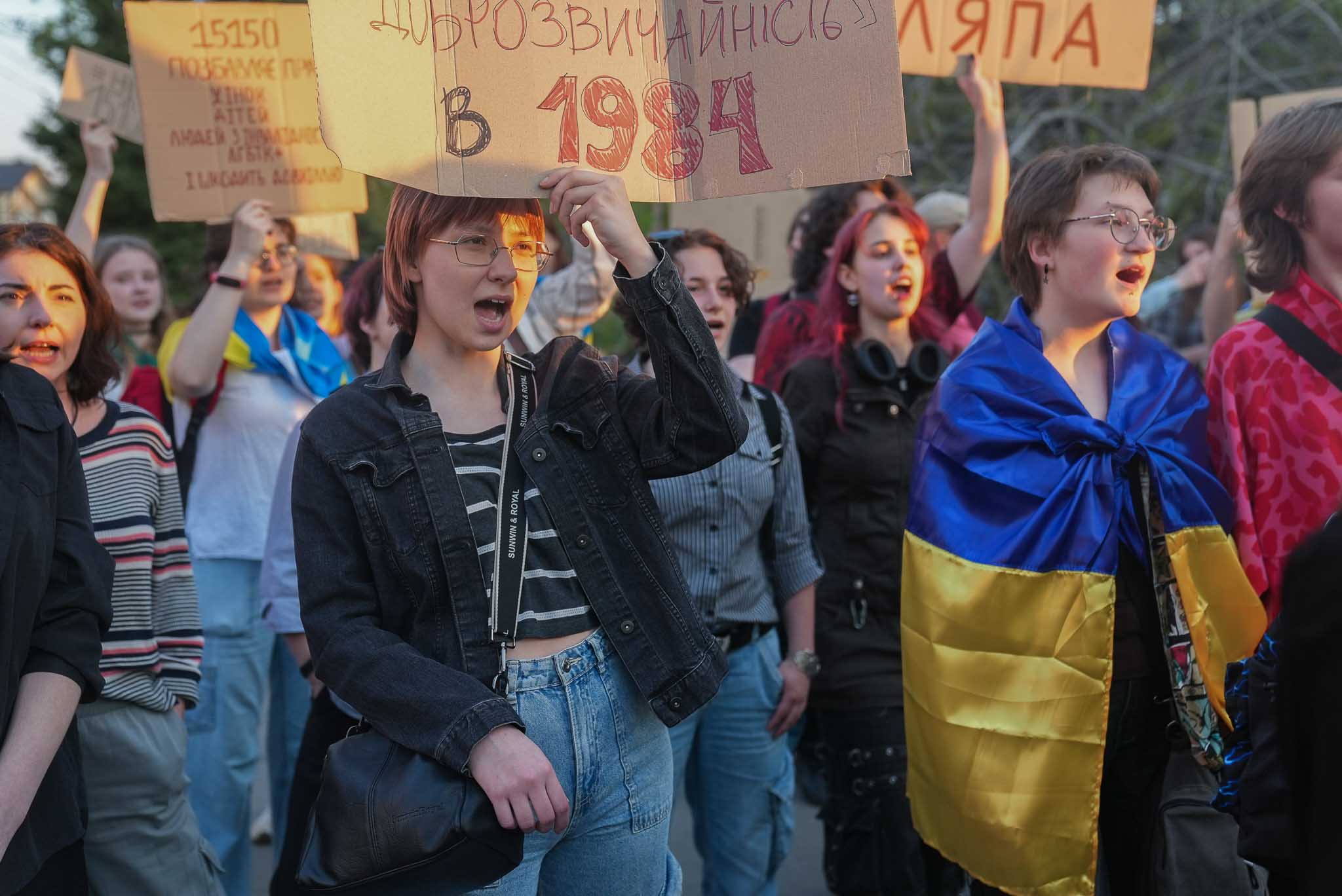
“Good morals” is a new concept to Ukrainian legislation known as “good morals.” It’s defined as a set of society’s moral standards, ethical norms, and socially accepted notions of proper behavior. Critics of the draft say the term is too vague and could be interpreted differently depending on a judge’s personal views or the political climate in the country.
Kateryna says that she fears the draft law could end up “pushing women even deeper into situations where they are not safe.”
When the crowd starts marching down Sumska Street, the shouts get louder — some protesters shout insults at Chairman Stefanchuk, others call for rights for same-sex couples. At times, the voices merge into a unified chorus demanding soldiers’ rights — the Civil Code’s another addition is introducing tools for control of soldiers’ digital footprint — and expressing support for the Ukrainian army.
Yan, one of the protesters, came to the rally with his sister and friends — he says the bill “ has not been properly debated with society.” Yan criticizes the absence of legal recognition for same-sex partnerships, saying, “this is something that should have been addressed, but instead it feels like we are going backwards.”
For Mykhailo, another participant of the protest, the draft Civil Code represents “a danger for the country’s development.” He argues that the document “has something for every group to be unhappy about” — including military personnel, LGBTQ communities, environmental activists, and businesses. He holds a sign that reads: “Stefanchuk, go fuck yourself.”
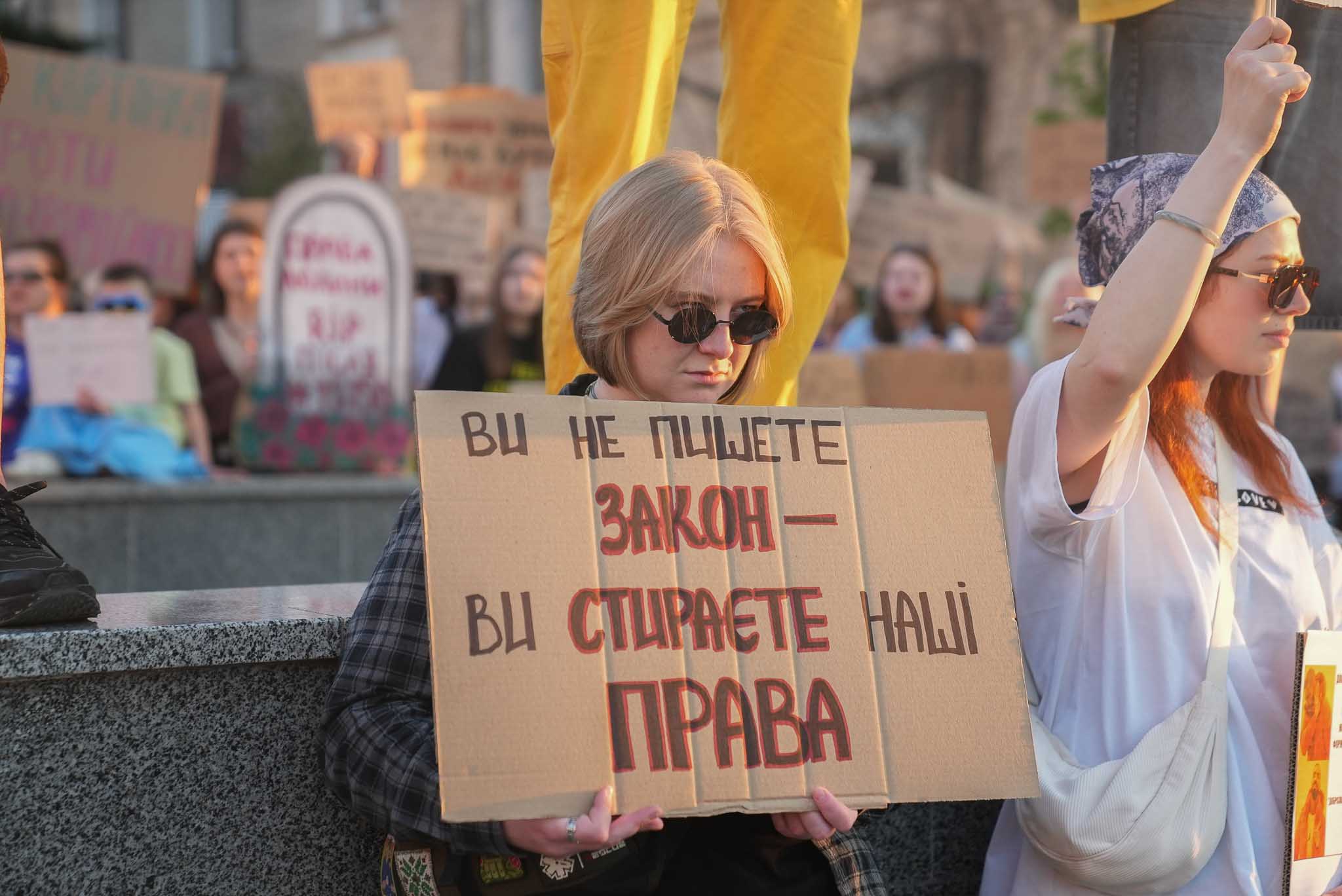
On May 10, protestors fill the street again. Before the start of the protest, co-organizer Daryna reminds, through a loudspeaker, that protesters had not seen any willingness from the authorities to substantially revise the document in four days.
Following her statement, participants began chanting: “Protect the military, not good morals.”
Among the participants was Inessa, a elderly woman, who came to the protests because the draft Civil Code does not meet European standards and does not sufficiently protect the rights of minorities and children.
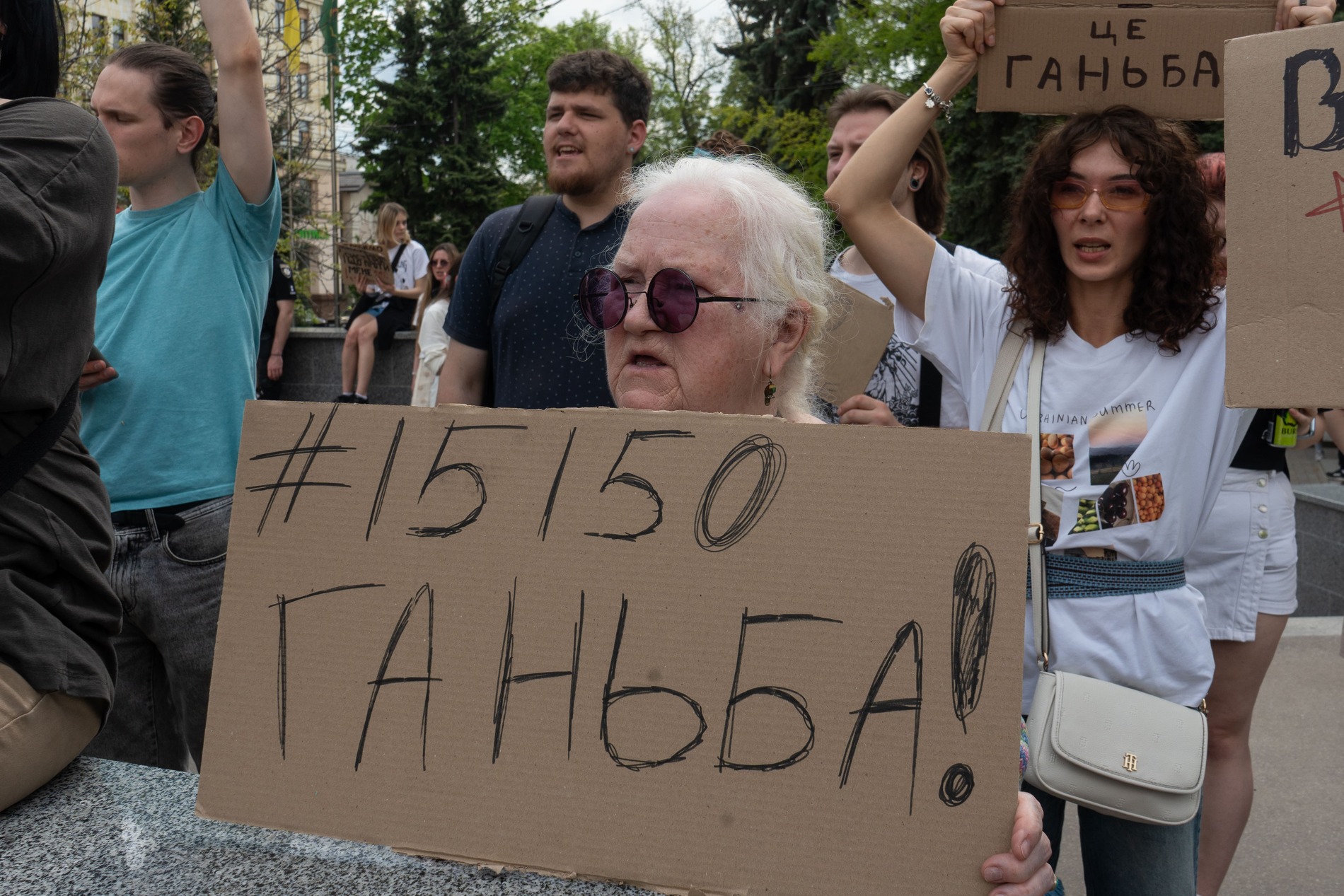
“If a country positions itself as a candidate for the EU, it cannot adopt a bill like this,” Inessa says.
Current state of things
Within parliament, after the first reading, the bill is currently being reviewed by committees and refined. Lawmakers involved in the process have stated that many of the most controversial provisions are expected to be debated again ahead of the second reading — until then, amendments can still significantly reshape the final text.
Activists report growing public pressure against the draft Civil Code. An online petition calling for the bill’s cancellation on the President’s official petition platform has gathered more than 25,000 signatures, reaching the threshold required for official consideration. The petition calls for the full withdrawal of the draft bill and a broader public review process involving legal experts, human rights groups, and civil society representatives.
Activists say the rapid accumulation of signatures reflects widespread concern over the scope and speed of the reform, particularly in areas related to family law, property rights, and vague legal definitions such as “good morals.”
As of May 29, neither President Volodymyr Zelenskyy nor Parliament Speaker Ruslan Stefanchuk had publicly responded to demands from activists and protesters calling for changes to the draft Civil Code. They also didn’t react to the petition.
Hi, it’s Nazar! I’ve been following the public reaction to the draft Civil Code since January, and I’ll continue covering it because, for me, it’s important to highlight every Ukrainian step toward European integration. If you’d like to support this work, you can treat Gwara to a coffee or subscribe to become a regular member of our community.
Read more
- ‘Why did Dmytro have to die for something to start changing?’ — Kharkiv ambulance crews seek better protection from Russian FPVs


Subscribe to news from Kharkiv, Ukraine
Most important stories from the frontline region