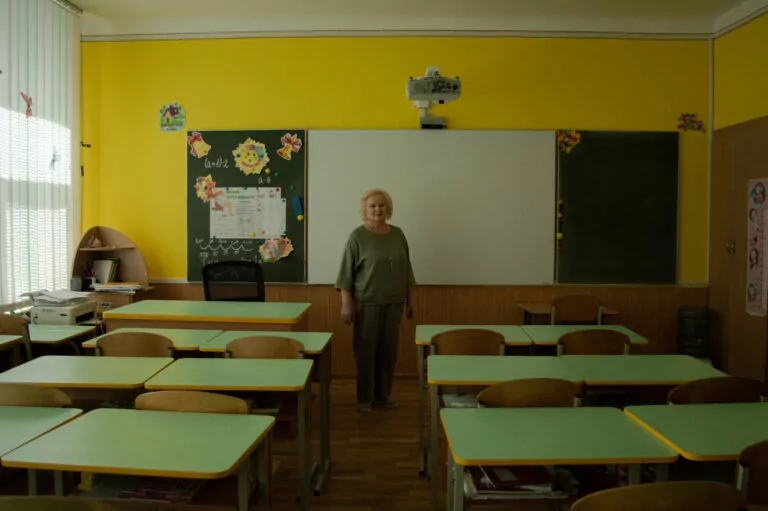
UKRAINE, LOZOVA — Chaos reigned inside the transit point of the Relief Coordination Center in a small city south of Kharkiv oblast. Recently evacuated people were bringing their belongings into the building. Someone helped an elderly woman climb the stairs.
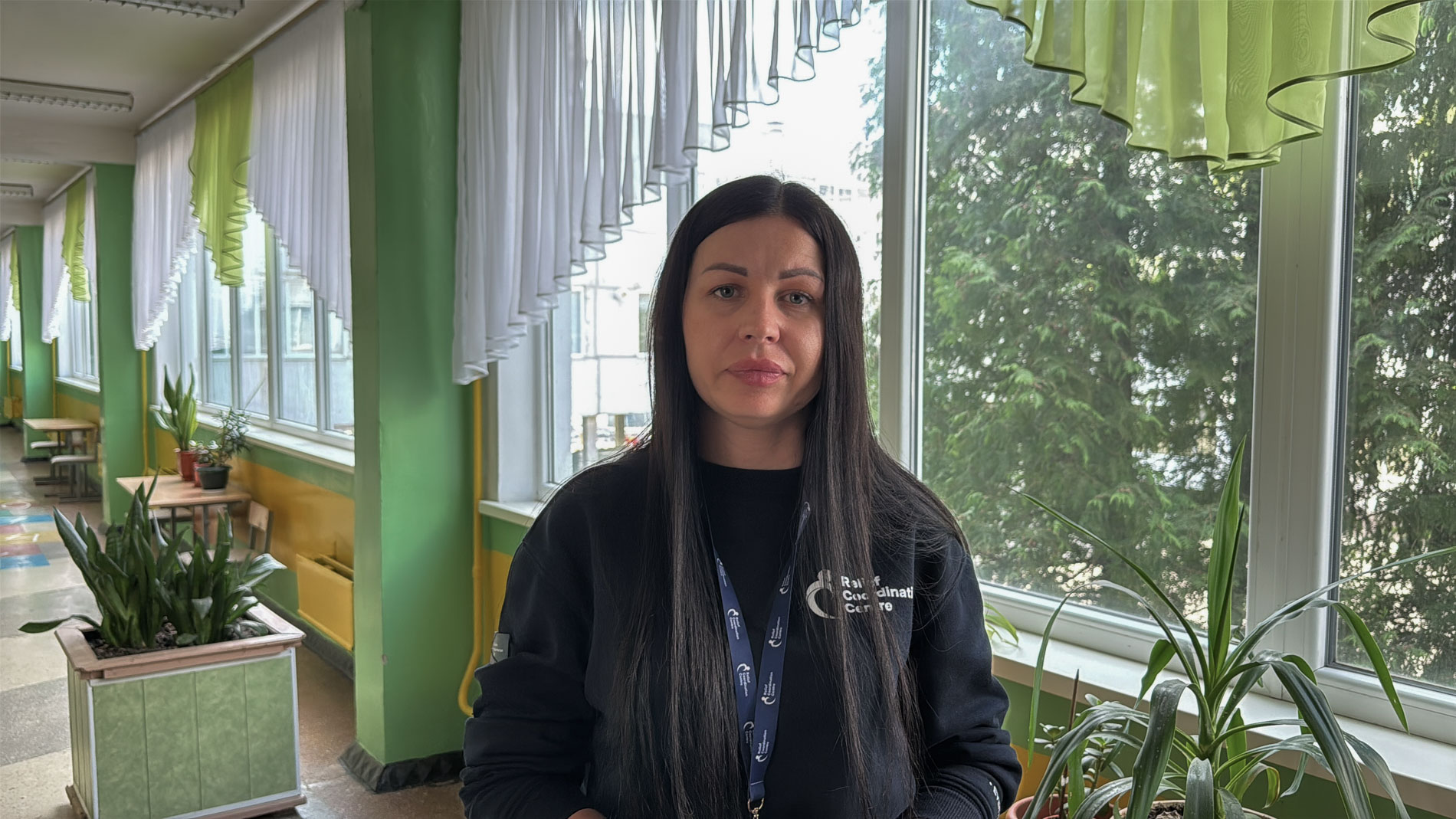
People rushed from one registration desk to another, repeating their stories and questions to the volunteers. I got mistaken for one: a man asked me about a transfer to a village in the Dnipropetrovsk region. His relatives, he told me, were waiting for him and his mother. I spotted Alesia Chechykova, an evacuee’s support team lead, in the crowd and asked her to talk to him.
Every day, the transit point receives 200–250 people, evacuated from Kramatorsk, Sloviansk, Druzhkivka, and other cities in the Donetsk oblast, Alesia told me later. Their hometowns — or second homes, to which they’ve already moved, running from Russia’s war — are becoming unlivable. The number of airstrikes grows, and the zero line moves closer as Moscow keeps trying to occupy the east of Ukraine, along with the fortress belt, vital for Kyiv’s defense.
During that one day in May, Kharkiv volunteers evacuated over 20 people, including four children, from Kramatorsk and Sloviansk — and moved them to the transit center. Gwara’s videographer, Liuba Yemets, and I joined the mission.
Transit center in Lozova
Lozova is located near the administrative borders of Donetsk and Dnipropetrovsk regions, a convenient location for a waypoint for people escaping the Russian aggression.
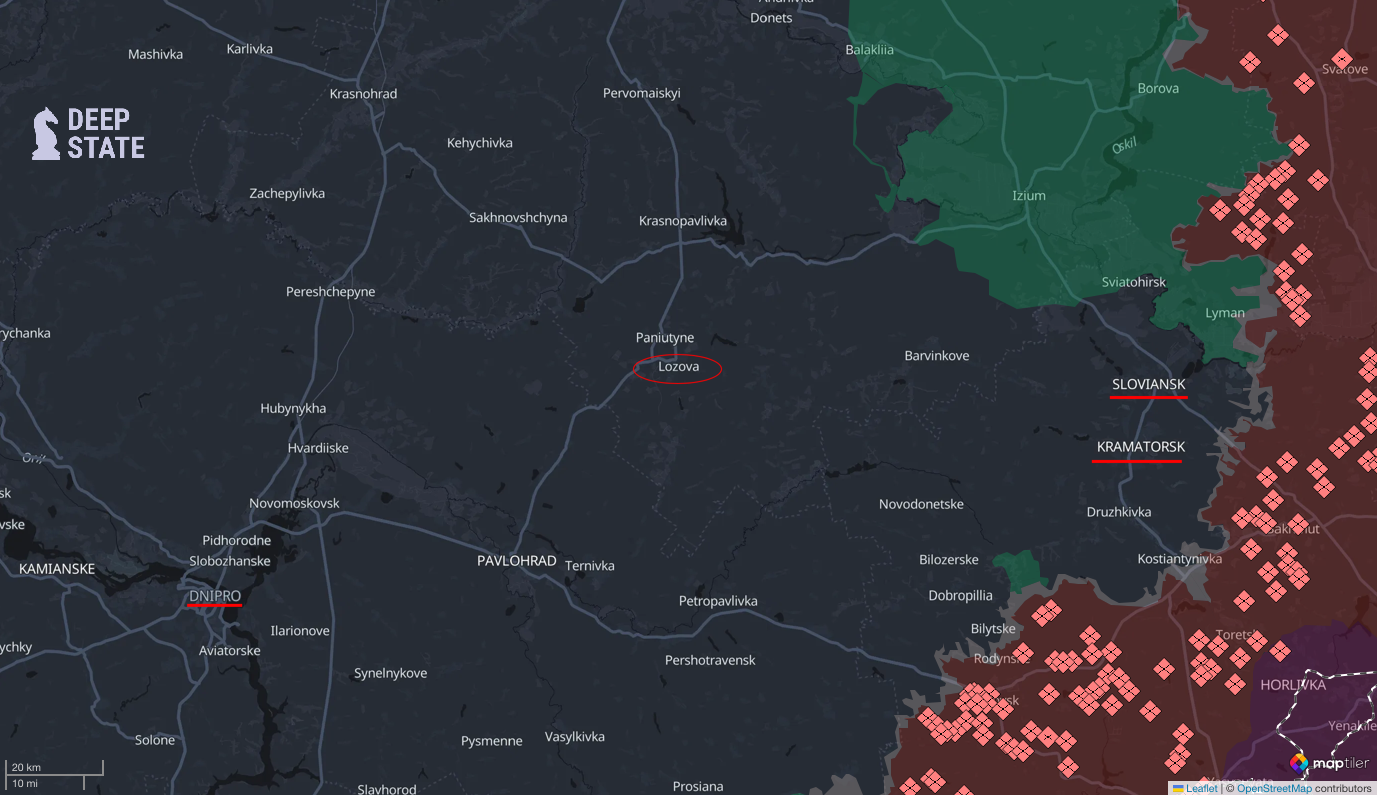
The transit center “grew” from the Kharkiv Relief Coordination Center, an initiative that started to help people evacuate in 2022 in Kharkiv. After two years of operation, the center opened transit points in Kharkiv, Izium, and Pavlohrad. The Lozova-based point opened in August 2025. Alesia Chechykova said that, in nearly a year, they have received 33,000 evacuees.
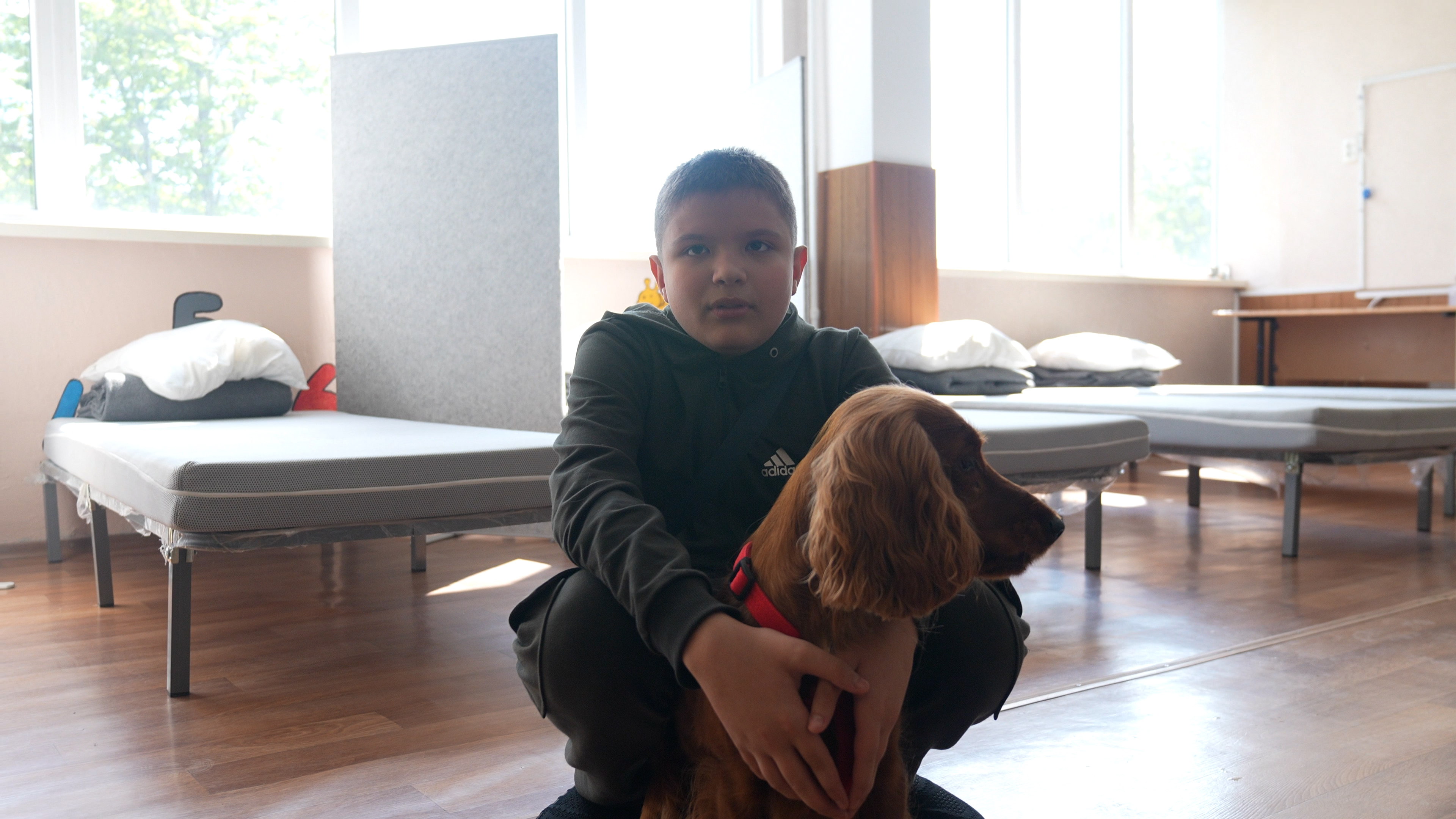
In contrast to the center’s first floor, with its crowds and frenzied inquiries from the recently arrived, the second floor was quiet and peaceful. Here, there were rooms with beds people could stay in for no more than three days while staff organized logistics or found temporary housing.
That’s where I met Serhii from Sloviansk. “It is already too dangerous there. It’s going to get even worse,” he said.
He has been in the center for a day now. He was waiting for his wife, who accompanied their daughter abroad. When his wife comes back, they’ll decide where to evacuate together.
The situation in Sloviansk took a turn for the worse after the New Year, Serhii shared. Since then, the city has been under constant attacks from Russian drones and glide bombs.
“They (Russian troops — ed.) are destroying house after house. Burning and smashing everything,” added Artem, Serhii’s roommate. He is from Novoselivka, 10 kilometers (~6 miles) from Sloviansk, the village on the edge of the zero line in Lyman direction, marked as partially occupied by an open-source war tracking project.
The Russians had attacked Artem’s neighbors’ houses with first-person view (FPV) drones, he told me. One of them, unable to walk with an injured leg, remained in Novoselivka. The other had been buried in the garden near his home. The drone attack blew off his legs, and massive bleeding killed him.
I saw Dania, 12, playing with his dog in the hallway. He used to live in Kramatorsk with his parents. Once, a drone hit the road they were driving on and exploded about 100 meters (~328 ft) behind them. They had passed that spot just a moment before. After that incident, Dania and his mother decided to evacuate, even though, according to him, that was not the first time they came under the Russian attack.
Сar that always brings home
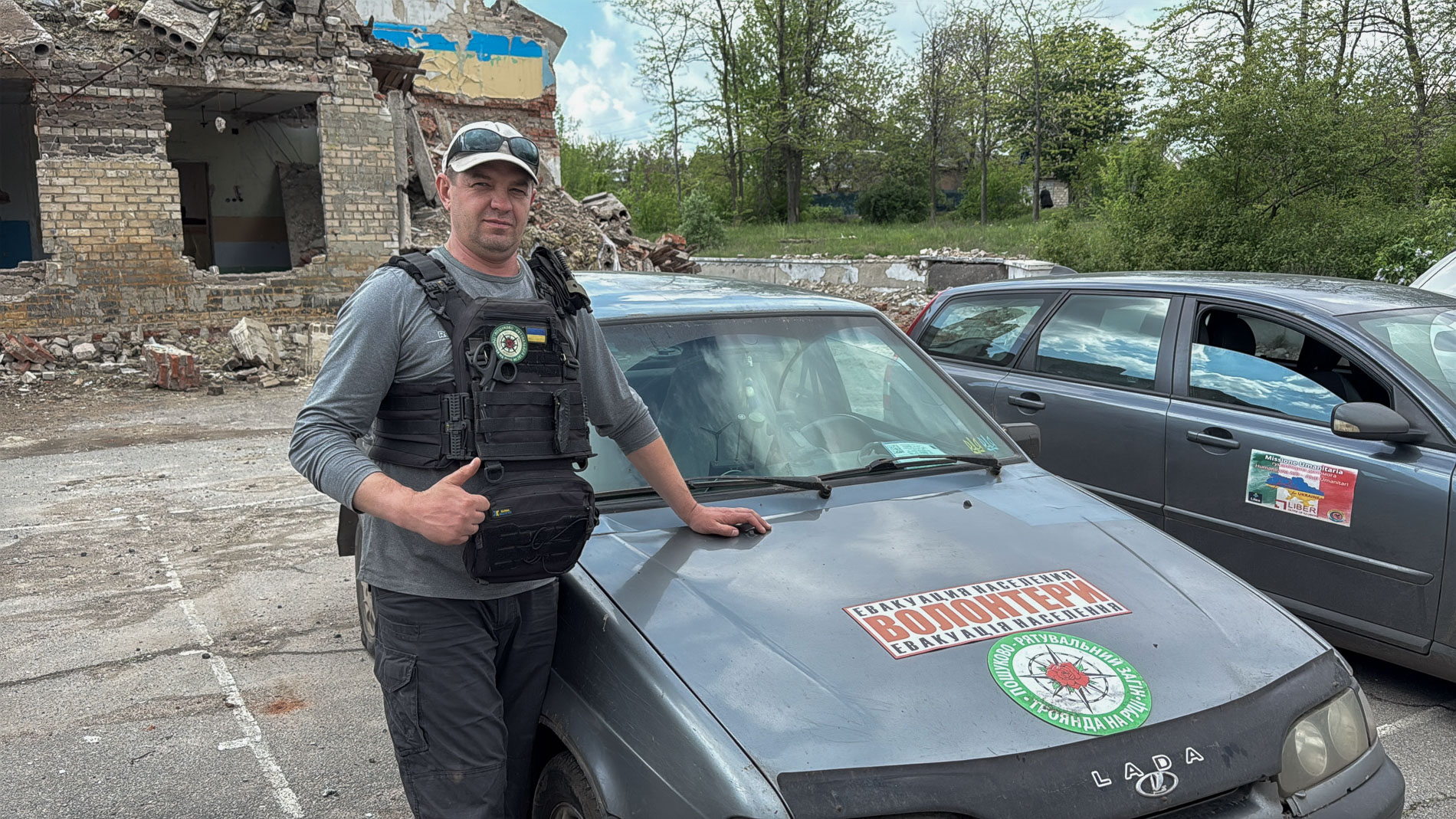
“This car has a name. I call it Lastivka (swallow in English),” said Oleh Chopenko, one of the volunteers from Kharkiv, as we’re waiting for other volunteers. The evacuation mission to Donetsk oblast will start at sunrise.
Oleh has been evacuating people and animals with Lastivka since the start of Russia’s full-scale invasion in 2022. The car isn’t new. After trips to frontline areas, where the road is rough and patchy from airstrikes and the weight of military vehicles — and where Oleh often has to hit 124 miles per hour to escape from Russian drones — Lastivka needs many repairs.
“This car always brings us home, though, under any conditions,” Oleh said gently. This particular time, volunteers planned to “bring home” people from Sloviansk and Kramatorsk. There should be children and people with disabilities among them, so two ambulances were expected to follow Lastivka on the road.
We made a stop in Izium. From near mount Kremenets, the highest point in the Kharkiv region, a road leading to Sloviansk begins. Russians have been heavily attacking this highway with drones since last year.
Although now it was covered with anti-drone nets, Russians had found ways to bypass the defense. Before we hit the road, volunteers received a remote mining warning. The order was to watch the road carefully and avoid any objects lying on it.
The team had decided to split up to save time: some volunteers would go to Sloviansk, others — to Kramatorsk. It was also vital to get all evacuees out as quickly as possible — Chopenko’s team’s armored vehicle, which was used to provide volunteers with the luxury of a slow drive, is being repaired. People were waiting for evacuation, though, so no one gave thought to rescheduling. Volunteers had to track alerts from Chuika, a Ukrainian-made drone detector, very carefully.
Enrico Gippetto, 23, a man behind the wheel that day, handed me one of those devices. He came from Italy and has been working with Kharkiv volunteers for over a month as a driver.
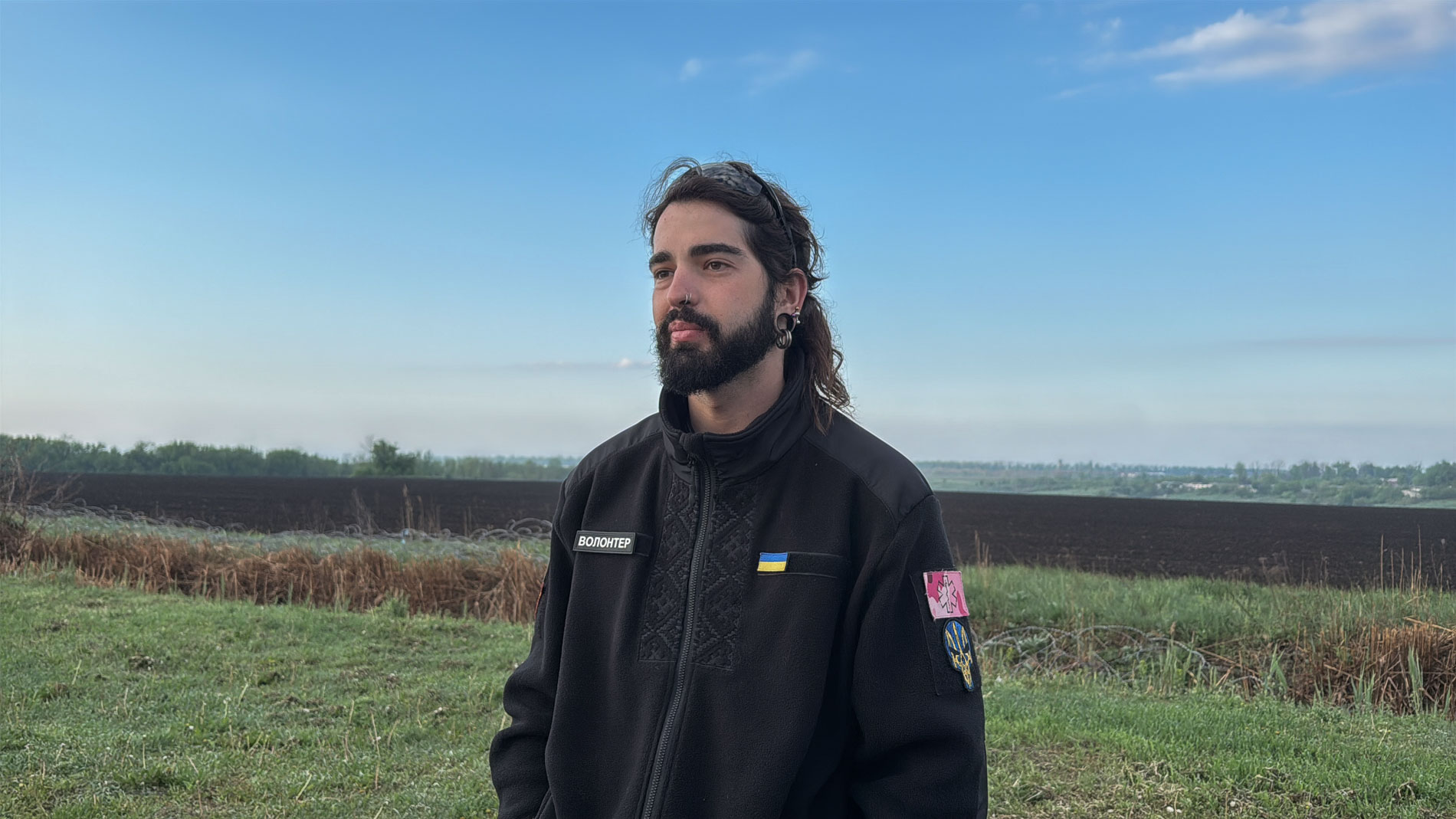
“I’m here because people need help,” Enrico said when I asked why he came to Ukraine as the team around us got bulletproof vests and helmets on. “That is not my work. Nobody gives me money to stay here. I spend mine instead, but it is my way to help this country and these people.”
City under the nets
We joined part of the team heading to Kramatorsk. The city looked damaged, but lively and crowded despite the constant threat of Russian airstrikes. Anti-drone nets stretched above the streets of the city, protecting civilian and military logistics routes pulsing through it.
There were no such protections for buildings on the sides of the roads. Oleksandr Pidhornyi, another volunteer, pointed at one of the destroyed homes as we were driving by. Russian troops attacked it on May 8, during the May ceasefire they themselves had declared. Two glide bombs killed three and injured 15 people.
“We pulled a woman from under the rubble and evacuated her,” Oleksandr recalled. “She’s doing well now, if I can call it that.”
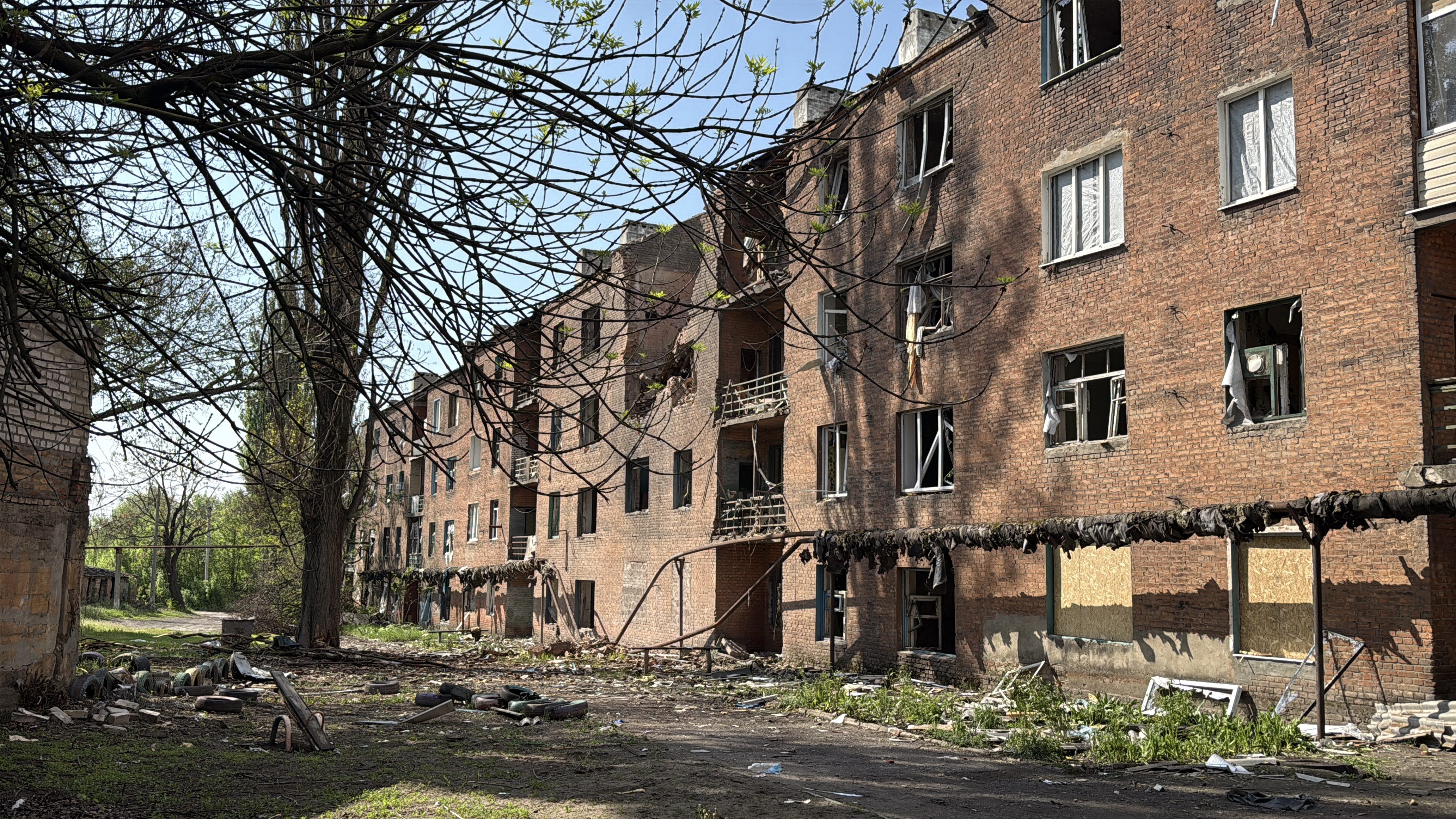
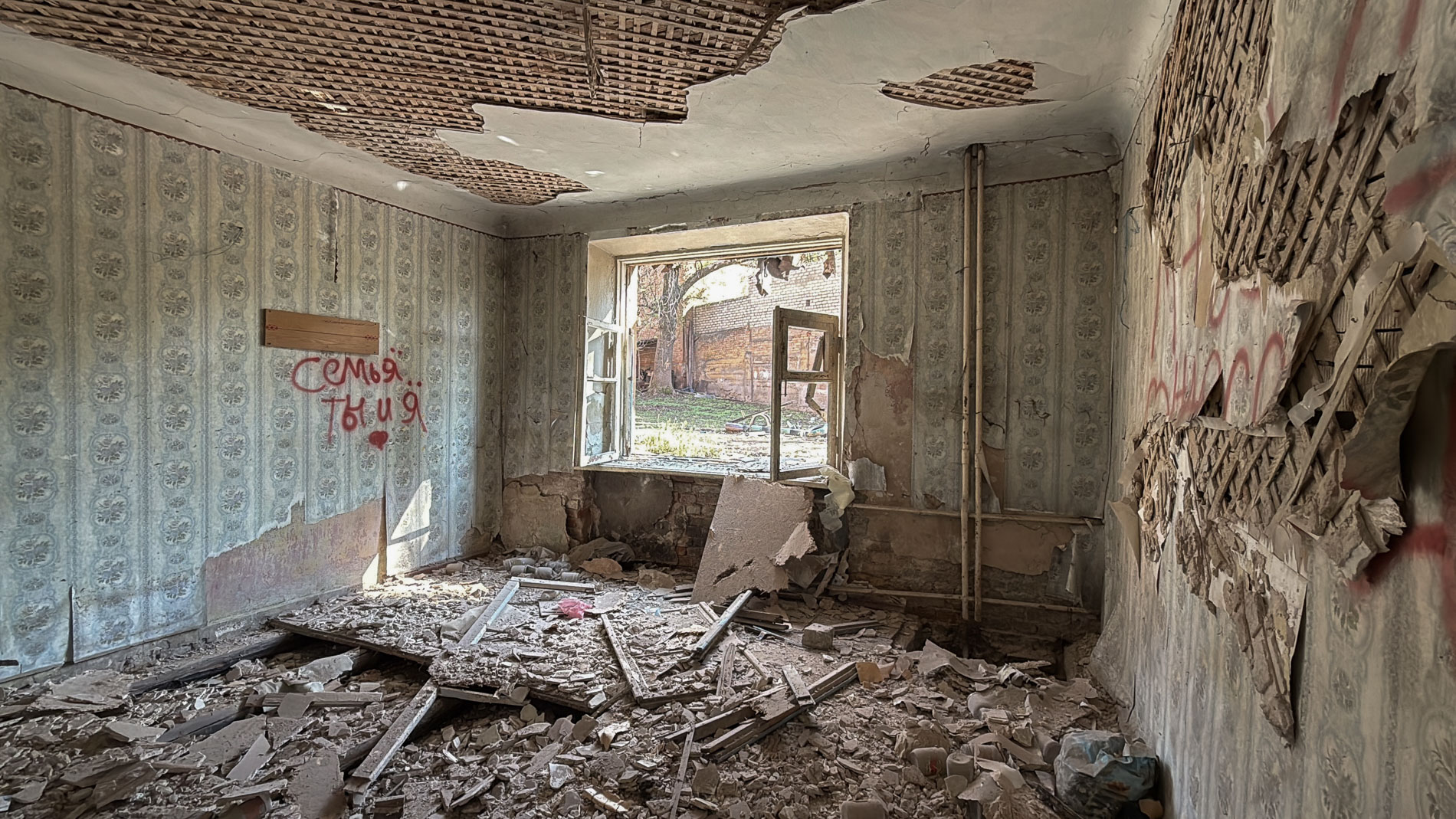
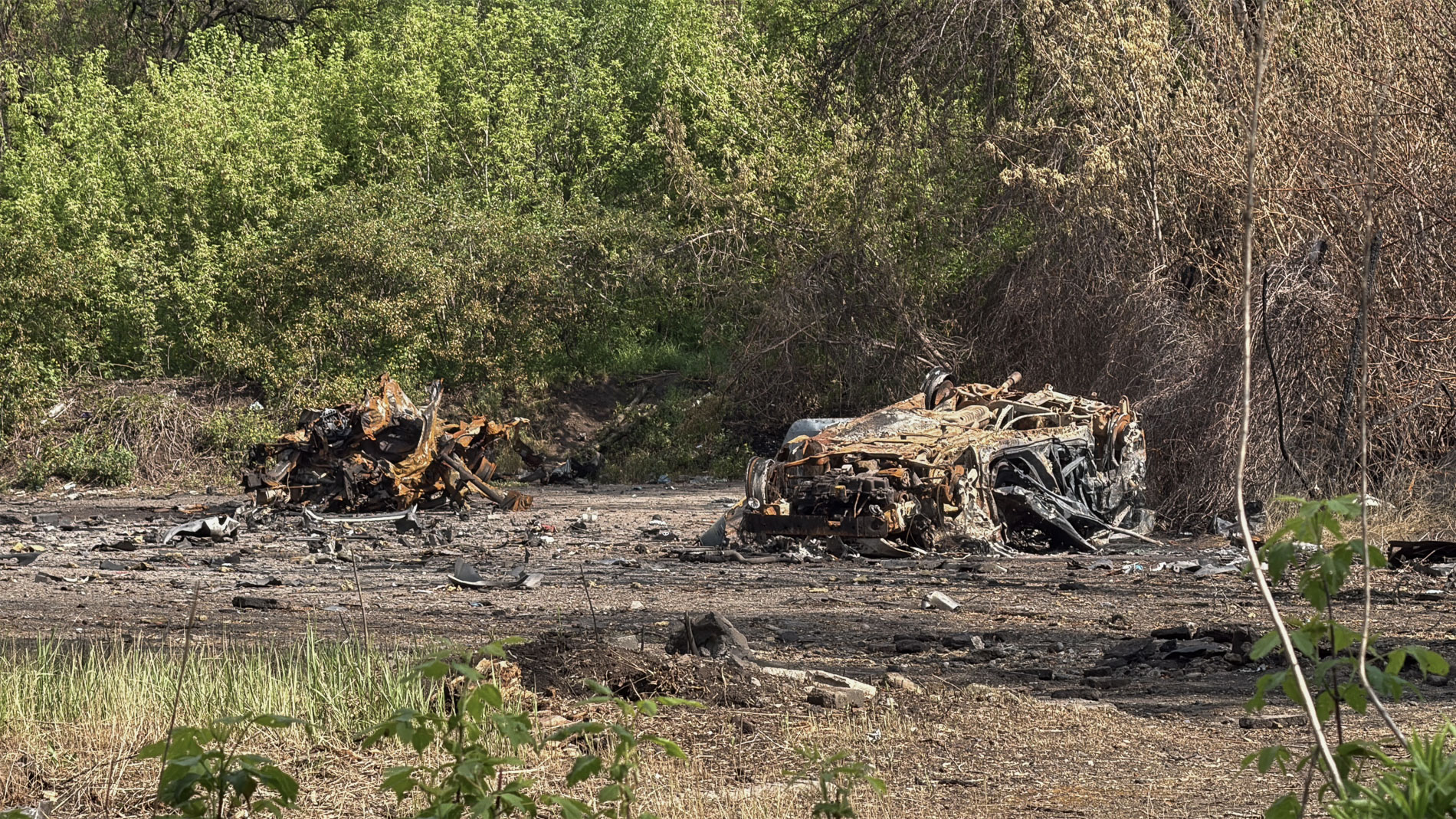
“The attack happened at night, and by morning, we were already here. It really gets to me because some people probably worked their whole lives to buy an apartment and build a life there. And, in one night, it was completely destroyed,” Enrico added.
As we were leaving the site of the destroyed building, we heard an air raid siren. In Kramatorsk, a city that’s this close to the frontline, at first, you don’t know what to expect from an alarm. Our Chuika also starts to make high-pitched alarm noises, indicating the presence of Russian drones flying into the city.
Real threats and imagined safety
Volunteers didn’t let the threat distract them.
First, they picked up an elderly couple, Valentina and Oleksandr. This was their third evacuation. In 2024, Russian attacks forced this family to leave Shcherbinivka village near Toretsk in the Donetsk oblast. Now, Toretsk is occupied by Russians. Then, the couple lived in Kostiantynivka, another city in the Donetsk oblast, until another Russian airstrike destroyed their home. Kostniantynivka is now surrounded by Russian troops.
“Everything burned down. We have nothing. We’re wearing the clothes we had on,” said Valentina, pulling at the fabric of her tracksuit.
The couple spent a year in Kramatorsk, until the situation started to look like their life in Kostiantynivka. “It all started the same way there,” Oleksandr said. After an explosion near their third home blew out all of their windows, the couple decided to leave Donetsk oblast.
As of March of this year, 58,000 people lived in Kramatorsk. Although the city’s population was declining rapidly, many people still refused to leave their homes.
“If we are destined to die in our own home, then we will die in our own home,” said Olha, a local who cares for her elderly parents in the city. We met Olha near a small gathering of people who had come for humanitarian aid. Every day, other Kharkiv volunteers bring food and clothes into the city.
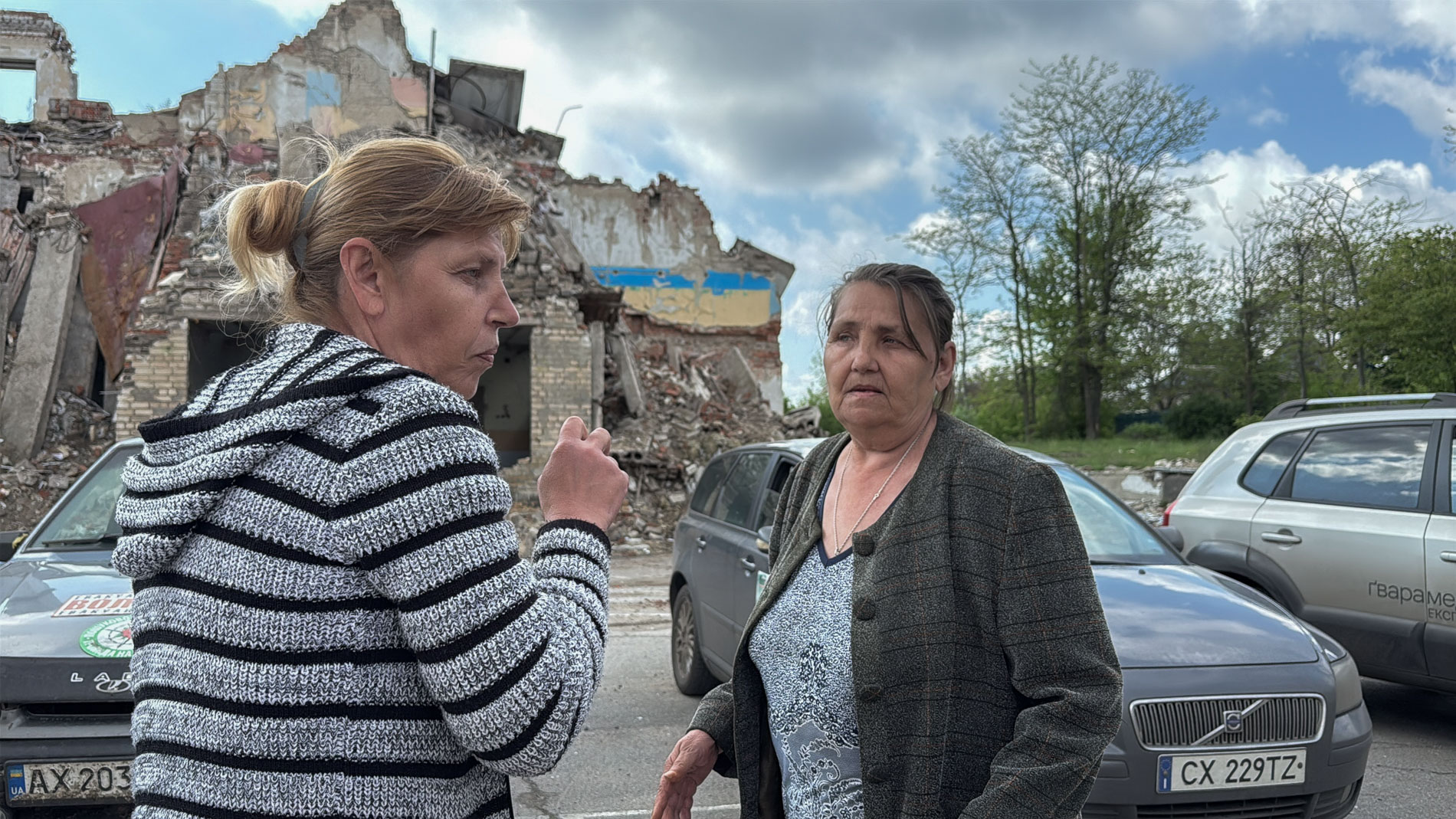
Some people reacted negatively when asked about evacuation. Volunteers explained that not everyone is ready to go “where no one is waiting for you.” The unknown is scarier than the Russian attacks. In most cases, volunteers observe that people decide to leave only when they are directly faced with danger or when they have nowhere else to live.
Relatives also influence these decisions. Olha, another Kramatorsk local, said that her son, who serves in the army, strongly insists that she has to leave. She has already sent her belongings to another city, but didn’t know how she would get there with her dog. “My son can’t help me (to evacuate). And it hurts for me to walk,” Olha said. She didn’t leave with us.

Raisa, another evacuee, has cancer. She and her son Oleksii had been staying in Kramatorsk. Oleksii said that Russian FPV drones have often flown over their house. Constant attacks and stress had forced them to move to another region for Raisa’s treatment. The family hopes to return, as Oleksii said, “if their house is still standing.”
Hurrying to escape
I watched Oleksii and Raisa finish packing and get their bags into the car when we heard an FPV drone overhead. The drone detector was silent. That meant the drone was likely using fiber-optic cables — controlled via such cables, drones don’t have to rely on radio signals that expose them to electronic warfare tools. To navigate around the threat, then, we had to rely on the sound.
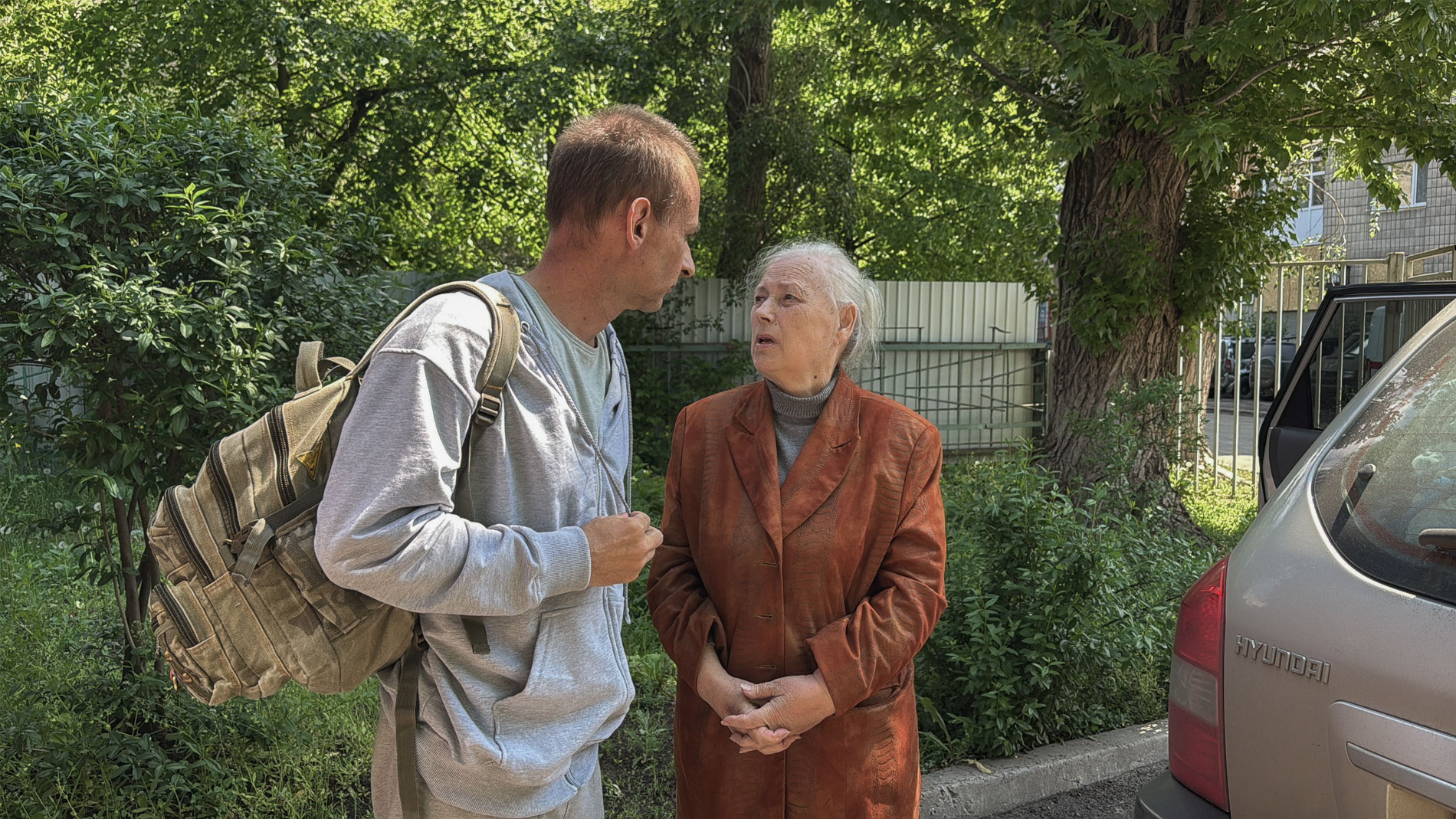
Everyone dispersed and hid under the trees lining the street in the neighborhood. Cars are the drone operator’s main target, so it was important to get as far away from them as possible.
There was an explosion. The drone hit a neighboring street. We quickly got into the car and drove away.
“It is very important to be ready with the car to leave immediately. We heard an explosion, and fortunately, we turned the car around as soon as we arrived so we could leave as quickly as possible. We didn’t waste any time during the attack,”Enrico said, pressing the gas pedal.
Oleksii added that he and his mother had been hiding from Russian drone strikes like that every day. Russian airstrikes have damaged almost every house in their district on the outskirts of Kramatorsk. Many of their neighbors have been killed there, Raisa said.
We didn’t stop on the road to Sloviansk to get away from the Russian FPVs. There, we met up with the other group of volunteers and the people they’ve evacuated. A single father of two, Bohdan, told me that his kids recently lost their mother, and Bohdan lost his wife. She had a heart condition. Couldn’t cope with the stress caused by the constant Russian attacks on the city.
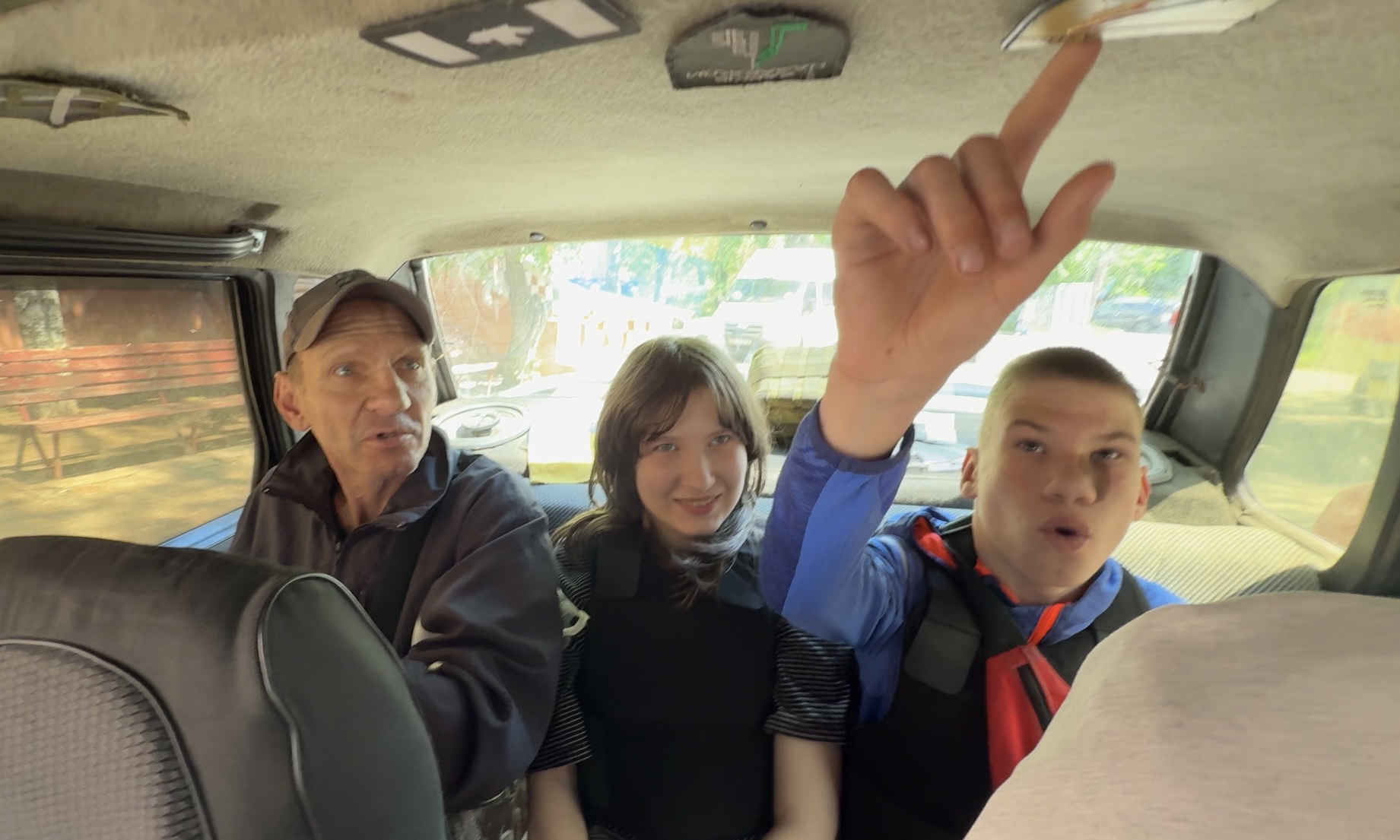
His daughter Ksenia, 12, said she’s glad to be going to a safer place. I saw her shaking from nerves. Her older brother, Hlib, spoke over her — said they would definitely return home.
Hlib, 14, had a disability. It was hard for him to sit calmly. It was clear that he was uncomfortable in the children’s bulletproof vest that the volunteers provided. He asked to take it off. I explained that he can’t do that yet. He has to wait until they arrive in Lozova.
They still didn’t know where they would go from there, Bohdan told me. They hope to rely on volunteers’ aid.
Read more
- Russian glide bomb kills 2 medical graduates in Kharkiv after they come home to get their diplomas
- Fast and almost invisible. Why are Russian jet-powered Shahed drones harder to down in Kharkiv?
Hi! This is Elsa, the author of this report. During this trip to the Lozova transit point and the Donetsk region, I met many different people and heard many stories. I want to keep doing this work and tell you more. Please continue to support us via a one-time donation — or join our community so we can share more stories like these.


Subscribe to news from Kharkiv, Ukraine
Most important stories from the frontline region