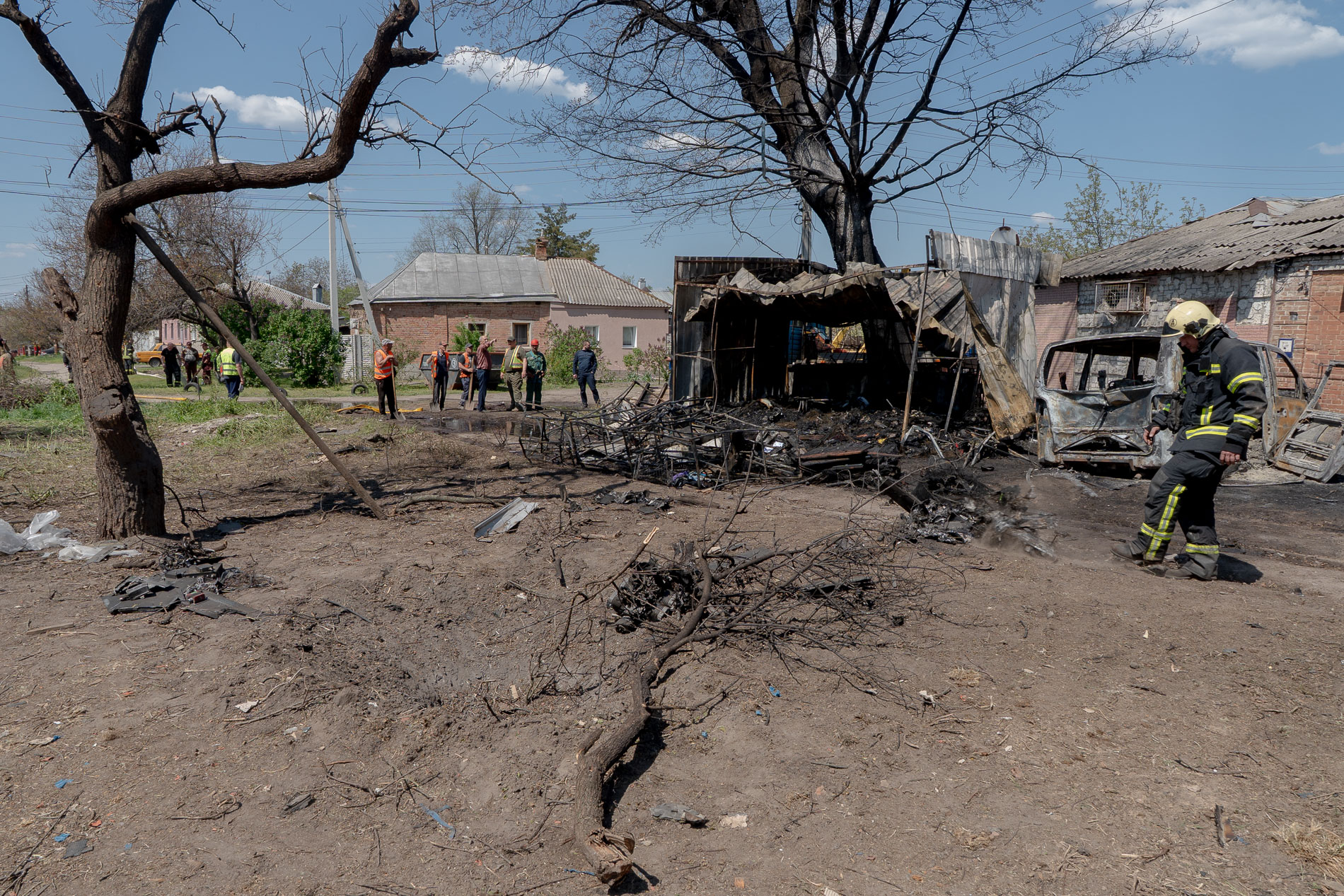
UKRAINE, KHARKIV, May 7 — The late morning in the residential district in the southeastern part of Kharkiv started with the sound of a Russian drone — first flying above, then hitting on the narrow street with people’s one-story homes sitting on both of its sides.
When Gwara’s journalists arrived at the site, the firefighters had already put out the fire that had overtaken the car parked near one of the houses. The car is a signed, ashy skeleton — just like a nearby kiosk.
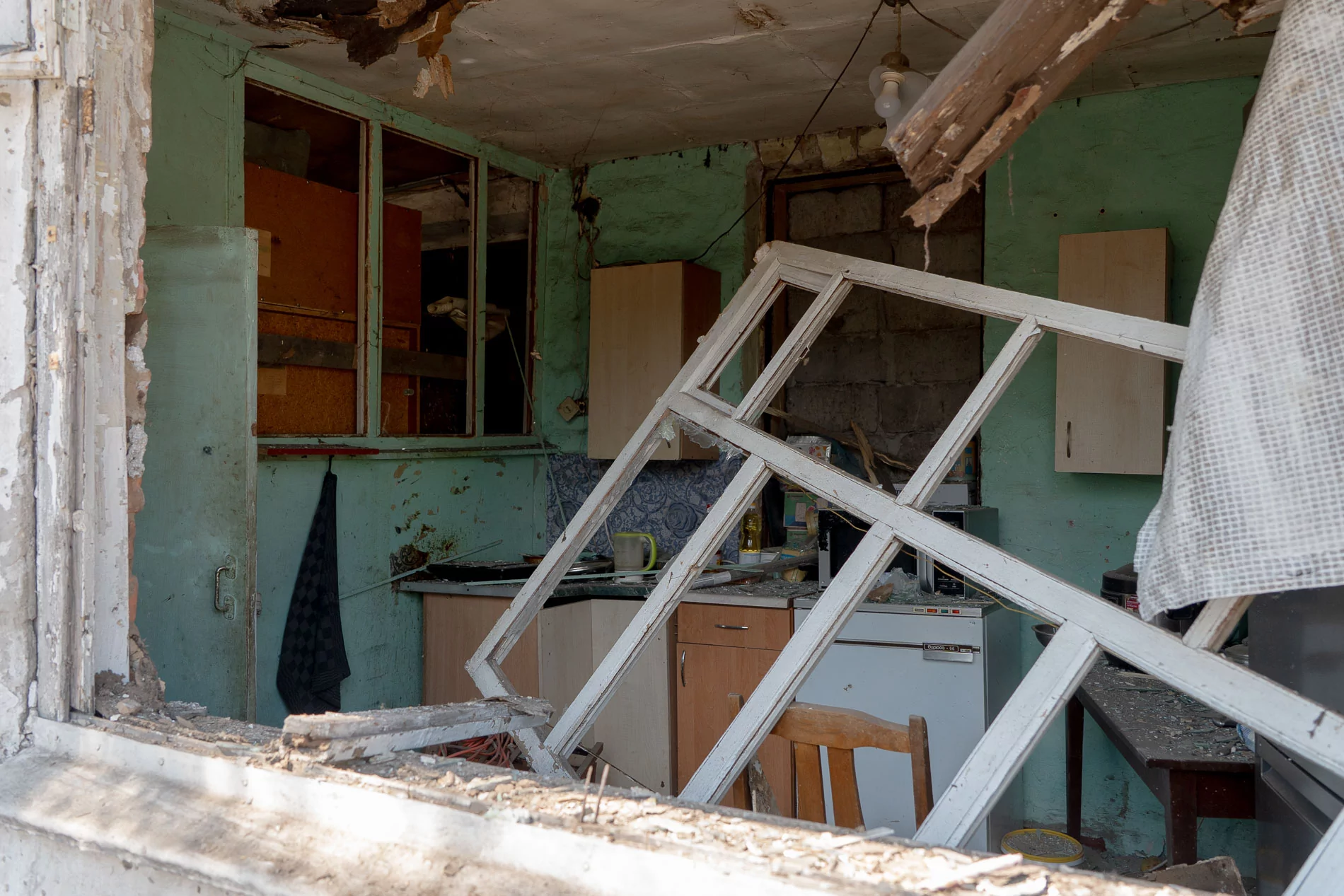
Across the street is the home of Nataliia Novitska: after the explosion, the glass in its doors and windows is blasted out. Inside one window, one can see a small kitchen: green walls, a water filter sitting on the kitchen counter, and a blasted-out window frame standing on the floor.
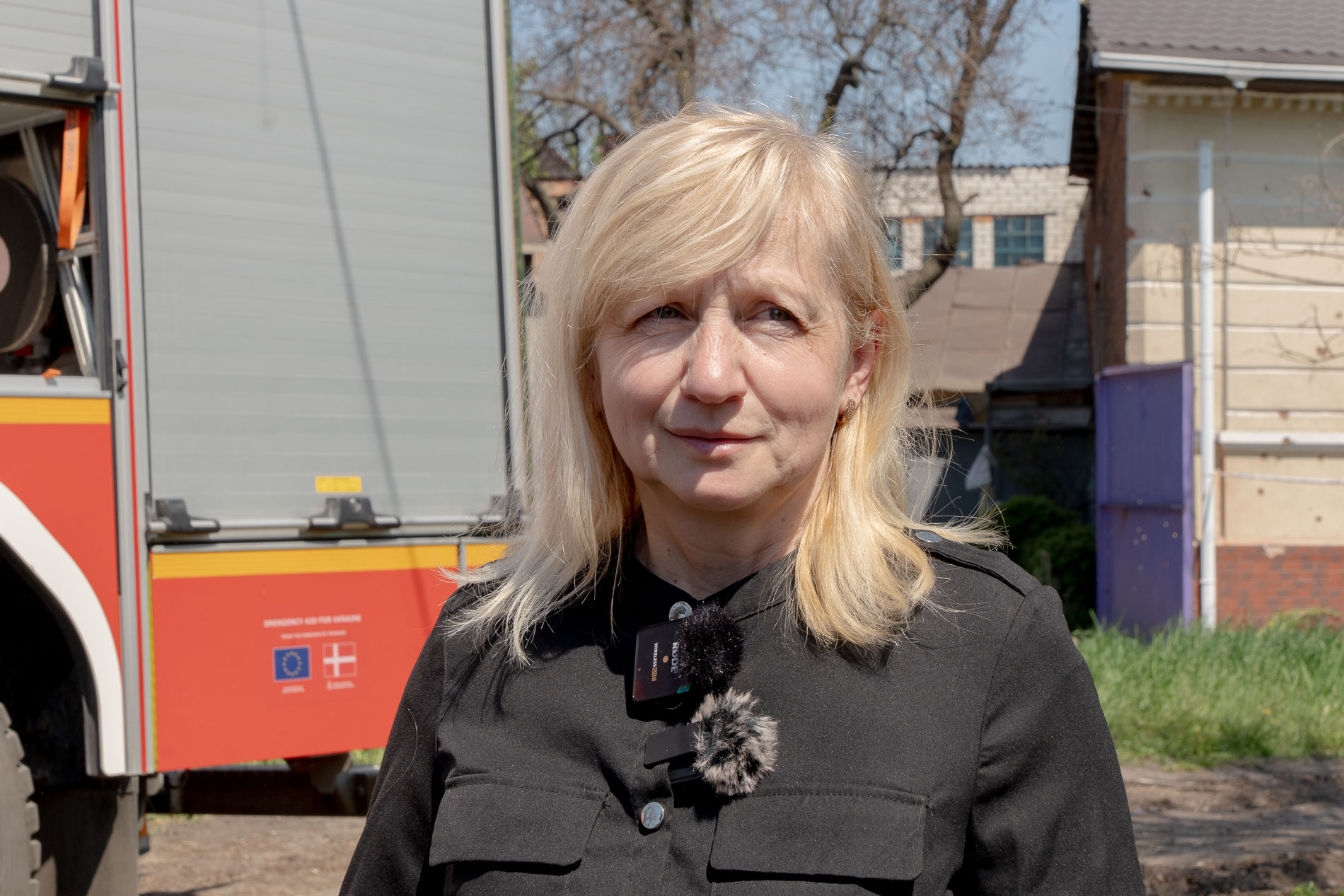
Nataliia tells journalists she wasn’t home when the Russian drone attack hit — she was at home when her daughter, and then her husband, called her to say that their house was damaged.
Nataliia and her family are from Mariupol, Donetsk oblast. It’s a city in the southeast of Ukraine that was occupied by Russia after the heavy fighting and siege in May 2022.
“The war doesn’t let us go,” Nataliia says. “It reached us here, too.”
Nataliia’s family left Mariupol in July of 2022. She says they couldn’t get out of the occupation through Ukraine and had to pass through Russia, going through filtration. After that, they went to their relatives in Poland — but then came back to Ukraine, to Kharkiv, and tried to adapt here.
The house that the Russian attack damaged is their relatives’ home, but they went abroad at the start of the full-scale invasion, too.
“This building is over 100 years old. I’m worried that something happened to the walls, but I don’t know yet,” Natalia said. “It’s good that the house didn’t burn. At least, our things were intact.”
Before the Russian attack hit, Nataliia’s husband, Viktor, was getting ready to cut down a tree on the street.
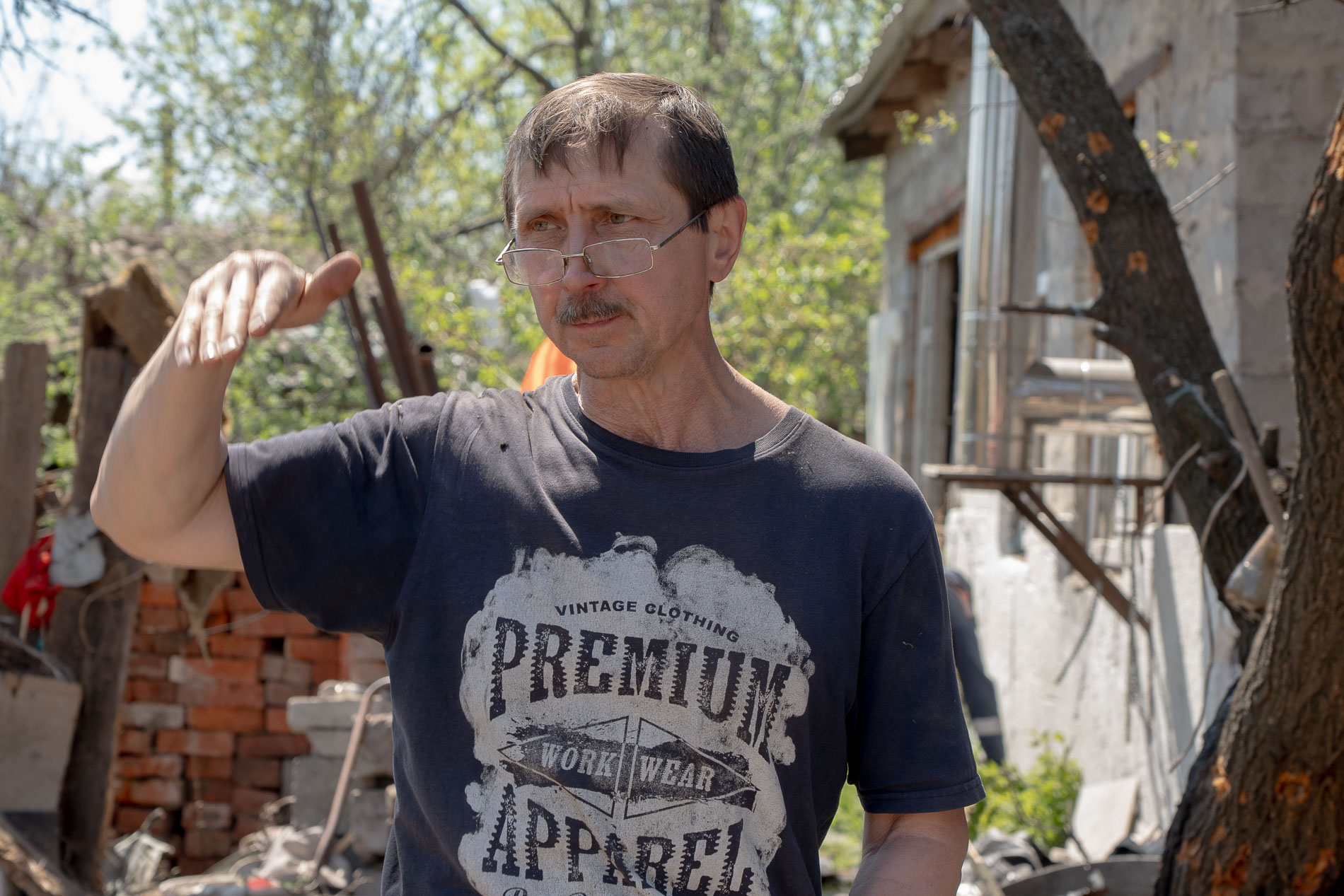
“I saw the Shahed diving down,” he says. “I went to get the tools from the shed. I heard (the drone’s) buzzing above my head, I looked up and saw it circling around and (then) flying (down to the surface), almost vertically. I thought it’s gonna fall on my head. I jumped back into the shed, and it hit 10 meters away from me. ”
There’s a small cut on the right side of Viktor’s forehead from the small piece of shrapnel. Medics clean it. Apart from Viktor, the Russian drone attack injured two men and caused an acute stress reaction in six people, including three children.
Gwara’s journalist asks Natalia and Viktor what they’re planning to do next. Viktor snorts and smiles, “We’ll live on, enjoy life. We’ll win anyway. Hundred percent.”
Natalia’s answer is different. “The feeling right now is, well… It’s not safe,” her voice trembles, “it’s not safe to be here, and, most likely, we—”
“Will leave?” Nataliia nods. “Also to Poland?”
“Abroad. We have a lot of relatives and friends from Mariupol abroad,” she says. “I have to go. But I wanted to stay in Kharkiv so much… Well, we’ll see how I deal with all that.”
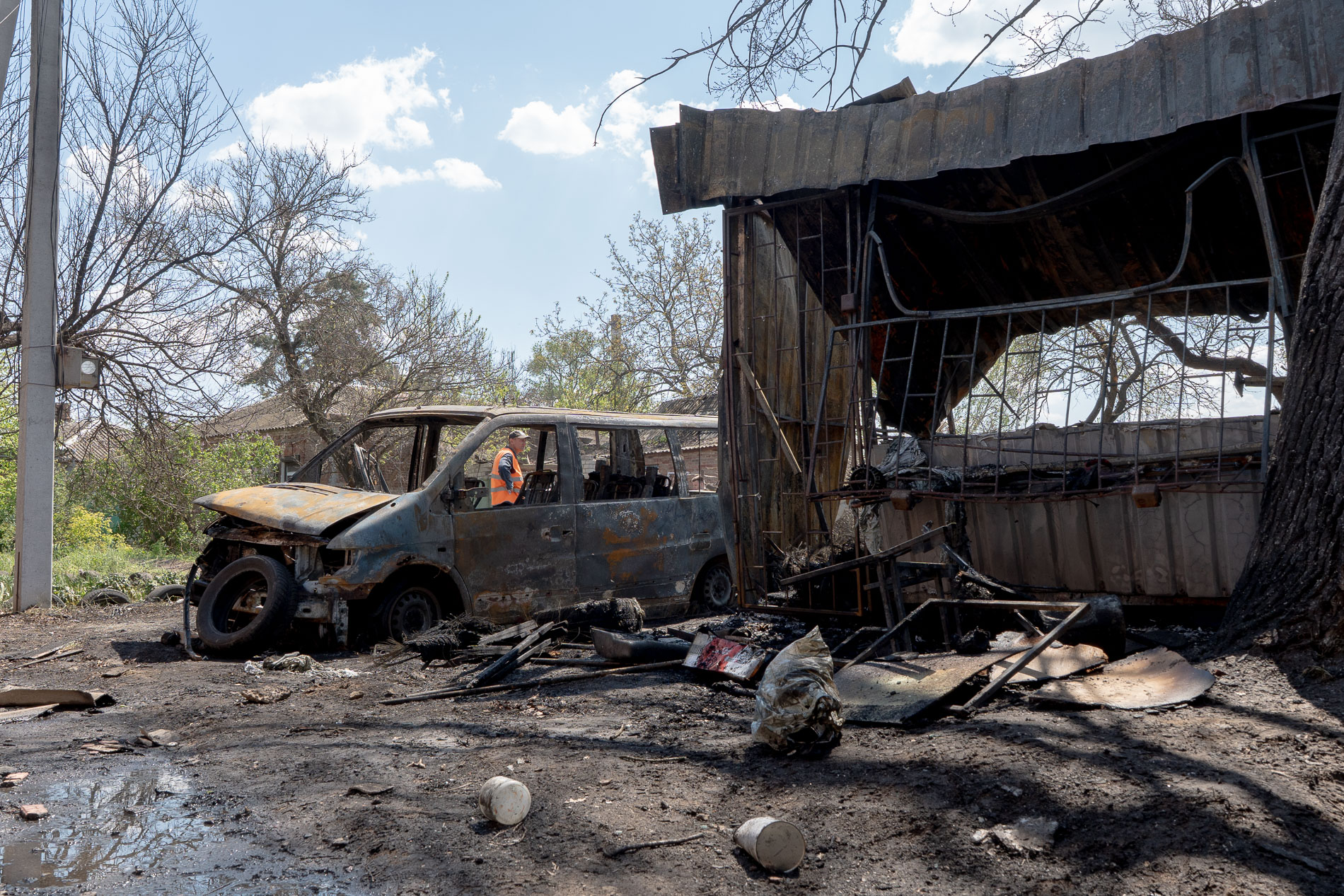
According to the Prosecution’s office, preliminary investigation, Russia used a Geran-2 drone, its variant of the Iranian-made Shahed. Kharkiv prosecutors opened a pre-trial investigation into the Russian war crime.
Kharkiv, a city that’s located 19 miles from the state border and is encroached by Russian forces from the north, east, and southeast, has often been subjected to Moscow’s airstrikes. Russia targets civilian, military, and critical infrastructure, causing deaths and injuries and destroying the city.
Hi, it’s Yana, Gwara’s editor and author of this article. Please, support our Kharkiv-based newsroom by buying us a coffee or becoming a member of our community.
Read more
- Russian drone attacks on Kharkiv injure 4 people in violation of Kyiv ceasefire over the past day
- Russian airstrikes injure at least 17 people across Kharkiv oblast
- Russian military advanced on the Kupiansk axis, OSINT war monitors report


Subscribe to news from Kharkiv, Ukraine
Most important stories from the frontline region