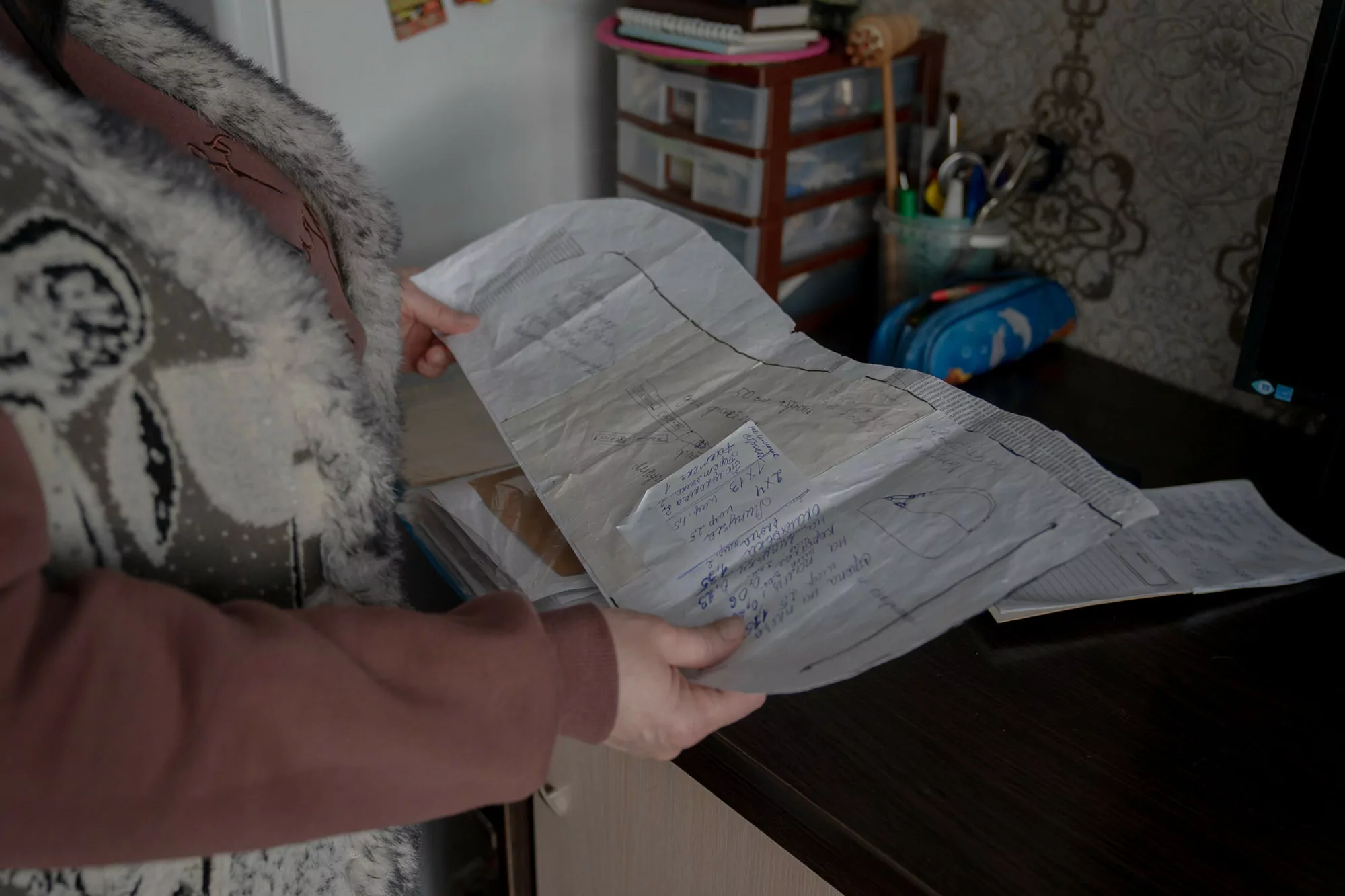
UKRAINE, KHARKIV — In Oksana Zaitseva’s small apartment in the industrial area of Kharkiv, two sewing machines, fabrics, pins, threads and other sewing materials take up most of the space.
Sewing has always been Okasana’s hobby. In 2023, she joined the Shveina Rota (“Sewing Company” in English), a volunteer sewing initiative. Despite initial worry about her lack of experience in this area, Oksana started sewing small pillows for wounded soldiers — simple items that nurses use in hospitals, putting them under injured limbs.
Now, she’s one of 700 volunteers of Shveina Rota, living in Ukraine and around the world and helping injured soldiers and civilians with comfortable clothes.
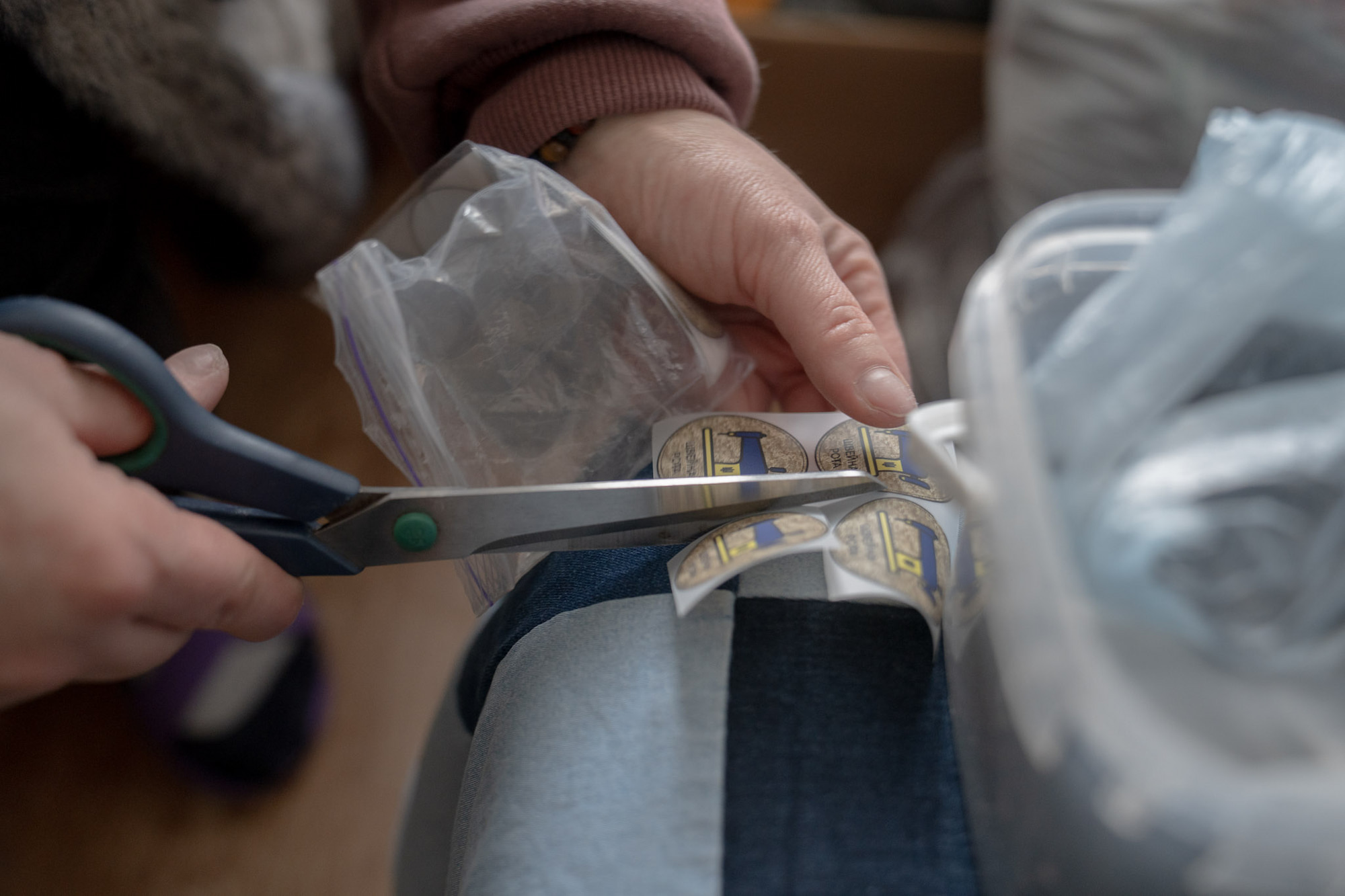
“I am always at home alone but I never get bored. I turn on some music or a movie and just sew and sew. I want to finish each item as quickly as possible,” says Oksana, showing a small thermal label with the Shveina Rota’s logo, which she attaches to each product.
Adaptive clothing
Oksana was forced to leave her job because of health conditions—she refuses to share the details on particulars.
“Now, I can’t do anything else but sew,” Oksana shares. She spends all of her free time working for Shveina Rota now. In one month, Oksana creates 40 adaptive t-shirts for them. She also makes adaptive pants and bandages for injured arms.
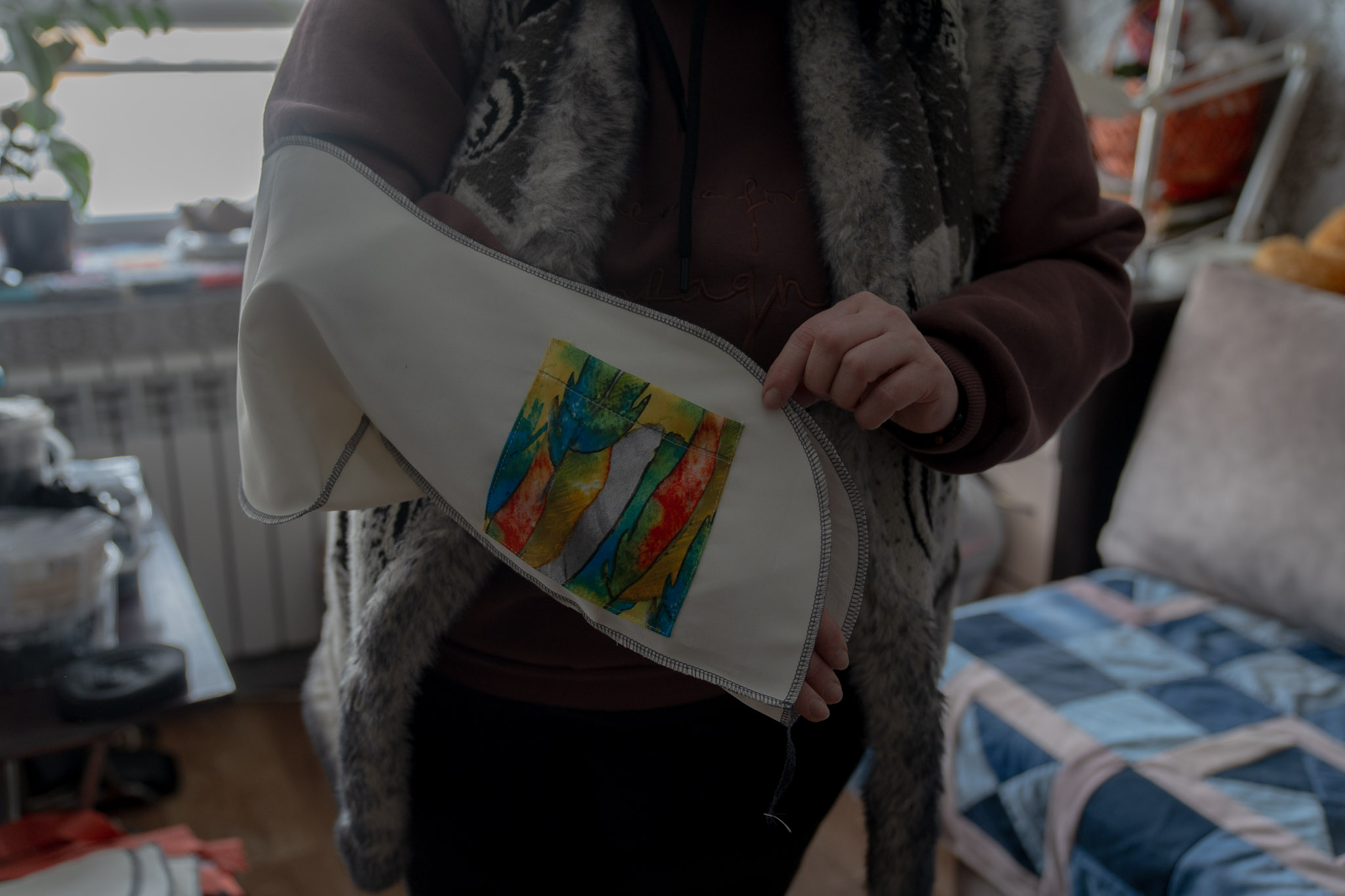
In three years of volunteering, Oksana says she sewed over 1,000 clothing items. She calls this work her own therapy. Previously, she often visited one of the Kharkiv hospitals and delivered the items to injured soldiers.
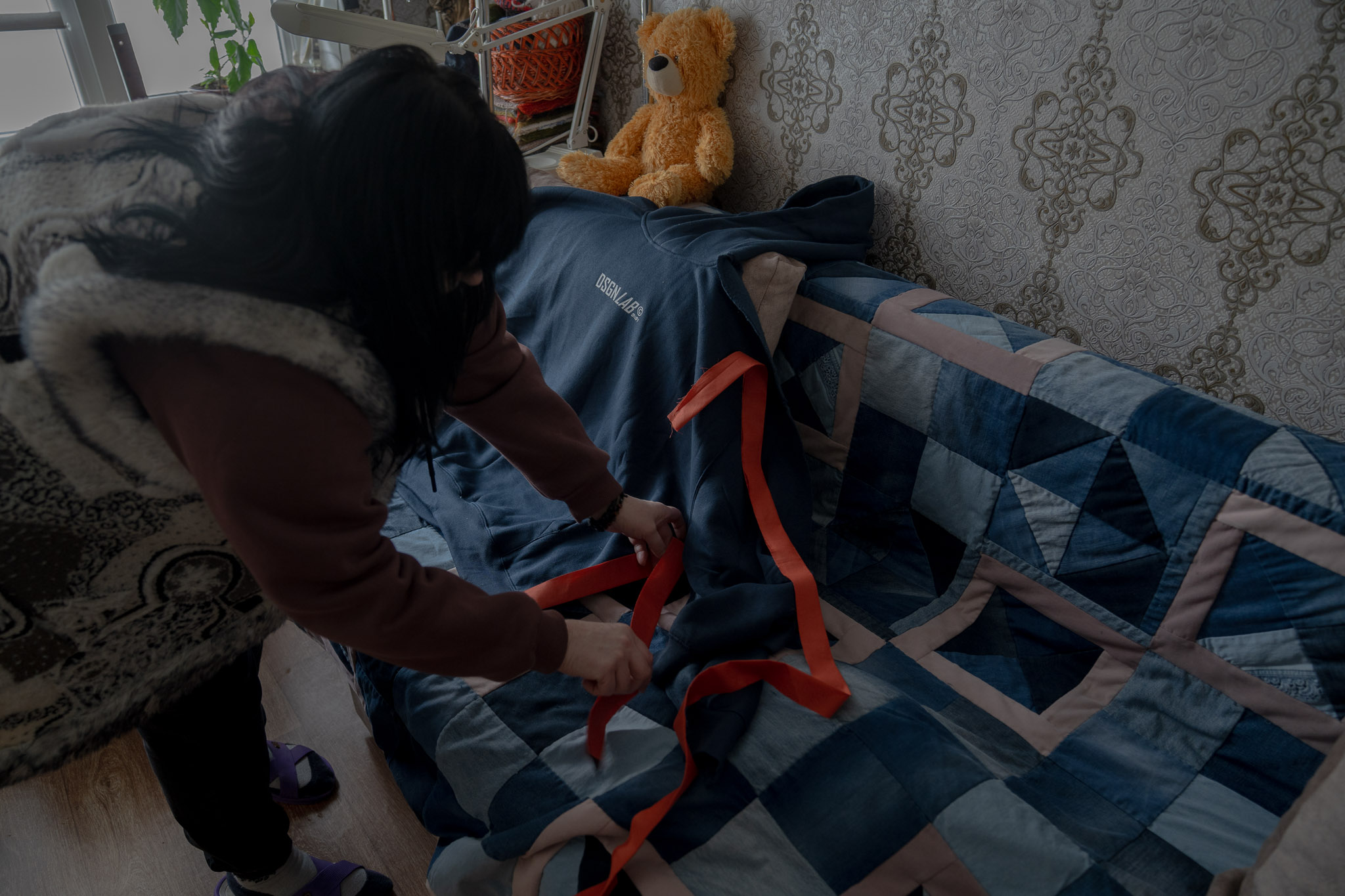
“This will be a (an adaptive — ed.) hoodie for a soldier who has injuries to both arms,” says Oksana, laying out on the sofa the hoodie, cut on both sides along its length.
Usually, Shveina Rota’s managers send Oksana regular, newly purchased hoodies. She unpicks the finished seams, trims the edges, and replaces the seams with sticky hook-and-loop velcro fasteners, so that a wearer could “open” and “close” the hoodie easily, without moving too much.
Adaptive items like this are useful for people who have injuries to the head, eyes, ears, or if they have external fixation devices on their limbs. They are also suitable for patients with back or skin injuries and fractures or amputations.
The craftswomen use the terms “cyber” and “armor” for clothing, though these are not related with cybertechnologies or actual protection.
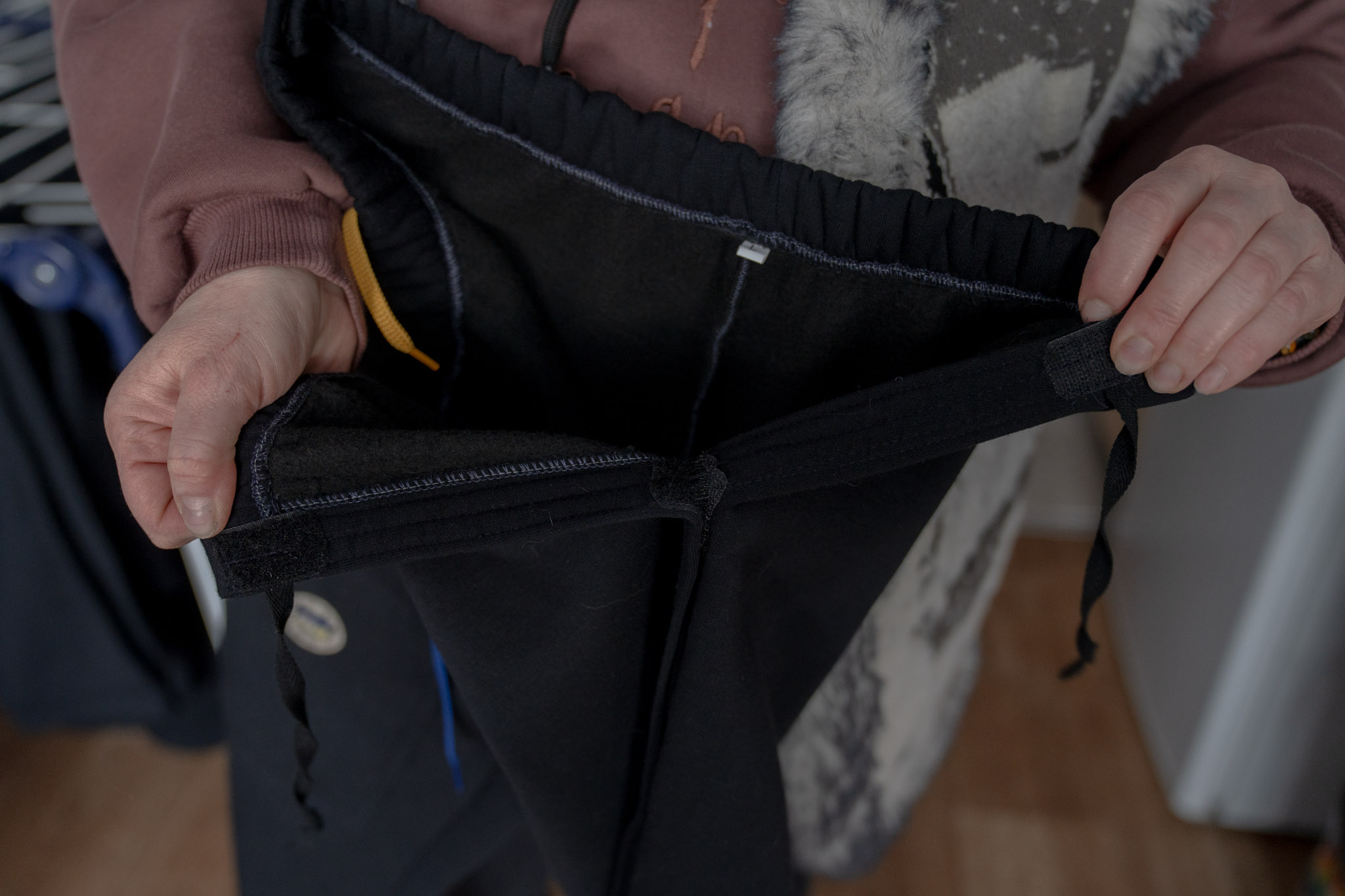
Oksana explains that adaptive items like pants, shirts, and underwear are called “cyber” while clothing intended for the front line is labeled “armor.” They often arrive in mixed packages, so terminology helps.
Oksana shows the adaptive pants, hanging from a small drying rack after washing. She wanted to pack the items during Gwara Media’s visit, but the clothes are still wet because there is no heating and electricity in her apartment after the Russian attacks.
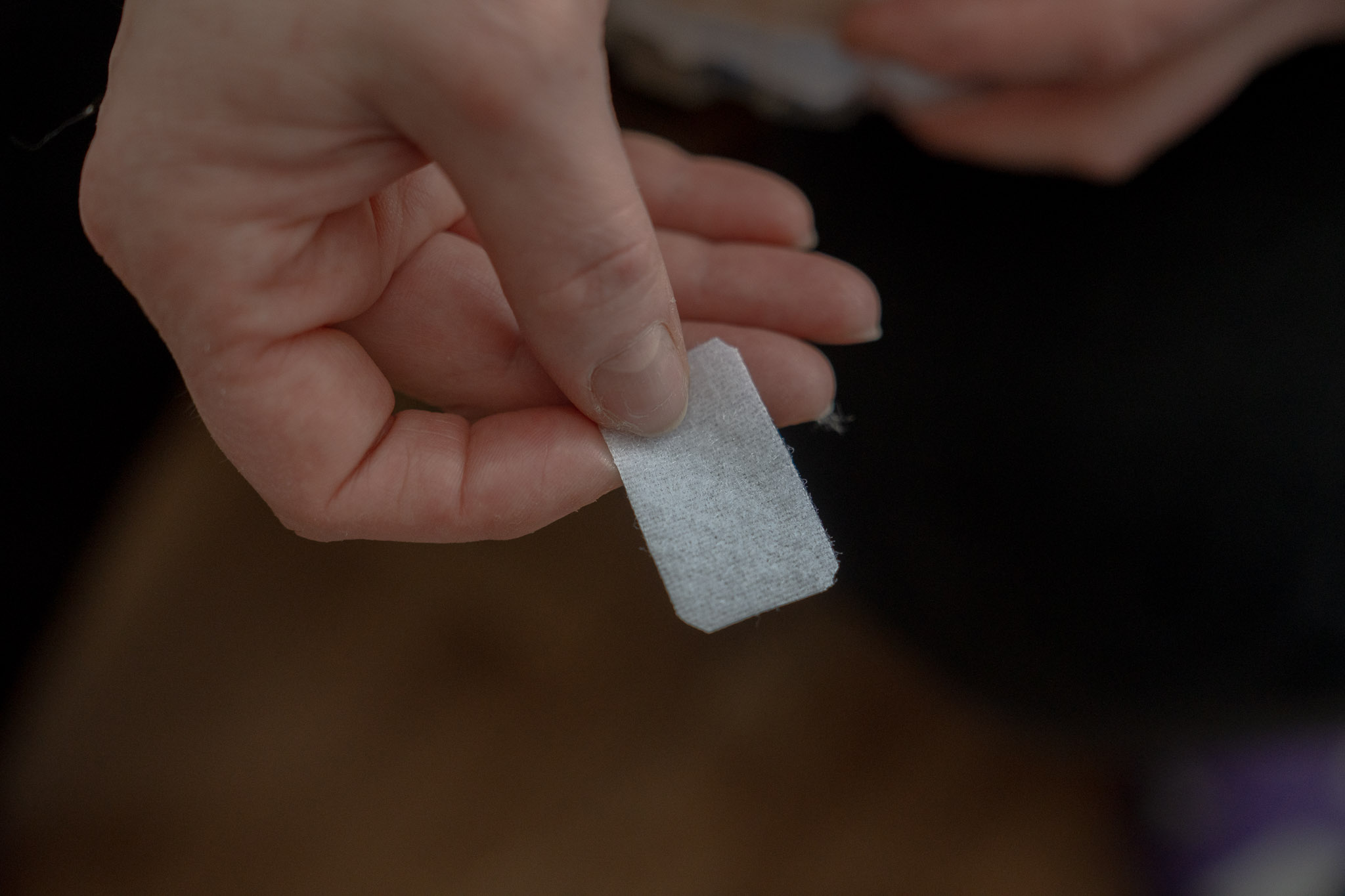
“I always have something to do (during power outages — ed.). For example, I cut velcro tape for fasteners (without electricity). I have to trim every sharp corner (on the edges of clothes) so that it doesn’t prick or scratch the injured soldier,” says the woman.
Toys for kids and soldiers
Currently, the initiative has helped more than 100 hospitals in Ukraine and fulfilled over 2,400 personal requests from soldiers, their relatives, and loved ones. More than 700 volunteers around the world have sewn over 300,000 articles of adaptive clothing and developed 35 original designs, which are available on the initiative’s website.
Since 2022, Natalia, another volunteer of the initiative, has been psychologically supporting injured soldiers at one of Kharkiv hospitals. She, her husband, and a nonviolent communication coach made their first visit to hospital on Dec. 31, 2022, bringing New Year’s gifts for injured soldiers.
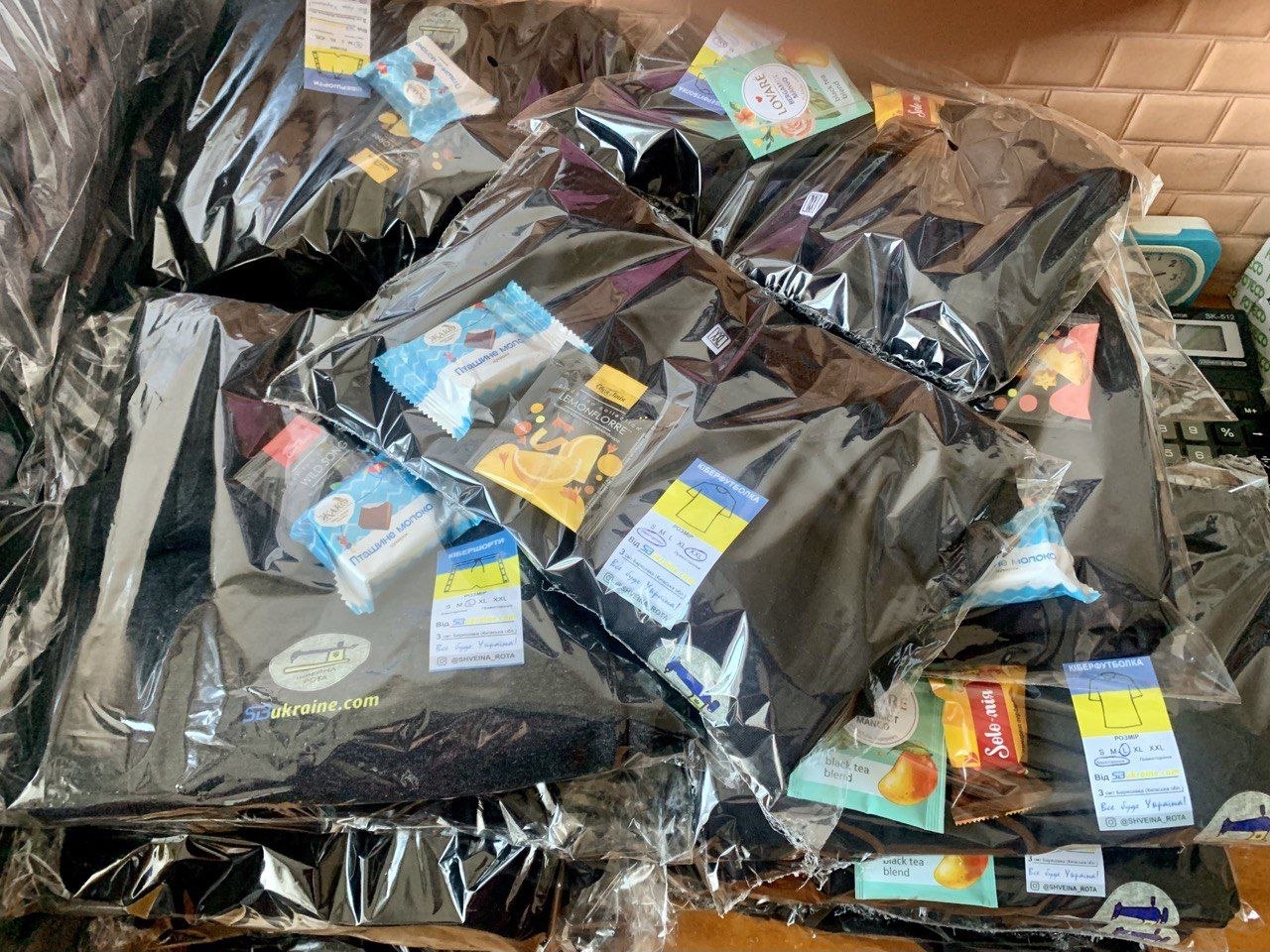
Often, the soldiers’ children were with them in the ward, so Natalia regularly brought toys to them. She started making toys, too, from socks, and eventually created instructions for volunteers on how to sew them. Participants of the sewing initiative call these toys “cyberiata” (“little cyborgs” from Ukrainian). Soldiers like them just as kids do, so seamstresses now add one to every order.
Natalia explains that injured soldiers can hold toys in their hands, and it works as a distraction from pain during the treatment.
“I thought it was silly, but then I realized that it was necessary,” says the woman.
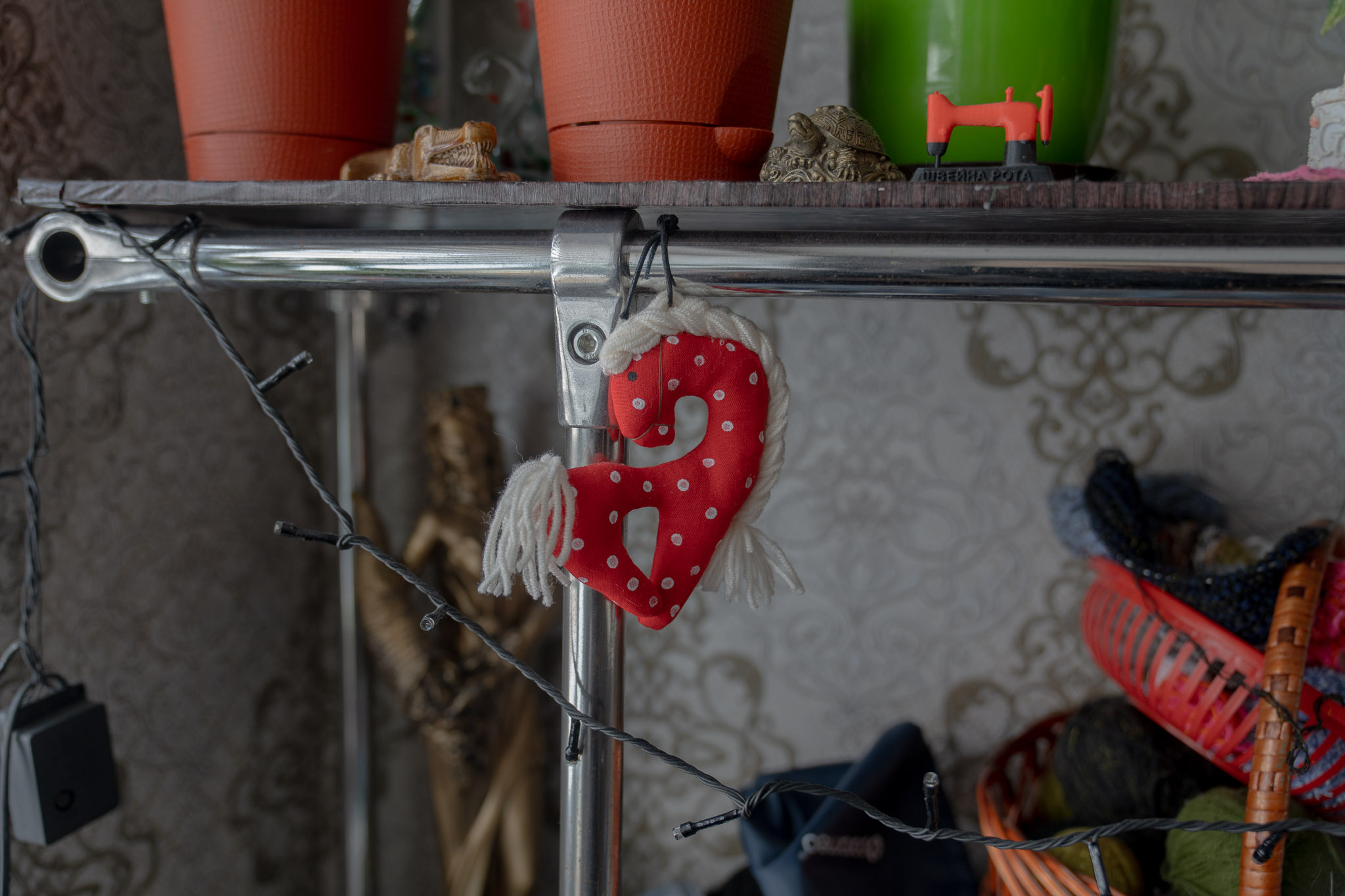
The woman also supplies seamstresses with sewing materials and teaches injured soldiers how to use the Shveina Rota’s Google form so everyone can request adaptive clothing they need.
“Why am I with Shveina Rota? Because their motto is ‘either in the Ukrainian Forces, or for the Ukrainian Forces.’ We do what our defenders need, because they deserve respect and gratitude for making it possible for us to live normal lives,” says Natalia.
“Anyone can sew with us.”
In 2026, Shveina Rota is a large volunteer initiative with about 30 centers inside Ukraine and abroad in Switzerland, Canada, Poland, Denmark, and Germany. In some cities, volunteers gather in hubs to work together, but most craftswomen set up their workspaces at home.
Their story, though, began with a small order to sew balaclavas (a type of headgear designed to leave only part of the face exposed, usually the eyes — ed.) for the Ukrainian Territorial Defense Forces at the beginning of Russia’s full-scale invasion in February 2022.
Back then, Maryna Palchenko and Kseniia Samoilych — co-founders of the initiative — gathered their friends who also knew how to sew, along with their sewing machines, patterns, and all the fabric they had at home. They sewed a maximum of 496 balaclavas for soldiers per day.
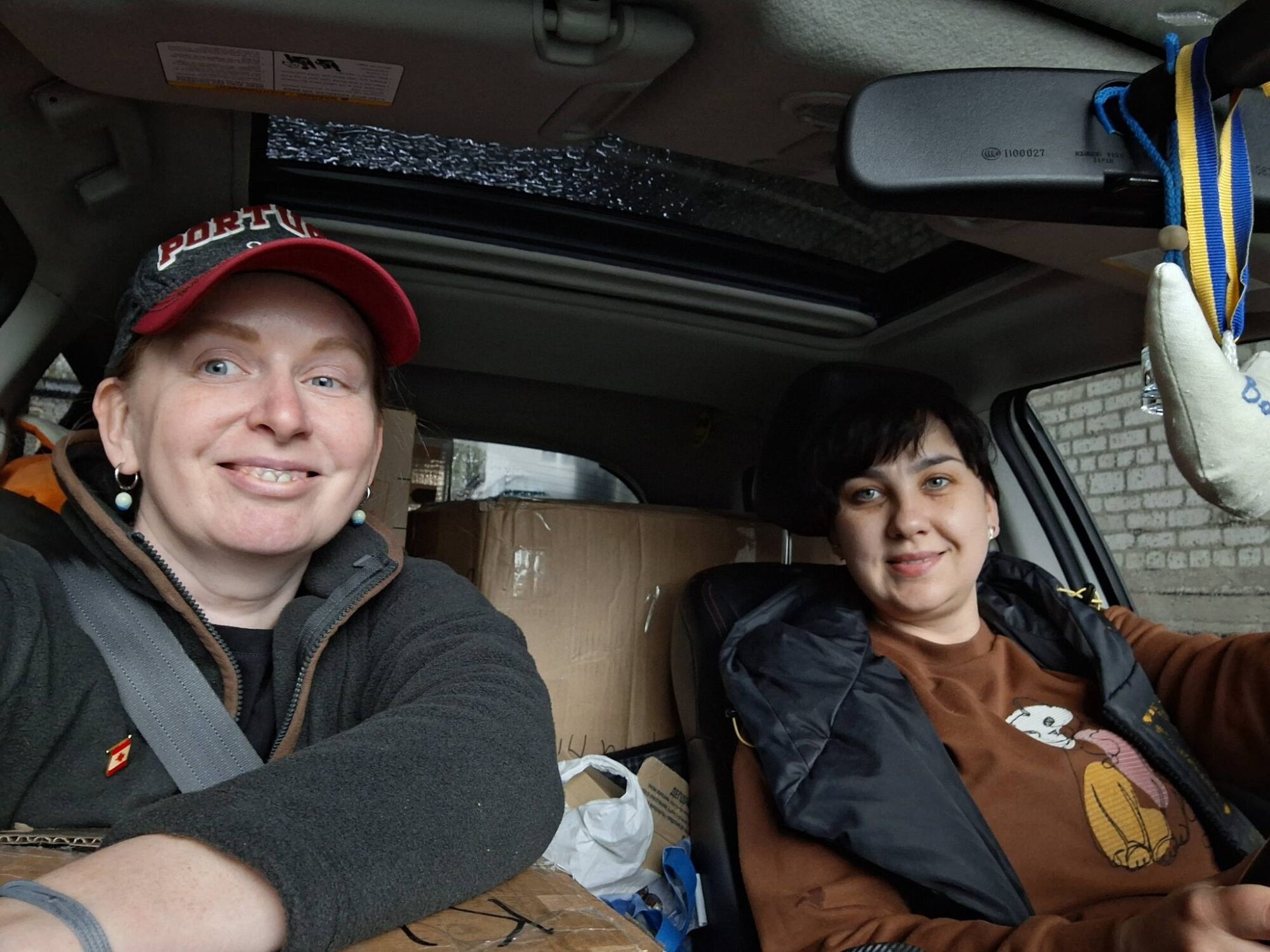
Throughout the years of the full-scale Russian invasion, besides adaptive clothing, volunteers have been making stretchers for evacuating soldiers, covers for transporting or camouflaging military equipment, and many other useful items.
Kseniia says that seamstresses in different cities are forming groups. There are about 10 seamstresses living in Kharkiv and the surrounding region. But right now, there isn’t a suitable space for the volunteers to gather. Kseniia explains that finding such a location is tough because of the constant threat of Russian airstrikes.
One of Shveina Rota’s largest centers is located in Nikopol, a city in the Dnipropetrovsk region about three kilometers (1.8 miles) from Russian-occupied territory. This space differs from others — volunteers there have powerful equipment that allows for sewing winter jackets, pants, hats, thermal underwear, and balaclavas on a much larger scale.
During Ukrainian counteroffensive operations in Kupiansk in winter, sewing volunteers provided military units with fleece jackets and joggers for the wounded. Soldiers wore them while they waited for evacuation from positions — simple, but warm and dry clothes kept them from freezing.
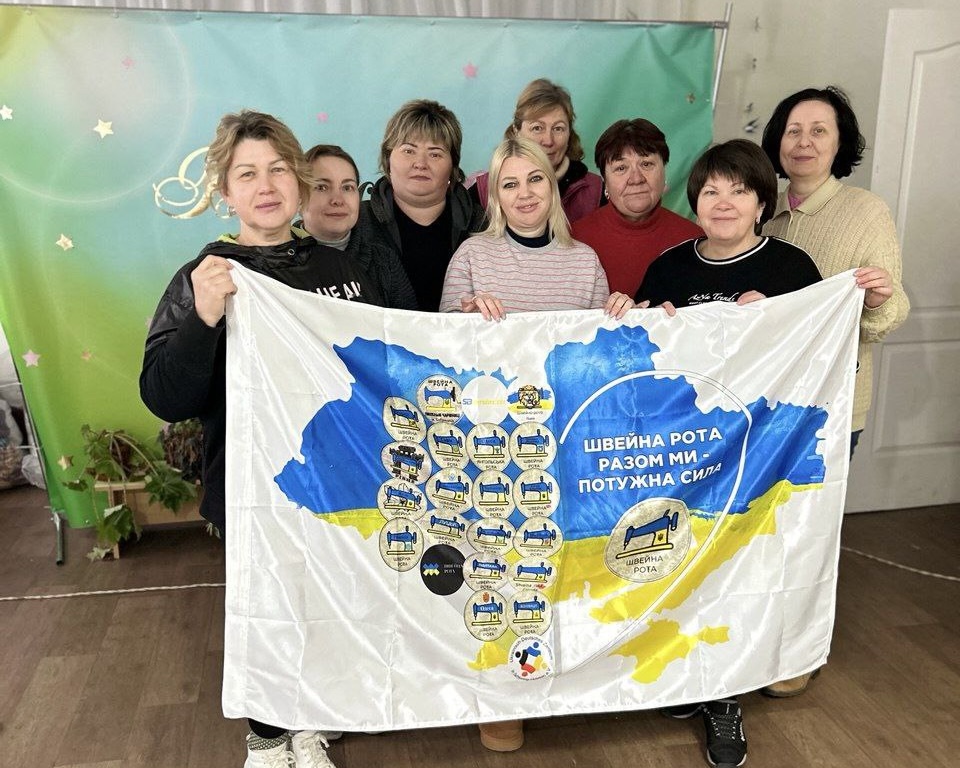
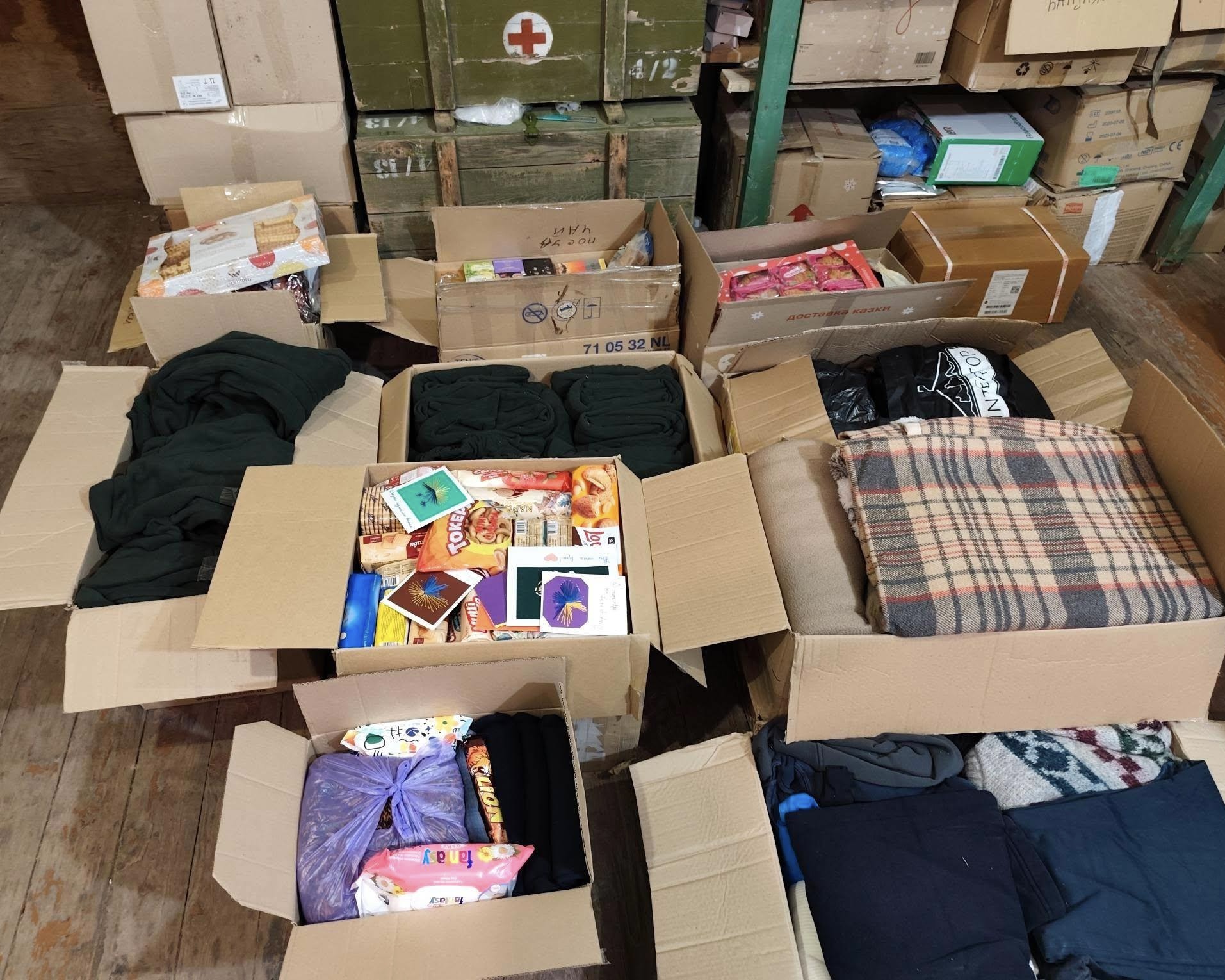
“Anyone can sew with us. We started out wanting to do more than just scroll through the news. Now, we teach people what to do and provide materials for them, and we’re excited to see new people join the team,” says Kseniia.
Read more
- How Kharkiv search and rescue dogs and their K9 handlers train for work at impact sites of Russian attacks
Hi, it’s Elza! I started to write this article during a severe frost in Kharkiv, after Russia once again attacked the city and left more than 100,000 customers without heating. I am posting this now, and in recent weeks, I’ve heard the sound of jet-powered Russian drones in Kharkiv for the first time. It is challenging, but we continue to write articles about the lives of people here for you. Please, support our journalism by buying us a coffee or subscribing to our Patreon.


Subscribe to news from Kharkiv, Ukraine
Most important stories from the frontline region