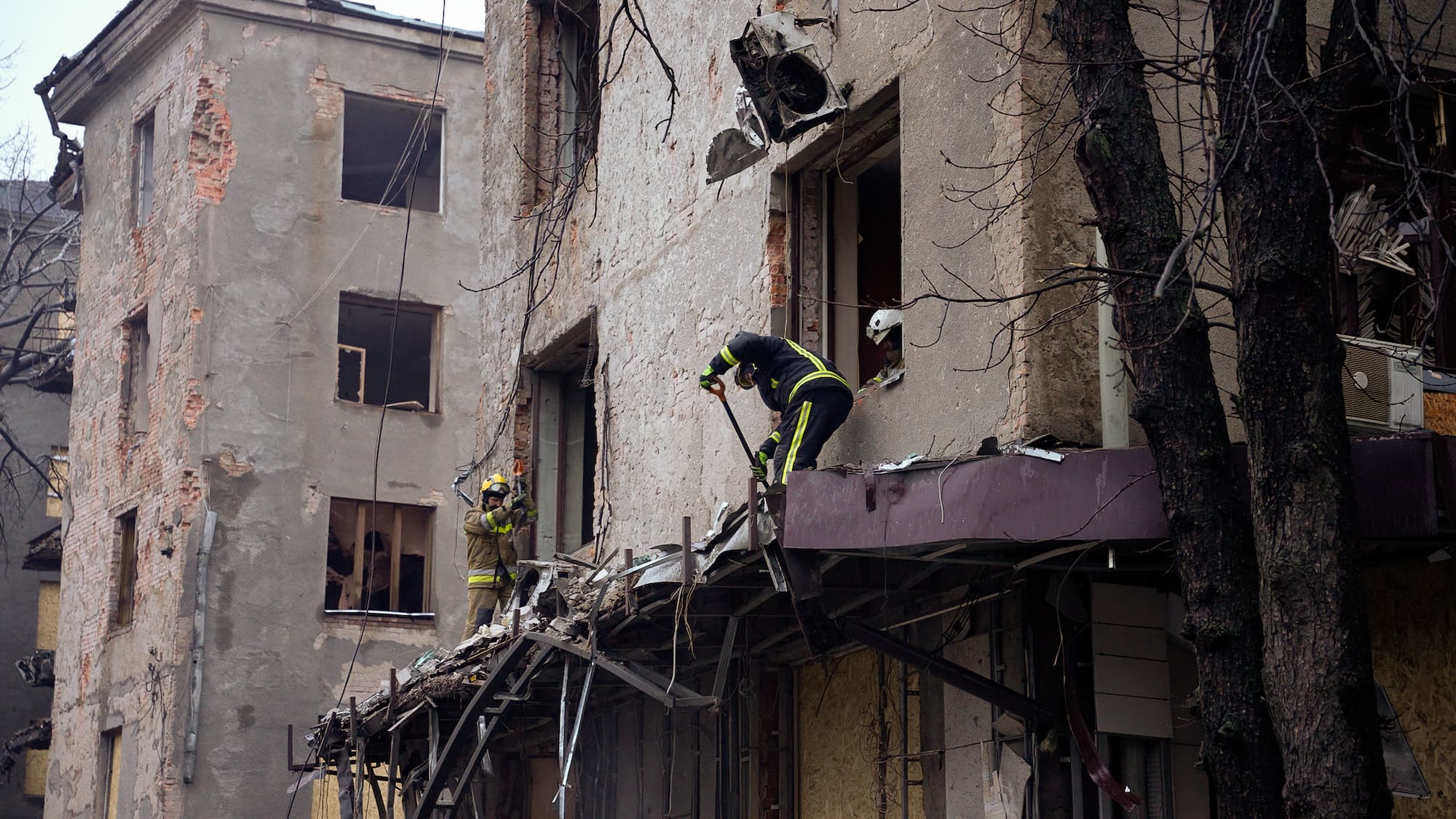
On Jan. 2, an explosion, reportedly caused by Russia, destroyed a five-story building in central Kharkiv, killing seven and injuring 38 people. The rescue operation lasted nine days.
Since the first days after the explosion, the dogs led by Oleksandra Karpova, a canine trainer and founder of the Mriia K9 (“Dream K9” in Eng.) search-and-rescue team, have been working on the impact site. It took several stages to find bodies of those who were trapped under the rubble. Gwara Media joined their rescue operation and, before that, went to learn how Mriia K9 trains their dogs.
Rescue operation
Authorities reported on two people killed and three people missing after an explosion on Jan. 2. Emergency services cleaned the rubble, and the firefighters inspected the explosion site. Dog handlers were allowed on location the day after, as the basement of the damaged building was flooded and inaccessible.
“We can arrive at the impact site and be ready to work within seconds. But, in some cases, we had to wait for 11 hours in the cold because emergency services needed to secure the (impact site),” Oleksandra said.
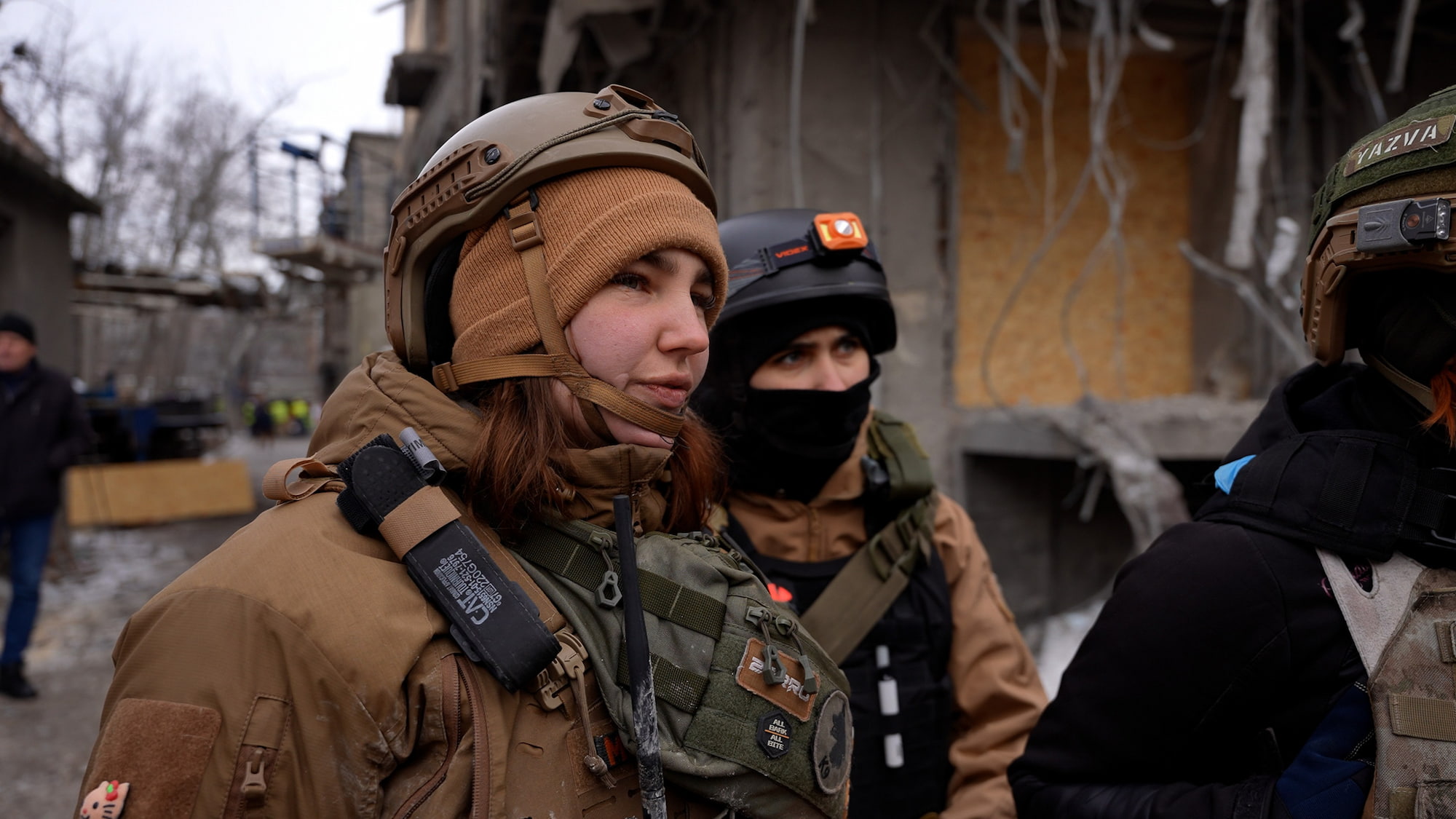
It was raining on Jan. 3. The rain affects animals’ sense of smell, Oleksandra explained to us. Scents go up in the warm weather, Oleksandra explained to us, and humidity pushes them down. Mriia’s dogs have been trained to work in different weather conditions, so Oleksandra picked the one most suited for rainy searches with her.
“It would be easier if the person (who dogs are searching for — ed.) is above us. But, in our case, they are below. There, the smell is changing,” Oleksandra added.
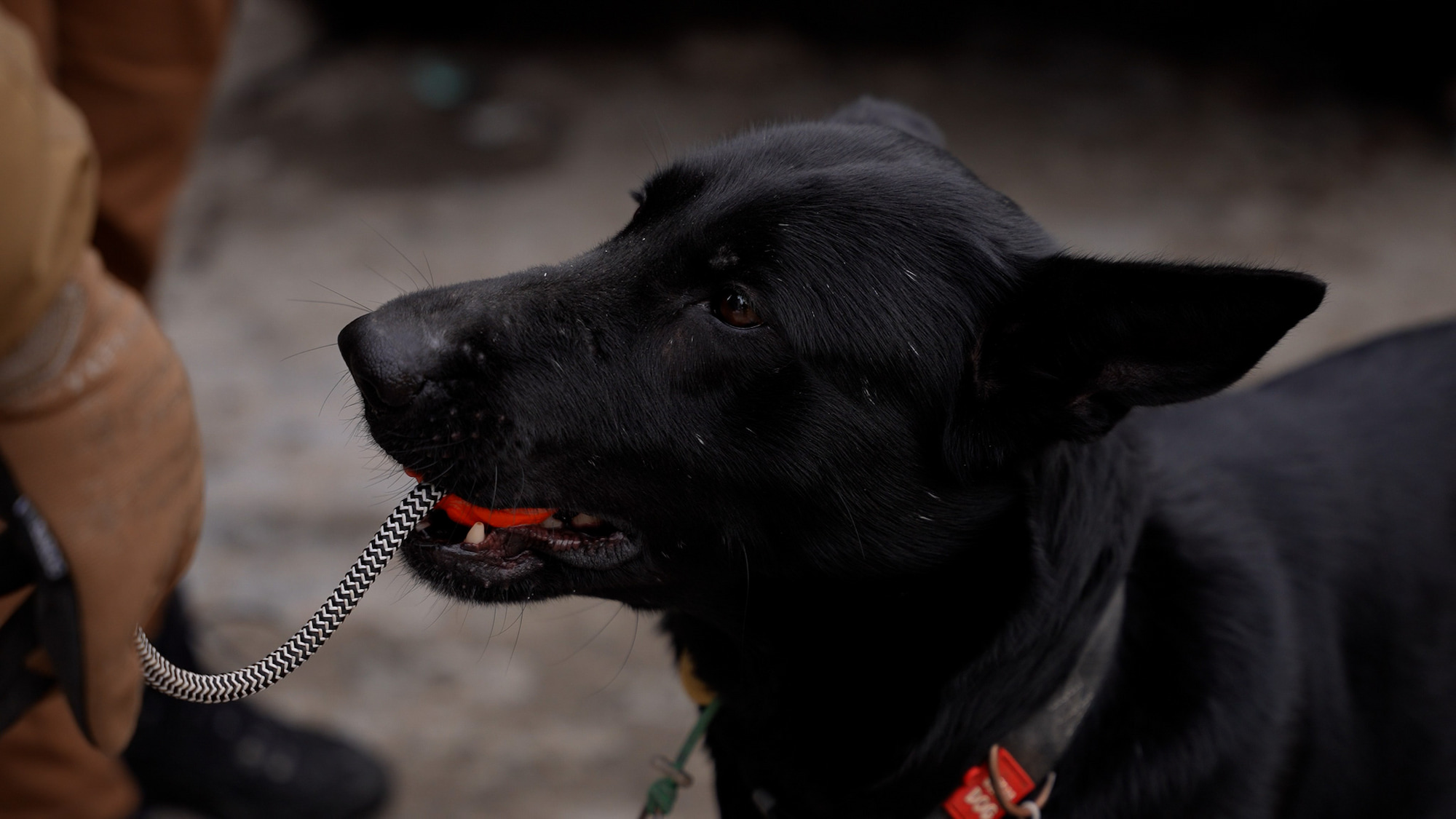
Between searching tasks — going into the wreckage of a building in the city center, left by powerful explosions, — Oleksandra played with a dog, throwing him an orange ball and praising him when he came back with it. It looks surreal amidst the landscape.
“The other trainers scolded me, said, ‘Even in the news your dog is with this orange ball.’ I respond ‘So what? The dog doesn’t understand that it’s a tragedy. He needs to be happy, it’s important for the dog to feel joy when he finds what he’s searching for. And the dog should feel that I’m happy for him to find it, too.”
The search operation after Jan. 2 lasted for nine days. Rescuers, along with their search and rescue dogs, find bodies and body fragments of seven people.
Living and dead
Before we had the occasion to observe Mriia’s dogs in the field, we went to join their training.
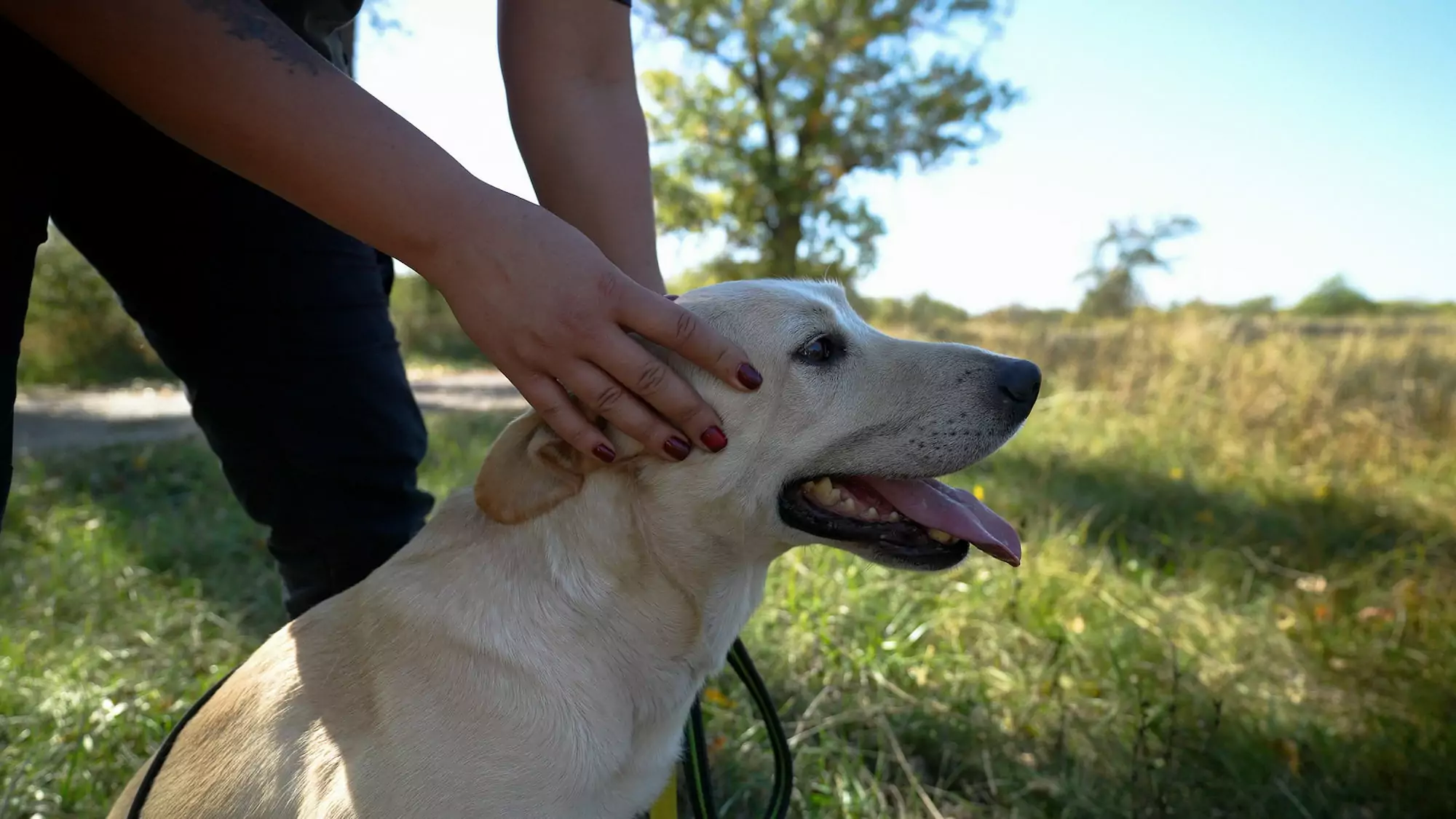
Dogs were excited, but they attentively waited for Oleksandra to let them out of their cages and play before the training. A few clicks of locks did the trick. Surrounded by happy animals, she tried to pour water for them in the metal bowls: Mudryk, Bro, and Ukropchyk.
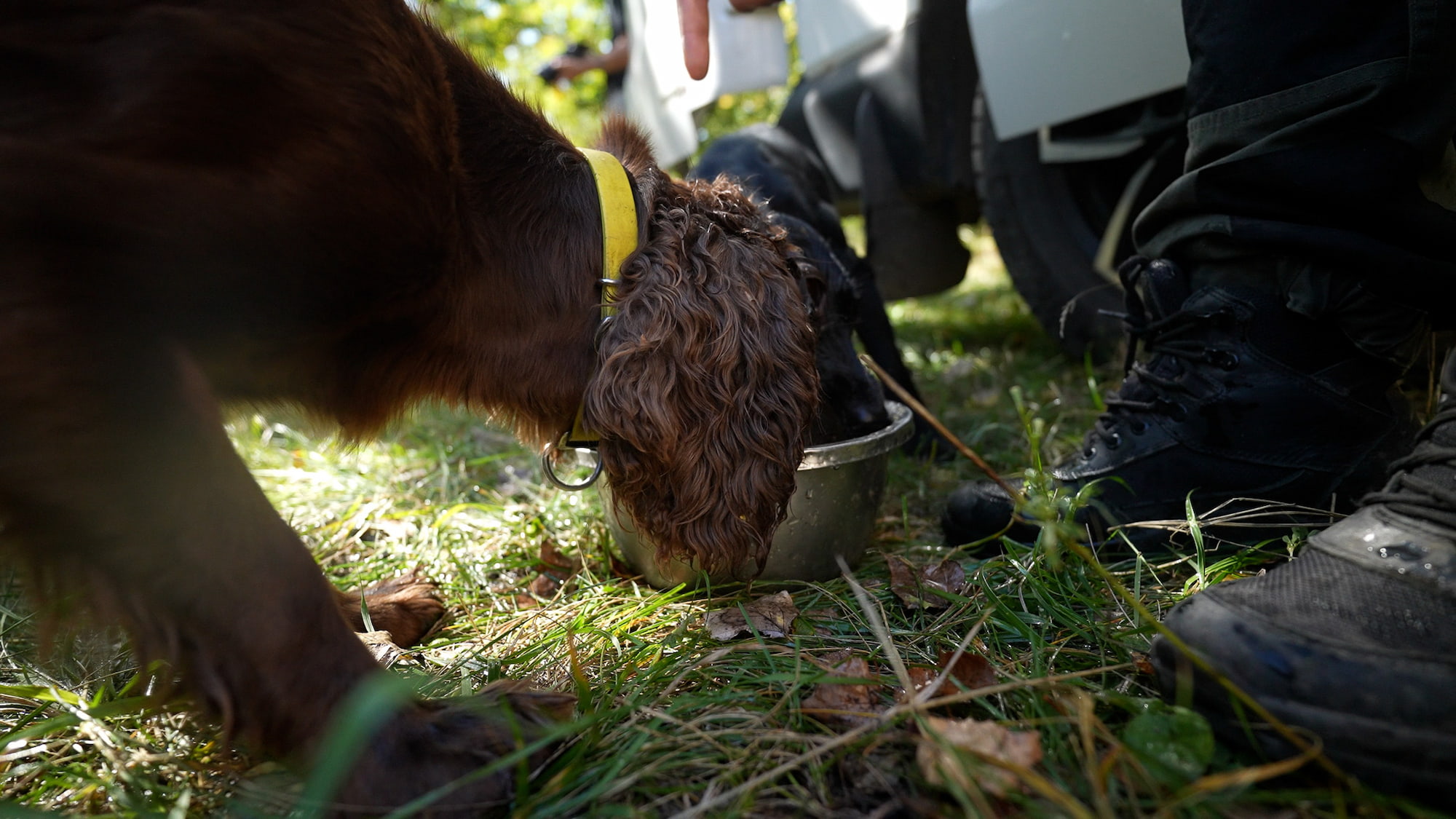
Training outside is essential for search and rescue animals — home classes would not do.
“If the dogs don’t have training, for instance, for a month — you can’t count on them in a real-world situation,” Oleksandra said. She explained that Mriia dogs work at least twice or thrice per week. Even if they are injured or sick, Oleksandra is trying to give them light exercises. That is necessary for them not to lose their skills, because restoring the progress from the start is a difficult task Oleksandra would rather avoid.
Canine trainers have to be vigilant, attentive when they work. Dogs are active, they always run around and can eat something wrong or injure themselves. Even though search-and-rescue is a difficult job, dogs remain mischievous animals.
After a few minutes of play, Oleksandra calls the animals back: it was time to start training. Back then, the session was dedicated to searching for both dead and alive people: “We have Bro and Mudryk for the living and Cuba and Archi (other Mriia K9’s dogs) for the dead.” An abandoned building not far from Kharkiv was set as the training field.
To search for dead people, dogs memorize olfactory “replacements” for corpse smell, either special liquids or animal meat, Oleksandra said. They are looking for the smell of a protein breakdown that starts at the fourth or sixth hour after death. Before that, a corpse can smell like a living person.
Animals who are trained to look for the living, then, learn not to confuse the substitutive smell with the smell of survivors. There are also “universal” dogs who can find both dead and alive people.
“Moreover, if a large pile of debris falls on the person, the smell of the person’s breath or sweat will remain (around the body) for a long time,” Oleksandra explained. “So dogs who were taught to search for alive people, can react to a fresh corpse.”
On the other hand, Oleksandra added, the dog that’s trained to look for dead people doesn’t react to the smell of the living at all.
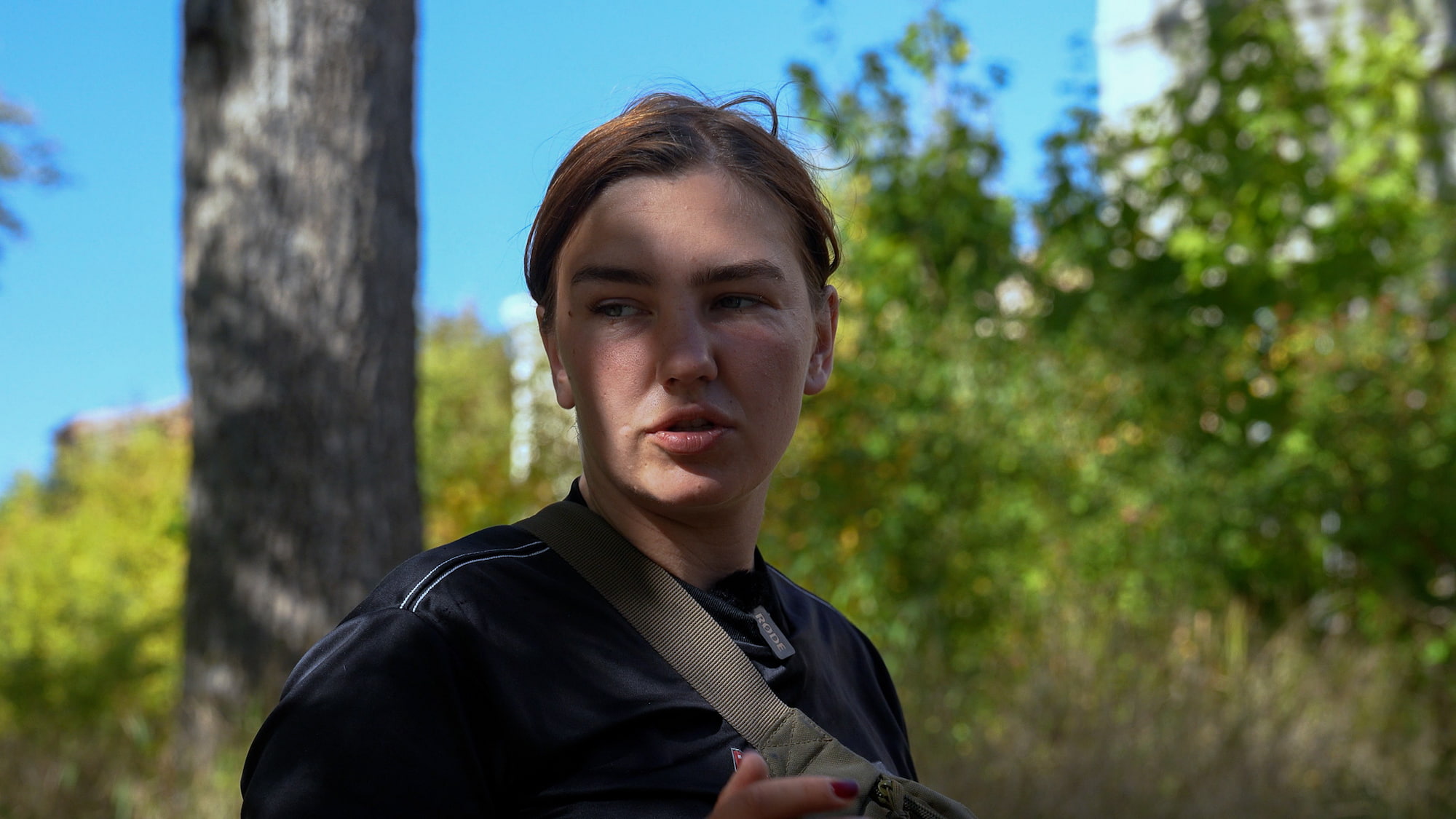
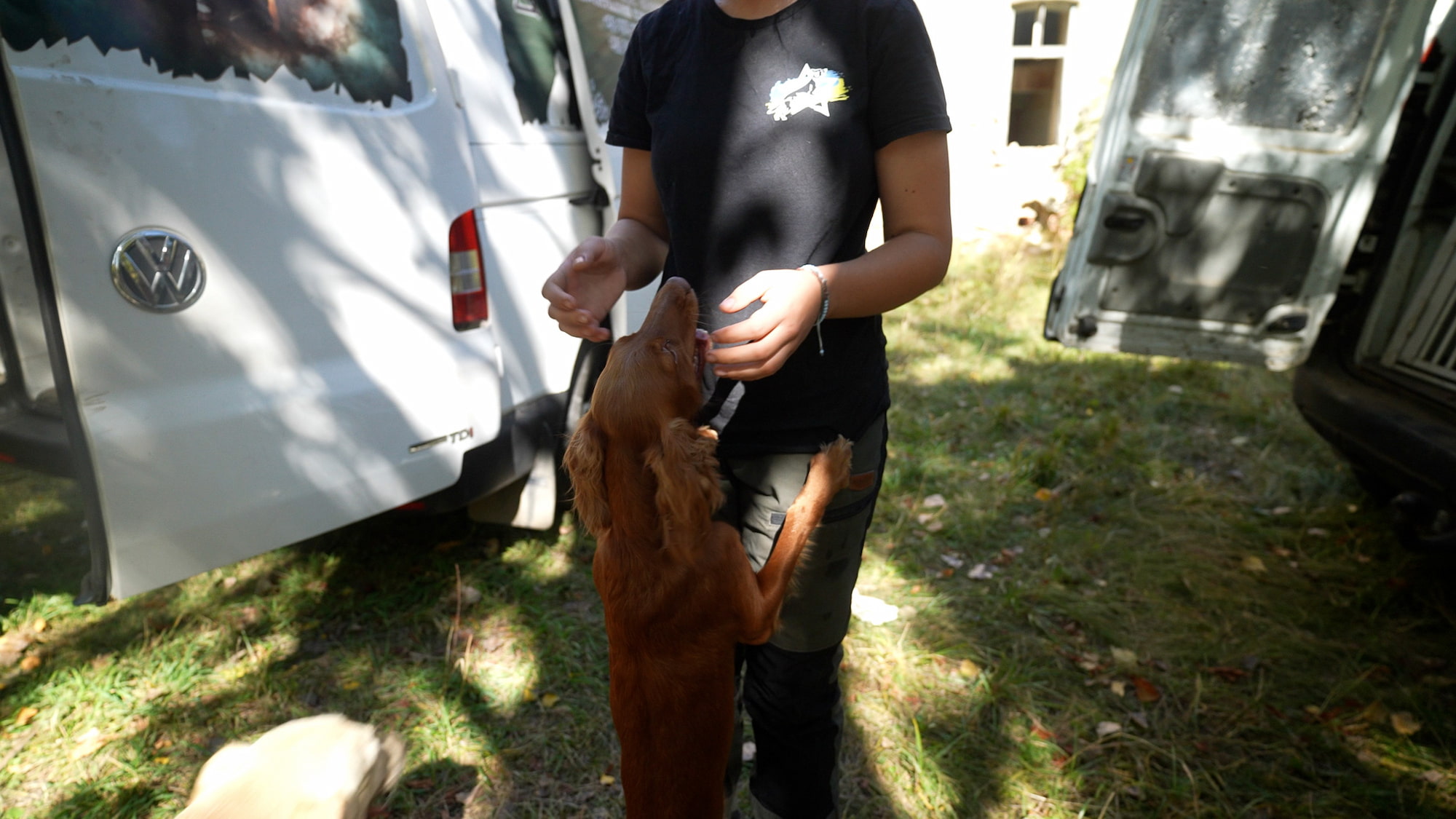
In choosing what dogs to bring on the mission, much depends on the situation, Oleksandra said to Gwara. If a person went missing a few days ago, it’s more efficient to use a “universal” dog for an outdoor mission. But, at the places of the emergencies, such as the impact sites of Russian airstrikes, it’s important to look for alive people first — before heavy machinery starts to work and sort through debris.
“If the zone is dangerous, to risk a dog’s life to find survivors is reasonable,” Oleksandra said. “On other hand, however bad that sounds, sending an animal under falling concrete blocks if you’re looking for the dead isn’t very rational.”
When heavy machinery starts to work, a dog can get injured, refuse to work because of the stress, or even be killed.
Working at the hit site of Russian attacks also poses a threat to the group accompanying the animal, Oleksandra added. Protocols say canine experts, assistants, medics, emergency services, and volunteers should be working alongside the dog, but Oleksandra had sometimes worked alone, by necessity. That’s why she has always planned the operations in a way that made it easy for her to work on her own.
One time, Oleksandra’s colleague didn’t keep her eyes on Mudryk, and then Mudryk was found on the half-destroyed building’s roof.
“I called him to me, he started to go, the slates began moving under him — and he just dropped where they haven’t put out the fire yet. He burnt his stomach there,” Oleksandra said. To improve coordination and prevent cases like this, Mriia K9 team regularly trains with other medics and search-and-rescue initiatives.
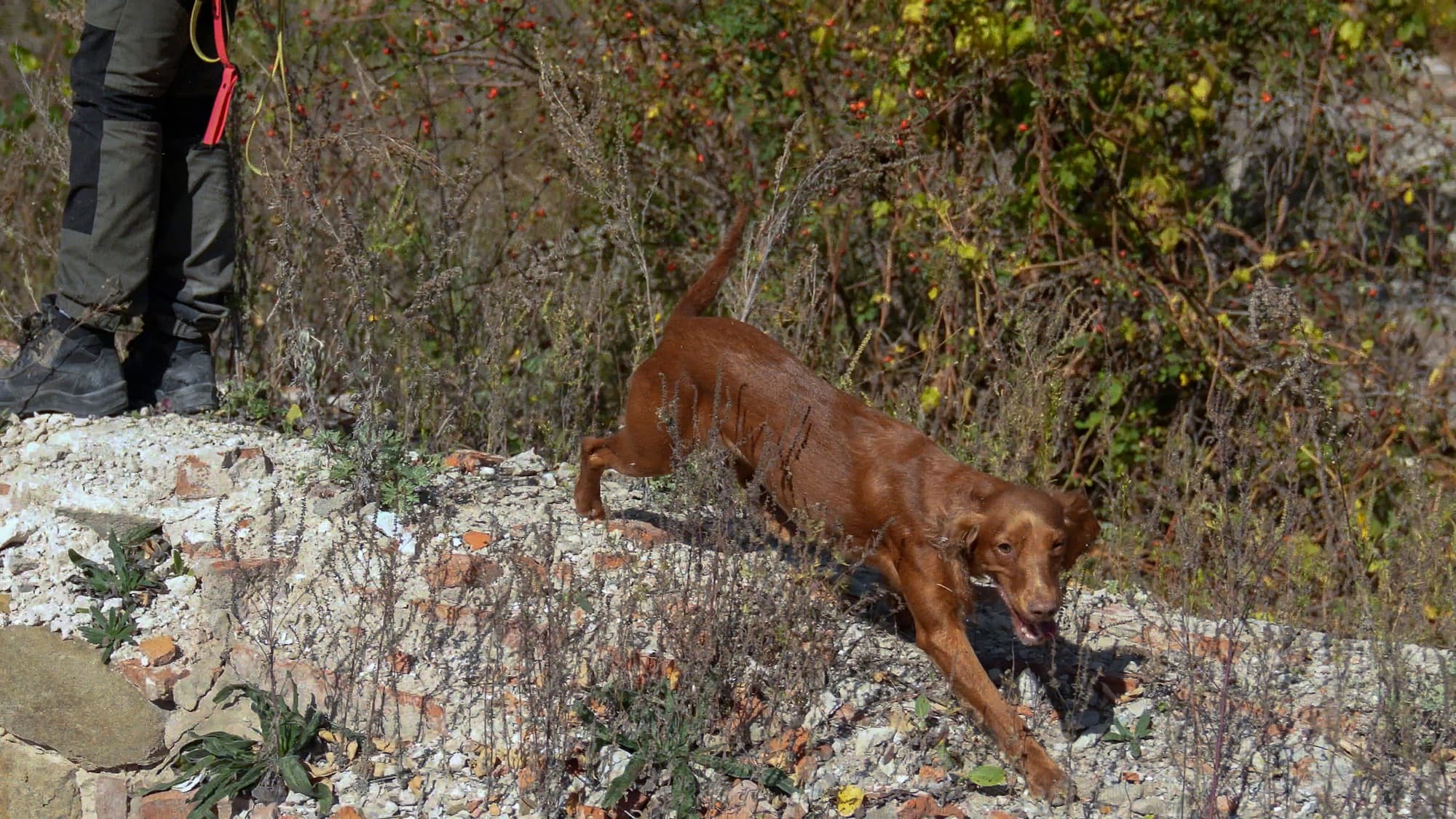
When dogs first get to Oleksandra, she walks them on different surfaces so that their paws would get rougher than the paws of the pets who live at home. That’s needed so that they aren’t injuring themselves walking on the debris or broken glass.
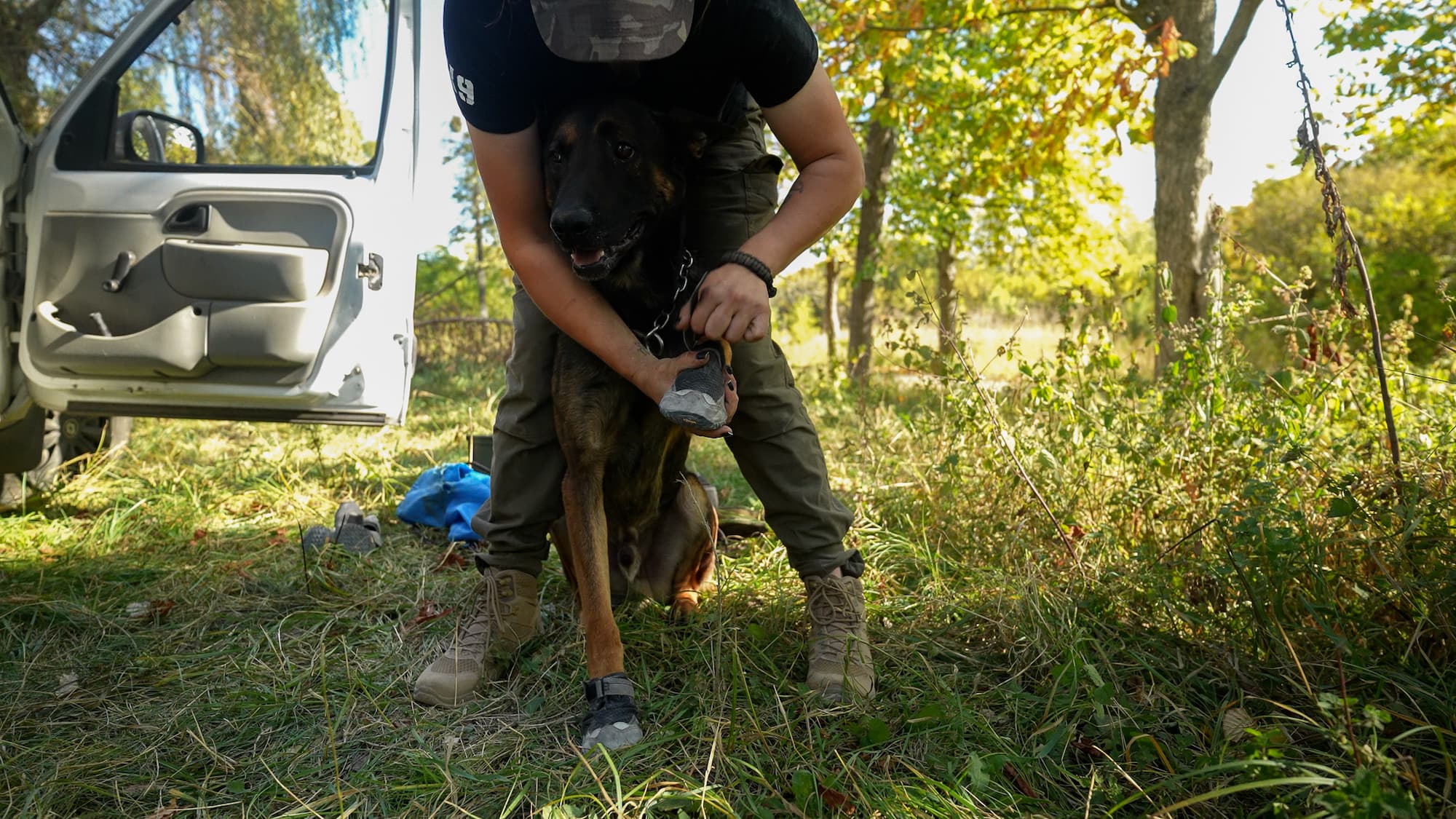
A K9 specialist doesn’t often use special shoes for dogs because they can catch on something and the animal will injure their leg. Oleksandra looks at the surface first, and, if she sees there’s a lot of glass and shrapnel, then she gets special footwear for dogs.
“And I always leave them with long claws, because they can slip on something, especially if there were fire, and it was put out. During winter, it’s especially slippery, and, even in shoes, I’ve seen the dogs fall,” Oleksandra said.
Motivation
When Gwara Media joined Mriia K9’s training, the team worked via method of direct encouragement, though. K9 specialists asked us to be statists: hide on the location and feed the dogs when they’d found us.
“We work so that a dog develops a desire to reach the human despite everything,” Oleksandra said while her colleagues were hiding various “smells” at the location.
After the dogs reach their goal, the K9 specialists teach them to indicate that they found what they were looking for. In Mriya K9, dogs “showed” that their task is complete by barking — Oleksandra believed this way is the most efficient.
“It’s a sort of game for animals, a game their comfort is dependent on,” Oleksandra said, and added that to teach dogs, one has to strip them of comfort and provide them with a way to get it back.
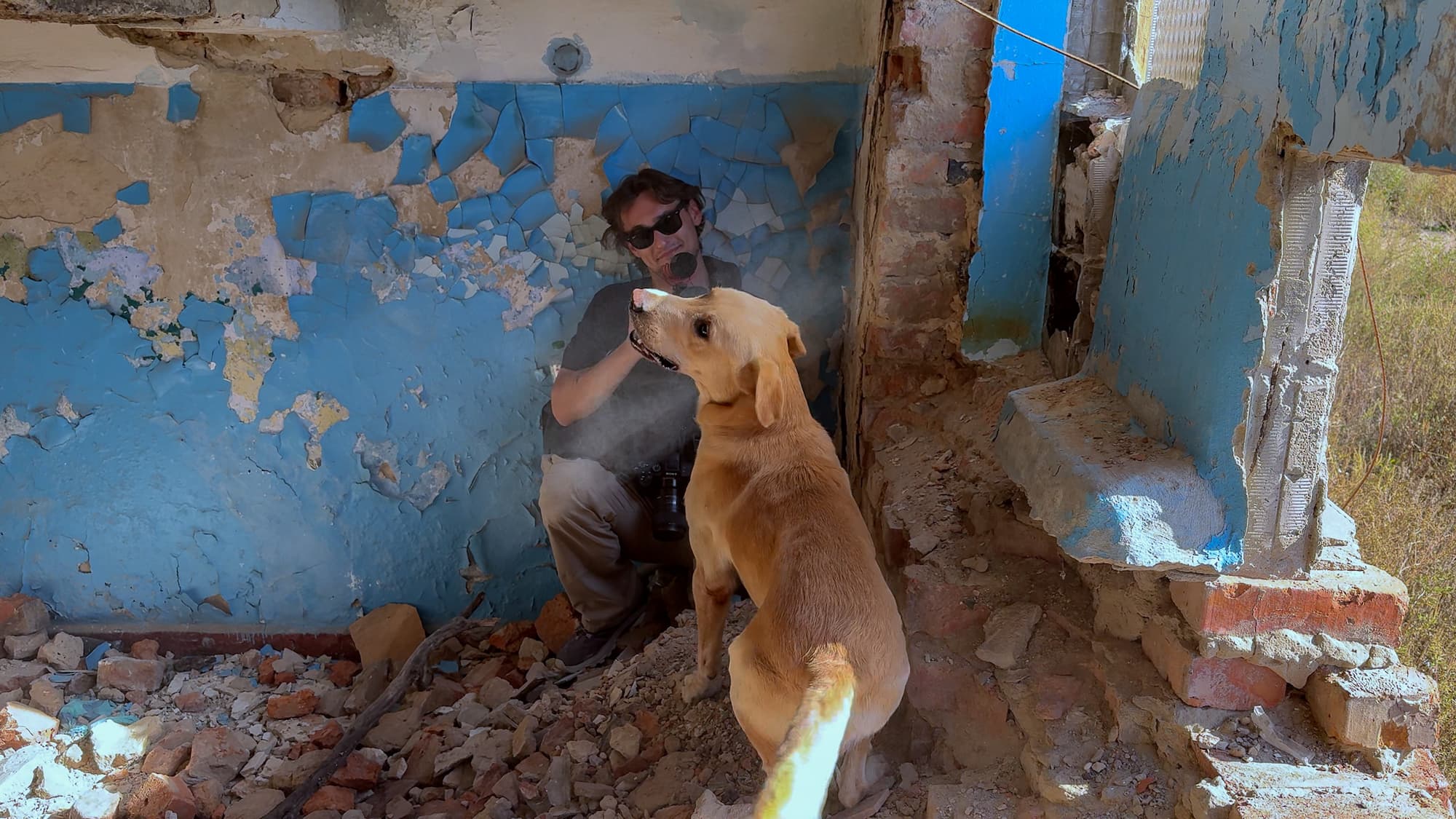
Sometimes, though, K9 specialists don’t reward dogs when dogs find their “goals” — training has to imitate life, and, during search-and-rescue there isn’t always time to interact with an animal positively.
“Someone will say, that’s cruel to the animal. But using a dog to do search and rescue is already cruel because dogs risk their lives. Dogs don’t need that. They want to swim in the lake, run after the ducks, and enjoy themselves,” Oleksandra said.
Training
First to train is a Labrador called Bro. Oleksandra told us he was brought from Italy when he was a year and half old. He was supposed to be trained to search for drugs, but the situation has changed — the Mriia team needed a dog who’ll search for people.
“Each dog has its own starting ritual,” the K9 specialist said. During this ritual, dogs understand that they’ll work, not hang out and play. The ritual depends on the dog’s character. For instance, Oleksandra’s team has a shepherd who gets too excited, so she has to lie down and chill before working. Dogs like retrievers and labradors, Oleksandra noted, don’t need to rest.
Bro has been training for two years already. It’s an experienced dog, so the K9 specialist didn’t put him on a leash or in harness.
“When I’m at the starting line, I want him to calm down, focus on the debris, on the search through it. I am not letting him go until I see his nose moving,” Oleksandra said. “In such a way, I understand that he begins to smell, and not just looking.”
Oleksandra commands in English, “check,” — and Bro disappears beyond the half-destroyed wall.
For Oleksandra, the main thing is to give the dog an opportunity to move where he wants. When he faces obstacles, he can start searching for ways to get around them. Bro shows up at the entrance to the building once again.
“Right now, he’s going to look for the stairway. But it won’t be here,” Oleksandra said, entering the building. “I always let him run free, because the dog, sometimes, knows more than us. He can catch the smell and lead me towards it.”
Oleksandra watched the dog carefully. If she’d seen the dog’s interest, but he still wasn’t able to find anything, she would have led him to the “target”. But the dog’s independence, she explained, is the main factor during the training.
Bro disappeared behind one of the doors in the building once again. Several seconds passed, and we heard his barking.
“Found something,” Oleksandr said and went to him.
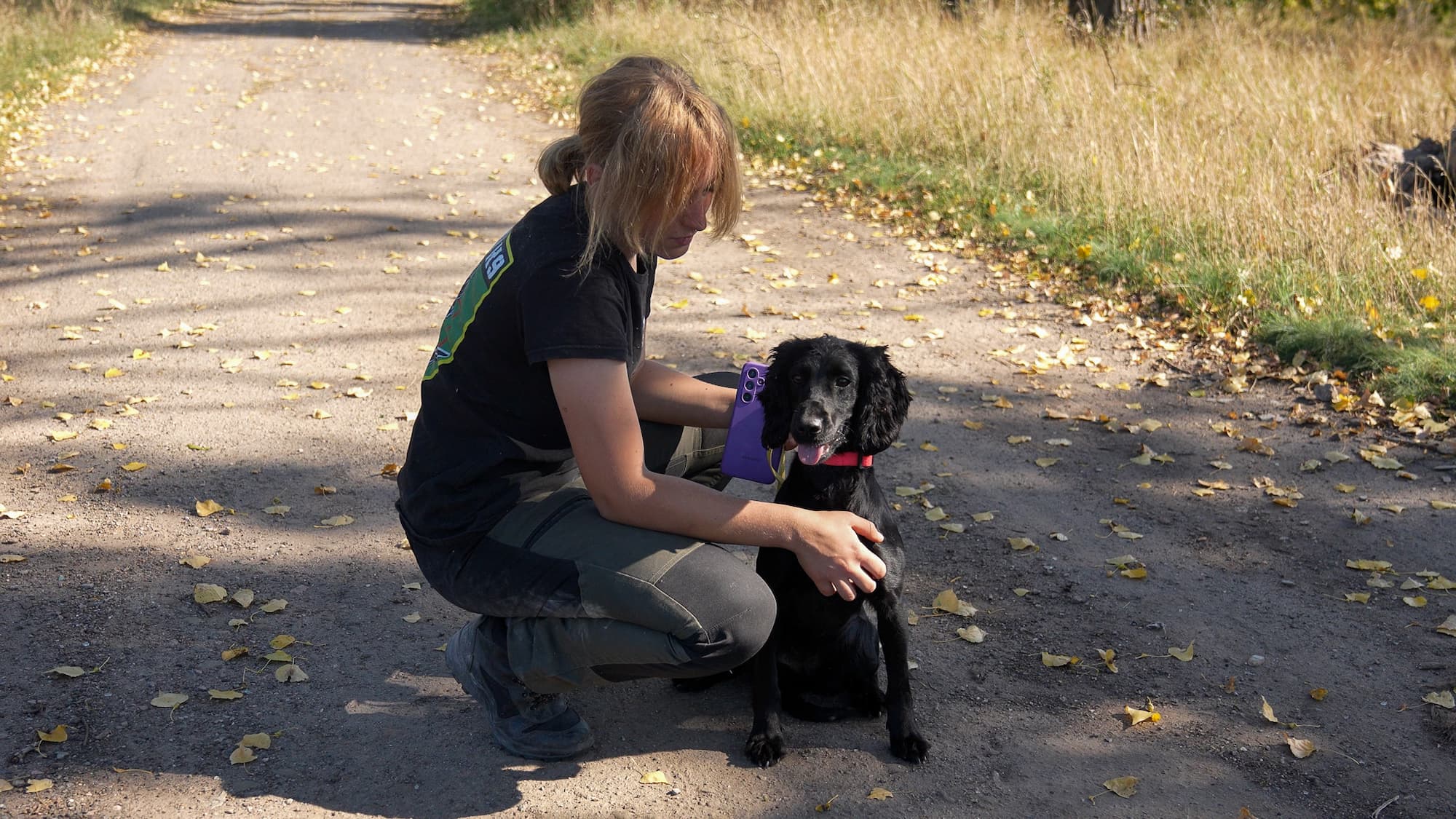
Next in line for training was the red spaniel of Oleksandra’s colleague. It’s a new dog who’s just learning. The most difficult thing was teaching him to “mark” what he’s found with his voice — Oleksandra said they have been teaching him bark for years. “Spaniels are special like that.”
The training for him was focused on whether he “marked” the target with his barking. If he didn’t, the target-person ordered, “us.” When he did bark, they waited a minute and commended the dog to bark again. Only after that, it was allowed to feed him.
Dream
Mriia is Oleksandra’s rescue dog. The search and rescue unit is named after her. And that’s the first dog who found a survivor in the debris of Palace of Sport in Kharkiv after a large-scale Russian attack on Jun. 7, 2025.
“According to the rules, if a K9 specialist has doubts and the location is pretty large, then one find should be confirmed by another dog,” Oleksandra explained. Mriia’s work was “confirmed” by Mudryk.
After the first days of full-scale invasion, Oleksandra and Mriia went to the impact sites of Russian attacks in Kharkiv. They’ve been working without a professional follow-up and equipment. For many months, Mriia had been the only search and rescue dog in Kharkiv. Apart from working on the impact sites, Oleksandra and Mriia visited shelters, underground stations, and school basements to provide emotional support to people staying there.
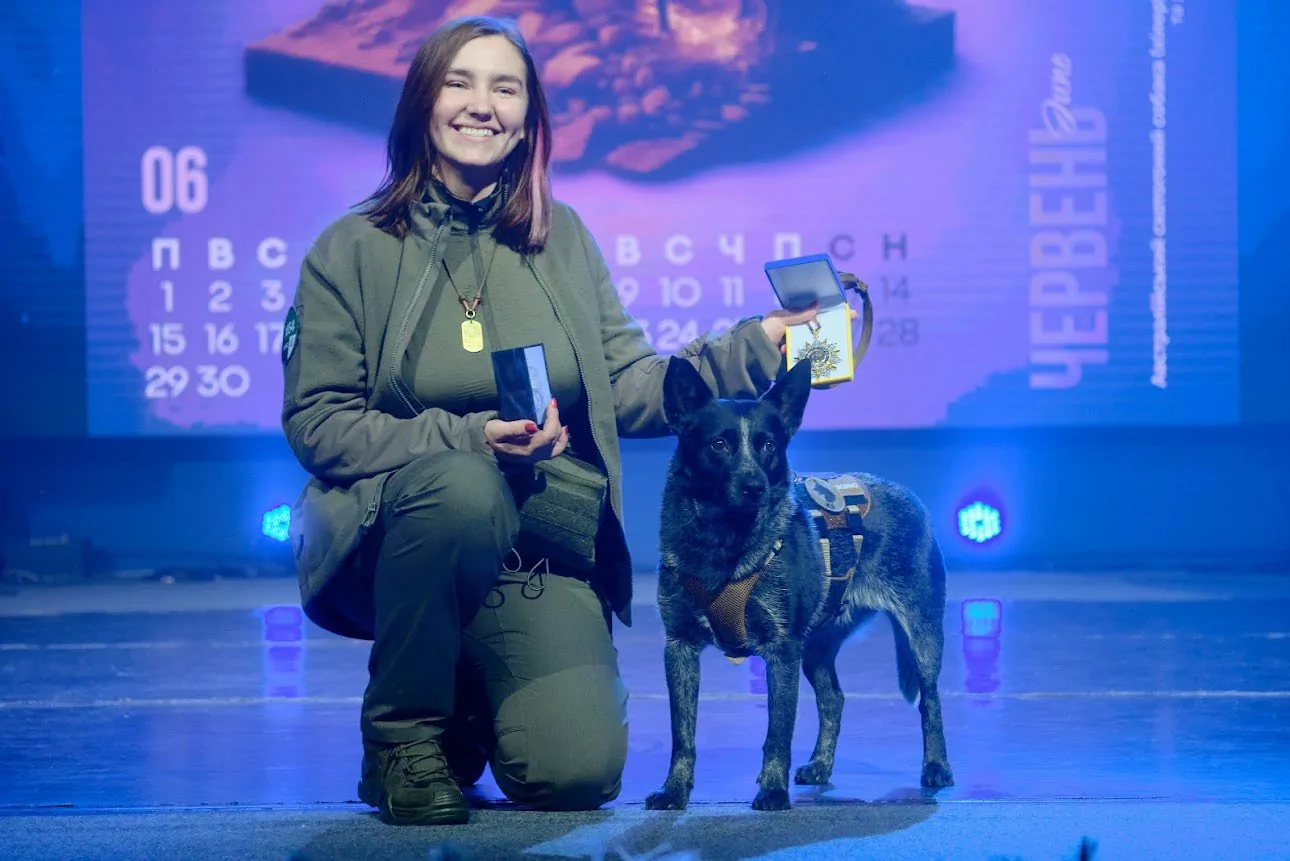
Once, the debris fell on Mriia during a search-and-rescue operation because of a Russian double-tap strike. Her head and spine was severely injured. Oleksandra said Mriia is “retired” already, but she is still visiting kids, veterans, and people who are disabled as an emotional support dog.
“(It’s a dog) who lived her whole life during peace time. She worked, everything was cool, and then she got thrown under the tanks,” Oleksandra said.
Author: Elza Diachenko
Translation: Yana Sliemzina, Nazar Hlamazda
Read more
- High-speed Kyiv–Kharkiv trains won’t be reaching Kharkiv until end of March because of power shortages caused by Russian strikes
- “We visited to bring them gifts, and now we come in bulletproof vests” — Inside evacuation mission from Kharkiv oblast village threatened by expanding range of Russian drones
Hello! It’s Elza, the author of this article. Mriia K9 team’s story really touched me: these people and animals work under difficult conditions, overtiming under the threat of Russian attacks, to save people. Oleksandra often attends training programs abroad, but sometimes she goes there not to learn, but to share her own knowledge, since her dogs have a lot of experience because of the war. To see more stories from Gwara Media, please, support our journalism by buying us a coffee.


Subscribe to news from Kharkiv, Ukraine
Most important stories from the frontline region