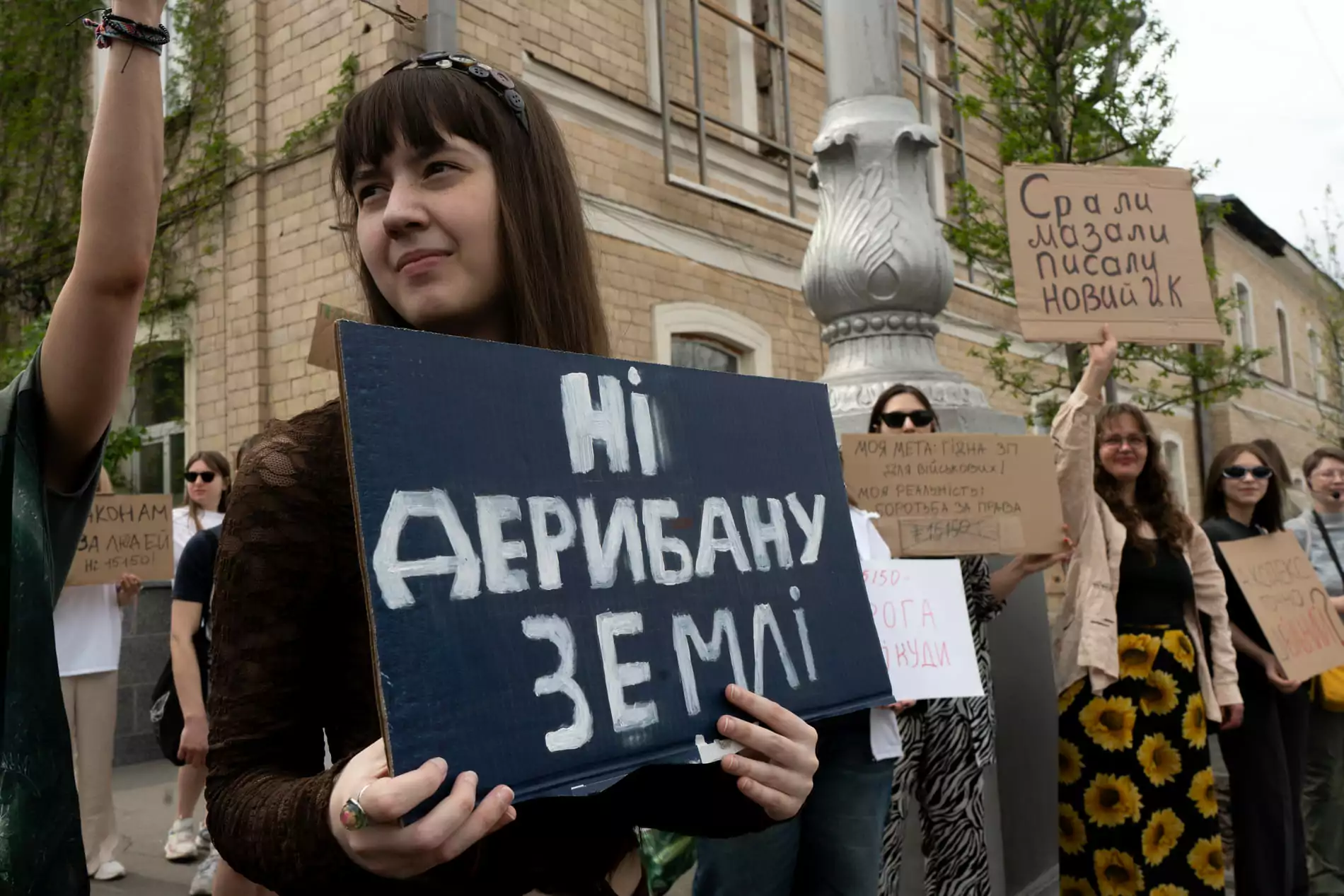
UKRAINE, KHARKIV, May 10 — At 12:00, over 200 people came to protest the draft Civil Code near the University metro station along the Freedom Square in the city, reports Gwara Media’s journalist from the location. It was the second time people in Kharkiv took to the streets against bill #15150 this week — the first protest was organized on May 6.
On April 28, Ukraine’s parliament approved a controversial draft for a new Civil Code in the first reading.
254 lawmakers supported the bill. It was introduced as an alternative to the previous bill (#14394), which caused a wave of criticism from the public, lawyers, and some lawmakers. In a joint statement, Ukrainian civil society organizations argued that the bill undermines the requirements for EU accession.
Apart from severe constraints on women’s rights and the rights of the LGBTQ+ community, especially trans people, the bill was criticized for provisions that can enable corruption, land grabbing, and create obstacles for investigative journalism.
Protesters in Kharkiv — and, before them, Inna Sovsun, one of the two MPs who voted against the draft Civil Code in the first reading — also said that the draft law encroaches on the right of people from the military to post on social media.
She wrote, “It’s always necessary to think about digital hygiene and secrecy. During the war, it’s relevant for the entire society, including civilians. But I am very worried about the Civil Code provision to deny the military their rights to their accounts on social media, their digital signatures.”
After the first wave of protest, Ukraine’s Parliament chairman Ruslan Stefanchuk said that the word “доброзвичайність” (loosely translated as “good morals”) used in the bill and criticized for being vague and “soviet” is the interpretation of a term “boni mores” that is often used in “civil codes of the EU.”
In the bill, the word is used, for example, in a provision that allows the court to attempt to reconcile a married couple that wants a divorce (or in which one person wants a divorce), if the “good morals” require so. Human rights organizations caution that this might make it harder for women to leave their abusers and increase domestic violence.
Apart from Kharkiv, protests against the draft Civil Code were organized in Kyiv, Vinnytsia, Lutsk, and other cities of Ukraine.
In Kyiv on May 5, police made the participant remove expletives from their signs, suggesting that swear words in public might constitute an administrative offense (a violation of the law that’s not disruptive enough to be considered criminal — ed.). In Ivano-Frankivsk, one participant reported that men advocating “traditional values” attacked her and her colleague after the protest.
Read more
- ‘War doesn’t let us go’ — Mariupol family’s home damaged after Russian drone attack on Kharkiv
- ‘Soldiers faint from hunger’: Ministry of Defense investigates supply shortages in Ukraine’s brigades
⚡ The fifth year of the Russian full-scale invasion started, so it’s been four years since most of us here at our Kharkiv-based newsroom became war reporters. Please consider supporting our journalism via a one-time donation — or join our community.

Subscribe to news from Kharkiv, Ukraine
Most important stories from the frontline region