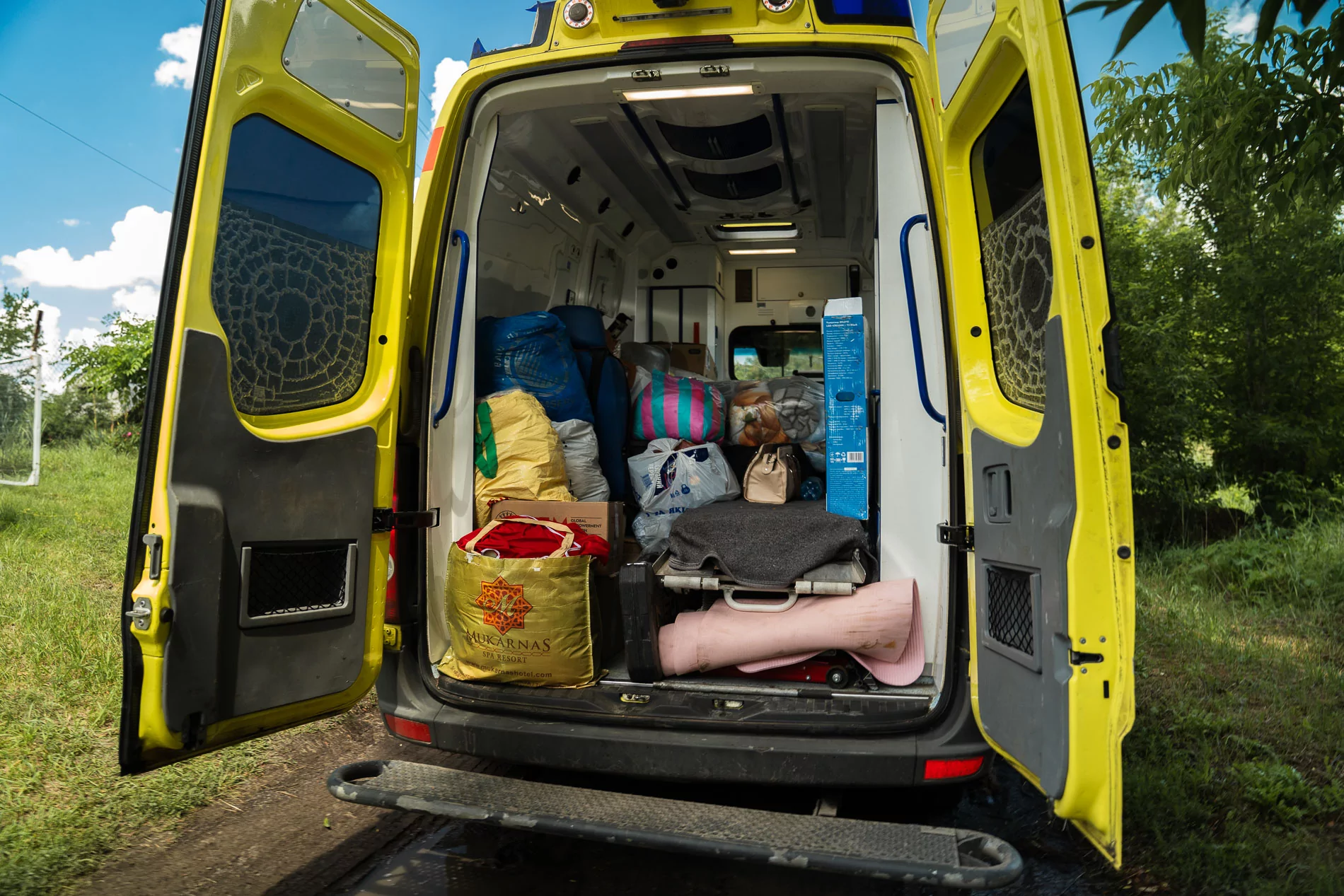
UKRAINE — The volunteers’ ambulance barely fits into the yard of a small house in Sloviansk, Donetsk oblast.
That’s a third place Leonid and his wife Liudmyla lived in after surviving Russian occupation in Yarova, a village about 12 miles from Sloviansk, and leaving it after liberation to get medical help. Both of them have cancer.
Yarova became the site of intense fighting, so the couple was unable to return home and moved to relatives’ place in the nearby Cherkaske village. They stayed there until May 23, 2026, when a Russian missile attack destroyed 34 houses, including the one where they lived.
“Only the foundation of the house remained. Everything else was destroyed, burned. All our belongings burned,” Liudmyla says.
Their belongings are laid out neatly in the yard. Everything the couple had was provided by volunteers or bought in a thrift shop. Now, they are leaving Sloviansk, too. Gwara Media’s journalists joined them on this evacuation mission.
Running from glide bombs
Both Liudmyla and Leonid are laser-focused on the task in front of them: get all of their bags in the car, get in themselves, and leave. Volunteers from the Kharkiv “I am saved” organization will help them to get to Izium in Kharkiv oblast, about 28 miles from here. The situation in Sloviansk, Liudmyla shares, has gotten worse.
“After we’ve just arrived, and Russians attacked the city, we would count up to 12 explosions and then go down to the shelter. Now, a shelter can’t save you here,” Liudmyla says. It’s clear that both of them are exhausted by the amount of Russian attacks.
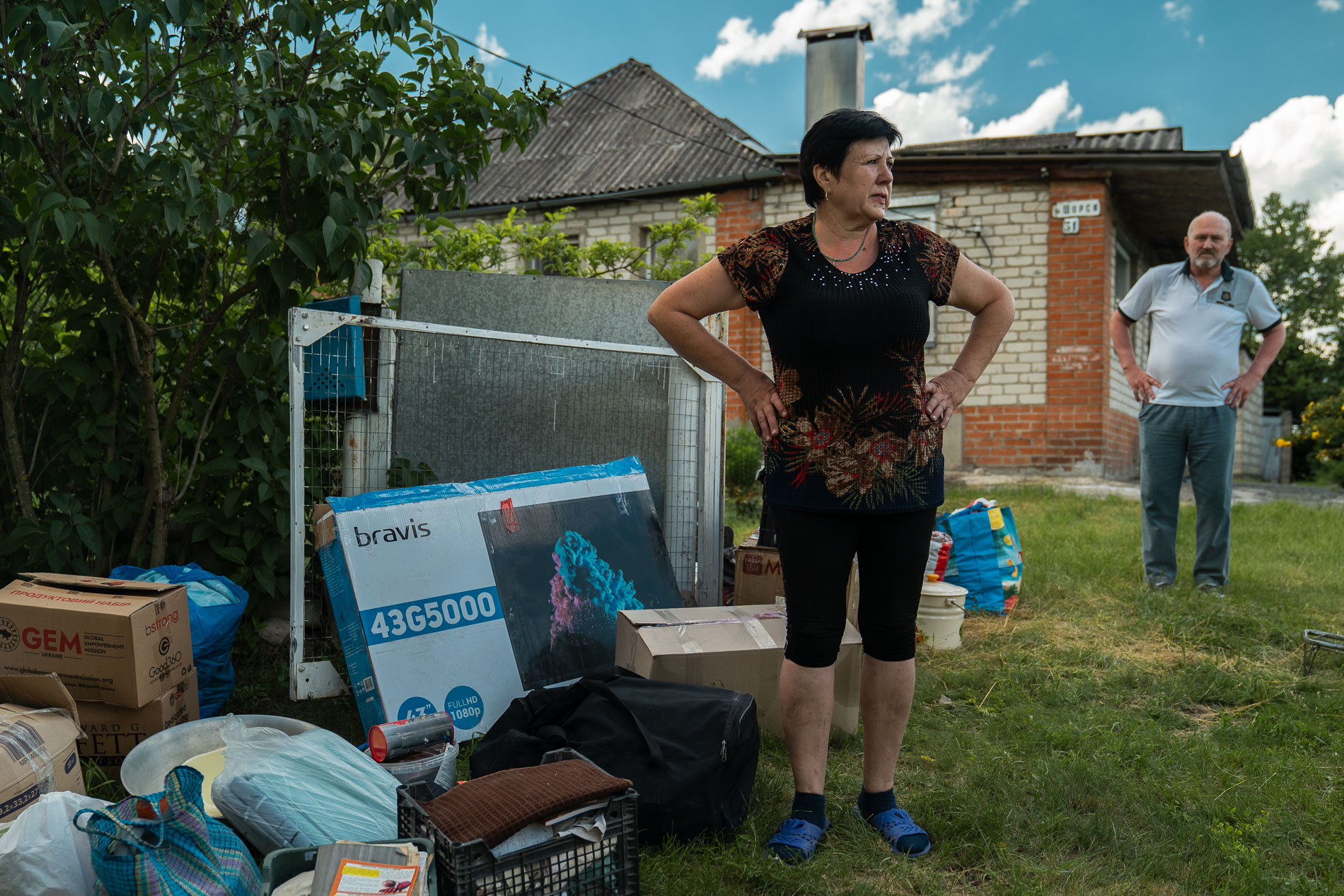
The volunteers help the couple load their belongings. The time for preparations is cut short with an air raid alert in the city.
Before leaving, one of the volunteers notices a thin fiber-optic cable stretching across the entire yard. Somewhere far from here, it might be connected to a Russian FPV. The volunteer takes scissors from his first-aid kit and cuts the cable. He says this should always be done when you see fiber optics because the drone may still be in the air.
Immediately after leaving, the volunteers receive a more detailed alert: Russian glide bombs are flying right up to Sloviansk. Along with Liudmyla and Leonid, they rush to the nearest basement to wait the threat out.
“Evacuating people with disabilities is difficult. The number of requests increases every day. And we only have one equipped ambulance and just a few armored vehicles,” Denys Stoianov, one of the volunteers, says.
This is not the only problem volunteers encounter. It’s also difficult to find housing for people with disabilities, Stoianov says. There are not many places in the organization’s specialized shelter, so volunteers have to find where to send evacuees next.
“Almost all facilities for people with disabilities across the country are full,” Denys adds. “For now, we are somehow managing, but it is difficult to say what will happen in the future.”
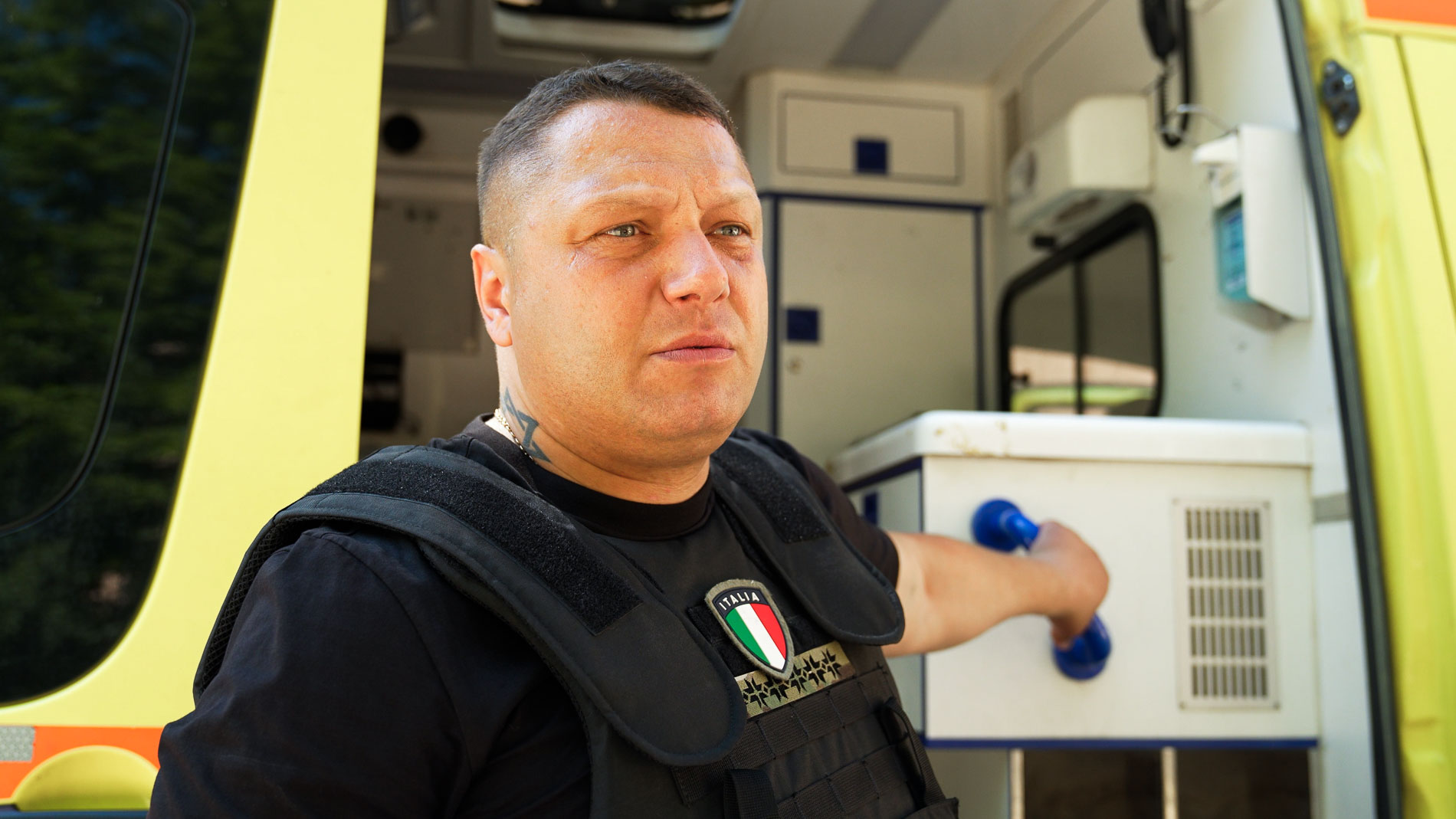
The basement that protects us from the glide bombs is in one of the Sloviansk schools. A few minutes after we get in, we hear the explosions.
Volunteers decide it’s time to leave quickly while Russian troops prepare the next attack.
“We’ll try to get through the road to Izium,” Denys says. “We have 20–30 minutes for this.”
The Sloviansk–Izium road, which connects Donetsk and Kharkiv regions, has become one of the most dangerous routes since last year because of the threat from Russian drones. But volunteers continue to evacuate hundreds of people using it, as it remains the shortest route to safety.
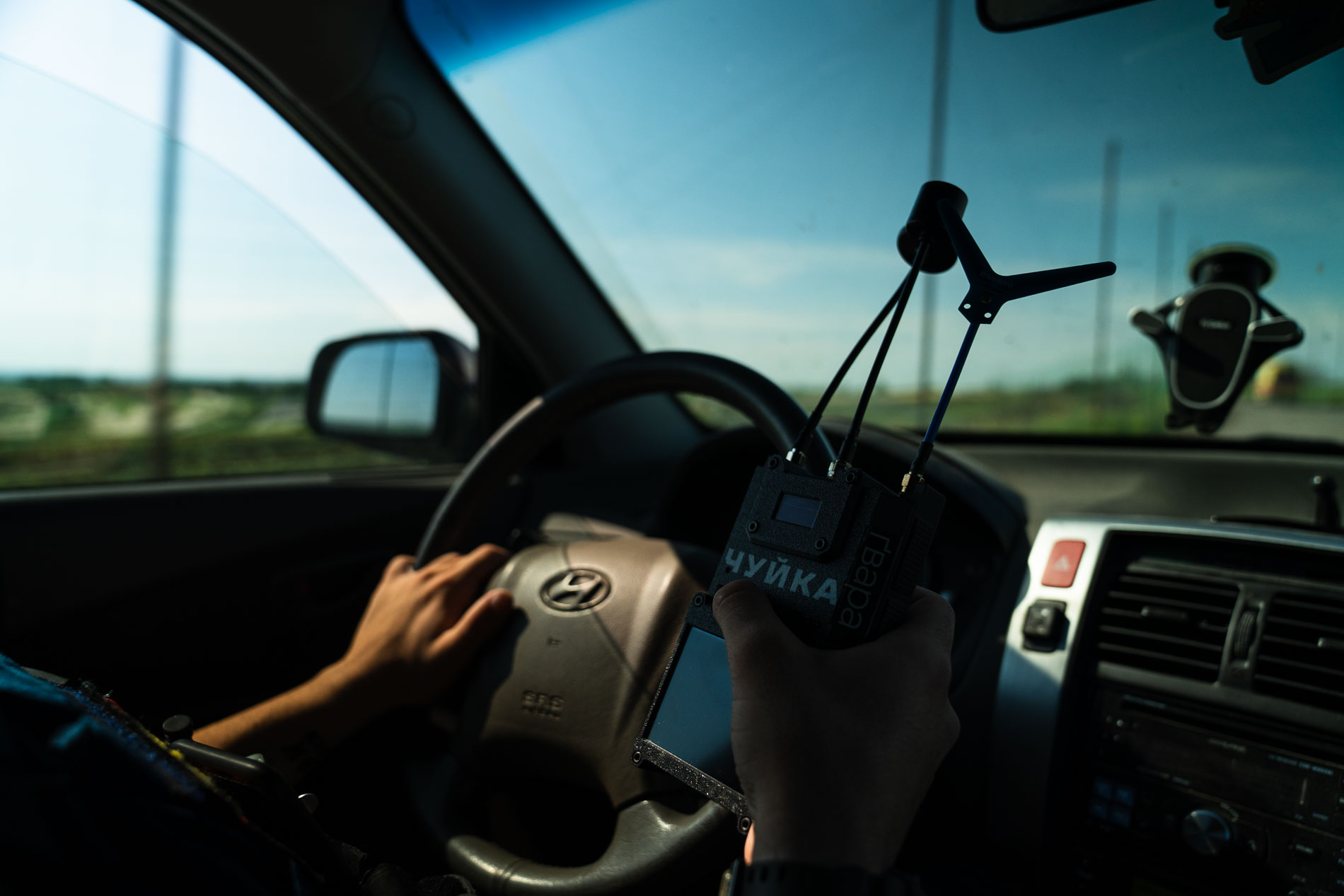
After leaving the city, volunteers need to drive at least 150 kilometers per hour (93 miles per hour), as Russian FPV drones may be in the air, including fiber-optic ones. They constantly monitor drone detectors.
If a clear image of their vehicle showed up on the detector’s screen would they need to stop immediately, get out, and hide. One of them captures a signal. It’s an image of the fields. They keep driving.
The volunteers reach Izium. Denys explains that Liudmyla and Leonid want to stay here with relatives as they had organized cancer treatment at a local hospital.
Finding the right address in Izium takes more time than the evacuation itself. But the volunteers bring the couple to the needed house. Before leaving, Denys wishes the evacuees good health and hopes they would not need the volunteers’ services again.
Liminal home
In a village not far from Lozova city, which serves as a transit point for displaced people from Donetsk oblast, there’s a shelter for people with disabilities who don’t have relatives that can host them like Leonid and Liudmyla. All of them — 17 people, to be exact — are from Donetsk oblast.
The number of evacuees changes every day as volunteers work quickly to help them find new housing. Unlike the transit center in Lozova, people can stay here without a time limit — as long as needed to resolve all bureaucratic and logistical issues. In total, volunteers can accommodate up to 20 people.
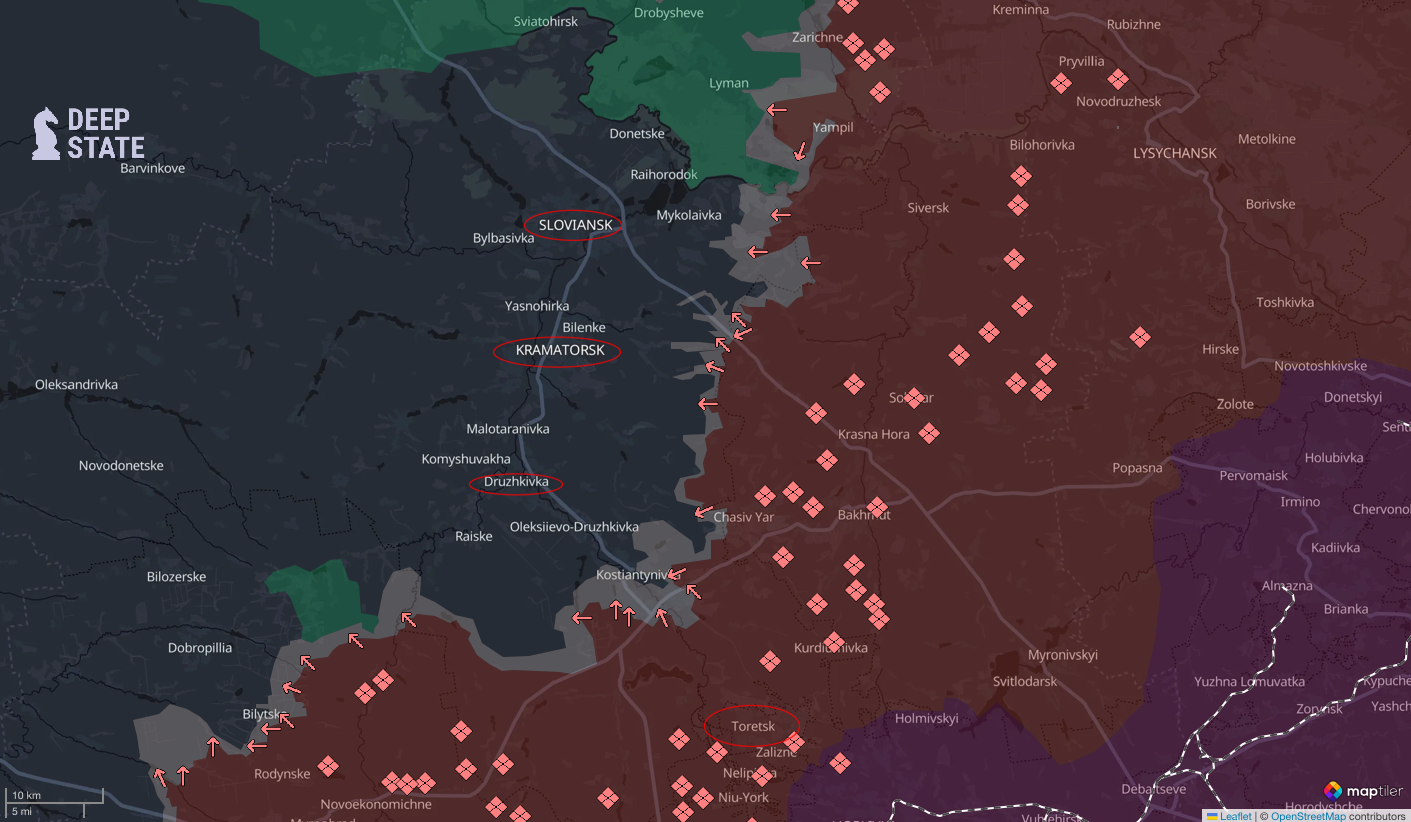
“The war drove us from home. Twice,” Ivan, one of the evacuees staying there, told us. Ivan is from Toretsk, Donetsk oblast. He lived there with his family until 2024, and they left because of the fighting in the city. They stayed in Druzhkivka, another city in the Donetsk oblast, but in June, Ivan decided to leave as well. The main reason is his brother, who has a disability.
The building of the shelter is small. It used to be a local school. Now, the classrooms are furnished with beds, wardrobes, and shelves filled with the belongings of evacuees.
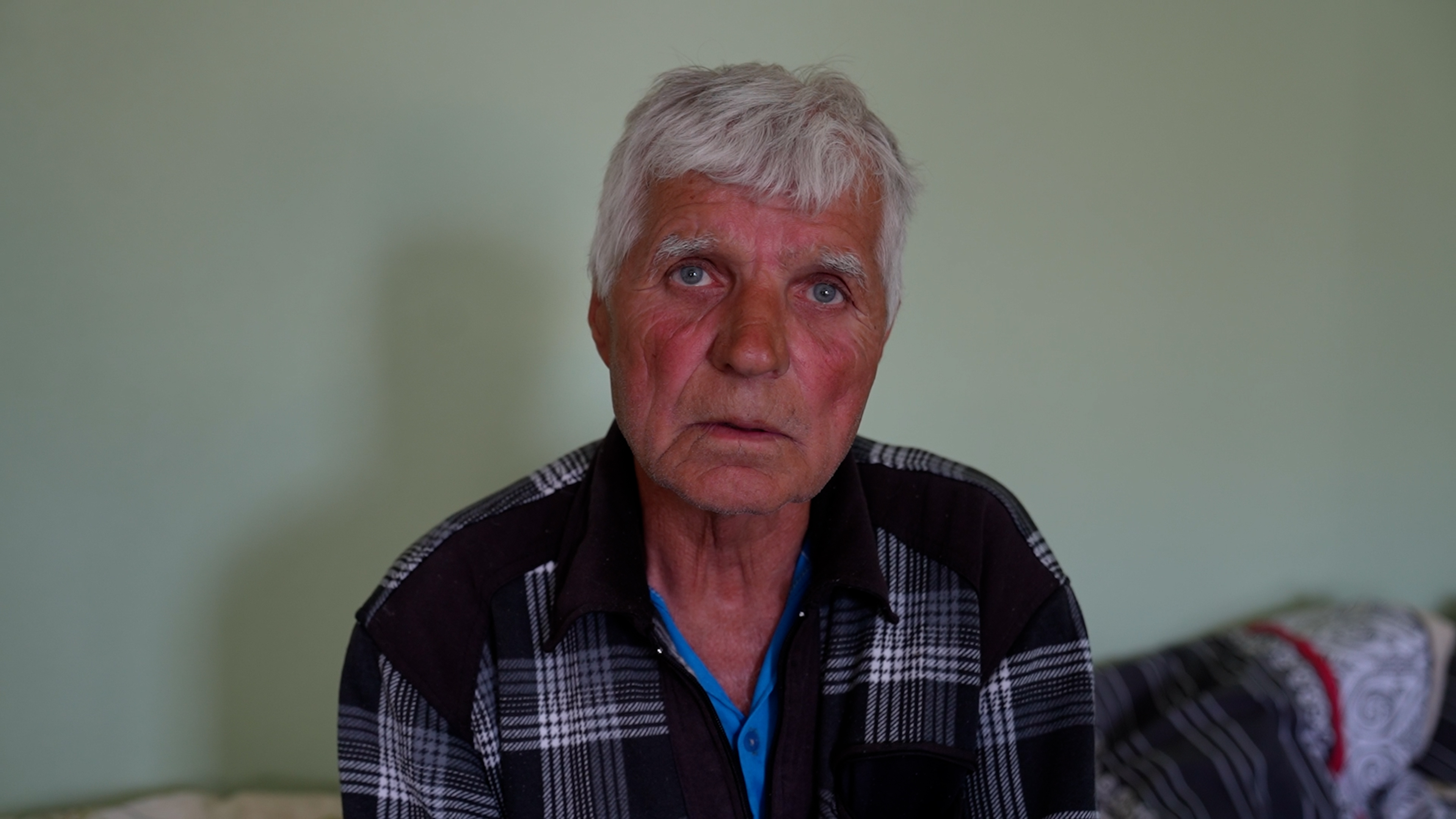
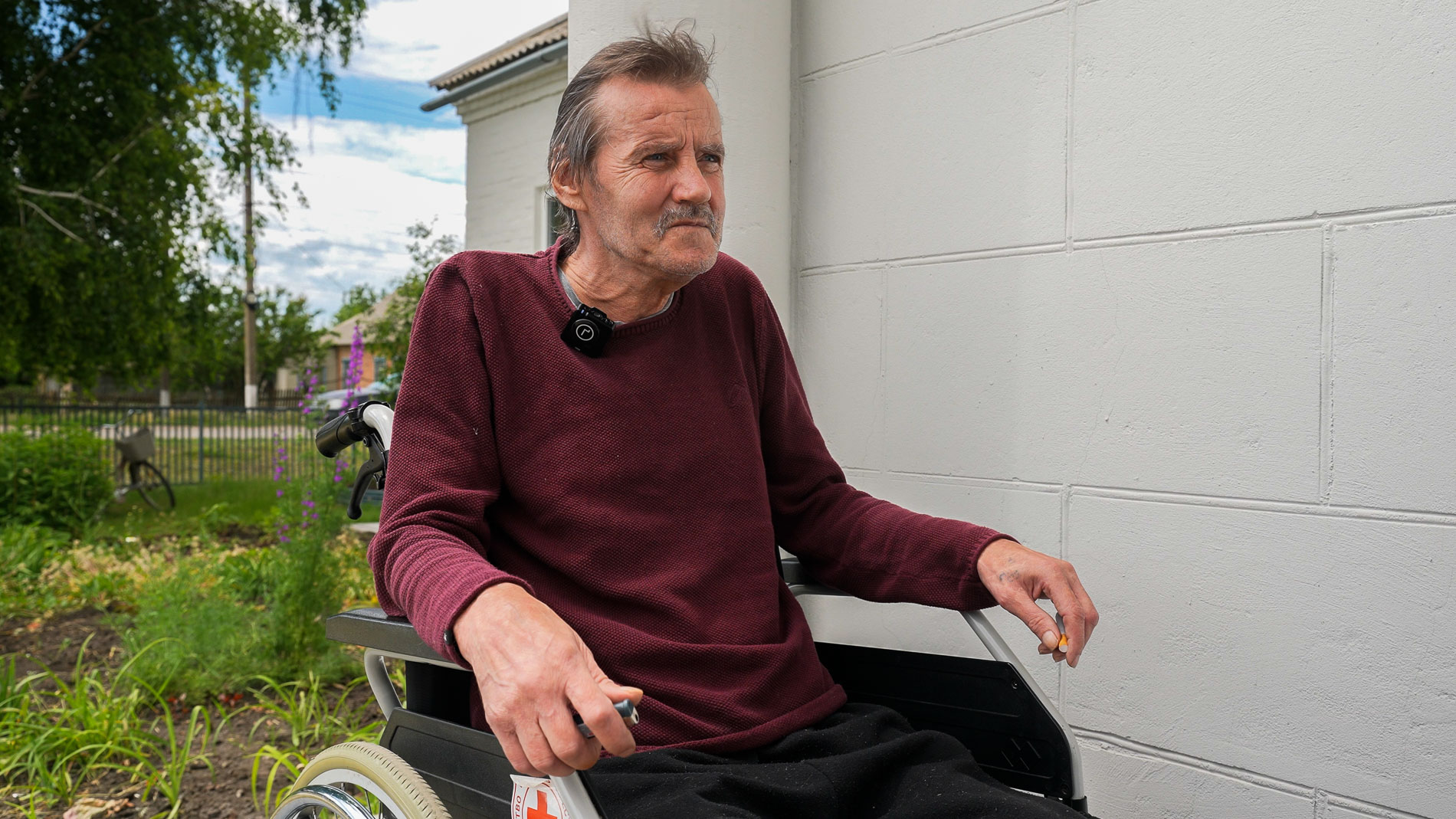
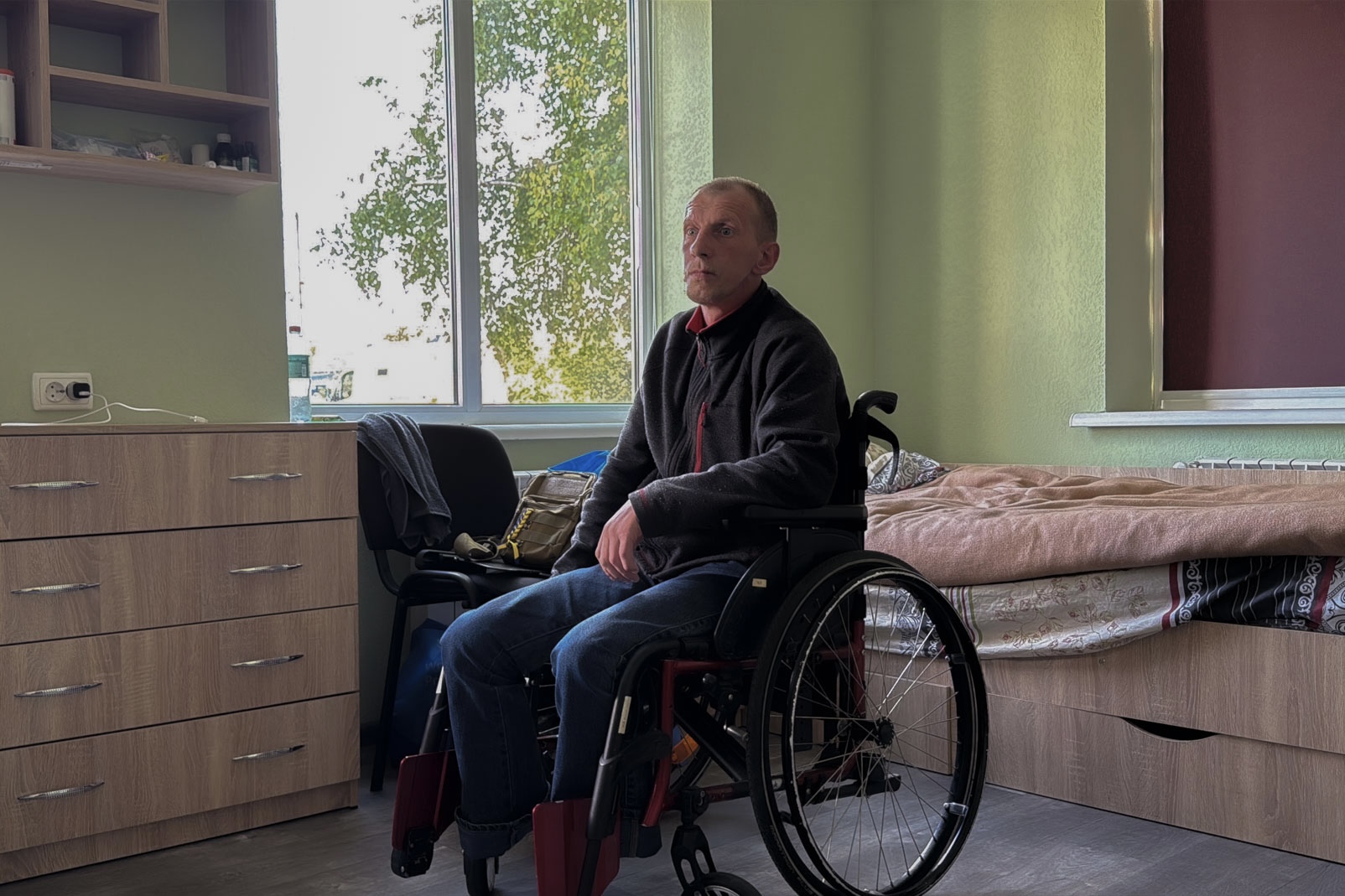
The entrance to the shelter is equipped with a wheelchair ramp. Volodymyr has just come down. He often goes outside to smoke in the yard near a neighboring tree.
Volodymyr lived in a village near Kramatorsk, a city in the Donetsk oblast. He lost both of his legs during one of the Russian attacks. He does not say much about his injury — says it’s painful to remember. Only shares that he underwent surgery and was evacuated to Lozova.
“After Lozova, they sent me here. I really like this place. The people are wonderful. I feel at home here,” the man adds with a smile.
Volodymyr doesn’t know where he will go next yet. He is waiting for the restoration of the documents that burned down along with his house. When they’re ready and a place to stay is found, volunteers will help him — he has no relatives.
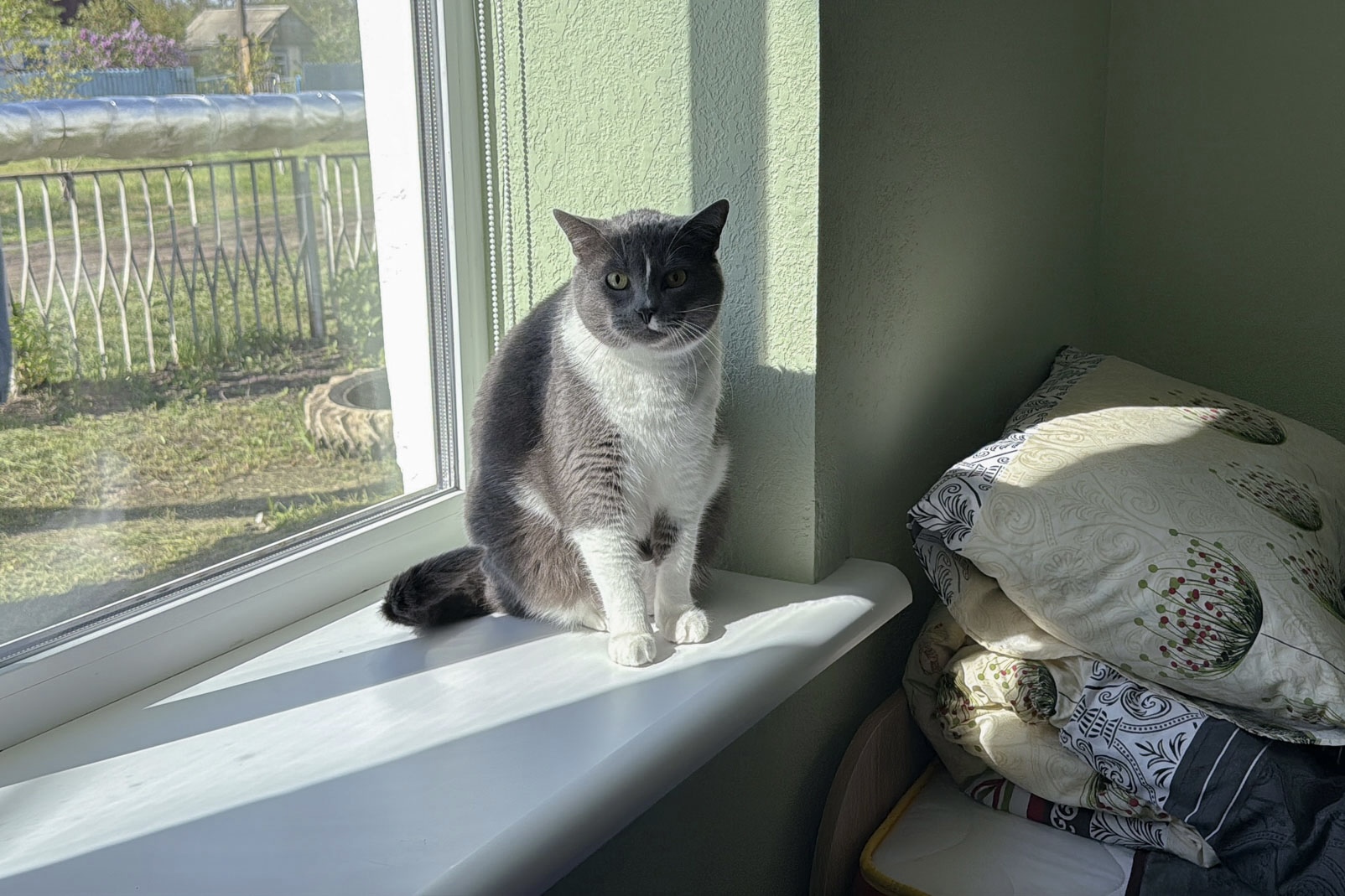
From the shelter’s window, a gray cat named Tishka watches Volodymyr. Its owner, Larysa, is from Sloviansk, like Liudmyla and Leonid. Larysa has had a disability since birth. She evacuated with a friend who takes care of her.
In Sloviansk, the women lived in a nine-story dormitory and decided to leave after explosions nearby shattered every window in the corridor.
“We’ve been staying at the shelter for a month,” Larysa says. “They still haven’t been able to find us a place to live. Especially with a cat.”
Tishka has kidney disease. Because of the Russian attacks on Sloviansk and subsequent evacuation, Larysa has not been able to give the cat the food that fits his diet for several months. She worries if Tishka will survive the journey to their new home.
“I told Tishka and my own body that we both have to make it through until the end of the war,” Larysa says.
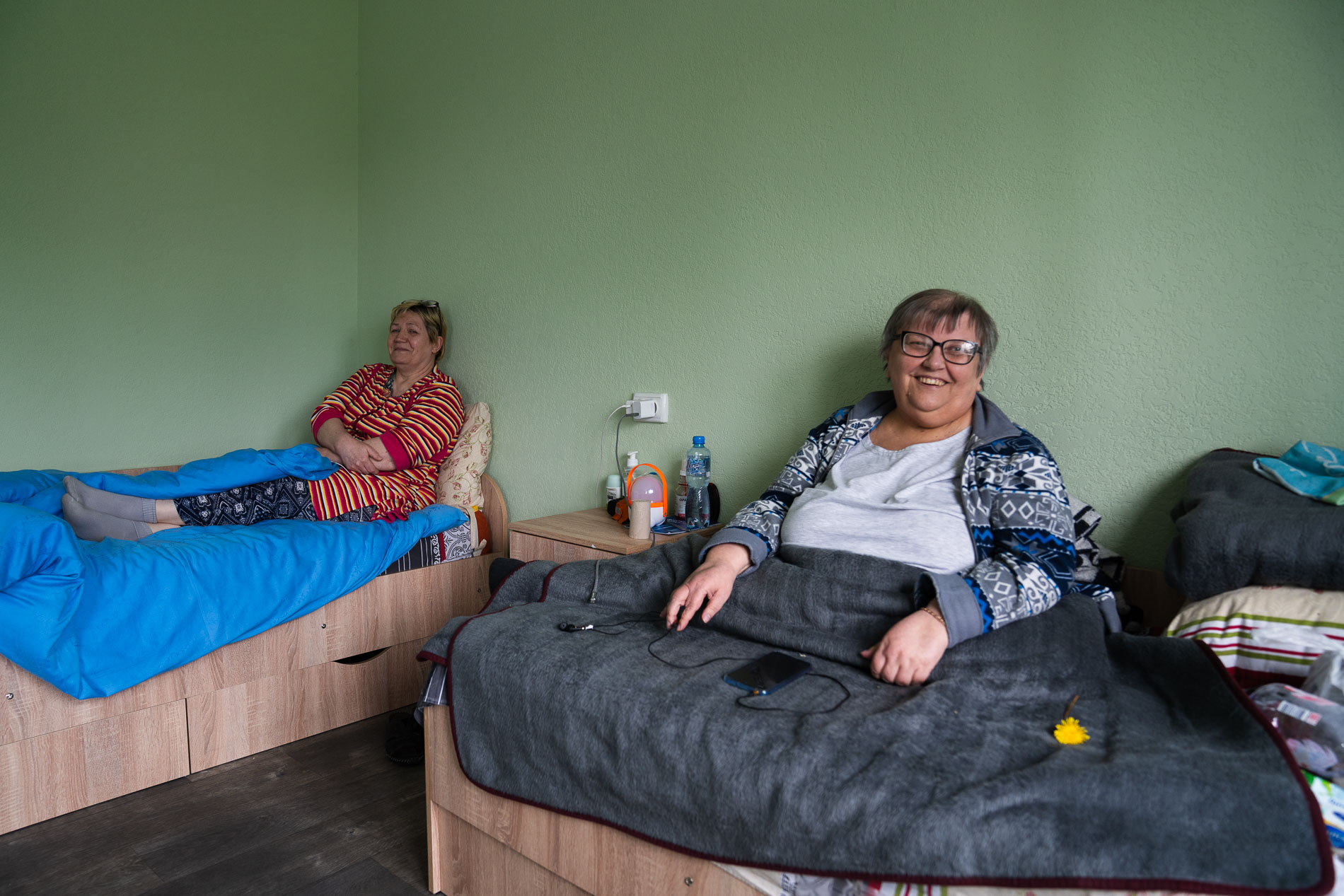
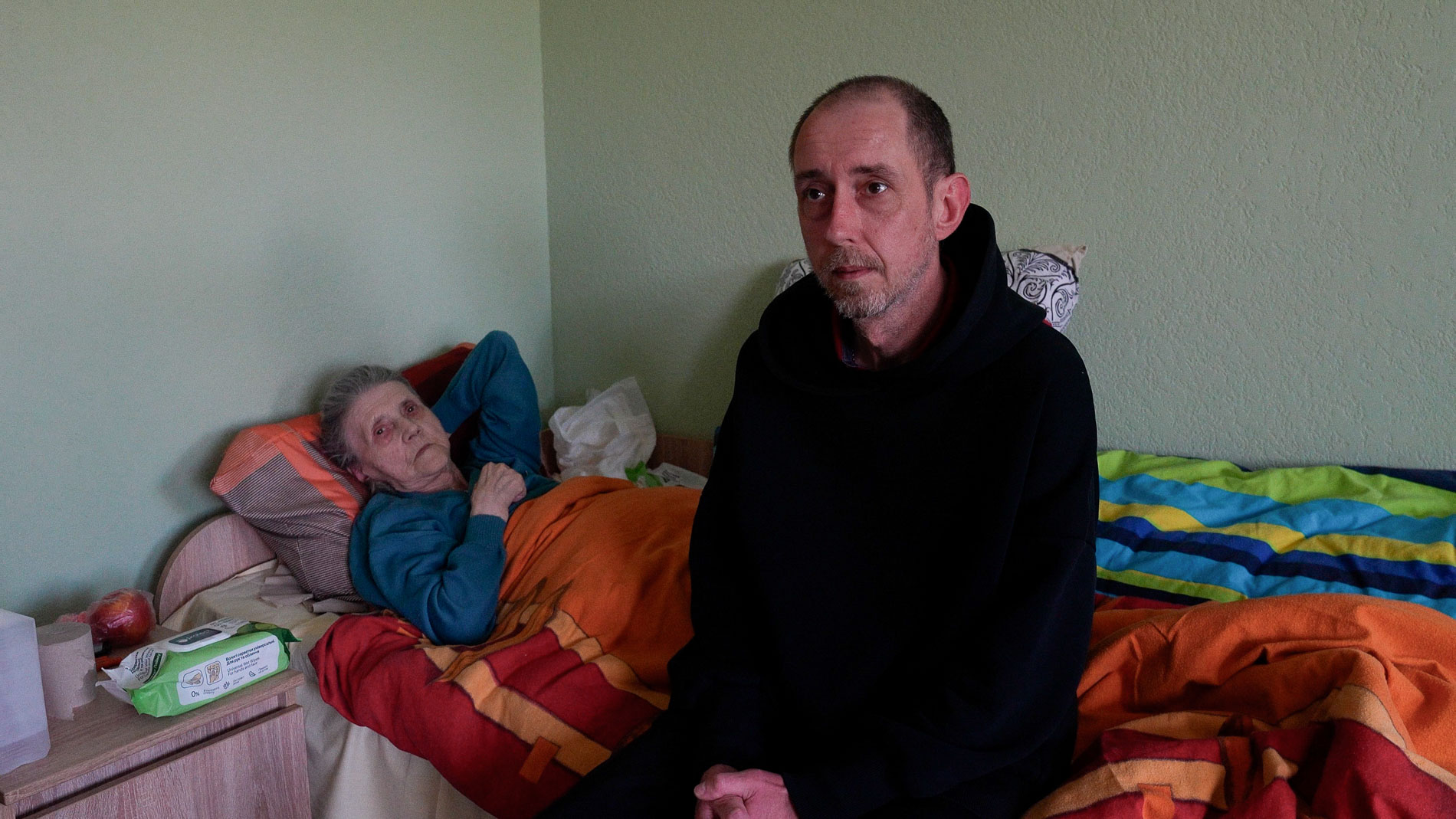
“My son and I hoped that the attacks would stop any day now until the very end. But it just kept getting worse and worse,” says Raisa, who lives in the room next to Larysa’s.
Raisa and her son Serhii came from Druzhkivka. A few weeks before our visit to the shelter, the security situation in the city had deteriorated. Almost all evacuation requests are now coming from there.
Last summer, Raisa has lost a leg because of an illness. She and Serhii lived without electricity and water for several months, Raisa tells us. A single shop worked in their neighborhood. Serhii would go there from time to time, hiding from Russian FPV drones overhead.
Joyful moments
The music interrupts Raisa’s story. Today, shelter volunteers planned a cultural program and invited a singer. She is too shy to share her name or to be photographed. It is her first time here.
She invites everyone to gather in a small room that usually serves as the dining hall. She turned on Chervona Ruta (one of the most famous Ukrainian songs), and people, tense and shy at the beginning, started singing and dancing.
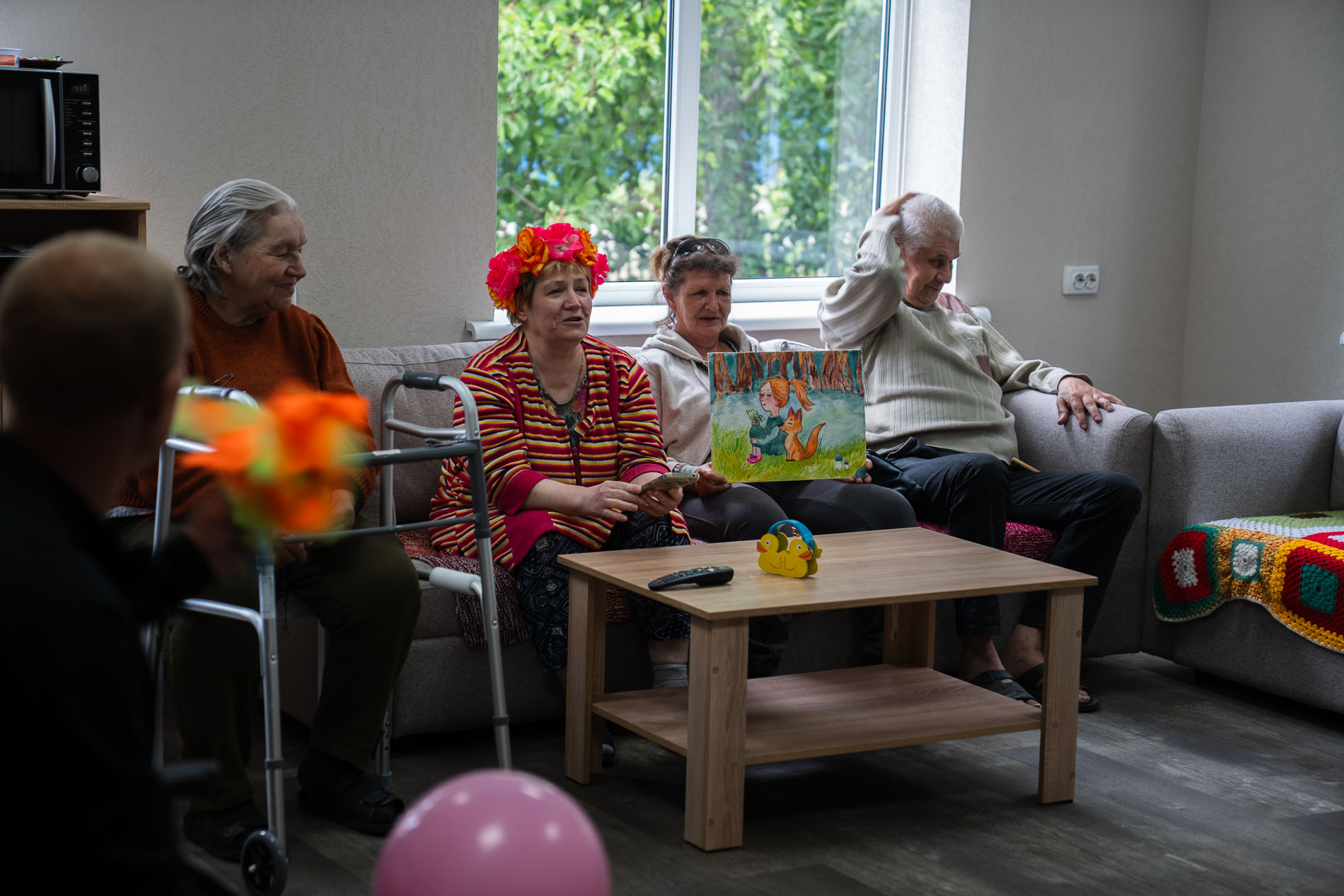
Denys especially enjoys the event. He is a former serviceman. During the winter on the frontline, he suffered frostbite on his feet. He underwent an amputation in Kramatorsk and remained in the hospital until a Russian strike hit nearby. Volunteers evacuated Denys to the shelter.
The man shares that he will be staying there for a long time because he is waiting for his documents to be restored. Still, he feels comfortable here, especially because volunteers try to provide people staying here with fun things to do.
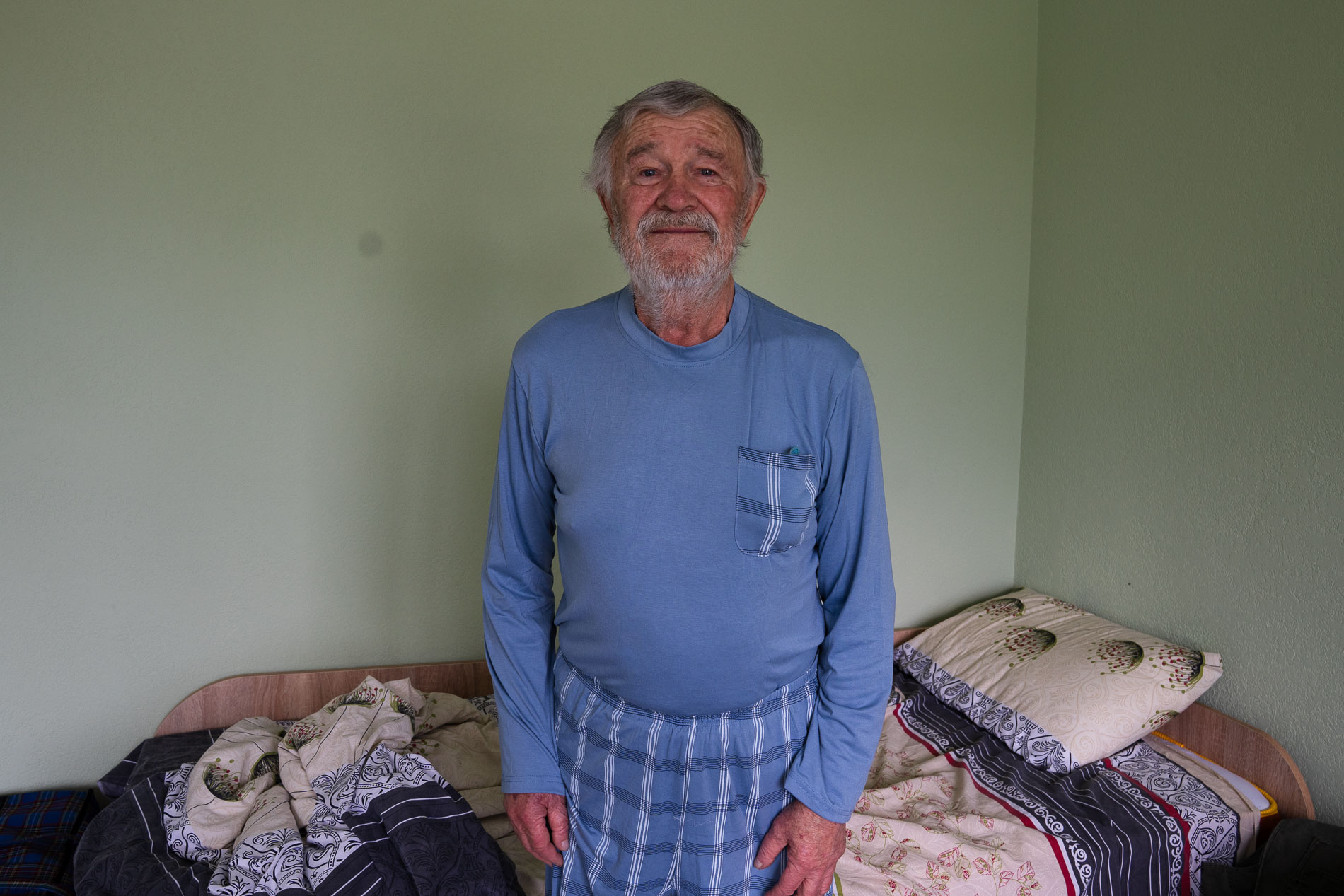
Ivan walks away from the music after the first song. He wants to be with his wife, Halyna.
“She has glaucoma, she can’t see,” Ivan says. “I guided her by the arm throughout the evacuation, and now I try not to leave her alone.”
Ivan himself recently suffered a stroke. He jokes that now, limping, he finally looks his age, because before that no one believed he was 80.
The couple has been staying at the shelter for only a few days. Shortly after they left Druzhkivka, the Russians attacked their neighborhood. They don’t know if their house is intact.
“We always keep our house keys in our pockets. We want to believe we’ll be able to return,” the man shares.
Neither Ivan nor Halyna knows where they will go next. They have no relatives in Ukraine, so their only option is going to friends in Poland. A journey that can be made very difficult by their health.
Ivan thinks it can’t be harder than evacuation, though. He expects volunteers that organized it to help with this next stage of their journey.
The number of evacuation requests for people with disabilities continues to grow. Recently, the mandatory evacuation zone has also been expanded in the Kharkiv oblast.
Dmytro Lozhenko, head of the I Am Saved organization, says that they plan to open another shelter for people with disabilities in Kharkiv, where volunteers will house evacuees from the Kharkiv oblast. The shelter will have 30 places.
Overall, since the beginning of the full-scale invasion, volunteers have managed to evacuate more than 5,000 people with disabilities.
Read more
- Kharkiv children go back to schools underground, behind armored doors
Hi! Elza here. It took me a long time to write this text. Together with my colleagues, we worked with the shelter’s volunteers three times. I wanted to show the entire journey — from evacuation to life at the shelter — that volunteers and evacuees go through every day. If you’re interested, please support our Kharkiv-based newsroom with a $5 coffee so we can tell you more about the lives of people in frontline Kharkiv and the region.


Subscribe to news from Kharkiv, Ukraine
Most important stories from the frontline region