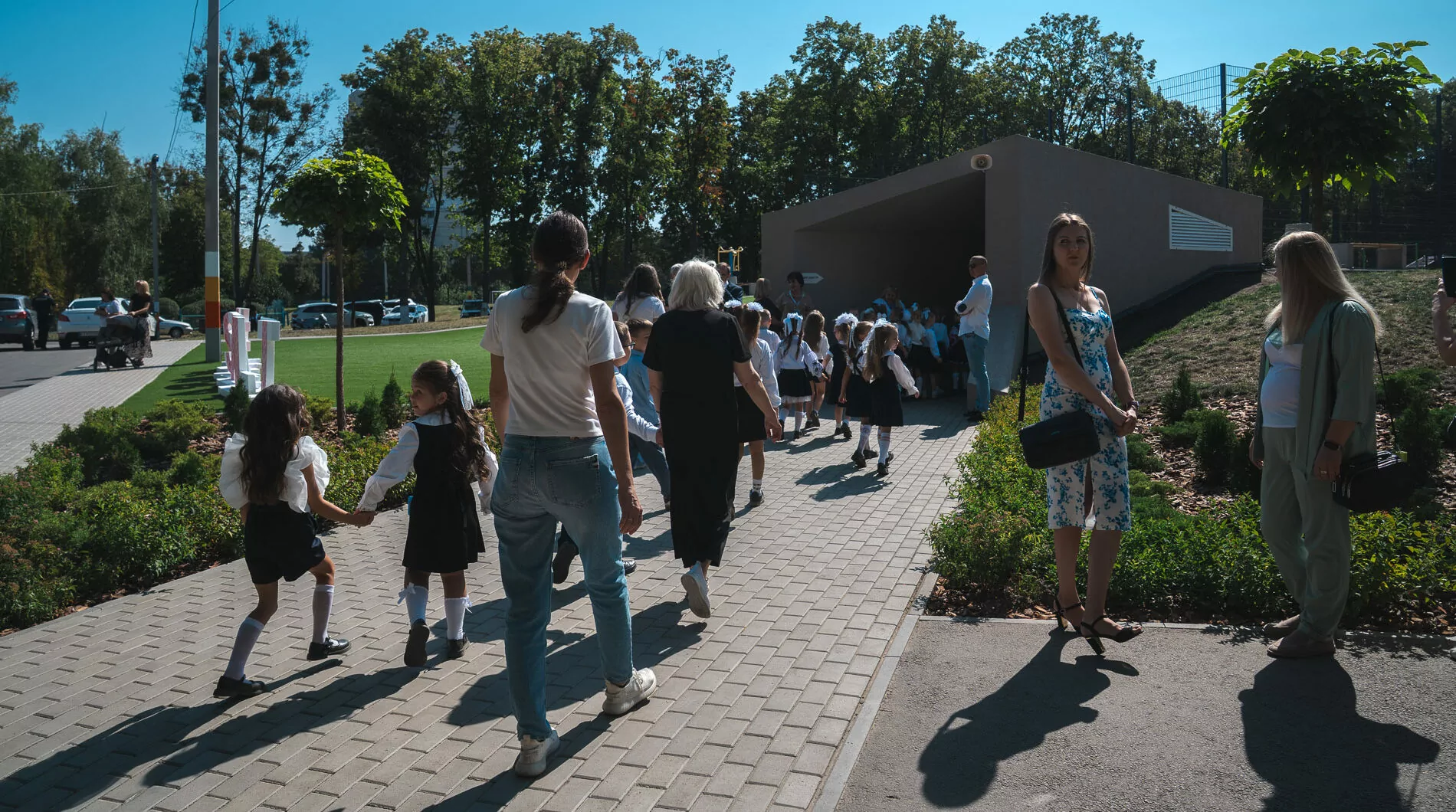
UKRAINE, KHARKIV — The first day of fall continued the summer heat. In the courtyard of one of Kharkiv’s lyceums, parents held their children by the hand as they waited in the shade under the trees.
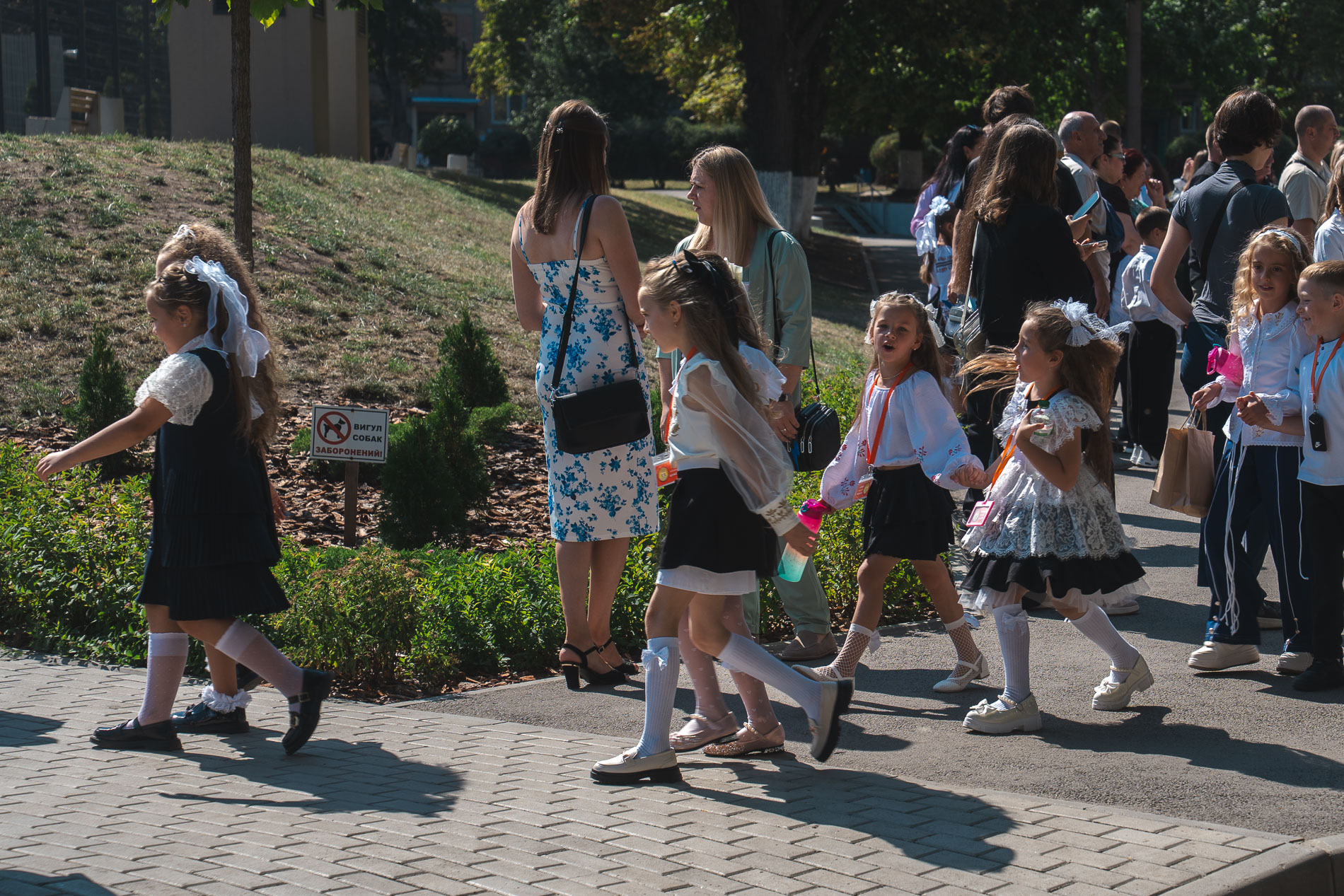
In Ukraine, the new school year traditionally begins on Sep. 1. Teachers carefully lined up first-graders in rows for a welcoming ceremony before leading them to classes. Only one detail sets this day apart from the prewar years — both the celebration and the lessons now take place underground.
After Russia launched its full-scale invasion of Ukraine in 2022, schools in Kharkiv and its region switched to online learning. In 2023, local authorities set up underground schools in metro stations and built others from the ground up.
In total, there are 10 underground schools working in Kharkiv now. Gwara Media journalists visited one of them and spoke with teachers, students, and their parents about the start of the school year amid the threat of Russian attacks.
First day underground
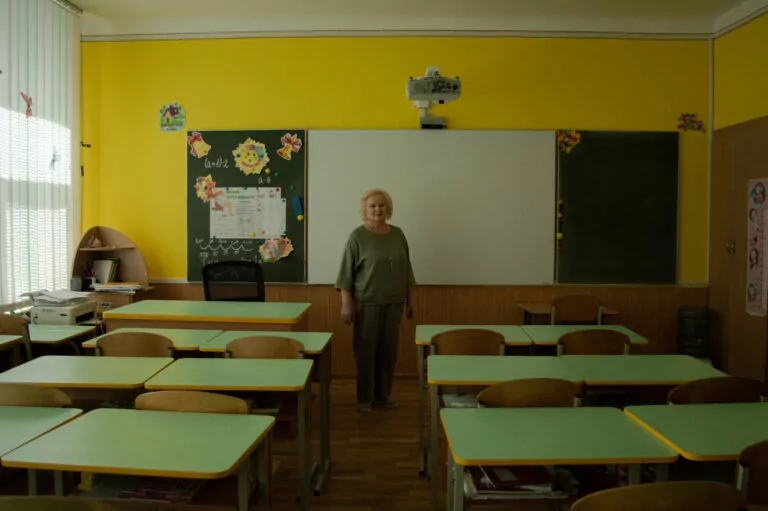
Students and teachers went down a long staircase to the underground school. Behind the armored door is a long hallway, at the end of which is a small assembly hall. Along the way, there are many doors decorated with colorful ornaments, leading to the classrooms.
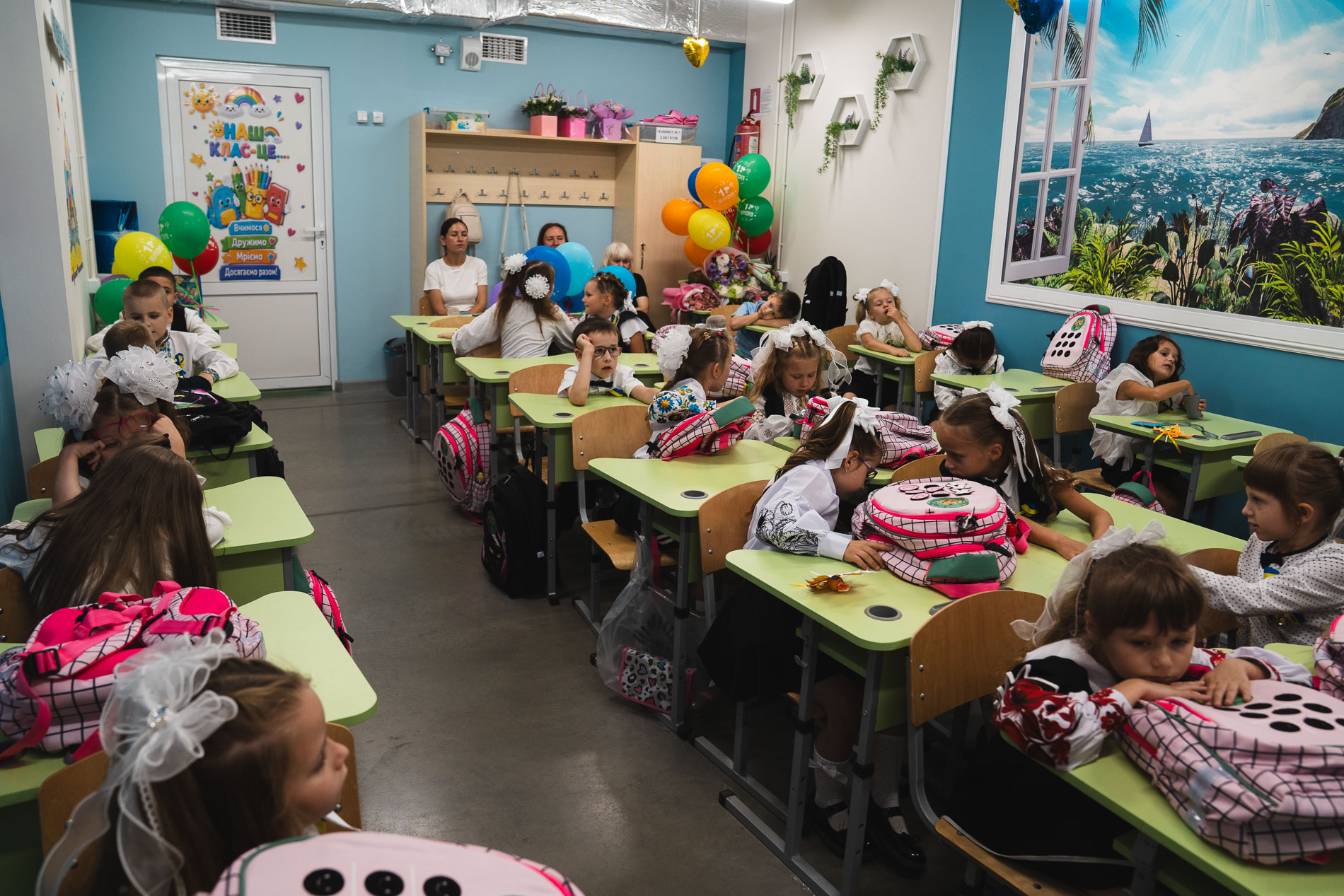
For the second year in a row, about 2,000 students from six schools across the Saltivskyi district, also known as Saltivka, have been attending classes here, Vladyslav Kronhauz, the director of Kharkiv lyceum №138, said. With only 20 classrooms available, the school works in three shifts.
Today, a festive atmosphere reigns at the school. The hallway was filled with students and their parents waiting for the start-of-school ceremonies.
Among them is Iryna Doshchak, deputy director of Kharkiv lyceum №138. She recalled a long-standing school tradition of pinning small bells to the uniforms of graduates, who then accompany first-graders as they begin their first day of school. The tradition endured the war — only now the celebration takes place underground.
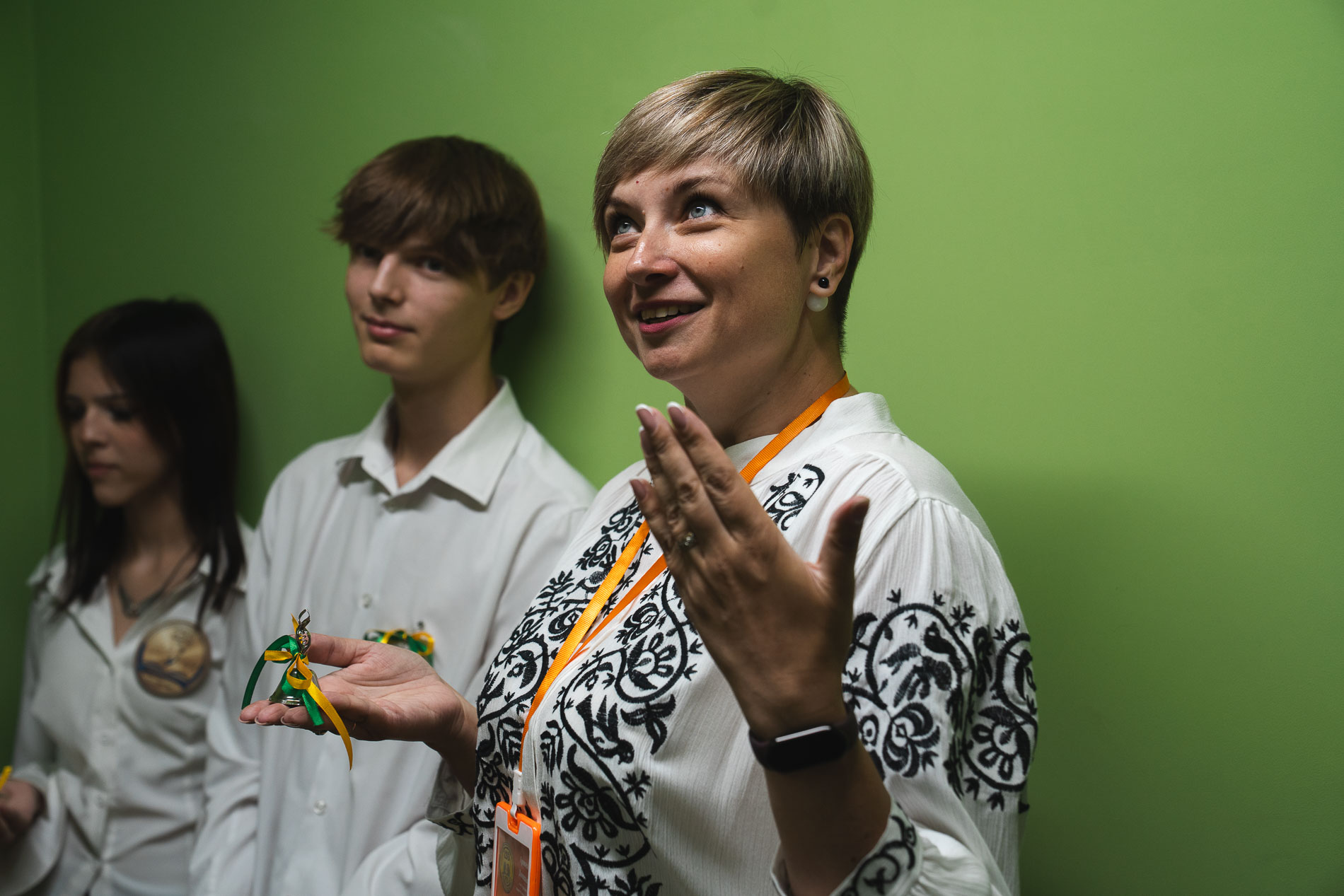
The hall cannot hold all students from six schools at once, so each school held its ceremony separately.
This system was also implemented for safety concerns. It is too dangerous for all students and their parents to be in one place at the same time.
Just as one of the ceremonies was underway, an air raid siren sounded. The Russian Banderol missiles were heading toward the city.
At the same time, the students and parents from another school, whose ceremony was scheduled next, had already begun gathering outside. The teachers led everyone into the underground school to wait out the threat.
The underground school
The demand in underground schools is especially high in Saltivka, one of the most densely populated areas in Kharkiv and, at the same time, one of the most exposed to attacks. Air raid alerts are a frequent part of life in this district, as Russian drones and other weapons often approach the city through this part of Kharkiv, making shelters for children to study particularly important.
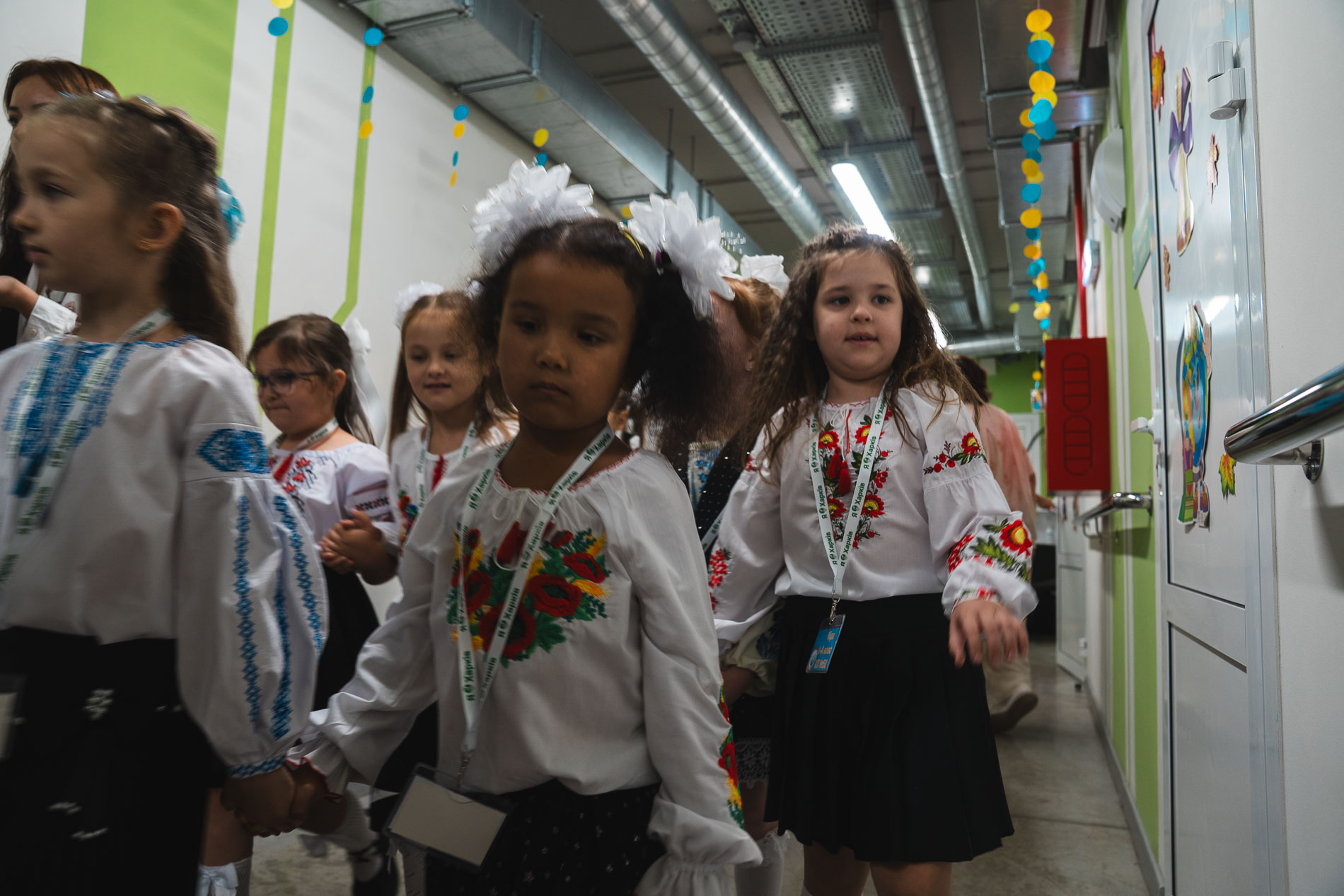
Among those who had come to study underground was the group of first-graders led by Anna Plekhanova, an elementary school teacher at the Kharkiv lyceum №128. This year, her school enrolled 46 six- and seven-year-olds in first grade, more than half of them displaced children from frontline settlements across Kharkiv oblast. Before Russia’s full-scale invasion of Ukraine, the school admitted roughly twice as many first graders.
“We can’t enroll more children now because there are not enough rooms for everyone in the underground school,” Anna said.
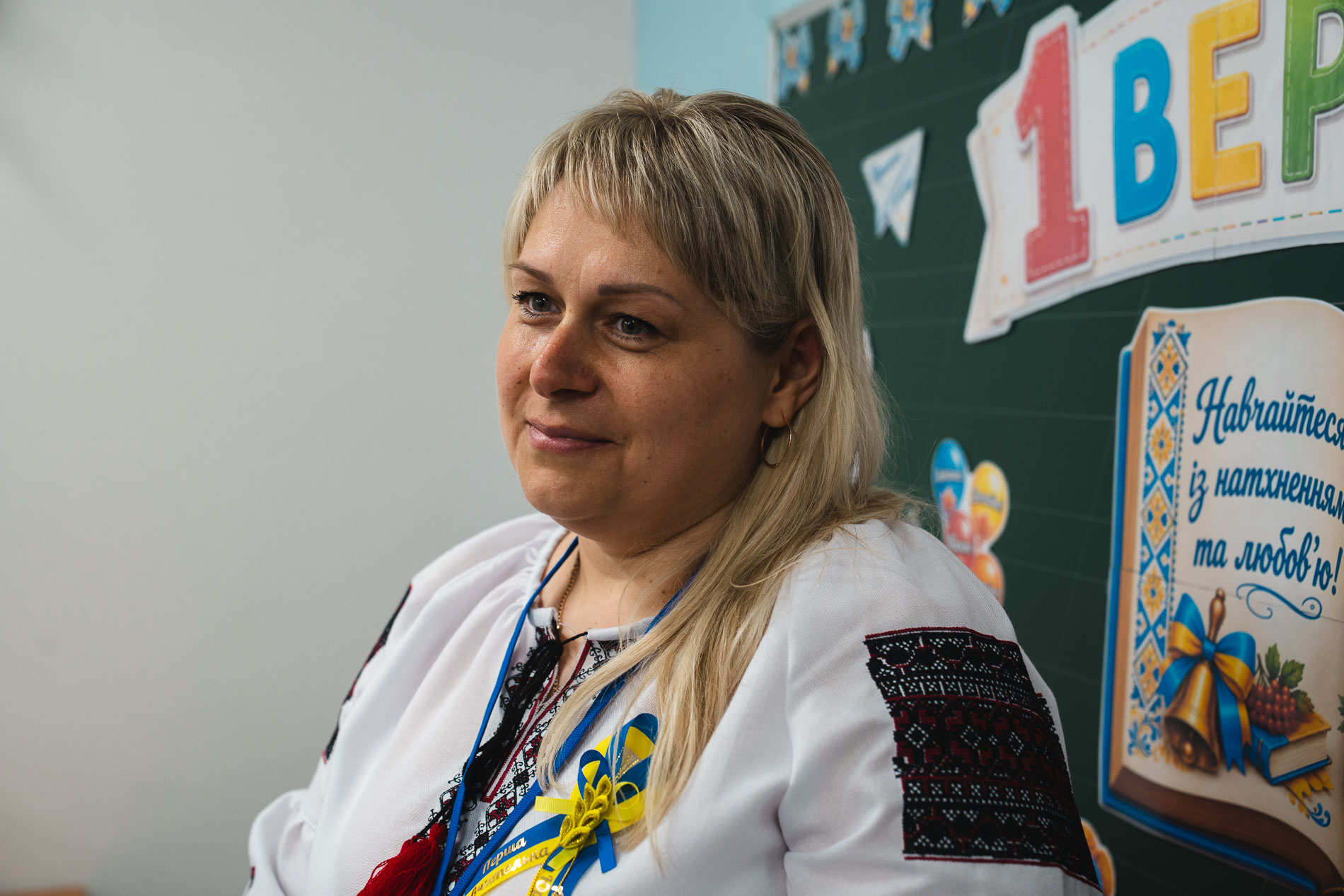
Sofia, a first-grader, sat by the teacher’s desk. She said she had been really looking forward to starting school.
“I’m not afraid to go to class because lessons are held in a shelter,” Sofia said.
Sofia said that she enjoyed her first lesson with Anna, whom she described as very kind to the children. When asked about her dreams, Sofia answers confidently that she wants to be a military officer.
Two of her classmates, Kirill and Bohdan, were playing nearby. For them, the start of the school year brings something ordinary that the war made harder to come by: a chance to meet other children and make new friends. During breaks between lessons, if there’s no alert, they will play soccer outside.
To study among other children
Mariia has a double celebration today. Her son, Vlad, is starting his final year of school, while her daughter, Elia, is starting first grade.
The family chose lyceum №138 because Mariia herself attended it as a child. Back then, classes weren’t held underground. Mariia still knows some of the teachers from her school and wanted her children to continue that connection.
The Russian full-scale invasion in 2022 interrupted those plans. The family left Kharkiv, and Vlad continued his studies online. They returned to the city this year.
Mariia said she was especially happy that both of her children can now attend classes and spend time with their classmates face-to-face, rather than through a computer screen.
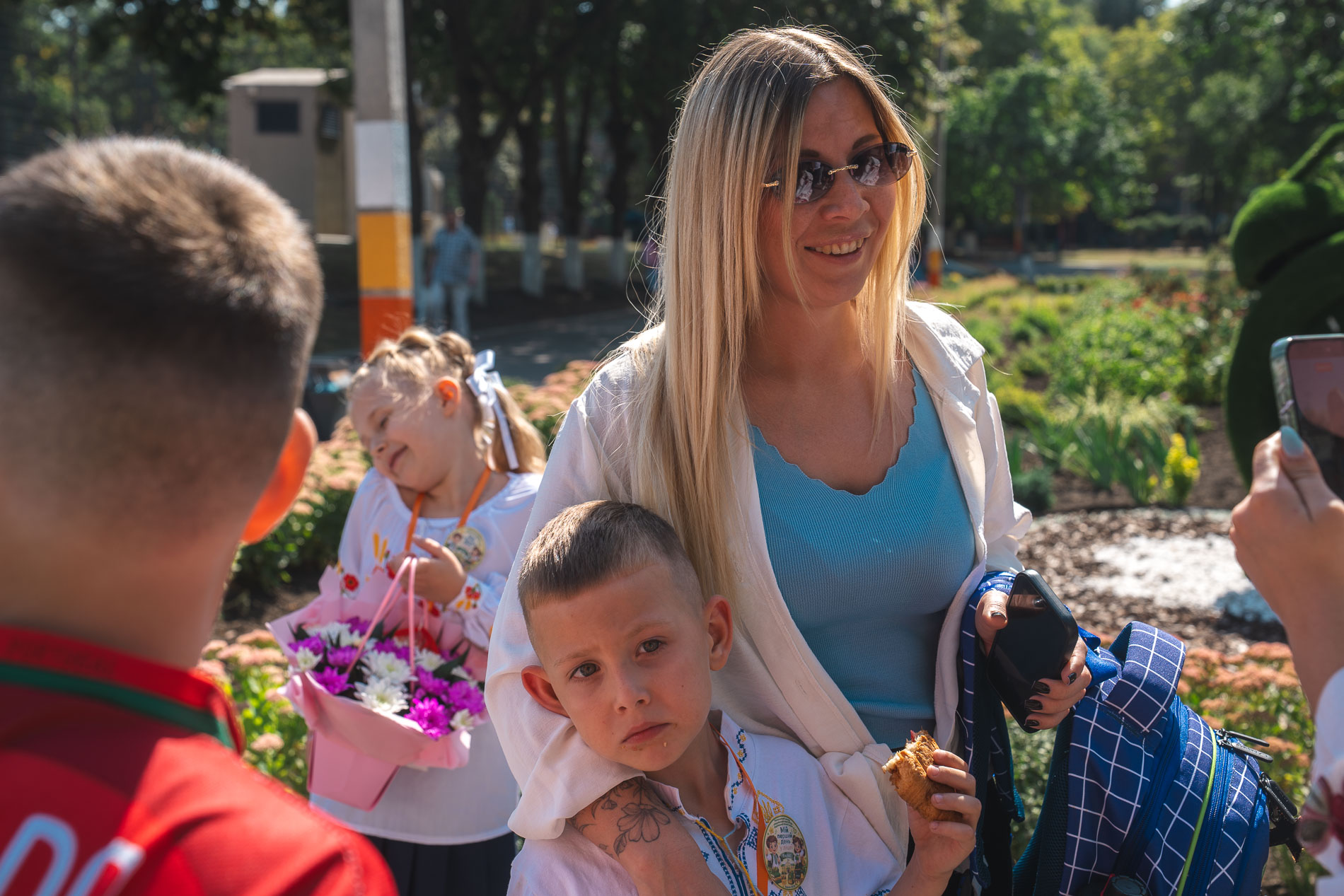
A 10-year-old Denys, who was starting his fourth year of school, held the hand of his younger brother Danylo, who was dressed in a vyshyvanka, traditional Ukrainian embroidered clothing. For Danylo, this was his first day at school. “I often told my brother how much fun it is to study with other children,” Denys said.
Olena, the boys’ mother, told Gwara that offline lessons provide children with something that online lessons cannot replace.
“Online lessons don’t provide the same kind of knowledge. It’s hard for a child. Offline school is much more comfortable.”
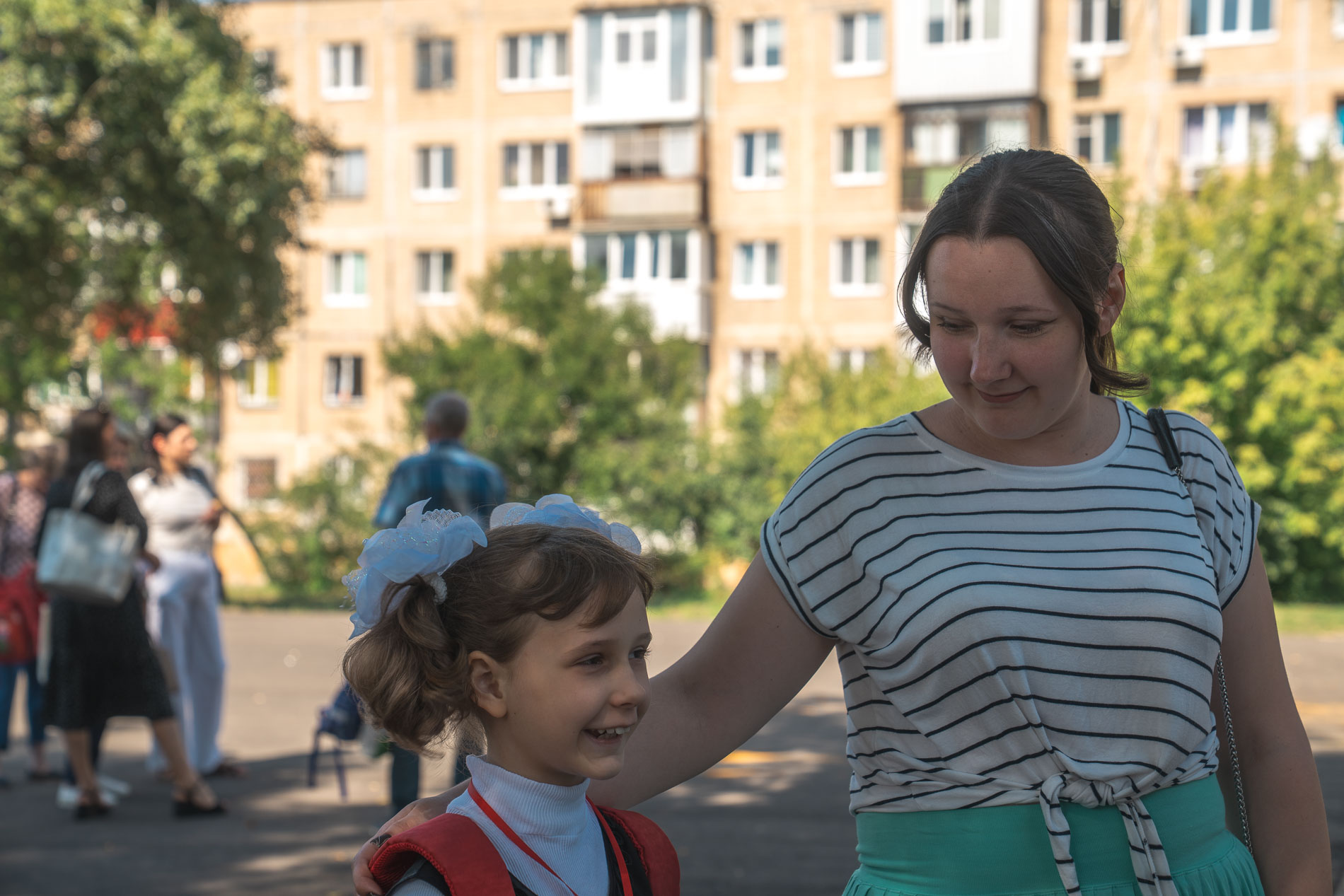
Another mother, also named Olena, said that returning to offline classes gave the chance for children to socialize.
Her daughter Anna stood beside Olena. She loves to draw and was looking forward to her next art class.
“I already have one friend in my class. I like talking with my classmates,” Anna said.
Read more
- Russia hits Kharkiv with frequent FPV attacks as authorities rush to counter the threat
Hi! I’m Elza, the author of this text. In the fourth year of Russia’s full-scale invasion, underground schools have become part of daily life for Kharkiv locals. I find this both fascinating and terrifying, but such is the reality of life in a city near the front lines. Please support our newsroom by buying us a $5 coffee or subscribing to our community so we can share more stories about what life is like in Kharkiv under the threat of Russian attacks.


Subscribe to news from Kharkiv, Ukraine
Most important stories from the frontline region