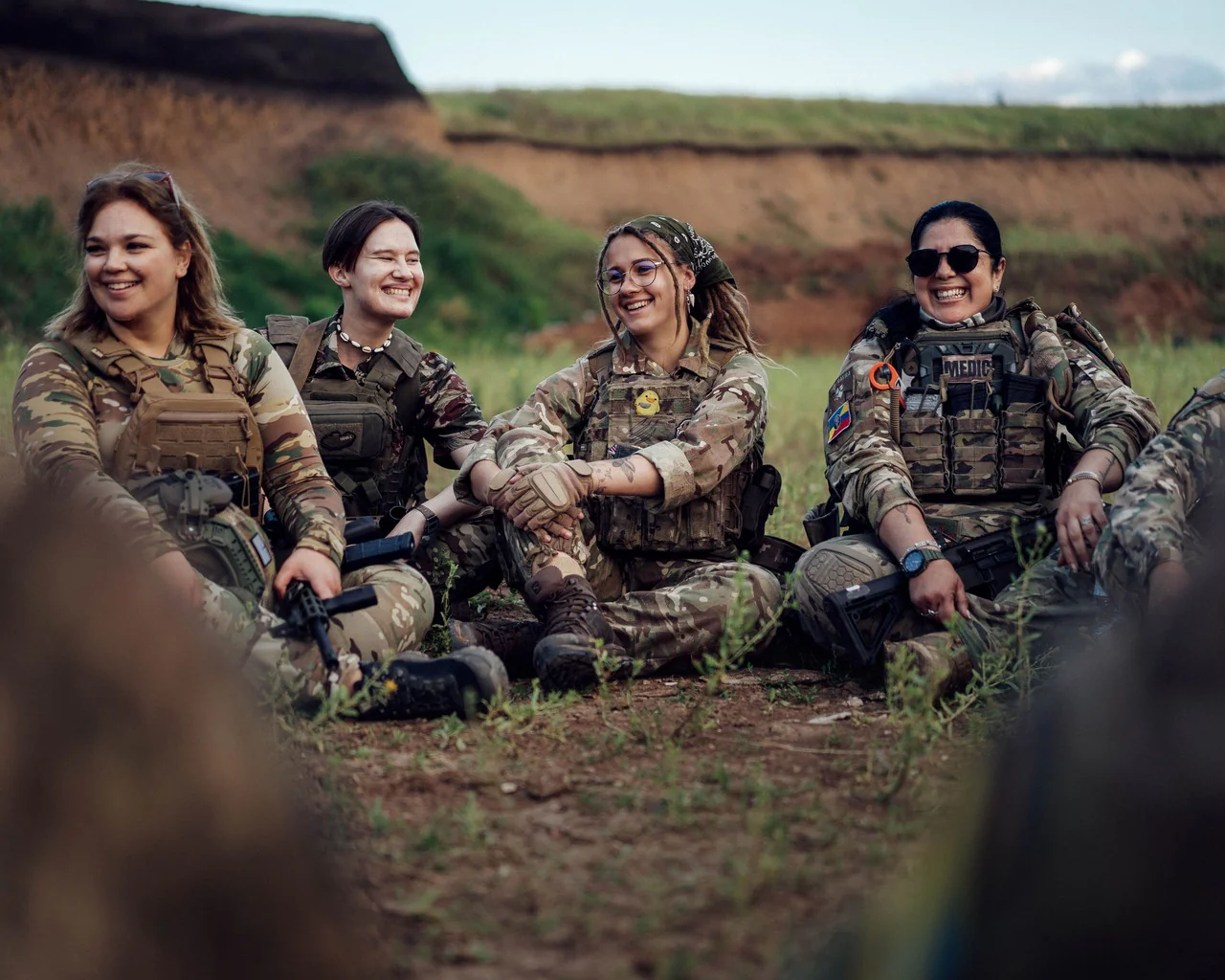
UKRAINE, KHARKIV OBLAST — “Oh my god. I’m finally here,” Odesa exclaims as she steps out of the car. Her sister-in-arms immediately encircle her. Odesa, as well as the other women who serve in Khartiia, have come to a remote training ground in Kharkiv oblast for target practice. But training is also a rare opportunity to see each other.
Odesa is 39. She serves as a combat medic. Born in the Odesa oblast in southern Ukraine, she chose the city’s name as her callsign.
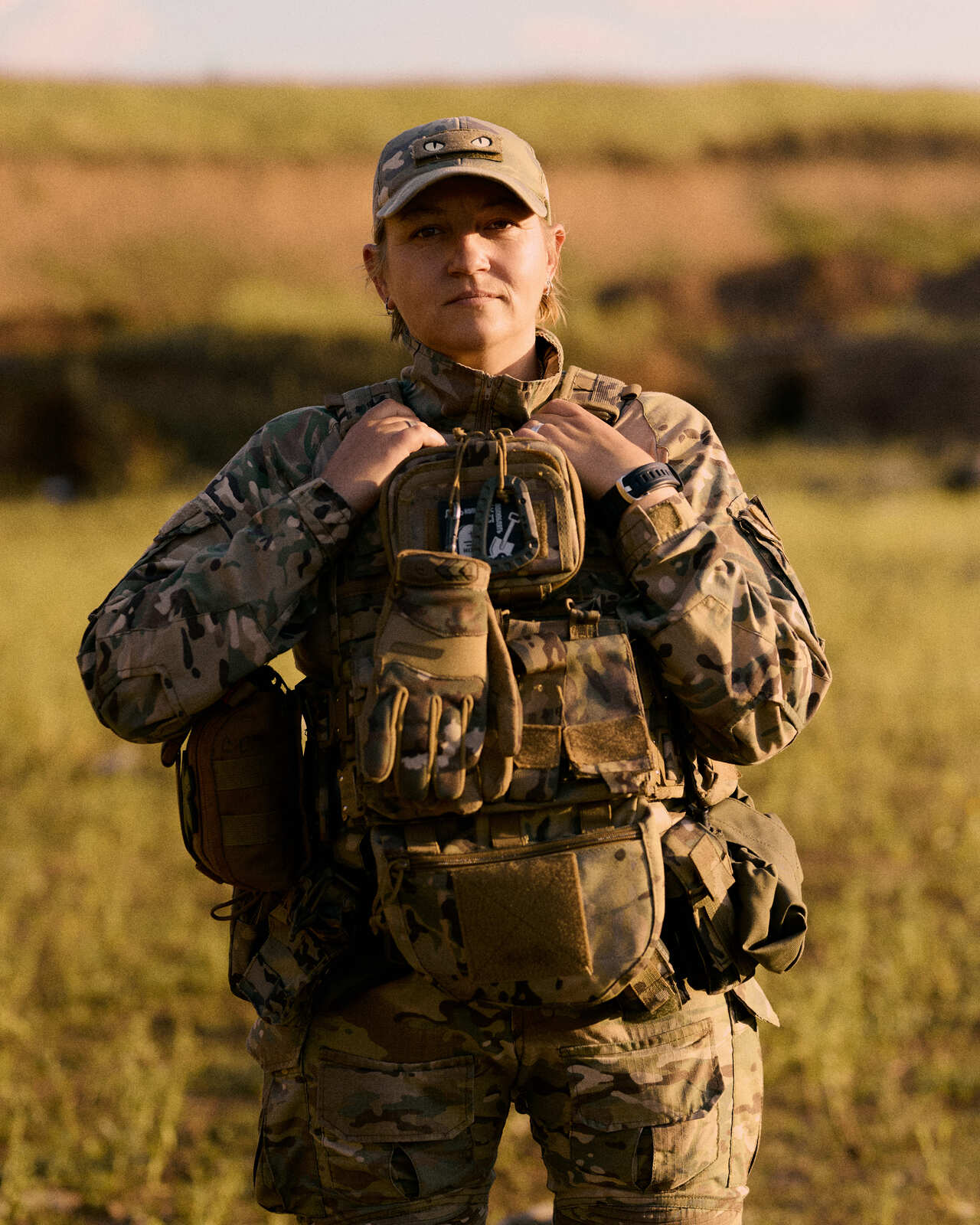
Odesa is among the women serving in Ukraine’s National Guard. As of 2025, women made up 4.7% of the National Guard of Ukraine. Across the Armed Forces of Ukraine, more than 75,000 women were serving as of March 2026, including over 55,000 servicewomen, said Oleksandr Syrskyi, then Commander-in-Chief of the Armed Forces of Ukraine. The Khartiia Corps did not disclose how many women serve in its ranks, but said that servicewomen can take on a wide range of roles, from tank drivers to drone operators.
While cases of discrimination against women and harassment do happen in the Ukrainian army, they are rarely documented. In 2026, only 10 women complained to the military ombudsman that their rights in the army were violated, Tetiana Nakonechna, spokesperson for the Office of the Military Ombudsman, told Gwara.
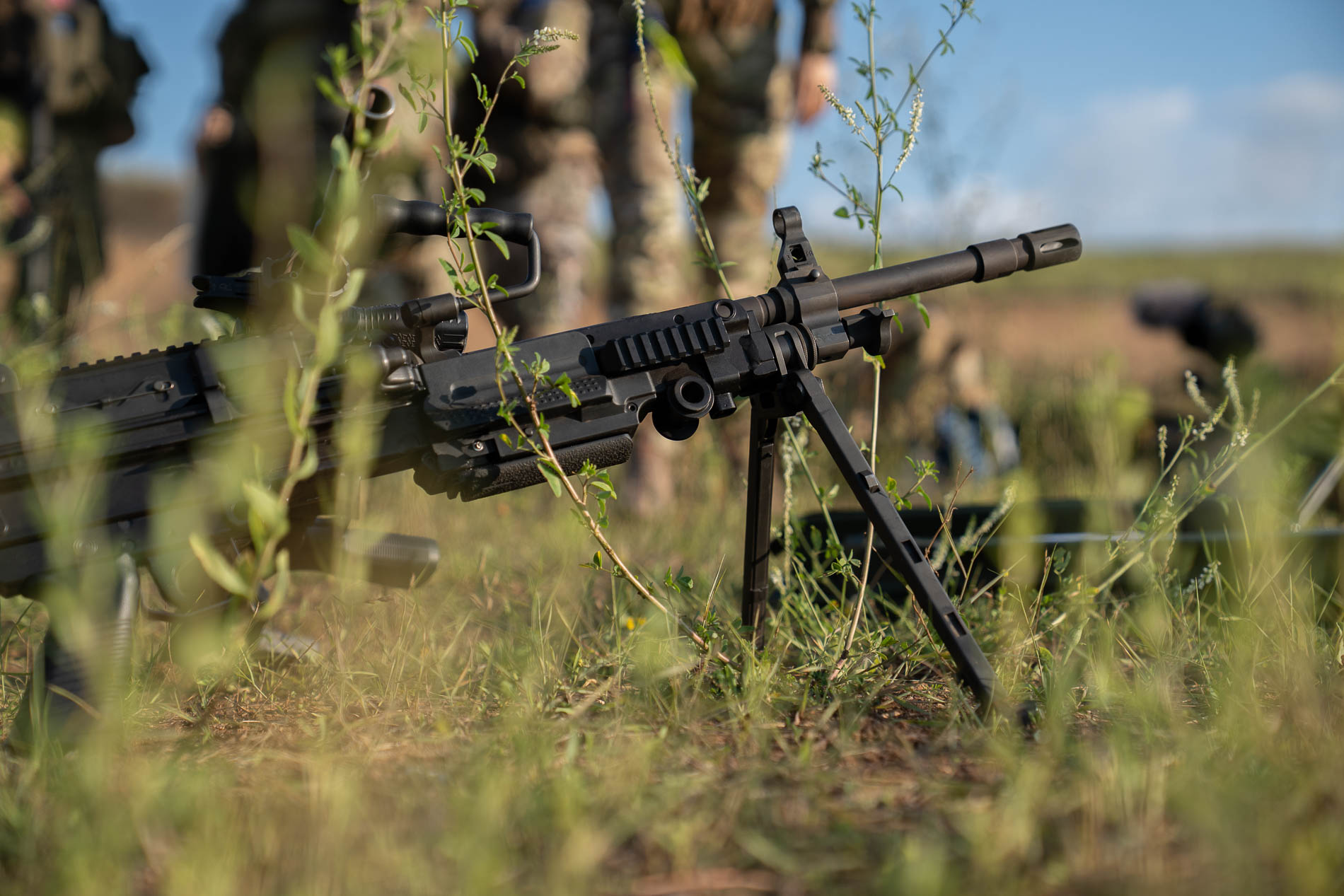
“Here (in Khartiia — ed.) we don’t have a problem with gender stereotypes,” Odesa says bluntly. The brigade wasn’t her first choice. She wanted to join the unit her brother was serving in, but they had indeed turned her down. One of the biggest challenges for her, though, is that military duties do not allow her to visit home as often as she would like.
“There is a lot of work for combat medics here,” she says. “However, I was in [the city of] Odesa a week ago because I had something very important to do. My son is starting university this year, so I needed to help him with paperwork,” Odesa smiles as she talks about her family. In a moment, she joins other women lining up for target practice.
Skills that save lives
“Ready…and..Fire!”
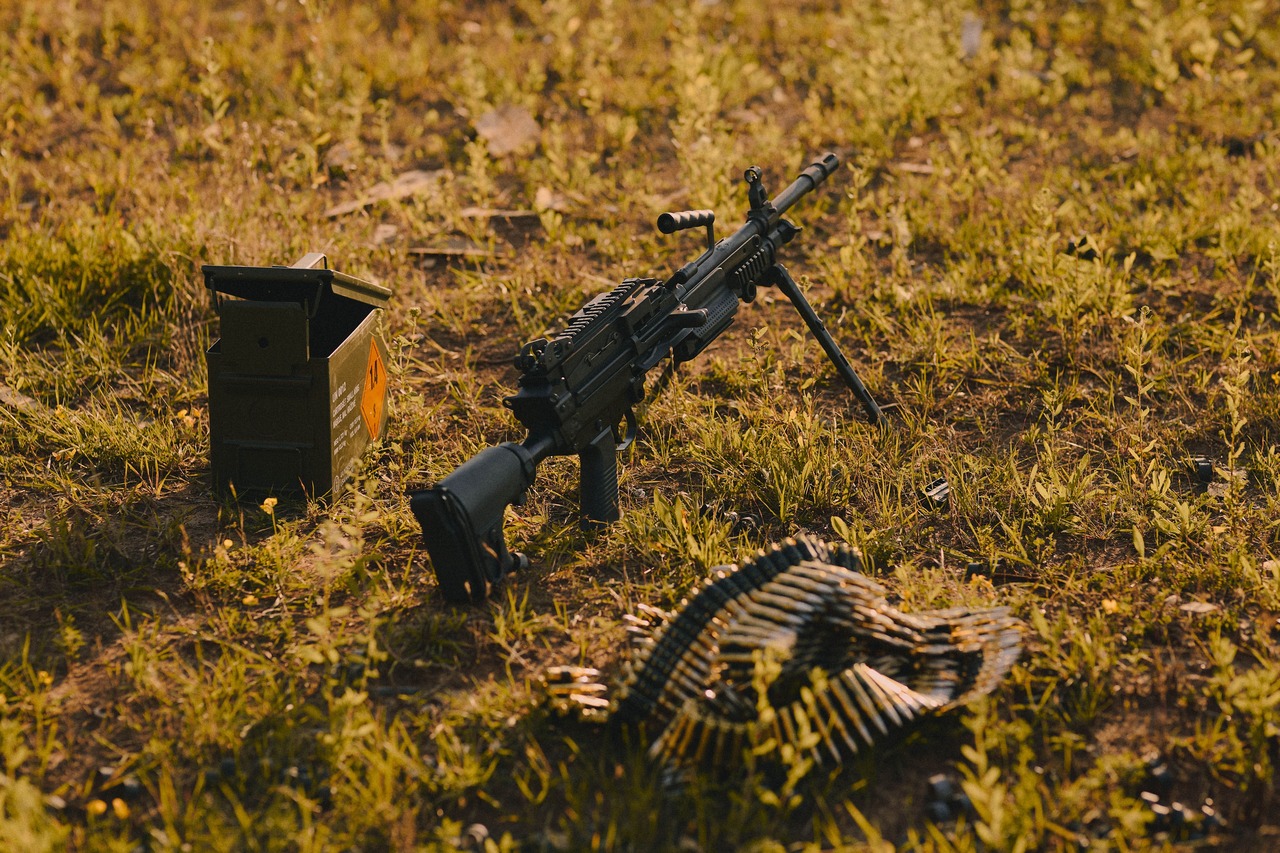
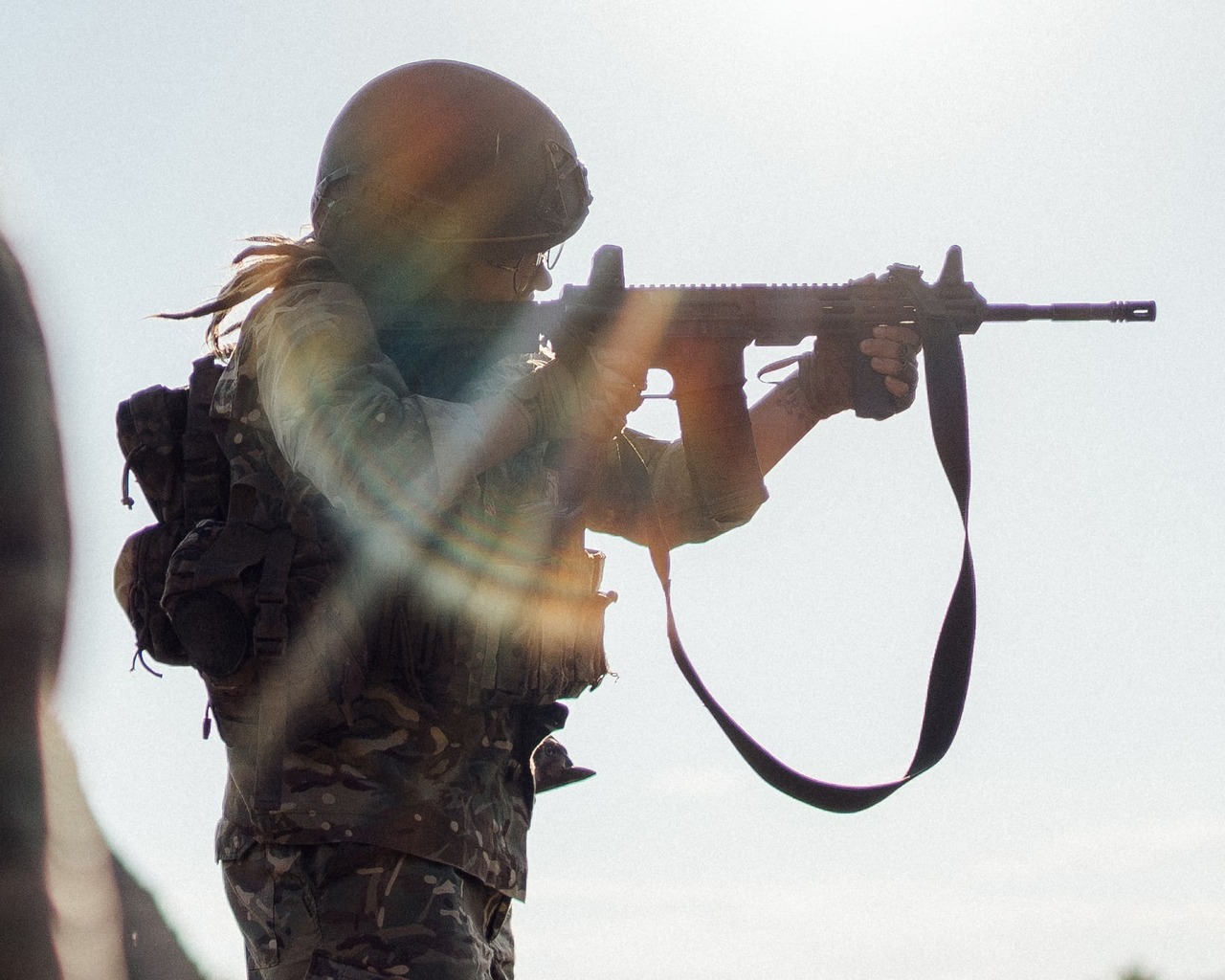
As soon as the instructor gives the command, Anhelina Rozhets, call sign Femka, a shortened (and often dismissive) form of the Ukrainian word for “feminist” raises her weapon and fires the target — tin sheet, concealed between obstacles made of stacked rubber tires.
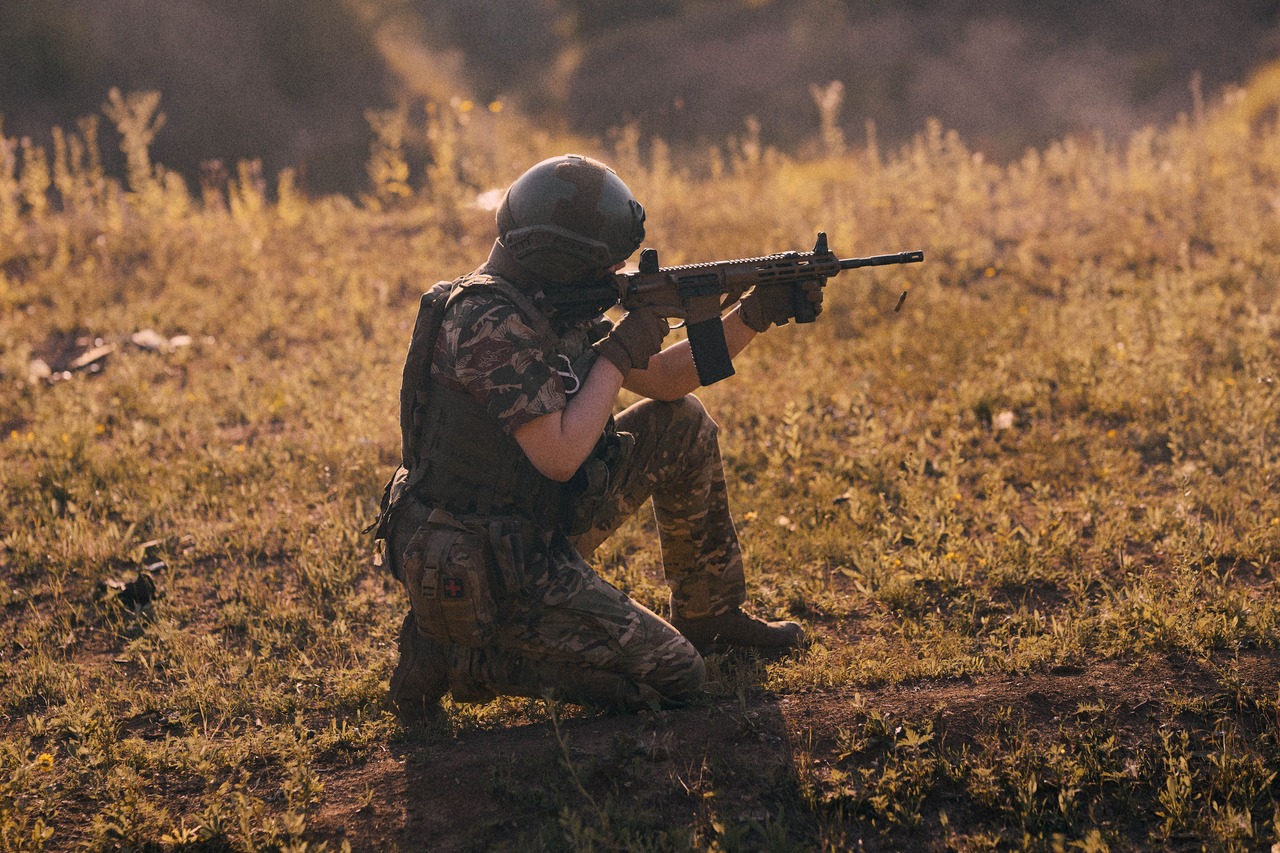
Femka fires three rounds standing, then drops to one knee, before finishing in the prone position. In her day-to-day service, she works as a drone operator, but it doesn’t mean shooting skills are useless in the so-called “drone war.”
Later, the day after the target practice, we met Femka with her sisters-in-arms in a fancy coffee shop in central Kharkiv.
“I was firing at the Russian first-person view drones (FPV), covering my fellow soldiers,” Femka, making a sip of her cold matcha, recalls one of the most difficult situations she has faced during her service in National Guard. On that March day, Femka’s military vehicle’s engine died somewhere in the open terrain somewhere close to the frontline in Kharkiv oblast. It was only a matter of time before the Russian drone spotted them. Sure enough, a drone soon hit the vehicle, severely injuring several of Femka’s brothers-in-arms.
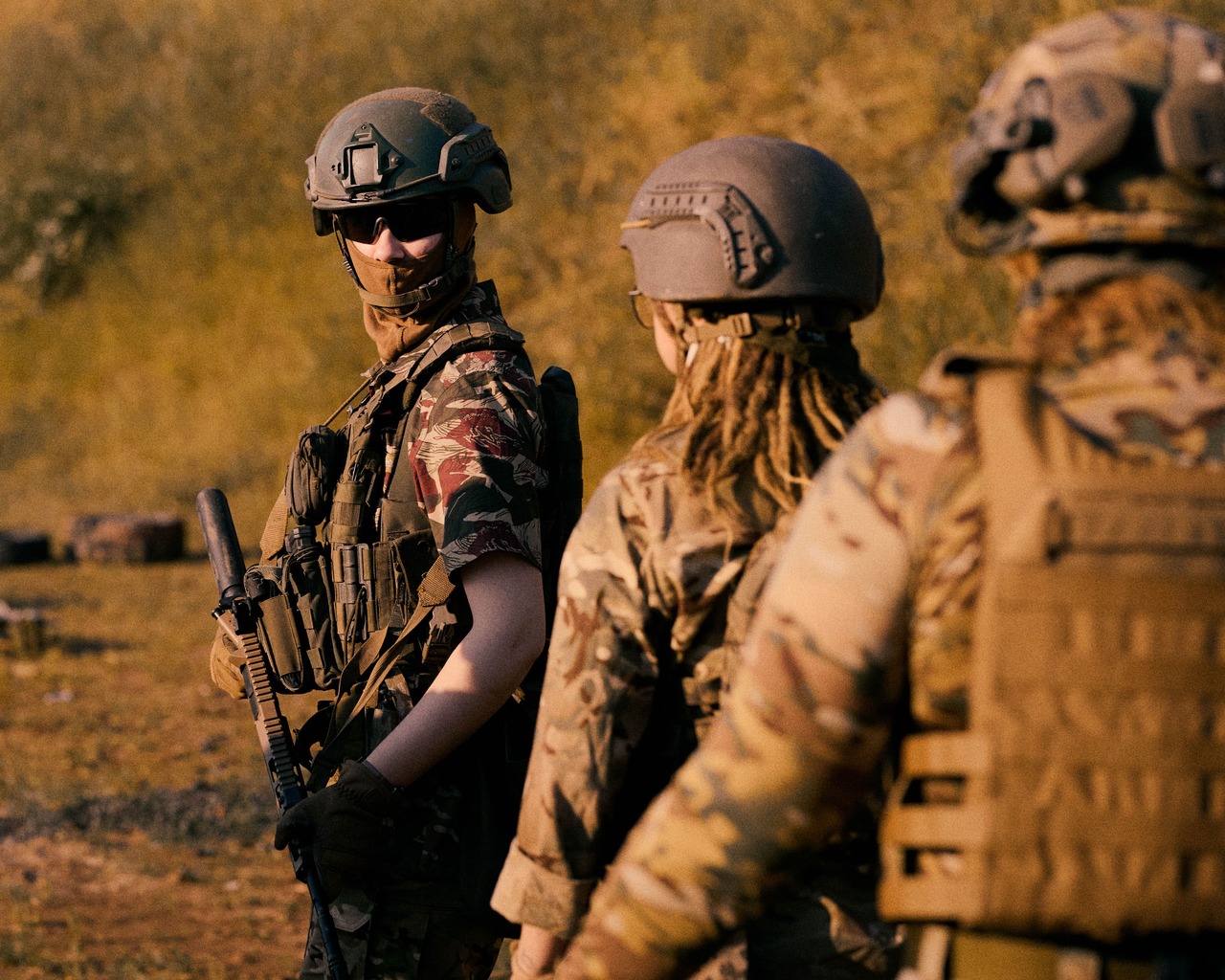
Femka, along with a soldier who also wasn’t injured in the attack, took cover in the bushes, protecting the wounded as they waited for the evacuation. Usually, the Ukrainian soldiers use shotguns to down FPVs, because, with shotshell’s projectiles, the shooter has more chances to hit a small and fast-moving aerial target. At that moment, however, Femka and her team only had assault rifles loaded with standard ammunition. The approaching drones were an elusive target.
“But we did it. I saw the drone closing on the vehicle with my very eyes — and then we shot this thing down. I can’t remember the exact number, but I clearly recall we downed one or two of them.”
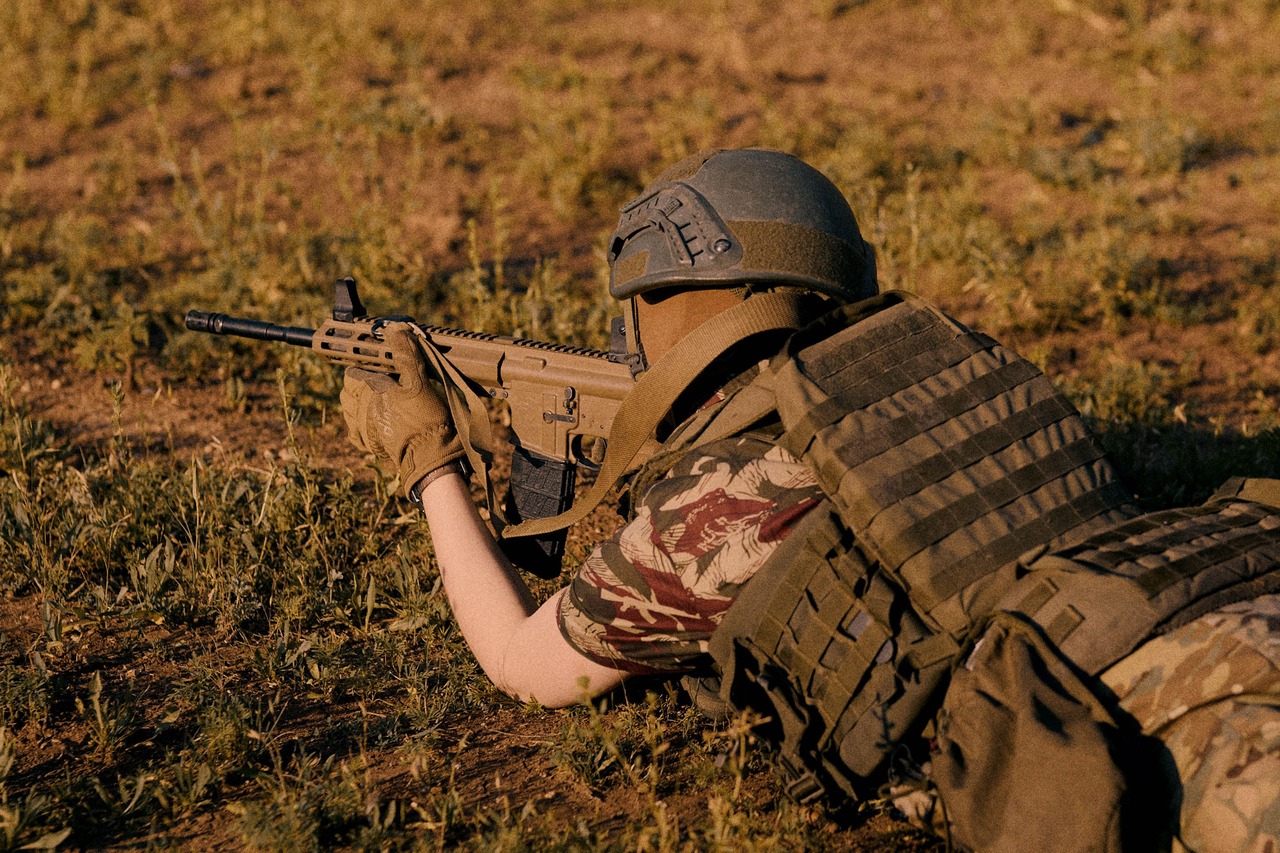
Telling this story, Femka is especially proud of the fact that she stayed calm and drew on everything she learned in tactical medicine training after that moment. She applied tourniquets, monitored the wounded, and followed the MARCH protocol, a life-saving first aid guide.
“Because of the good training I got, it was much easier for me to cope. What worried me most was whether they would be alright,” she recalls. Eventually, Femka’s crew was evacuated. Some of the wounded had limb amputations, but everyone made it out alive. Warmly, Femka adds, “I try to stay in touch with them as much as possible. They are still undergoing their rehabilitations.”
The chance to prove yourself
Femka says she was a delicate, sheltered girl when she swapped her life in Kyiv for becoming a soldier in the Kharkiv oblast. An out lesbian, she also always was in human rights activism — a combination she jokingly describes as “hitting the jackpot.”
She got her callsign after joining the military, while training with what she described as a Conservative military organization. She refused to disclose the organization’s name.
“I asked them to remove the flag with sexualised women wearing some sort of armored bra,” she says with a laugh. “After that, they started to call me ‘sodomite’ and ‘femka,’ trying to insult me. So I adopted “Femka” as my callsign.” This callsign fit, she said: it was short and ironically reclaimed the word used to insult her.
Femka initially aimed for a combat position in the National Guard because she wanted to avenge her friends whose lives Russia had taken. She recalls her fallen sister-in-arms; she has always wanted to participate in the fight with Russians. To serve as a drone operator now, Femka says, is the way to honor her.
It’s common for women to want to volunteer for a combat position, Femka says. ”When men say they want to serve away from the frontline, women step forward to fight.”
While she still sees revenge as a reason to fight, Femka also looks at her military service as the opportunity to prove that women as well as queer people are a full-fledged part of Ukrainian society.
“I’ve seen these men who told me that feminists and queer people are something from the US and Euphoria TV show. Something hostile to them,” she says, adding that initially she faced these prejudices, but proved her colleagues wrong.
“When they see that we stay with them side by side in the very same dugout. When they see that we sweat, stink, and fight alongside them just like anyone else, they change their minds.”
To be surrounded by other women
“The best option is to find the unit where you will be surrounded by other women, though,” adds the woman with long blond dreadlocks.
This is Sofiia, her callsign Zhuika, the Ukrainian name for Nibbler, her favorite character from Futurama animated series. Before joining the military, she worked as a secretary in central Kyiv.
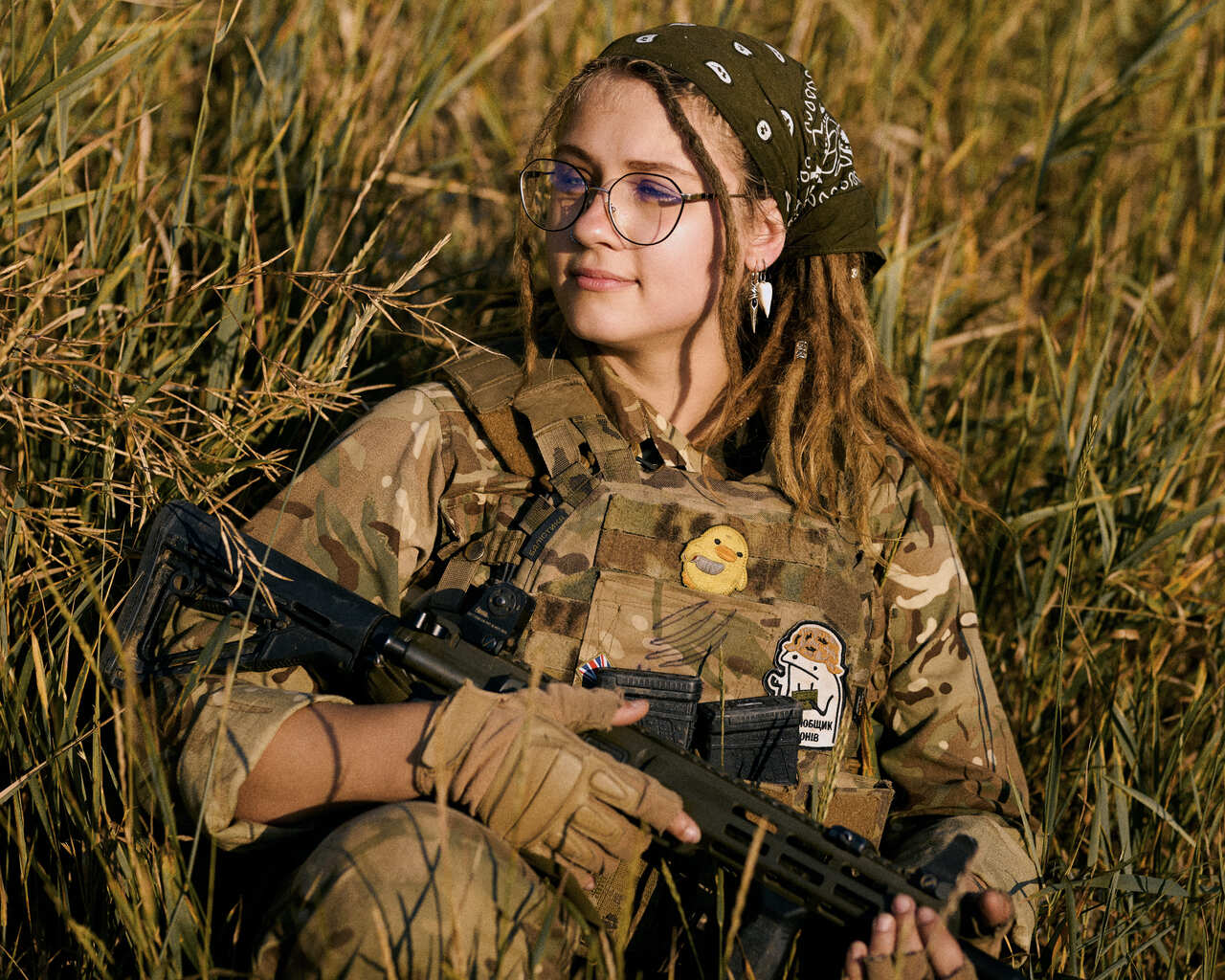
From her office overlooking Khreshchatyk, the capital’s main street, she would watch funeral processions carrying fallen Ukrainian soldiers through the city. Eventually, she says, she grew tired of watching the war from a distance, feeling that she was doing nothing.
For the past year and a half, Zhuika has served in aerial reconnaissance. One of her most difficult missions took place near Kupiansk during the winter, when her unit operated close to Russian positions. The urban landscape offered little cover, and footprints could remain visible in the snow and mud for days, revealing where soldiers had moved.
It was also there that she encountered a Russian FPV at close range for the first time. Despite the fear and the cold, she remembers the operation as one of her unit’s greatest successes. Her team provided aerial surveillance for assault operations, corrected artillery fire, and monitored the battlefield from above.
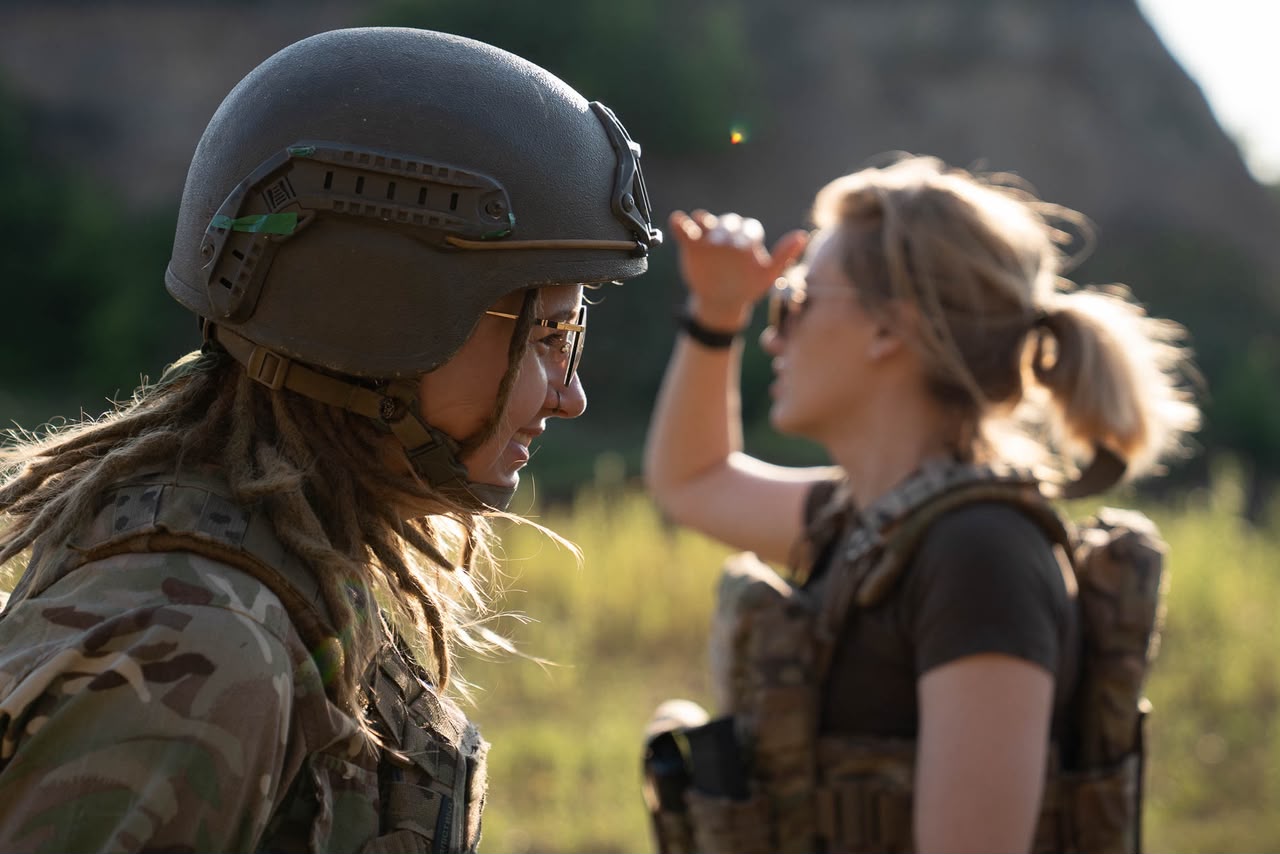
For both Zhuika and Femka, choosing a unit was not only about choosing where to work, — it was also about finding people who can explain what life inside that unit is really like. Femka says that, before joining Khartia, she would search for female service members on Instagram and message them directly, asking about commanders, conditions, and the atmosphere within their units. They were “quite frank” with her. Now, she receives similar messages from other women and tries to answer them just as openly, sharing practical advice and warning of possible difficulties.
Zhuika agrees that the presence of other women can offer a degree of security in an environment where female soldiers are still often treated with condescension. She describes sexism in the military as a reflection of sexism in civilian life, with one crucial difference:
“In civilian life, you can say, ‘I’m facing discrimination here, so I’m leaving.’ In the military, you do not choose where you are or who you serve with. You have to learn how to work with them.”.
That is why her advice to women considering military service is practical and direct: know exactly what position you want, speak confidently about your skills..
“And, if you are a woman, go somewhere where there are other women,” Zhuika adds. “That is the best advice. At least then you have some assurance that things will be all right.”
Hi, this is Nazar, the author of the article. Many different people are fighting to resist Russian aggression, and we’re commited to telling their stories, and if you want to see more pieces like this, please support our journalism by treating us to a coffee or becoming a regular subscriber.
Read more
- Inside Kharkiv Literary Fair: Publishers warn of crisis caused by Russian attacks, lack of government support


Subscribe to news from Kharkiv, Ukraine
Most important stories from the frontline region