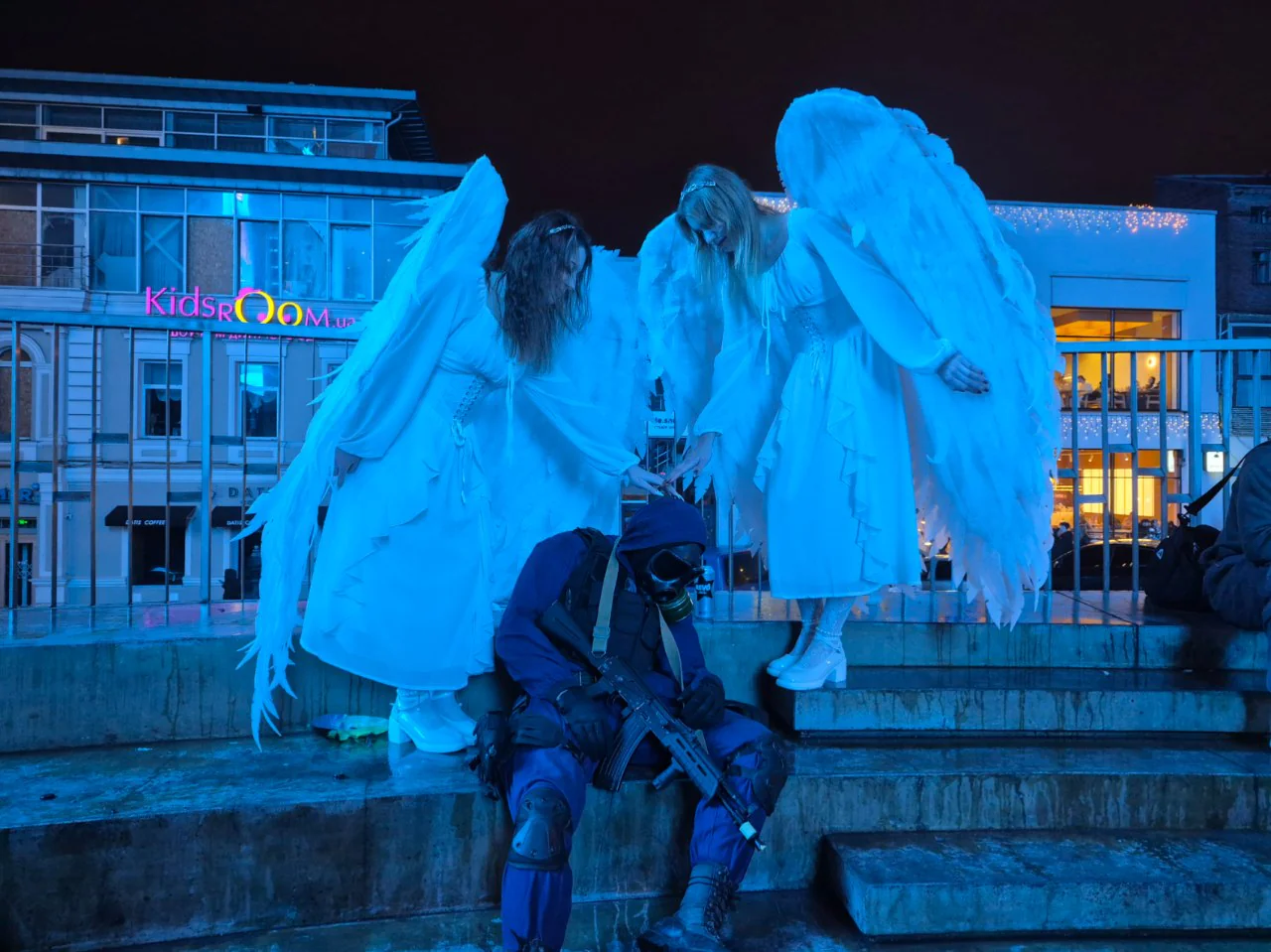
UKRAINE, KHARKIV, Oct. 31 — Streets in Kharkiv center are flooded with young people in Halloween costumes. Horns on their heads, powdered faces and bloody tears, witch hats and — I think I’ve seen one Minecraft sword. With the air alerts and explosions, it’s impossible to forget what the real horror is for this city, but most of the people walking towards me or gathering near cafes and bars look determined to have fun on Halloween.
So, let’s talk about a haunted place in Kharkiv, a ghost local to the Kharkiv region, and a few superstitions.
But first, did Ukraine celebrate Halloween (historically)?
Not exactly. The Slavic pagan version of Samhain is called the autumnal dzyady or didý (with didý meaning ancestors of any gender, though in modern Ukrainian it translates to “grandfathers”). It was believed that on this day, when autumn meets winter, the world of the real touches both the underworld and the world of higher spirit, and the ghosts briefly return home. During these days, people went to the cemetery and brought food to the dead to welcome them into this world — or made a table for them at home — and spoke of the dead to their children.
The thin veil between the worlds of dead and living is a plot of many urban horror stories, and Kharkiv has many. For instance, an almost-completely-destroyed building called the Roof of the World, standing on Teatralna Str., is believed by some to be haunted. People say every architect who wanted to restore the building went mad. Spooky. The building, beautiful in the past but slowly crumbling to rubble in the current, does look menacing, especially in the dark.
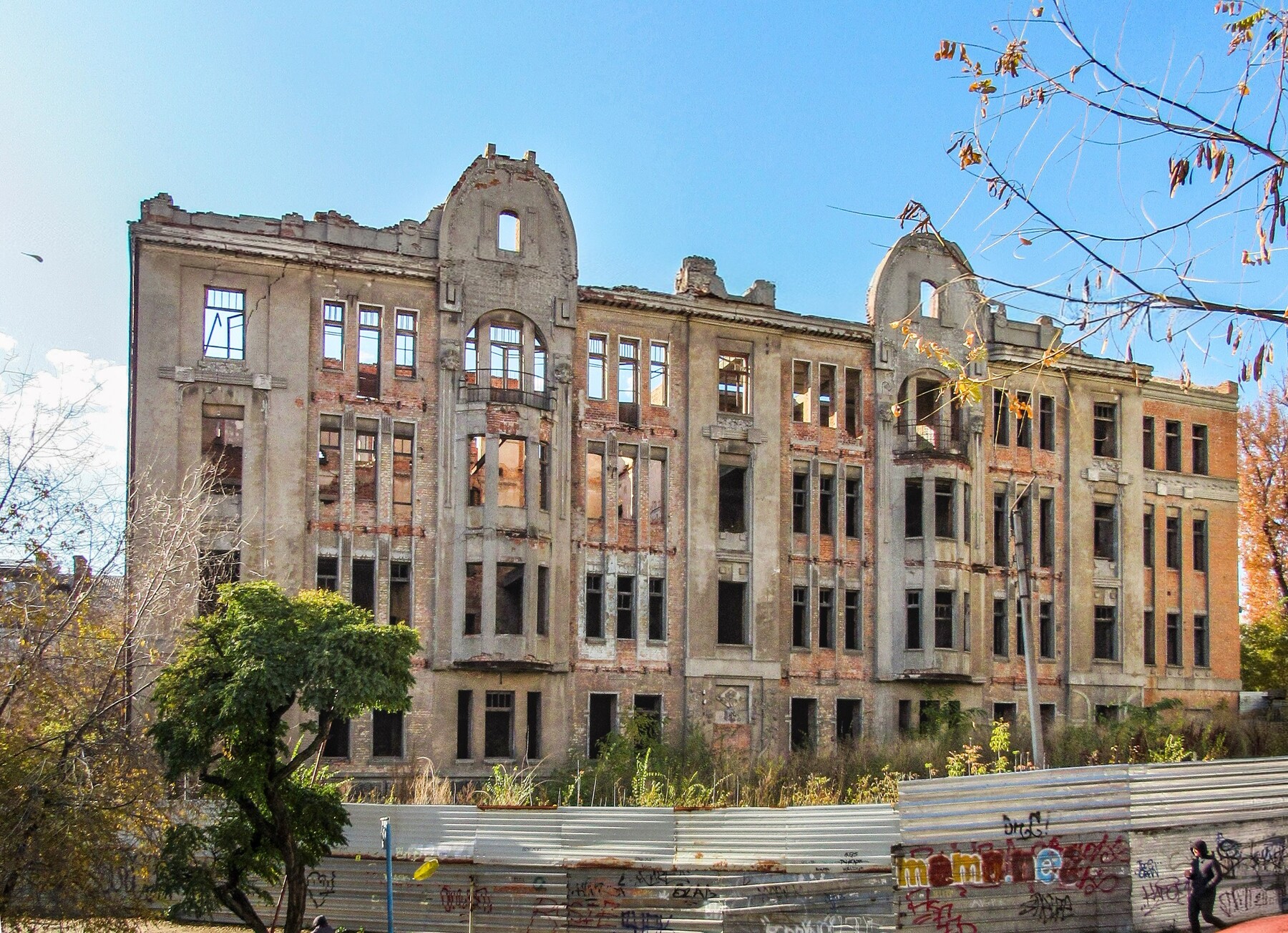
There’s no evidence for any “paranormal” in the history of the building, though, says Anton Bondarev. He’s a genealogy researcher now, but a few years ago, he was one of the major Kharkiv experts in all things mystical. He loves ghost stories rooted in reality.
“The dead hold my legs”
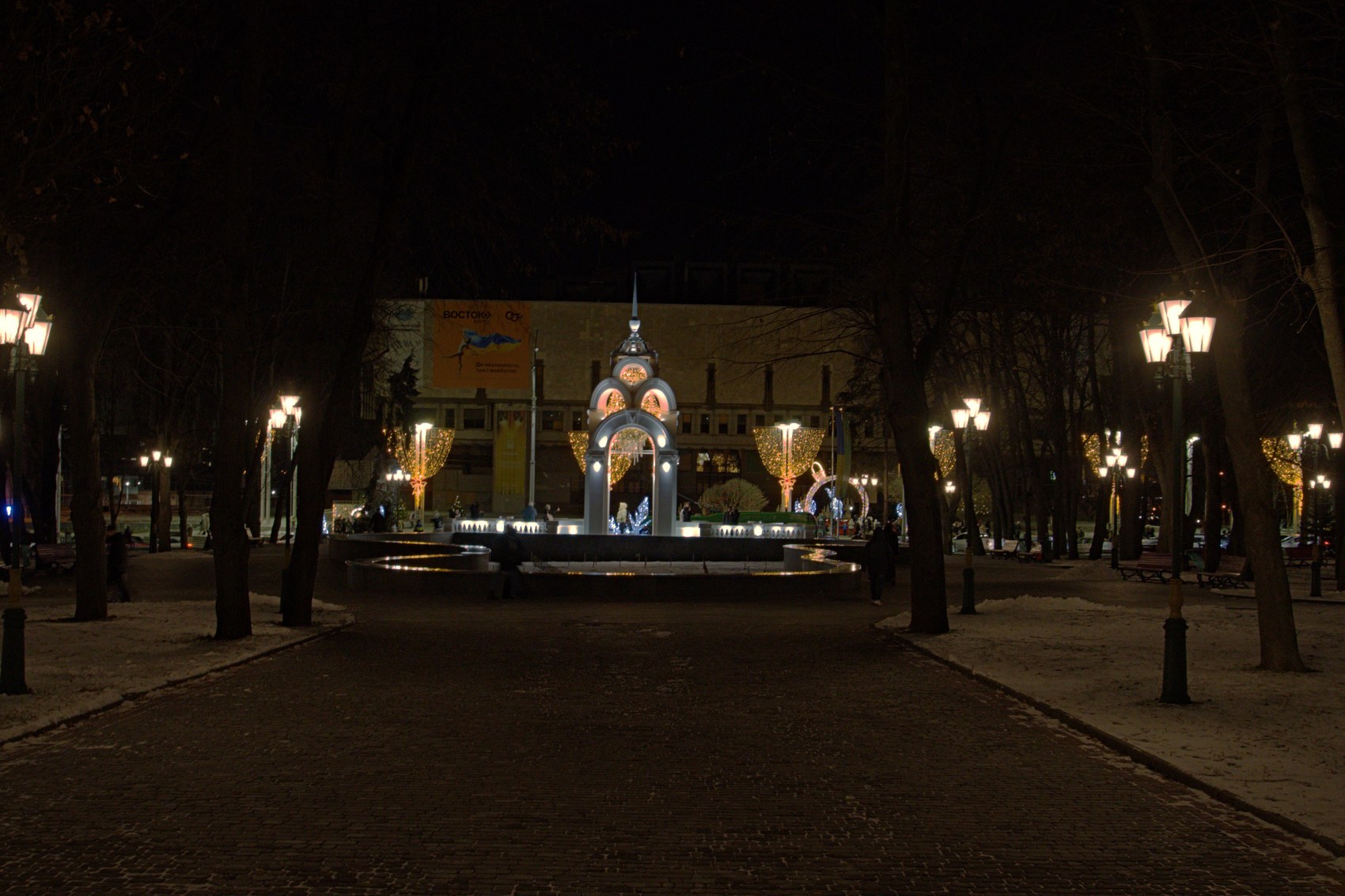
In place of the fountain called Mirror Stream and the park behind — one of the city’s most popular and well-known locations — there was an old Myrrhbearers’ cemetery. It was closed at the end of the XVIII century and the beginning of the XIX century, and turned into the Myrrhbearers Square (now it’s called Victory Square). Locals, Bondarev said, had a lot of urban legends and ghost stories about the Myrrbearer cemetery and its remnants that became a part of the square.
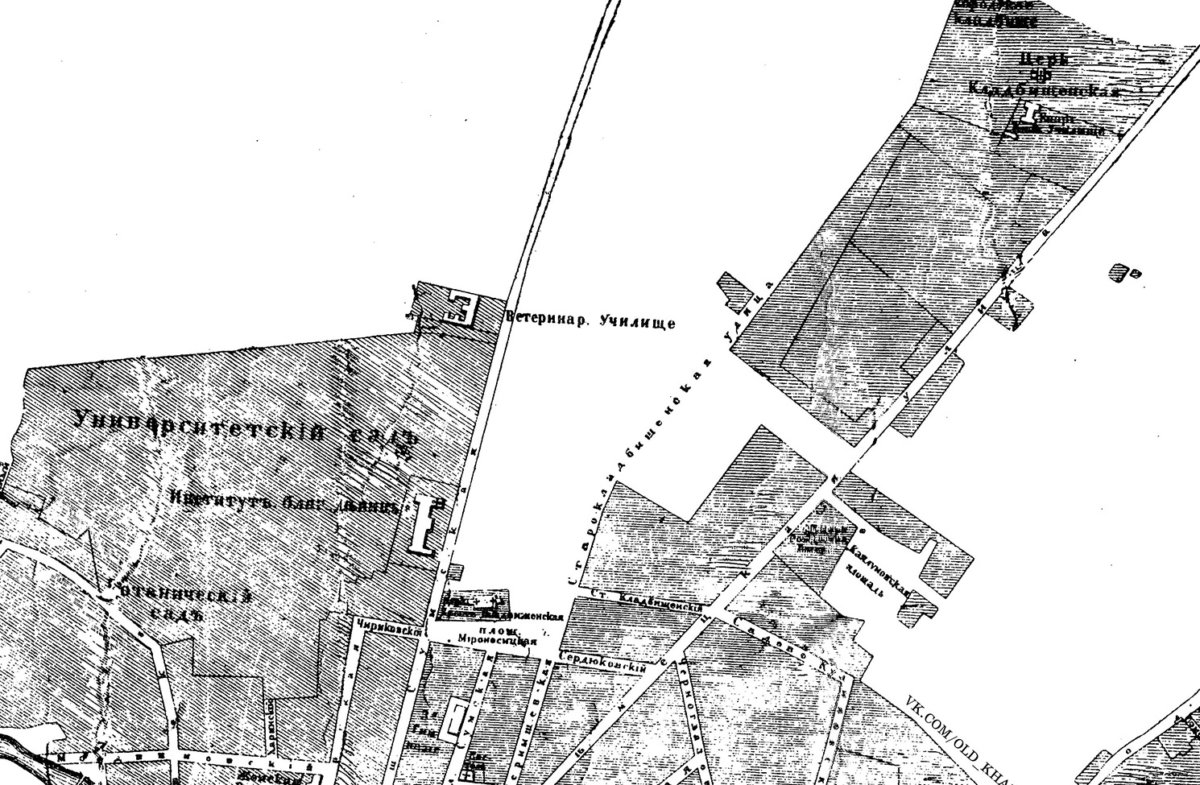
For this story, Bondarev drew on the writing of Vasilii Karpov, an art critic from one of the major merchant families in Kharkiv, who collected stories from Kharkiv locals in the 19th century. Most of modern Ukraine back then was colonized by the Russian Empire, so the sources describing that time are often in Russian, just like Karpov’s memoirs.
“In its abandoned crypts and chapels,” Karpov wrote, “…people of evil will and deviant character lived. In the night, […] they were hiding in the crypts.” Sitting on the coffins of the dead, they burnt candles or oil lamps and played cards.
Bondarev says that the laughter of the “deviants” and the smoke rising from the former cemetery, as well as the lights amidst – appearing from people probably wanting to see their playing hand better – scared the locals. There were legends of the dead rising from the crypts, born out of the superstitious minds of people who had to often walk past the cemetery, and then through the square. One legend spoke of a dead woman in white. She hunted people who disturbed her grave and took her cross.
Karpov wrote that the Myrrhbearers Square was kept in disarray. One day, Martens, a daughter of a laundress of about 20 years old, walked across the square with her mother and fell into an old grave. The old wooden planks that were covering the grave rotted and broke under her weight. She tried to get out but couldn’t. The edges of the grave were crumbling below her hands. She was stuck, and her mother couldn’t help her. “The dead grabbed my legs, and they won’t let go,” she screamed to her mom. Her mother went to search for help.
“But it was dark. She spent all night half-buried in the cemetery soil,” Bondarev said. Matrena was taken home only at sunset. “She went a bit mad after that. She started to wander around. One boy saw her months later, face white, wearing white clothes, and took her for that dead lady walking the streets. He hit her in the head.”
The boy’s name was Trofym, according to Karpov’s memoir. He then told police that he defeated the ghost haunting Kharkiv with a chisel and was taken into custody, beaten by order of the court, and charged with 20 years in a katorga — a labor camp in harsh conditions, which was a common penal punishment in the Russian Empire.
“It’s an exemplary story. It was 1900, with the first photo cameras and so on, but no one from the locals came to help because they were scared of the ghost,” Bondarev said. “That’s why it’s the most mystical place for me; you can connect it to real history. And real history is always better, a much more interesting narrator than someone’s fantasies.”
Poltergeist in Lyptsi
Another story Bondaryev tells me is about a well-documented case, by Russian writer and translator Alexei Aksakov in the book called “Harbingers of the Spiritism over the Last 250 Years” (1895), of a Lyptsi poltergeist. Lyptsi is a small settlement close to the Russian border, now constantly shelled by Russian airstrikes and almost vacant. Most of the locals have evacuated to safer environments.
So, in 1853, a man called Captain Zhandachenko wrote to the local ispravnik (a head of police) that unusual things started to happen in his flat. “Some invisible force started to throw dishes, bricks, knives from the stone stove on the floor, into the walls.” Zhandachenko then called for the priest, who came with the holy water to deal with the “force,” but the “force” threw an axe into the door from the attic of the outbuilding.
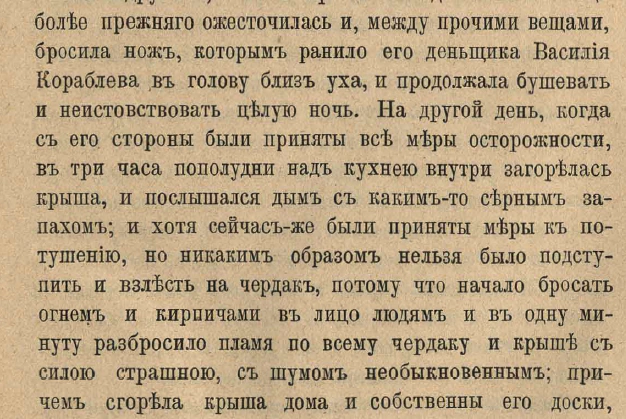
The “force” then began starting fires in the house, in addition to flying things around. Eventually, Zhandachenko and his wife moved out, and the house burnt down completely.
“The case was looked into in the local courts of Kharkiv governorate from 1853 to 1856, and was closed ‘due to not finding a reason for unusual occurrences,'” Bondarev said. “So, the existence of the Lyptsi poltergeist was officially judicially validated by the government.”
Witches and superstitions
Bondarev said that he tracks Ukrainians’ belief in the paranormal even now, through genealogy. “In progressive 1910, I’ve seen cases of women changing their name and their patronymic after their child was born dead or died an infant.” He said they thought they were being jinxed, and imagined that getting a new name would allow them to hide from malice. Of course, the track record showed that it did not work. “It was a simple, routine tradition. It makes clear how deep our ancestors’ belief in magic was.”
The names of everyone Kharkiv locals considered witches, Bondarev said, could be found in the state archives of Ukraine. “Because following the law [before 1917], every priest had to report on various fortunetellers, psychics, seers; about every superstition. Every Orthodox priest included that in his report on faith in his flock. If there was a palm reader somewhere or a parishioner complained he saw a ghost somewhere, he had to write that down.” Then, in the Soviet Union, there was no place for the church or witches, so, with 1917, these records fizzled out.
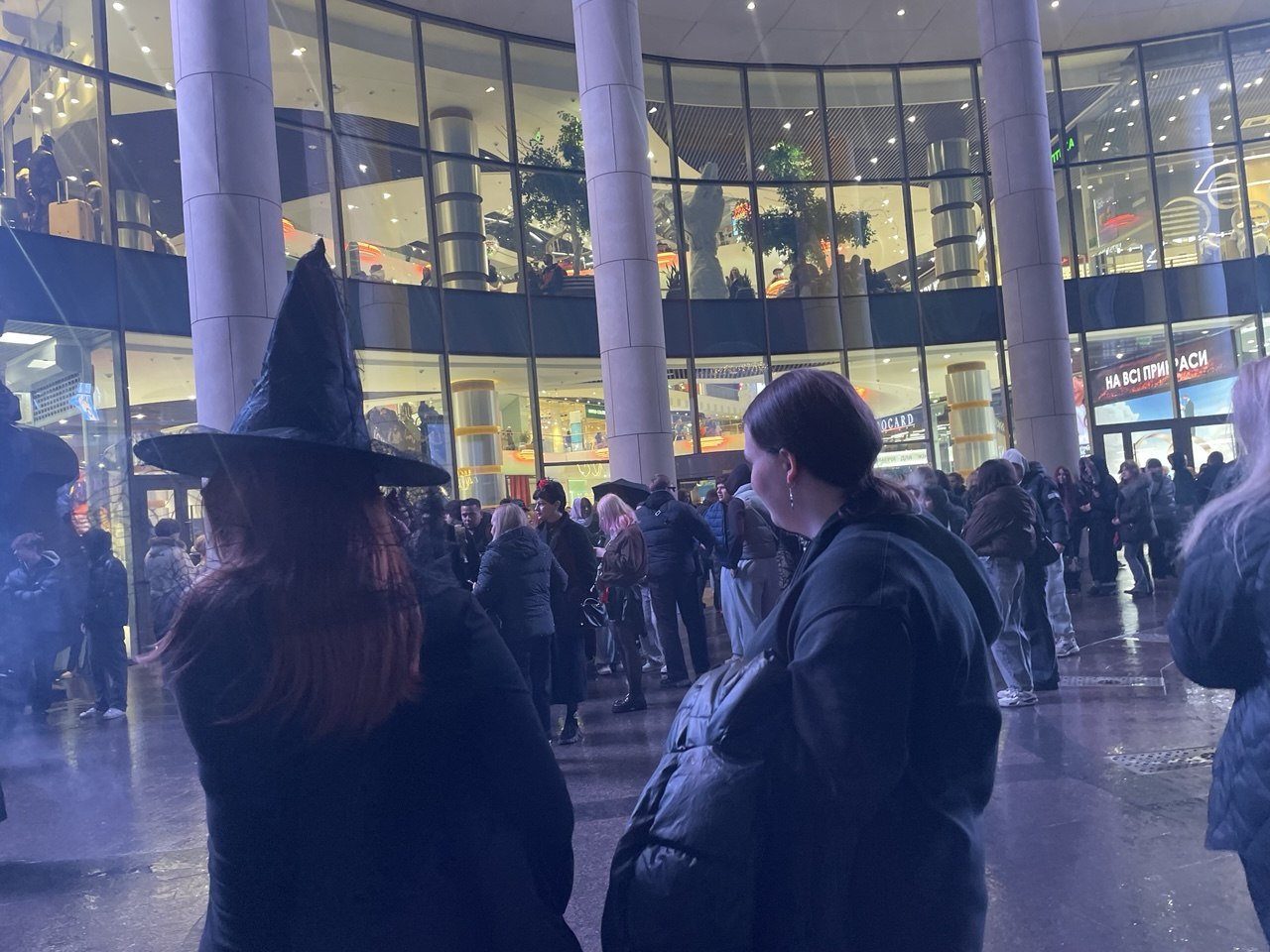
In 2026, Kharkiv shopping malls, though incessantly targeted by Russian drones, organize entertaining Halloween events for children and teenagers (although the one hit on Oct. 30 had to cancel the celebration), cafes hold quiz nights and “comfortable and terrifying” parties, clubs do themed balls. Pagans still celebrate autumnal didy — and a lot of people watch horror movies for escapism.
Cover photo: Three people in Halloween costumes in the center of Kharkiv on Oct. 31, 2026 / Ivan Marshak for Gwara Media
Hi, I’m Yana. I wrote this article on the weekend because the majority of the work week was dedicated to writing about things Russia does to Kharkiv and Ukraine. Writing this was fun, though, even though the stories Anton told me (and I’ve then read) are pretty grim. If you’re interested in more articles like this, please consider joining our community or committing a $5 tip to our newsroom’s mental health here in Kharkiv.
Read more
Essay: Kharkiv modernism is not just Soviet
Kharkiv wartime travel guide: what to see and do 12 miles from front line


Subscribe to news from Kharkiv, Ukraine
Most important stories from the frontline region