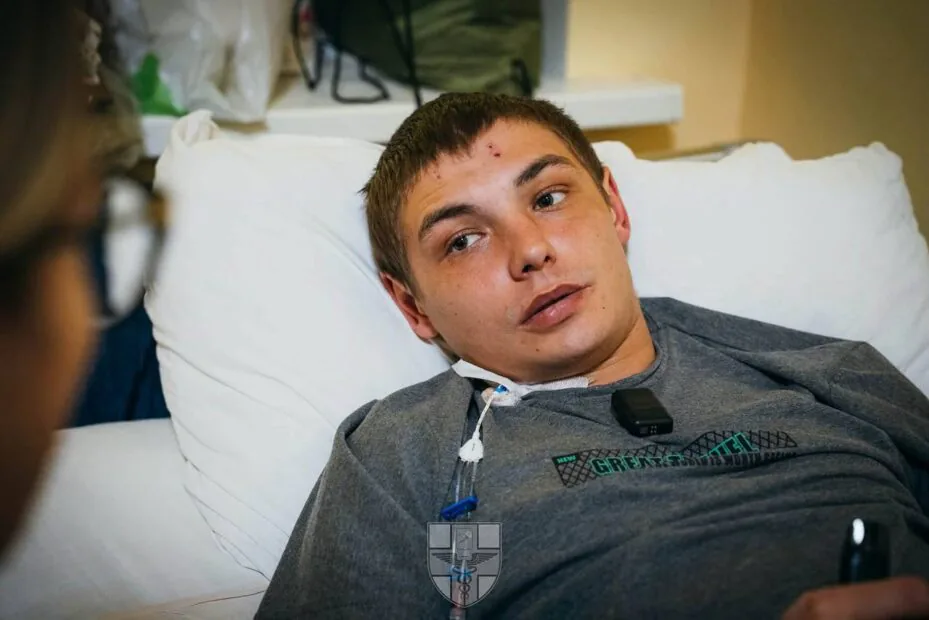
UKRAINE, KHARKIV OBLAST, Oct. 30 — “I lit a cigarette, looked at the horizon and flew,” said Artem. Wounded by a Russian mine and exhausted, he watched all attempts to evacuate him failed. Then a flying drone took him home.
Artem is a 25-year-old Ukrainian storm trooper of the 129th Separate Heavy Mechanized Brigade. He was among the first Ukrainian soldiers that were evacuated from the battlefield via rescue aerial drones.
Gwara Media’s journalists talked to Artem about the evacuation, and what he went through before and after. Below is the record of his story.
A week without evacuation
When Artem stepped on a mine while moving toward the Ukrainian positions near the Russian border on Velykyi Burluk axis in Kharkiv oblast, the explosion severely injured him and Siava, his brother-in-arms. Artem recalls seeing his Siava’s leg hanging by a strip of skin.
Somehow, Artem found strength to remove his damaged combat boot and apply two tourniquets on a wounded leg. Both men found shelter in the nearby bushes — the most common hiding spot for hiding from Russian first-person view drones (FPVs).
Siava died two days later.
While Ukraine is actively using ground drones to carry supplies and evacuate casualties without risking rescue crews, the surrounding terrain, water obstacles, and Russian FPVs made this option impossible for Artem.
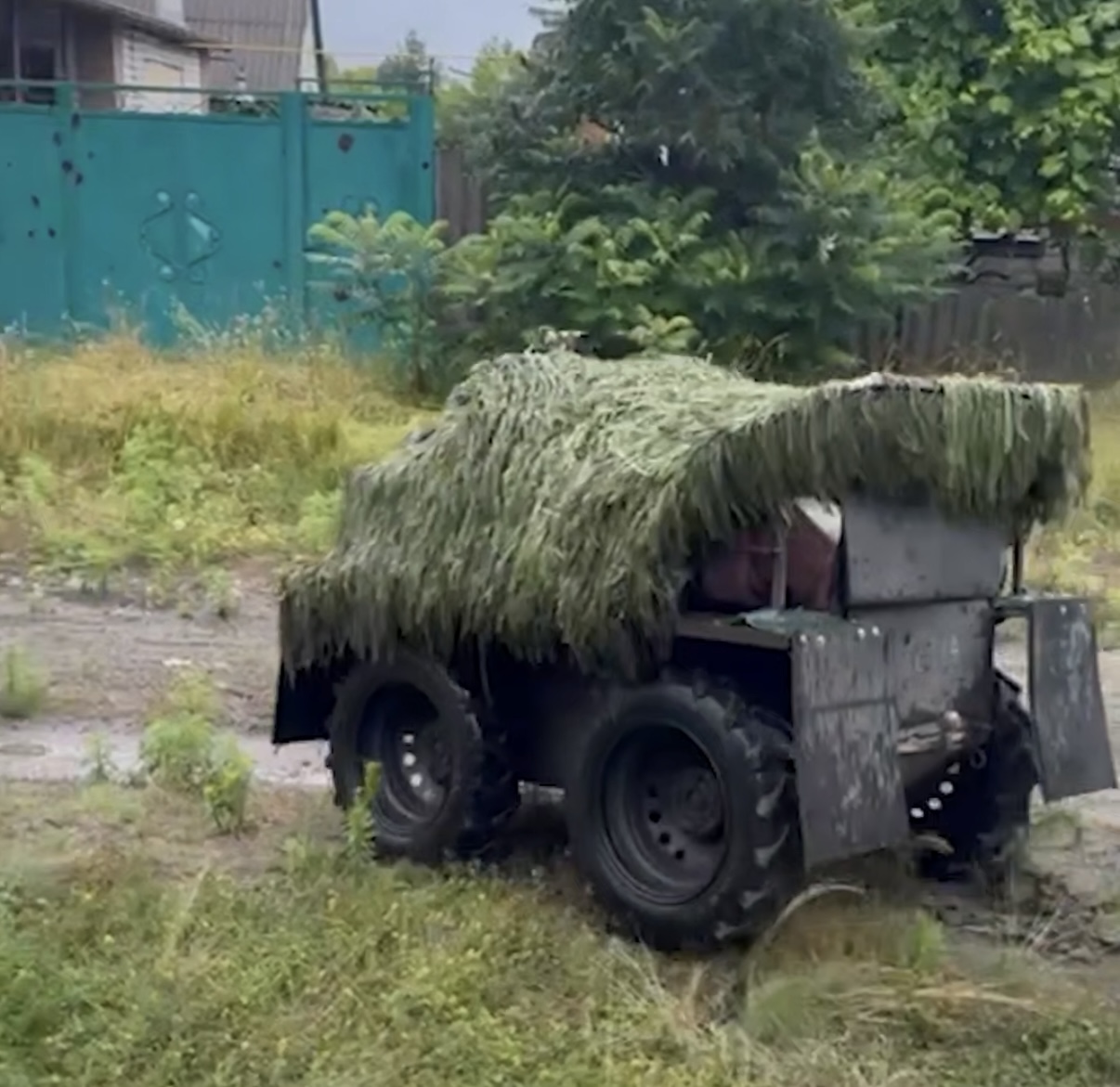
Still, the Ukrainian military tried. They sent four ground drones to evacuate Artem. Artem recalled them being destroyed by Russian fire before reaching a halfway point of the route to him.
“No one could have carried me out. It was too far,” he said.
The thoughts of Artems’s family kept him going. “I had to make it. My daughter was waiting for me.”
His daughter is seven years old.
A rescue from the sky
The solution came from above.
A drone operator from the 475th Separate Assault Regiment, known as CODE 9.2, conducted the evacuation using a Ukrainian-made StarGate rescue drone. Developed by Skyfall, a Ukrainian defense tech company, it’s a heavy-lift machine designed to transport a wounded person in an enclosed capsule. According to SkyFall, the drone can lift up to 330 pounds.
While a CODE 9.2 pilot evacuated Artem, other Ukrainian units suppressed Russian positions near him, e.g. using heavy Vampire drones for attacks.
The drone pilot with a call sign KVN, said that after landing on location, he raised a camera and saw a wounded Artem crawling toward StarGate. Silence fell over the command post. Then, it was time to extract him.
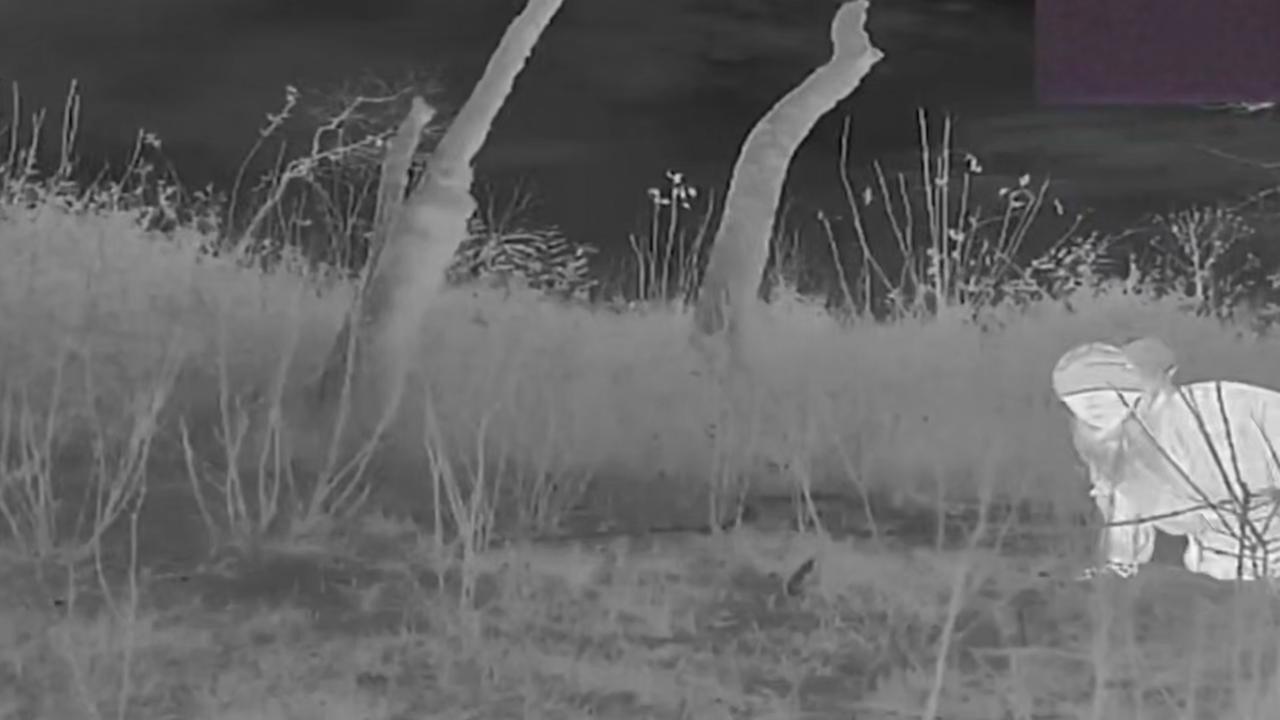
“It was comfortable. Everything went smoothly,” Artem said. “I’m very grateful to that drone operator.”
A new way of the evacuation
This operation was a part of Ukraine’s broader effort to find ways to retrieve a wounded soldier from a battlefield where every move can be observed and attacked by Russian FPVs or other means.
On Oct. 19, Ukrainian forces reported on aerial evacuation in the Kupiansk area in the eastern Kharkiv region for the first time.
In that operation, Ukrainian drones rescued Kostiantyn, 49, an infantryman in the 30th mechanized brigade. Like Artem, he held the position alone after the Russians killed his brother-in-arms. And just like Artem, Kostiantyn was then injured in the Russian attacks. He was stuck, with no way to extract him via ground drones. An air drone got him to safety.
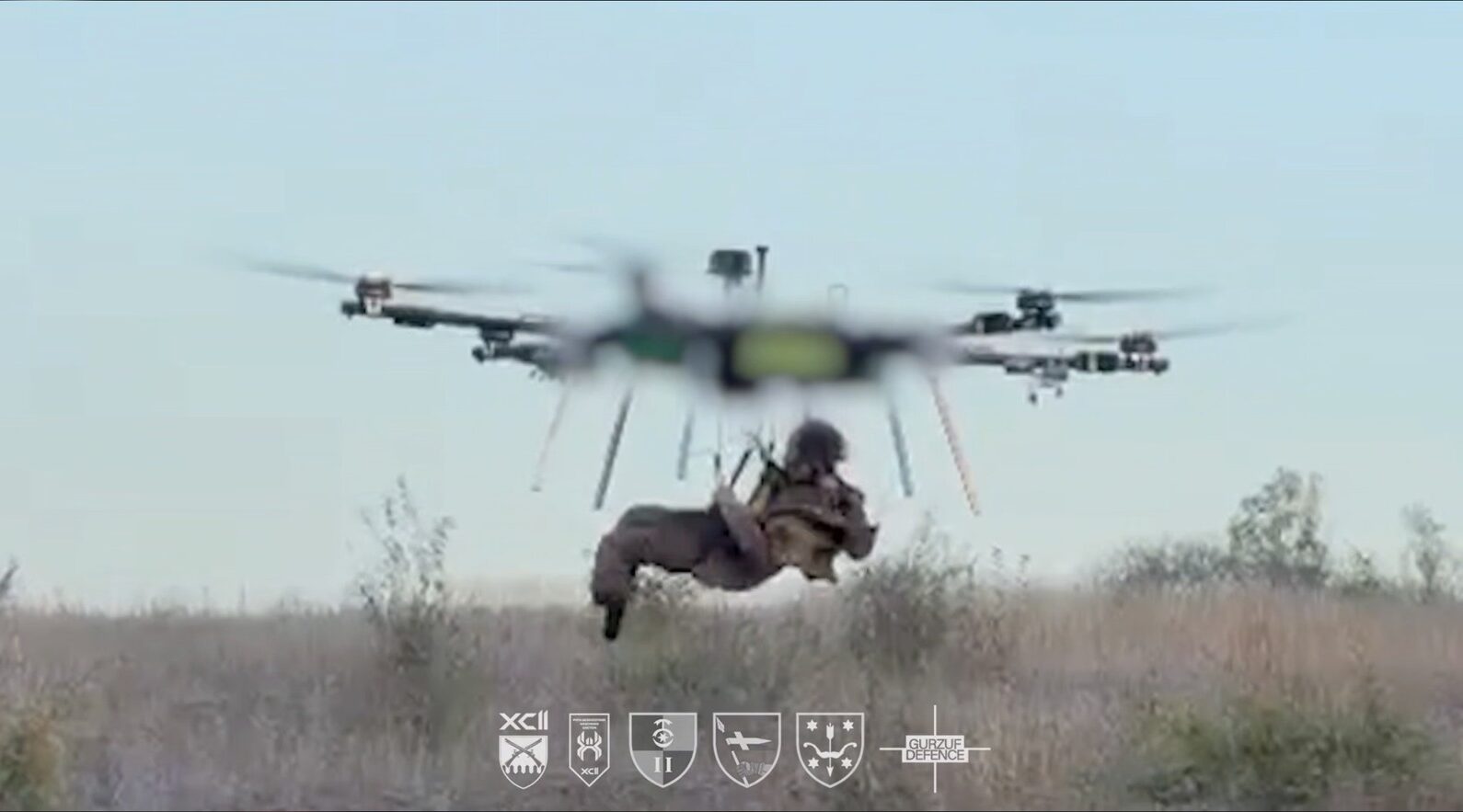
Days later, CODE 9.2, reported evacuation of two more wounded soldiers using aerial drones, including Artem.
Military officials said that they hope to turn the experience into regular rescue capability rather than a series of exceptional operations.
Oleksandr Nastenko, the commander of CODE 9.2., has said that the regiment plans to launch a dedicated aerial medical evacuation unit.
Those who wait
In the Kharkiv hospital, Artem received blood transfusions and, seven hours later, doctors amputated his right leg at the knee.
By the time of the interview on Oct. 29, Artem was undergoing further treatment and rehabilitation in Lviv, in the western Ukraine.
“I go through some sort of surgery every day, taking things slowly,” Artem said about his treatment. He shared that his mother and girlfriend were with him in Lviv, and his brother had come to visit him.
But when asked about his brothers-in-arm, his voice grew quieter. Artem remained in touch with the men who had taken over his position. He said, they were still holding their ground.
Artem’s daughter is still waiting for him at home.
Hi, my name is Yana. It’s important for me to share stories like Artem’s because it’s only thanks to him and other people in the Ukrainian army that I (and many others) can do my job in frequently-under-deadly-Russian-attacks, but still free Kharkiv.Thank you for reading it. Our journalist Nazar Hlamazda turned my interview with Artem into a text. If you want to support our newsroom, please consider making a one-time donation or becoming a member of our community.
Read more
- Why Hungary blocked two EU accession negotiation clusters for Ukraine, Moldova without explanation — and what Kyiv can do


Subscribe to news from Kharkiv, Ukraine
Most important stories from the frontline region