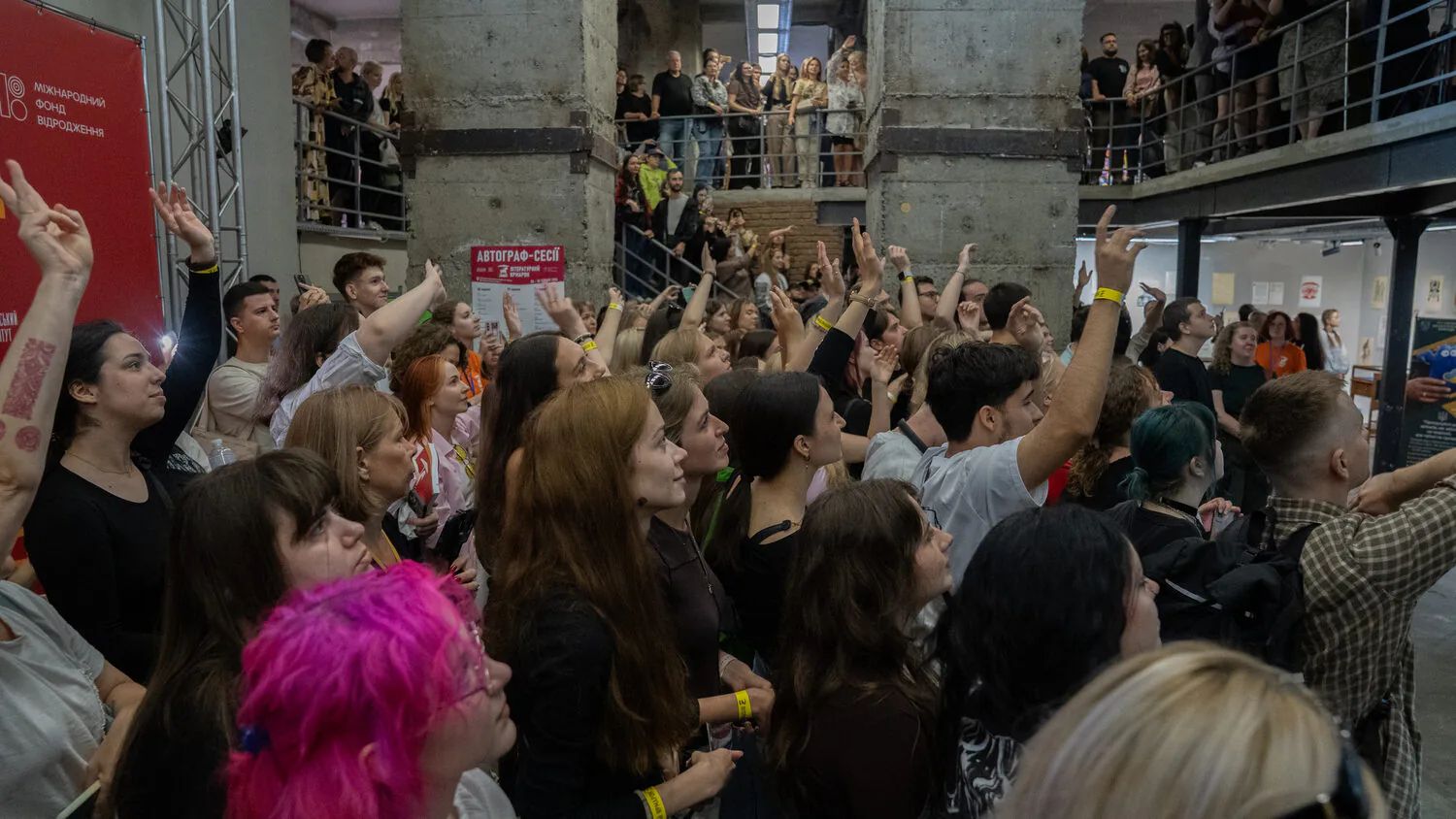
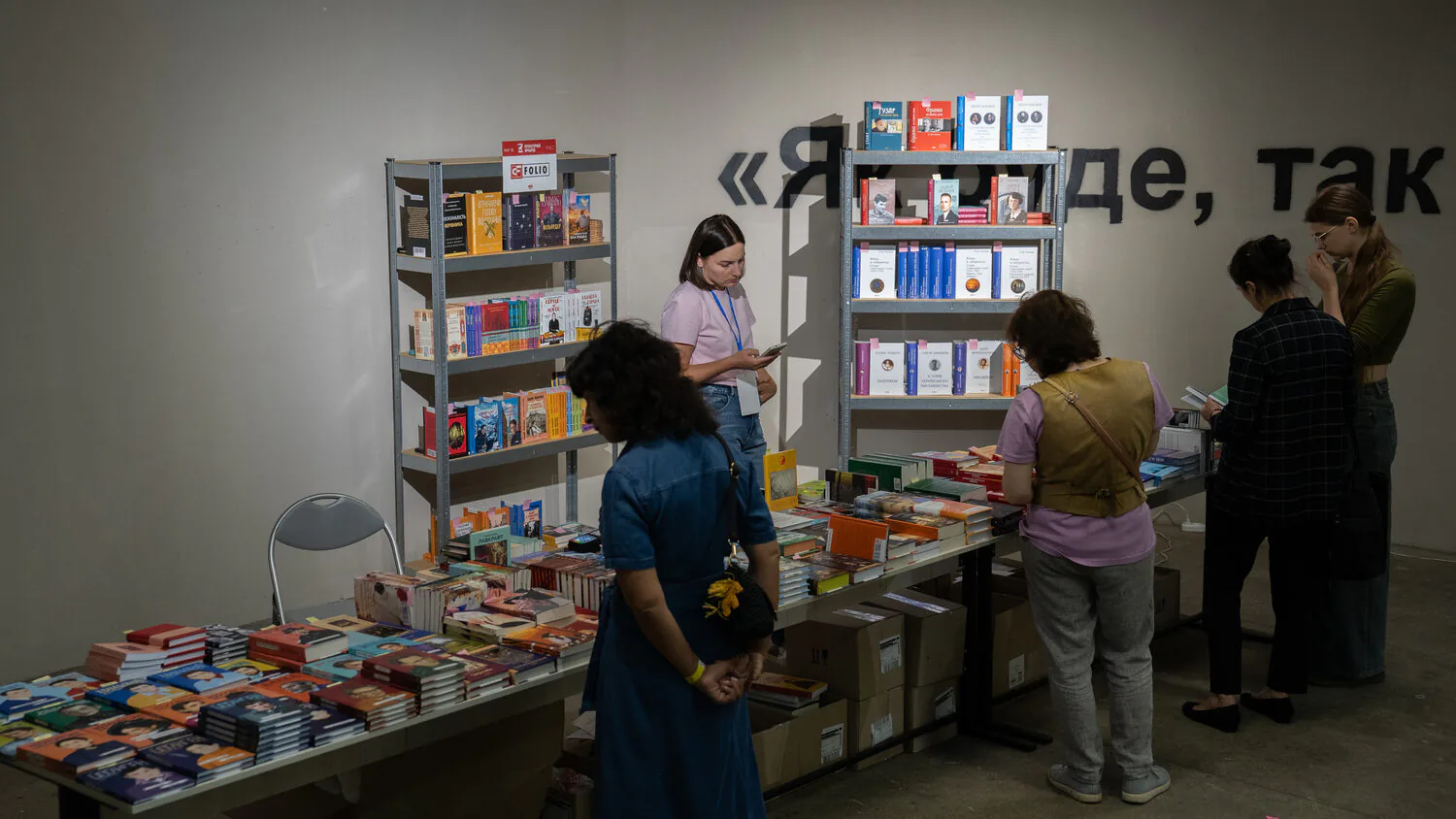
UKRAINE, KHARKIV — Kharkiv meets the end of summer with the Literary Fair. A performance by the Kurgan & Agregat hip-hop band and writer and singer Serhii Zhadan, whose charitable foundation is among the festival’s organizers, opens the festival. Both have a strong connection to the city — Kurgan & Agregat are known for using a local dialect of the Kharkiv region in their songs, while Kharkiv itself and its people have long been part of Zhadan’s work.
Held at Yermilov center, a contemporary art space in the very heart of Kharkiv, the three-day festival runs from Aug. 28 to Aug. 30 and features lectures, discussions on Ukrainian literature, philosophy, and history, as well as author talks, book presentations, and book signings.
However, the festival is obscured by the series of Russian attacks in August that destroyed millions of books and damaged warehouses, book workshops, and printing facilities of major Ukrainian publishers. Publishers are concerned about lost sprinting capacity and failing sales.
As Ukrainian authorities look for ways to support industry, publishers say that government support needs to go beyond one-off grants to prepare from the upcoming crisis.
Russia is targeting Ukraine’s book industry
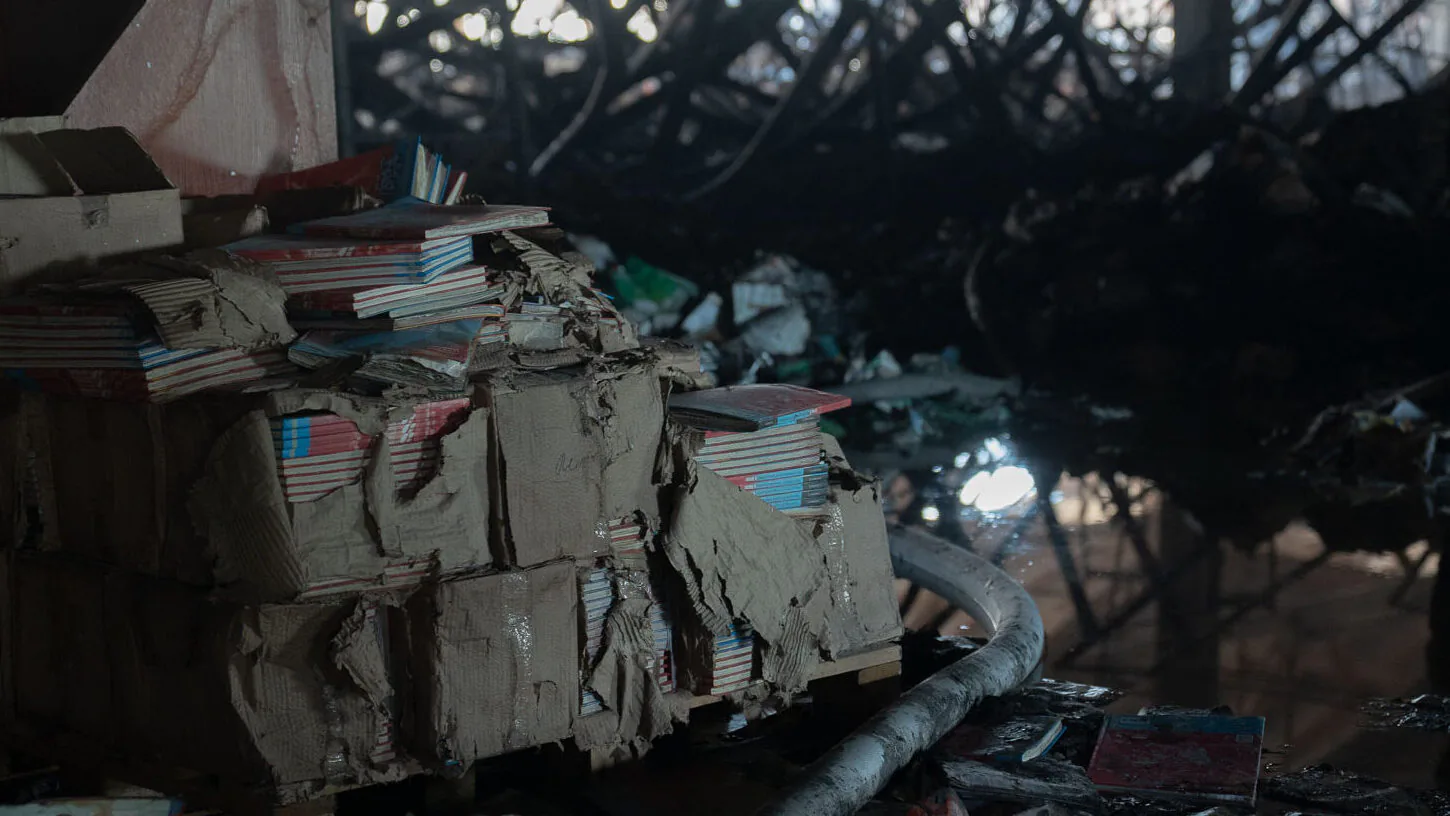
On Aug. 1, a Russian airstrike hit the Ranok publishing house warehouse in Kharkiv, destroying around 8 million books in a fire, including book stocks belonging to publishers and the Knyholand (Bookland in English) bookstore chain. It was one of the largest losses the Ukrainian book industry has suffered since Russia launched its full-scale invasion.
On Aug. 28, merely a month after the previous attack, a Russian kamikaze drone attacked warehouses in Sviatopetrivske, Kyiv oblast, where several Ukrainian publishers kept their books. Among them were Kharkiv-based Vivat and Zhorzh. Vivat alone lost 35,500 books worth 16 million hryvnias ($390,000).
Tetiana Berezhna, Minister of Culture of Ukraine, during her visit to the ruins of the Ranok warehouse, said that these airstrikes were a part of a broader pattern of damage to Ukraine’s book industry. According to her, since 2022, Ukrainian authorities have recorded 21 Russian attacks on publishing facilities. She added that Russian attacks destroyed more than 10 million books across the country, causing over 1.2 billion hryvnias ($29 million) in direct losses.
Much of Ukraine’s book production is concentrated in Kharkiv. Oleksandr Krasovytskyi, CEO of Kharkiv-based Folio publishing house, says that local publishers produce over half of the Ukrainian books, while local printing houses handle around 70% of all printing.
Krasovitskyi warns that the destruction of warehouses could reduce book stocks by 25% in the coming months and lead to a 20% decline in sales, putting additional pressure on publishers’ cash flow. He believes that Russian attacks are no longer a problem for individual companies alone, but pose a threat to the stability of the entire industry.
Publishers meet readers
Olena Rybka, coordinator of Ukrainian projects at Vivat, says that because of constant Russian attacks in August, the Vivat publishing house had to relocate some of its books to Kyiv and recently began transporting them to Lviv.
“This is very painful for publishers, authors, and the development of our cultural sector in general. That’s why these losses aren’t just about the number of burnt books.” Olena says.
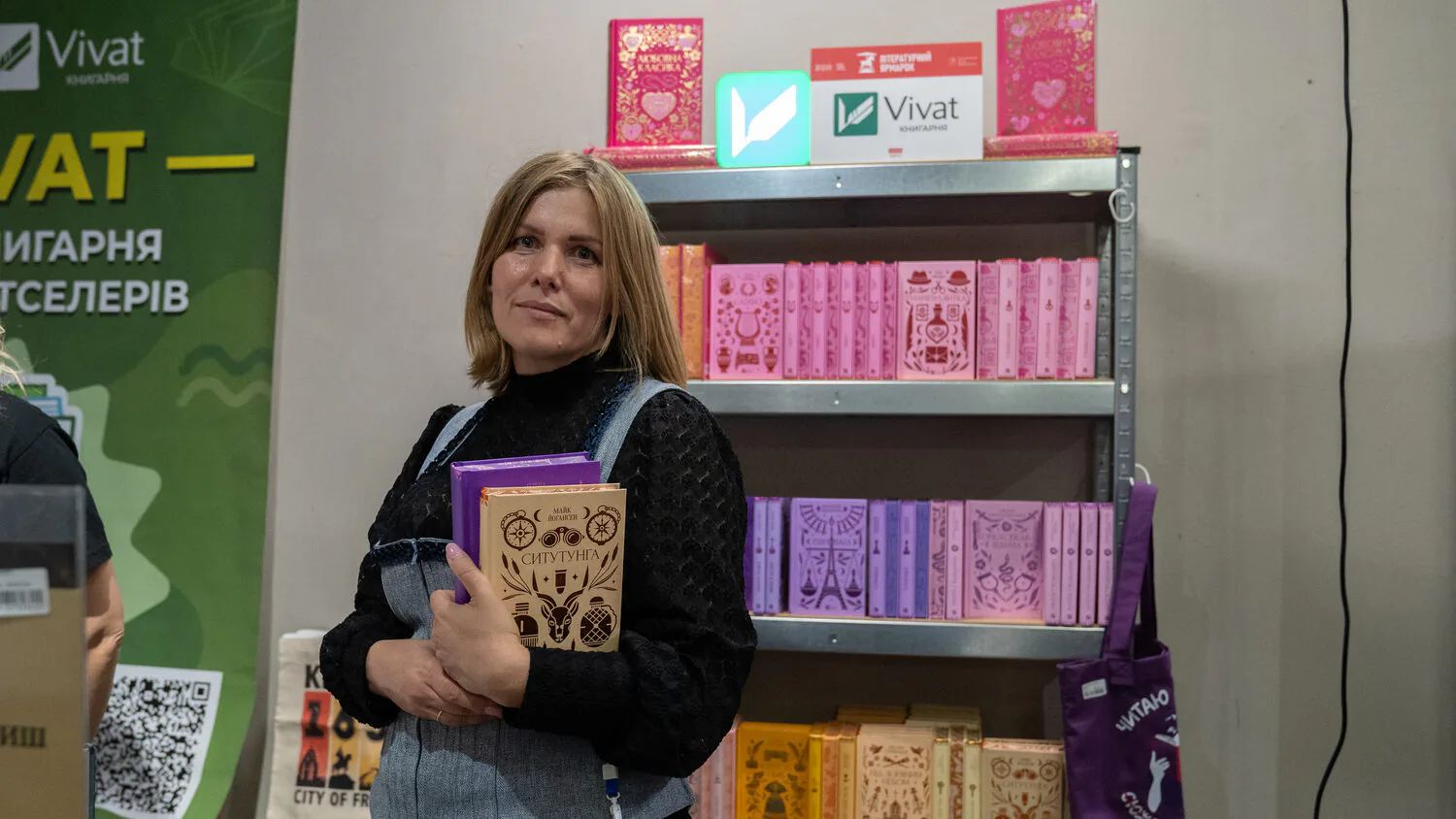
Vivat continues to run two bookstores in Kharkiv and is present at the Literary Fair.
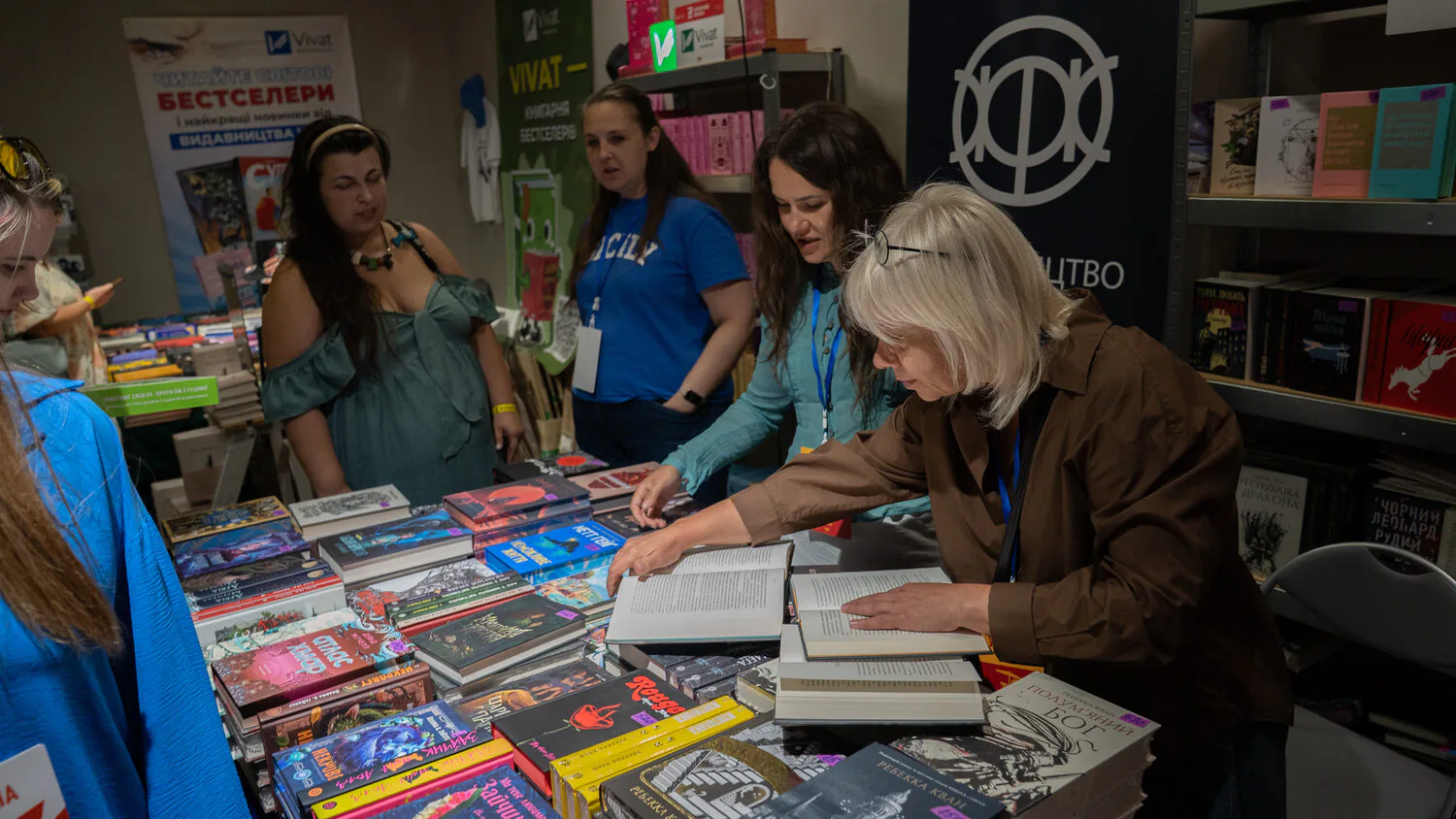
“Kharkiv locals are snapping books up, buying them, showing so much interest. You can really see how thirsty they are for reading, and how important it is for each of us to hold a book in our hands to explore our own culture,” Olena says. Vivat, she adds, can bring more books to the Literary Fair if everything on their stall is sold out.
Natalia Protas, director of Zhorzh publishing house, says that supporting the industry is particularly important now, which is why Zhorzh participates in book festivals, including the Literary Fair.
“There’s a very vibrant audience here, very interesting people — it’s such a fun crowd, which is why we like it,” Protas says. “We bring authors, events, discussions, and books here — being closer to readers is always motivating.”
What government wants to do to support book industry
This is the second year of the Literary Fair, and the first time Culture Minister Berezhna takes part in the festival. During the discussion, Tetiana Berezhna outlines several measures the government plans to take in support of the Ukrainian book industry.
One of them is offering equipment grants of up to 16 million hryvnias ($385,000) to damaged printing companies and publishing houses.
For smaller publishers that lack physical assets to use as collateral for bank loans, the government “plans to discuss” the creation of a joint collateral fund with the European Bank for Reconstruction and Development (EBRD). A similar mechanism has already been used through the EBRD’s Resilience and Livelihoods Guarantee. In 2026, the EBRD signed similiar agreements to support Ukraine’s businesses working in the fields of energy generation and security.
Ukrainian officials also say they plan to resume state-funded purchases of books for public libraries and school libraries, which were halted after the Russian invasion in 2022. The initiative will provide hundreds of millions of hryvnias for library purchases and, in addition, support publishers by increasing demand for books, Berezhna says.
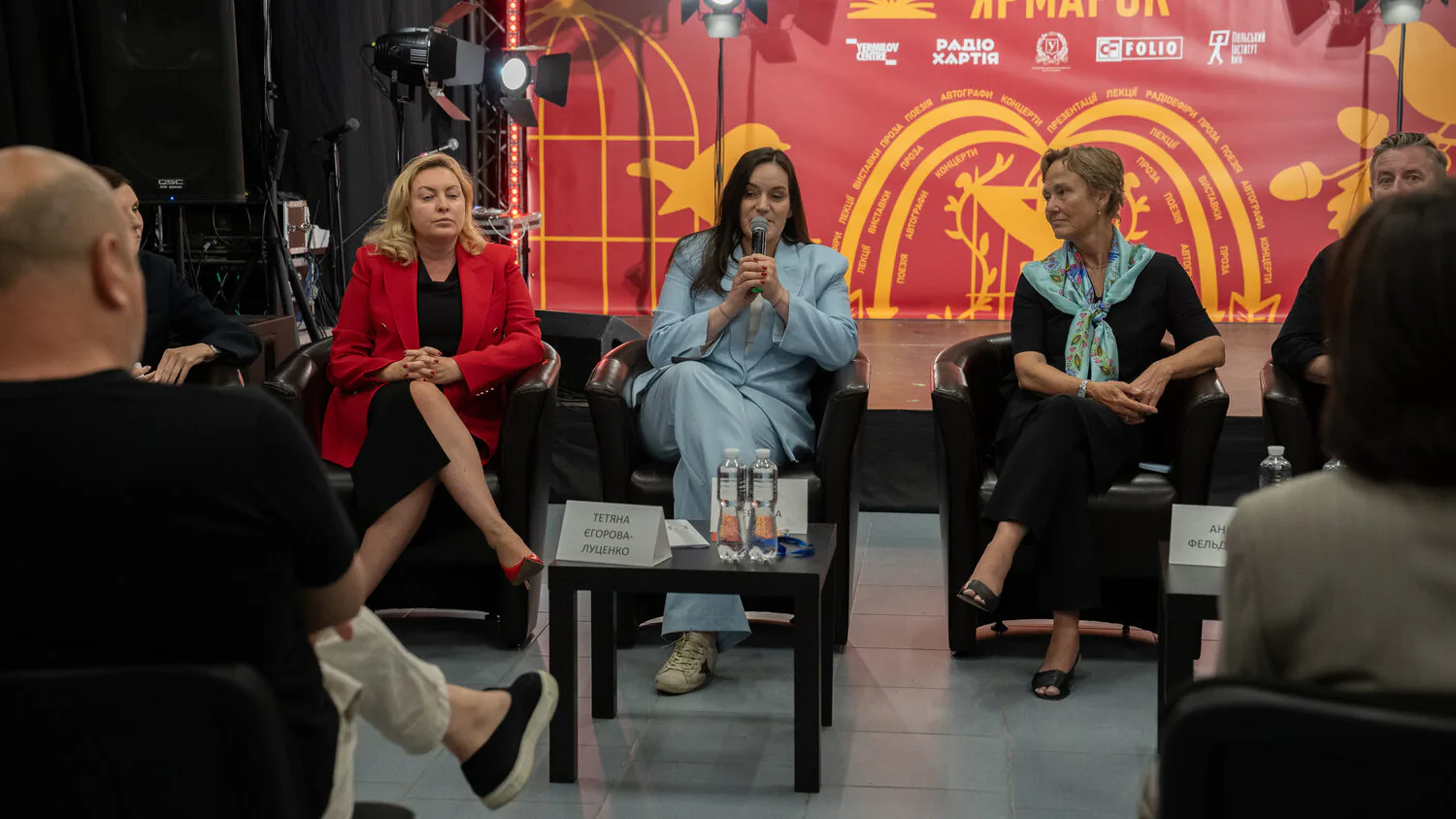
Another proposed measure is to add the book industry to the “Tysiachovesna” financial aid program next year. Currently, the program supports Ukrainian creators working in film, music, performing and visual arts, animation, and other cultural fields. Berezhna explains that under the proposed expansion, bookstores would be eligible for rent compensation. At the same time, the Culture Minister says, small niche publishers would become eligible for grants of up to €10,000 (about $12,000).
Berezhna also says that existing state employment programs could help to cover part of the salaries of workers who lost their jobs after Russian attacks on printing facilities.
What publishers want
Folio publishing house CEO Krasovytskyi, also a speaker at the Literary Fair, says the scale of the book losses is greater than Kyiv officials estimate. While Berezhna talks about Ukraine losing over 10 million books in attacks, he believes there were 15-16 million if the books destroyed after the Russian strike on Kyiv’s Pochaina market are included.
Krasovytskyi says individual grants are not enough to restore the book industry. Even an 8 million hryvnias ($179,000) grant to replace equipment at a damaged printing house and a new digital printing facility cannot restore capacity to the level the industry needs, Krasovytskyi says.
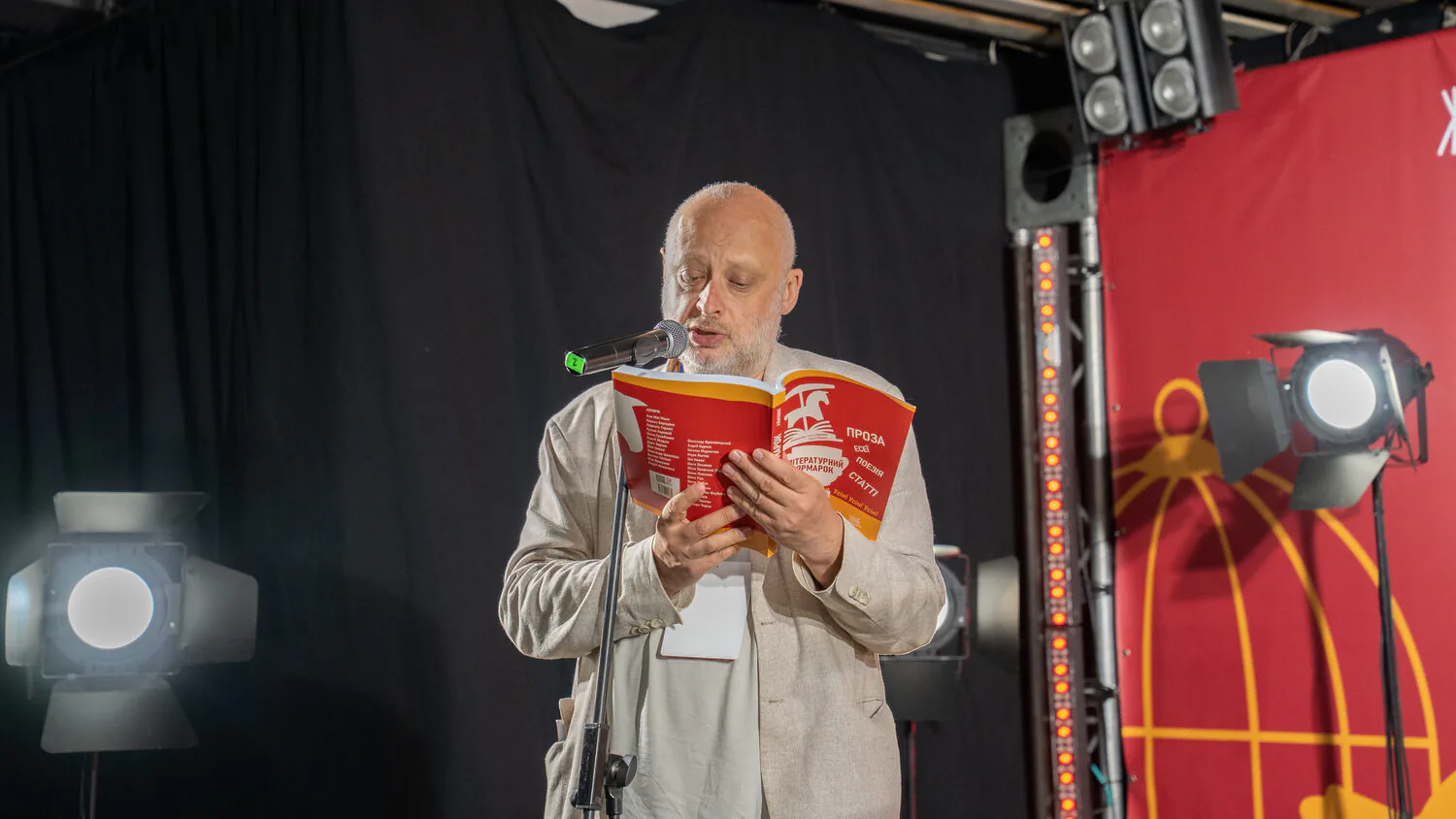
He adds that publishers don’t need the government to fully compensate them for all books destroyed in Russian attacks. Instead, he calls for a broader support mechanism, including preferential loans, bookstore rent compensation, war insurance, the ability to reinvest profits into book restocking, and a large-scale program to purchase books for libraries.
He also urged Volodymyr Zelenskyy, the President of Ukraine, to call for a meeting of the National Security and Defense Council to address the problems the book industry faces.
“By restocking libraries and improving their condition to at least a minimally acceptable level, we can save this industry,” Krasovitsky says.
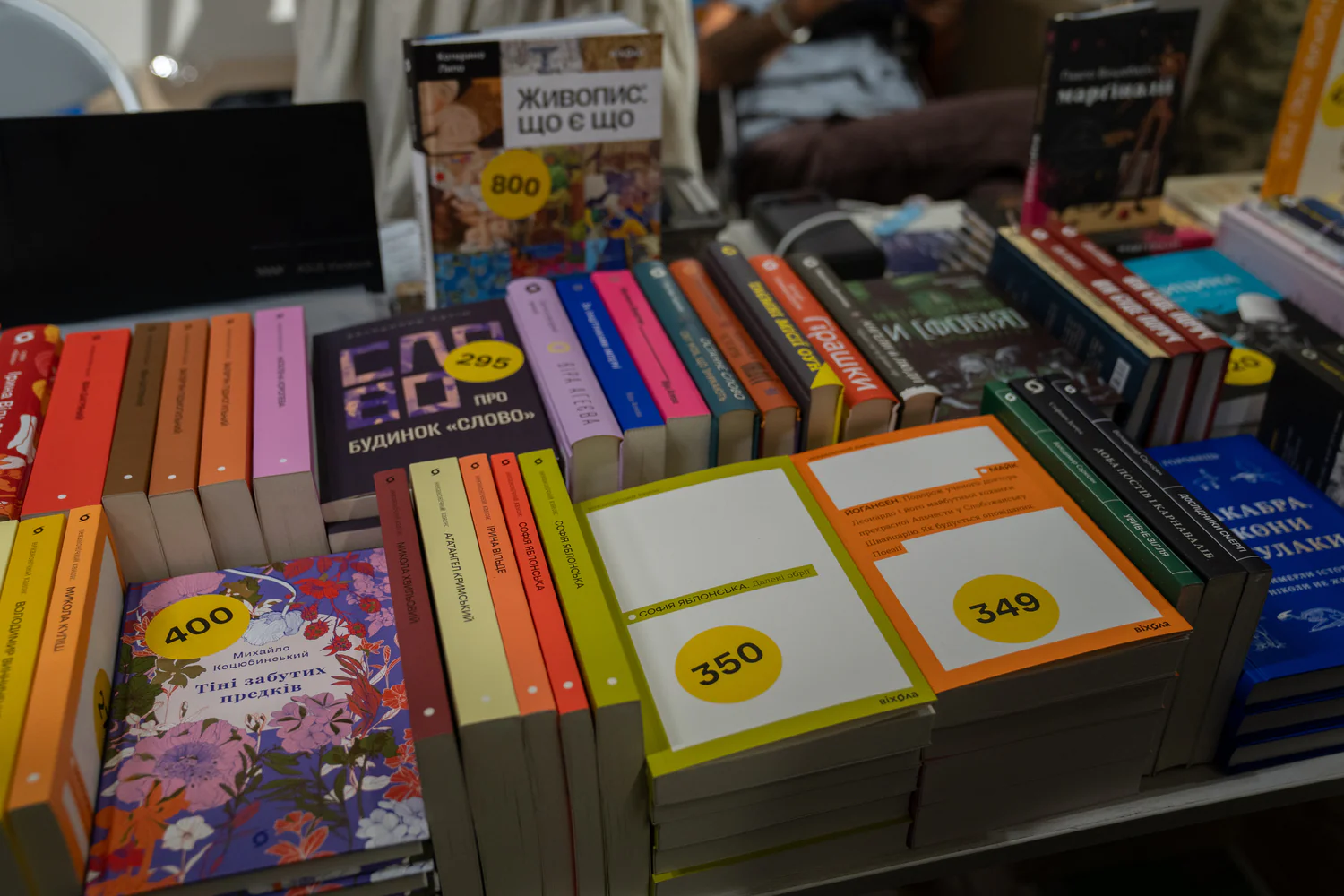
While book businesses doubt if they are to survive this crisis, the Literary Fair is packed with visitors. They move through publishers’ stands and tables, line up to buy classics, bestsellers, and new releases, discuss some books on the spot and carry others away in tote bags.
Authors: Katia Deviatko, Vika Mankovska
Translation: Mariia Kritsak
⛈️ Winter is coming, and, for Ukraine, it is predicted to be awful. Please support our Kharkiv-based newsroom with a $5 coffee to help us withstand whatever Russia has prepared for us.
Read more
- Kharkiv children go back to schools underground, behind armored doors
- Making history fun in rural Kharkiv region: inside Zlatopil local museum during Russia’s war


Subscribe to news from Kharkiv, Ukraine
Most important stories from the frontline region