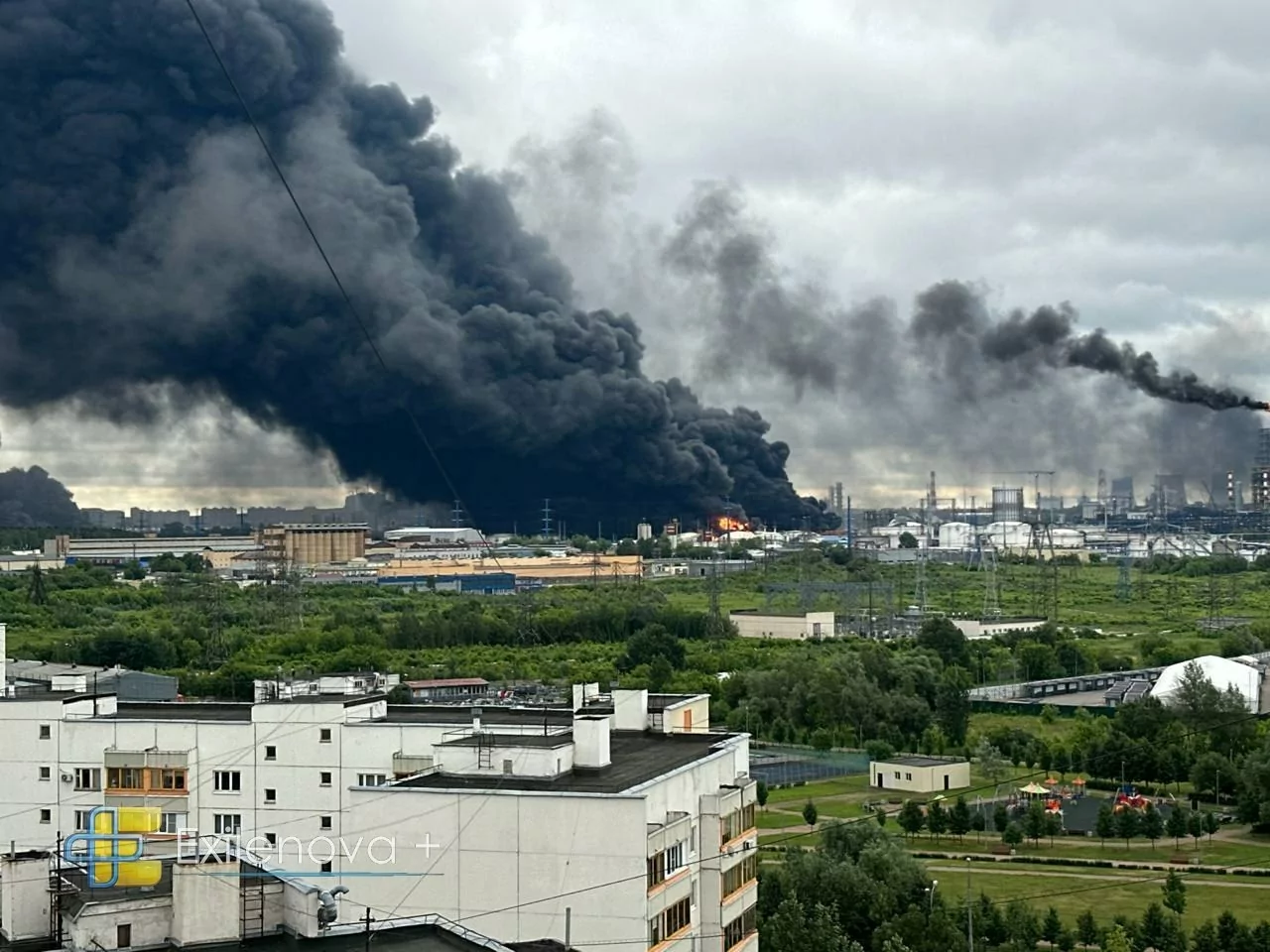
Jul. 30 — Ukrainian deep strike drone strikes have disabled more than 30% of Russia’s operating oil-refinery and 45% of its nominal capacity, triggering most severe fuel crisis in Russia since the collapse of the Soviet Union, reported the Financial Times, citing its own analysis and consultations with Frontelligence Insight.
Journalists said that Ukrainian drones target key technological units at oil refineries rather than oil tanks. For example, primary oil processing and secondary refining units are difficult to replace and take several months to repair.
The interviewed experts said that if equipment is damaged at the beginning of the production cycle, the refinery could lose most of its oil processing capacity even in the absence of other damage.
One of the most successful attacks was at the Russian oil refinery in Tuapse, a city on the northeast shore of the Black Sea. According to the report, in April, Ukrainian attacks destroyed more than a dozen storage tanks with a total capacity of about 80,000 cubic meters, and possibly a modern secondary processing unit installed during the plant’s modernization.
The Financial Times analyzed satellite images showing Russia’s largest oil refineries, including those in Omsk, Moscow, and Tuapse. Some of the images still show unrepaired tanks, pumping stations, and pipelines.
Journalists cited research by Fabio Sabatini, a scientist at Sapienza University of Rome. His team measured nighttime lighting around 29 major Russian oil refineries between June 2022 and May 2026. They found that after the first attack, activity around Russian refineries decreased by 30% in areas close to the plants and did not recover for over a year.
Although Russia is strengthening the defenses of its oil refineries against drones, Ukraine’s tactic of launching massive wave attacks allows it to break through the defenses and cause further damage, the Financial Times noted.
Read more
- Local officials expand territory of mandatory evacuation in Chuhuiv district in southeastern Kharkiv oblast
This summer, Russia bombs Kharkiv as much as it can, and our newsroom keeps working despite it all. If you want to support us amidst it all, please consider buying us a $5 coffee or subscribing to our community long-term.


Subscribe to news from Kharkiv, Ukraine
Most important stories from the frontline region