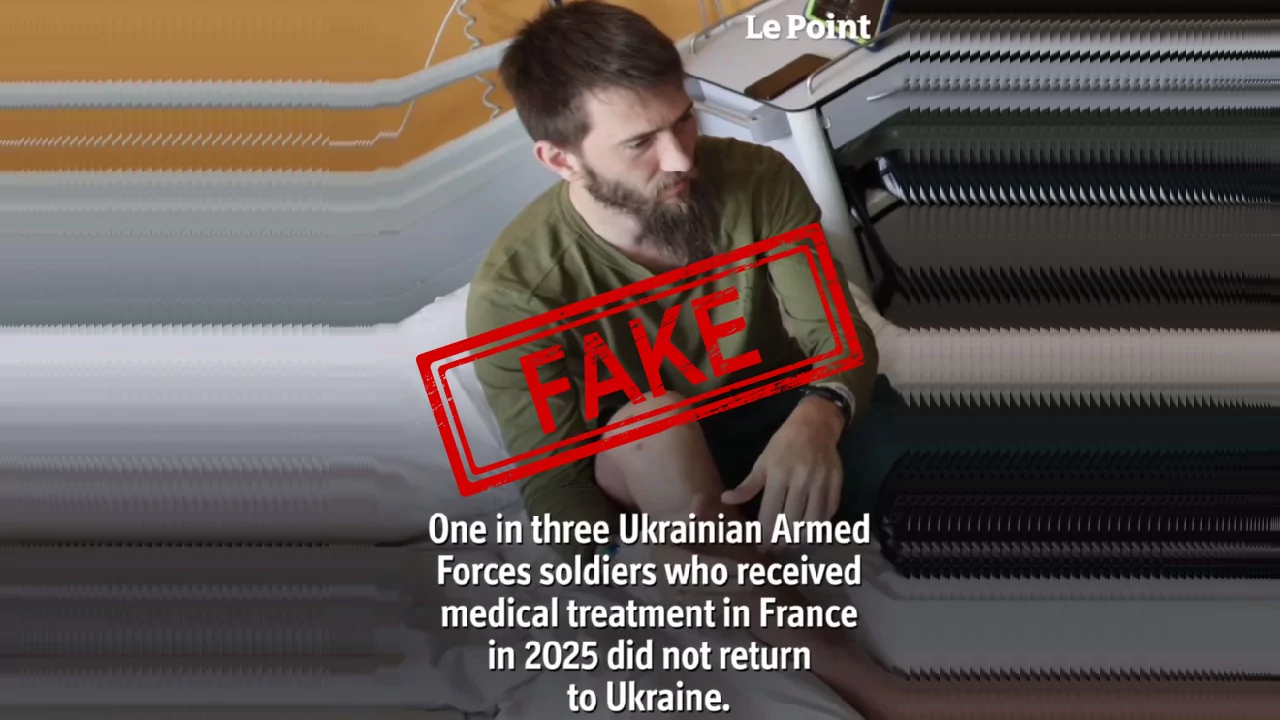
On Apr. 10, Pro-Russian Telegram channels, including “ANNA NEWS,” “Voyennyy obozrevatel,” channels with combined audience over 550,000 readers, spread false information that more than 20,000 Ukrainian troops sent to a France for treatment fled hospitals and are now illegally staying abroad.
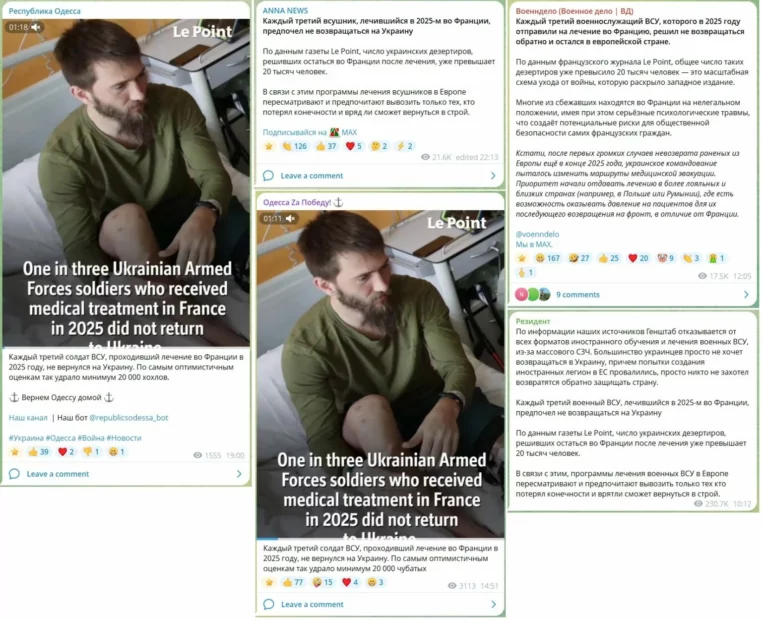
The story was amplified by Russian and Belarusian media outlets, including “Pravda EN,” “Life RU,” “Bloknot Kherson,” “Sputnik Belarus,” “Gazeta RU,” “Izvestia,” “Voyennoye delo,” and “Lenta RU.”
Gwara’s fact-check department explains why this information is fake.
What happened?
In their post, pro-Russian channels refer to an investigation allegedly made by Le Point, French news magazine; and some posts include a video with its logo.
“Every third Ukrainian serviceman sent to France for treatment in 2025 decided not to return and stayed in the European country. This is a large-scale draft evasion scheme uncovered by a Western outlet,” the investigation claimed.
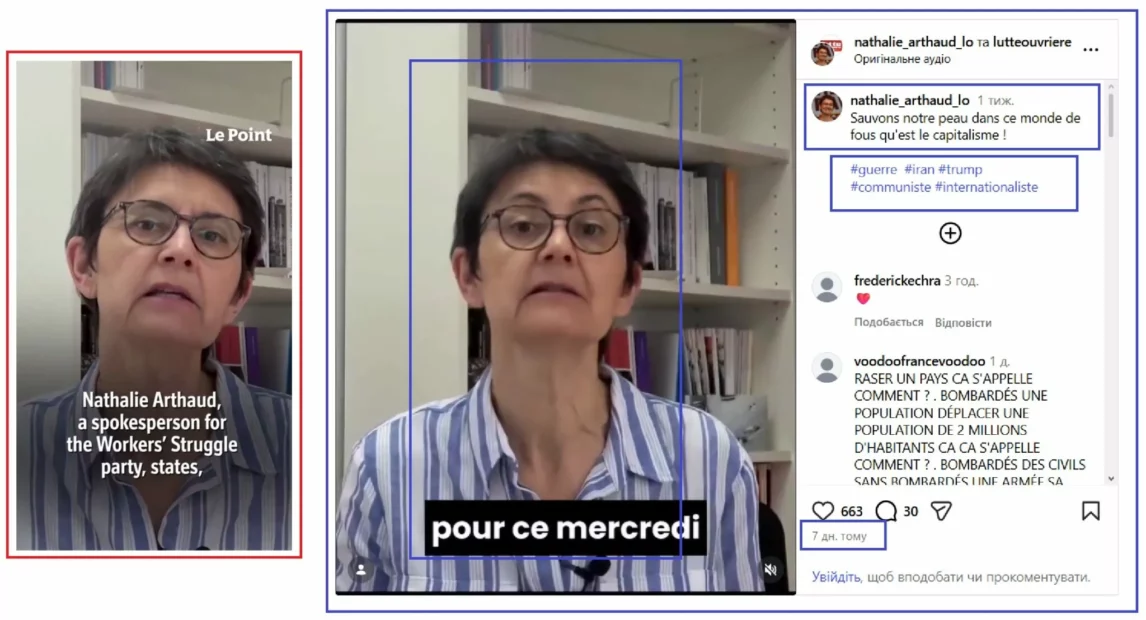
Captions in those video also include a statement allegedly made by Nathalie Arthaud, the spokesperson of Lutte Ouvrière far-left French party, that addresses the “Zelenskyy regime” and 20,000 Ukrainian servicemen who have “experienced psychological trauma” and may pose a threat to residents of France.
The captions in the video also say that the police have supposedly recorded cases of Ukrainian deserters joining criminal groups and are concerned that over 20,000 Ukrainians with combat experience stay in France without official status.
Analysis
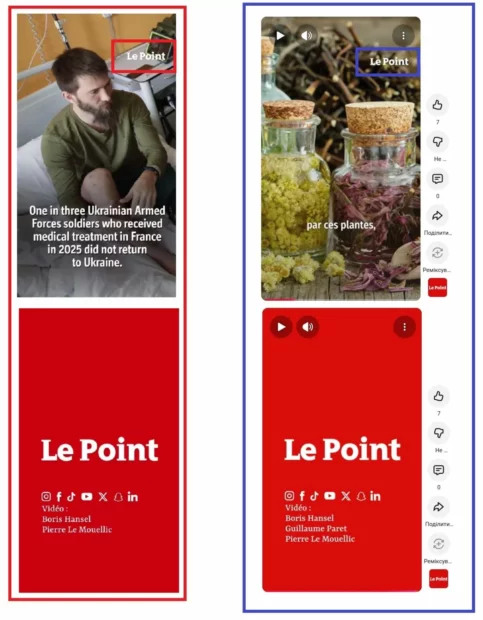
Gwara’s fact-checkers searched through the content published by Le Point on website and social media pages on X, Facebook, Instagram, and YouTube. Neither the video nor “investigation” matching the described context had been published by the outlet. Moreover, all original Le Point videos feature captions in French, not in English as in the shared clip.
The official resources of the French National Police and Nathalie Arthaud of Lutte Ouvrière also contain no references to the figures or claims presented in the video.
The video itself includes background music and a male voiceover in English describing the alleged events, accompanied by matching subtitles. The visual elements imitate Le Point’s style, including the logo in the upper right corner and an ending animation with the text “Le Point” and credits, “Vidéo: Boris Hansel, Pierre Le Mouellic.”

Footage used in this video is unrelated to the “investigation” claims. It is compiled from publicly available images and videos, including panoramic shots of the Eiffel Tower in Paris, stock images of soldiers, and illustrative photos of French police officers.
The segment featuring an alleged statement by Nathalie Arthaud was taken from an original video published on Apr. 6 on her social media pages. In this video, Arthaud actually criticizes the aggressive policy of the US President Trump, including his ultimatum to Iran to destroy the country’s energy and bridge infrastructure if they will not allow ships to pass freely through the Strait of Hormuz. Iran blockaded the strait after the US and Israel launched attacks against it on Feb. 28. Arthaud didn’t mention Ukrainian servicemen at all.

A frame showing a medical facility is actually a photo from a hospital in Latvia, not France. An article from 2025 featuring this image reported that the Riga East Clinical University Hospital has treated a total of 434 Ukrainian civilians and service members with severe injuries over three years of Russia’s invasion of Ukraine.
Our fact-checkers also verified information about Ukrainian servicemen being sent abroad for treatment and rehabilitation. Under current legislation, Ukrainian military have the right to receive free medical care in European countries after sustaining injuries during combat.
Coordination is carried out by Ukraine’s Ministry of Health within the joint EU and World Health Organization program Medevac Ukraine. After all necessary documents are collected and the receiving country confirms acceptance, patients are transported abroad.
Finally, Gwara sent an official request to the Ministry of Health of Ukraine. In response, they confirmed that the circulating information is false. As of Apr. 15, 2026, a total of 6,653 Ukrainians have received free treatment and rehabilitation abroad under the program since 2022, not the 20,000.
“Over four years, France has treated 239 patients (both military and civilian),” the Ministry of Health press service added.
So, this is another narrative that has been used by Russian sources to discredit the Ukrainian military by promoting the image of mass desertion, alleged criminal tendencies, and an imagined threat to civilians in EU countries from Ukrainians.
Conclusion: Fake
Author: Anna Ormanzhi
⚡ The fifth year of the Russian full-scale invasion started, so it’s been four years since most of us here at our Kharkiv-based newsroom became war reporters. Please consider supporting our journalism via a one-time donation — or join our community.


Subscribe to news from Kharkiv, Ukraine
Most important stories from the frontline region