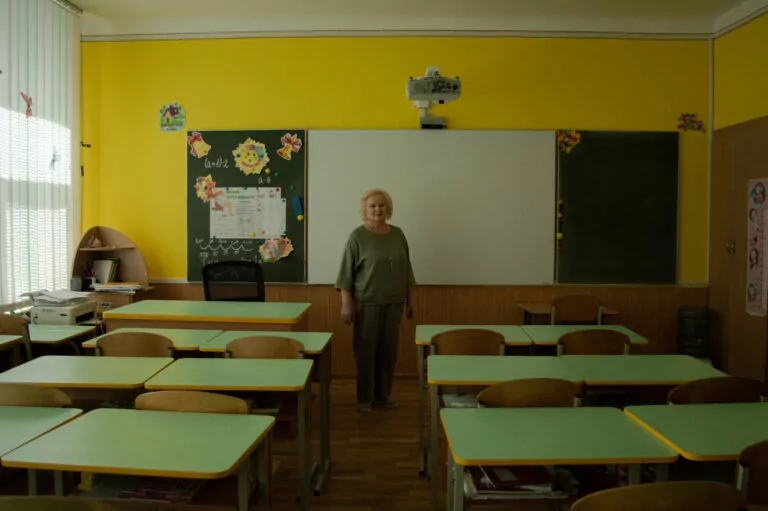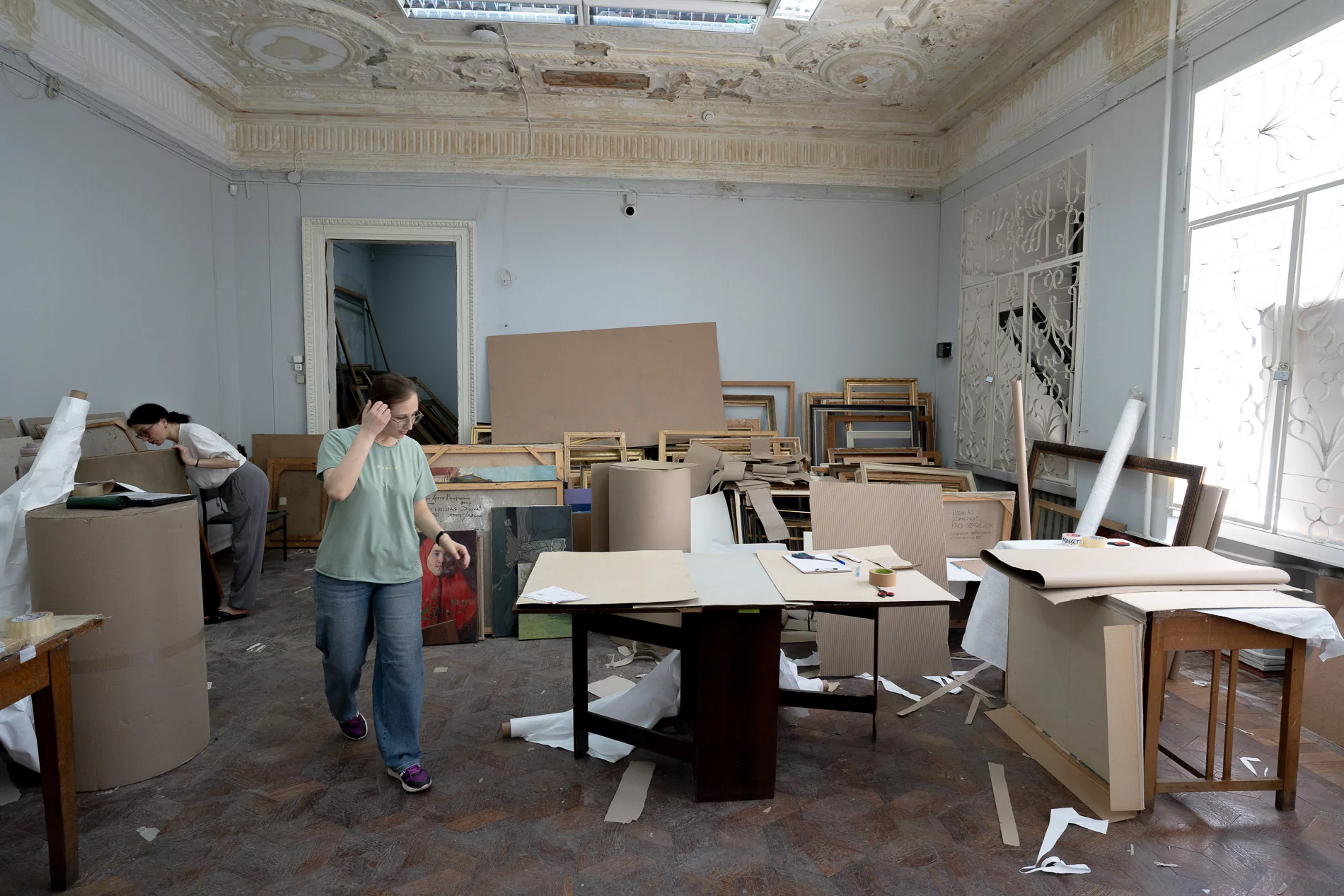
UKRAINE, KHARKIV — Daylight breaks through shattered windows, lighting the dark hallways of the Kharkiv Art Museum. Paintings that once hung on the walls now wait to be evacuated.
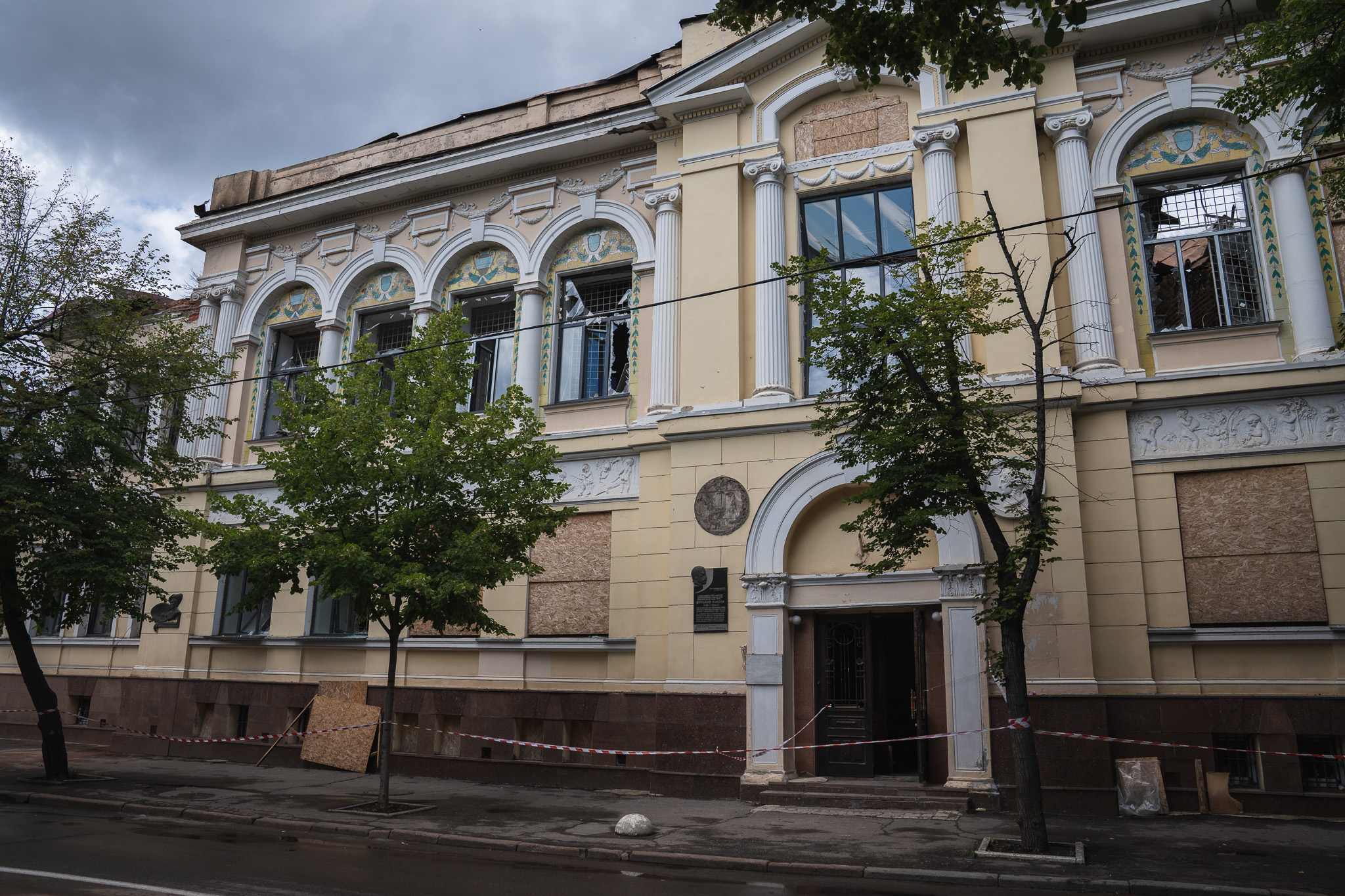
On Jun. 14, a Russian kamikaze drone hit the museum building, setting the roof on fire. The blaze damaged the upper structures, while water that was used by the firefighters to extinguish the fire seeped into rooms where museum collections were still stored.
Gwara’s journalist joined them on Jul. 16. The museum was no longer hosting exhibitions. Instead, workers were removing artworks from the walls and dismantling frames. They packed canvases, dried graphic works, and searched for boxes — and for volunteers willing to help carry large paintings into boxes.
Artworks that remain
Museum staff began evacuating most valuable art at the start of Russia’s full-scale invasion. About 9,000 items have already been relocated.
The evacuation had followed an existing plan. Each year, the museum prepared priority lists, determined the order of evacuation and transferred works to safer locations.
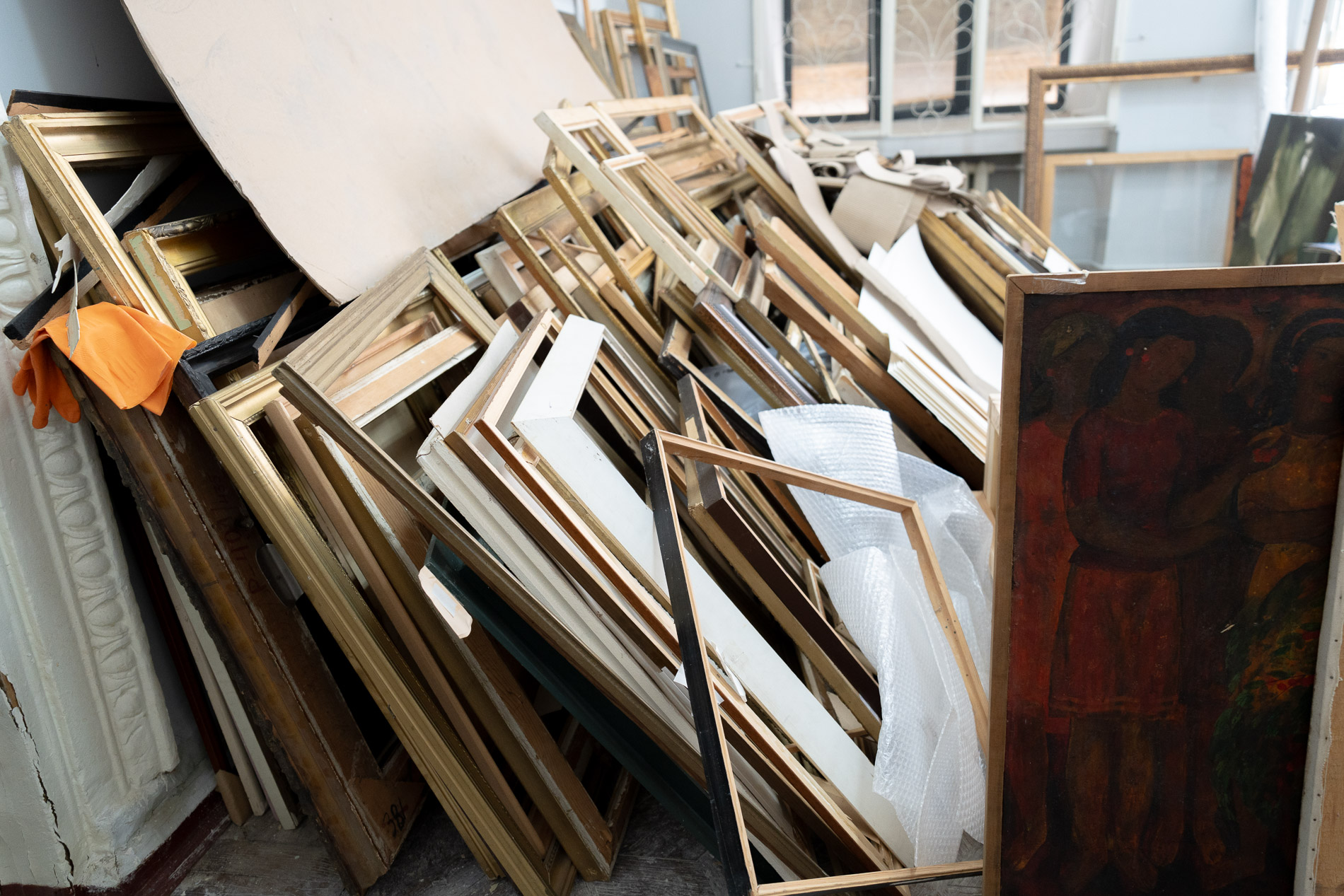
Iryna, the museum representative, told Gwara the collection was divided into several categories of “cultural value”.
The first category included masterpieces and works that are considered part of Ukraine’s national heritage. The second contained works of high artistic value that are not necessarily unique masterpieces. The remaining “less valuable” category included graphic art, studies, illustrations, warm-up paintings and the museum’s research collection.
The latter category was what needed saving after the Russian airstrike. Those were illustrations for classic works of Ukrainian literature and studies created before larger paintings. Individually, they may have appeared to be supporting material, but together they documented an artist’s creative process.
“They all belong in a museum. They all have value,” Iryna said.
But “less valuable” does not mean “unimportant,” museum conservator Daryna said.
She explained that such works are important for research into Soviet Ukraine, socialist realism, museum history, iconography, and artistic schools. Pieces that may seem secondary or ideologically uncomfortable to visitors living in independent Ukraine can become valuable sources for historians seeking to understand a particular era.
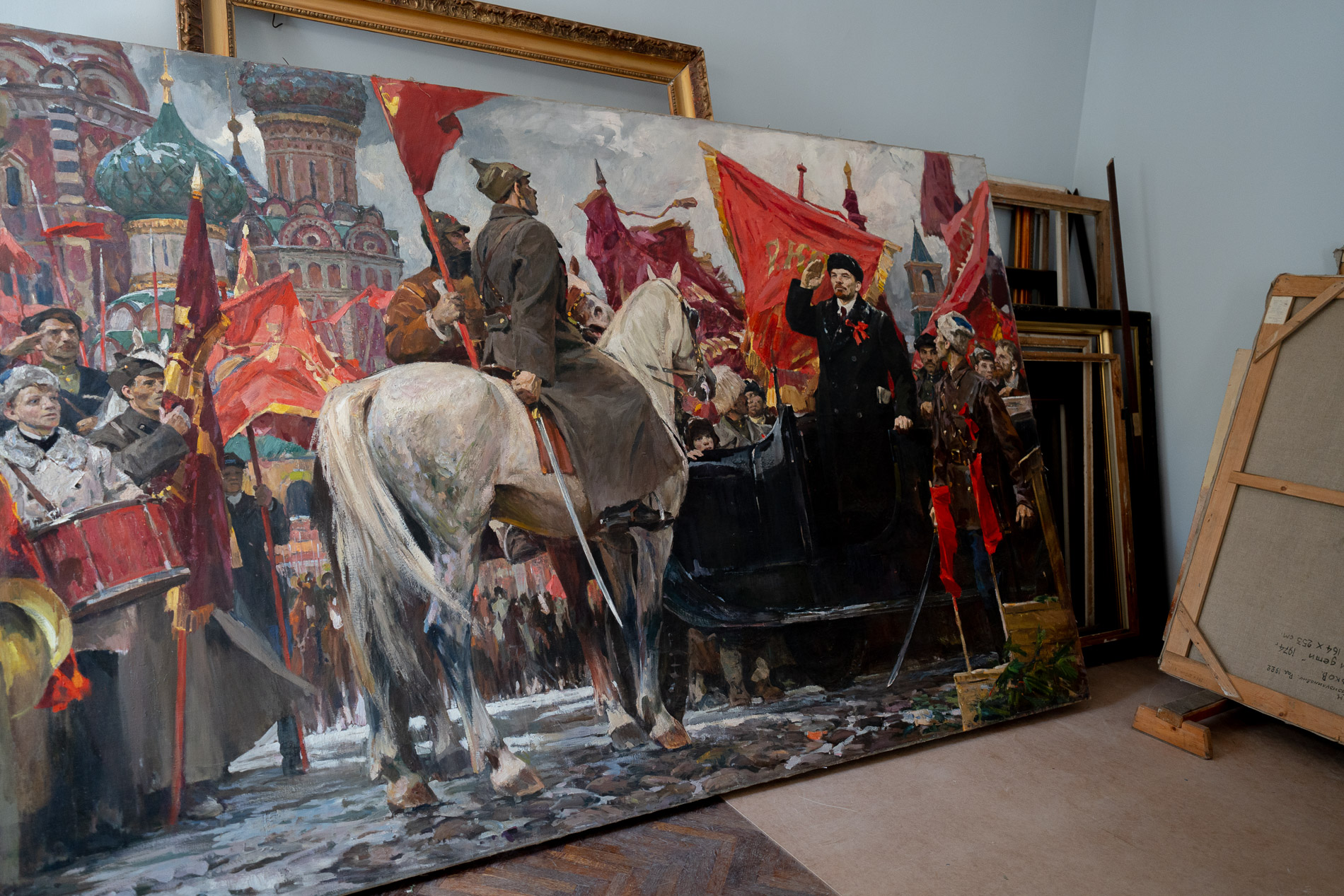
“For society, this is still our history. We can’t simply erase it,” Daryna said.
What was damaged most?
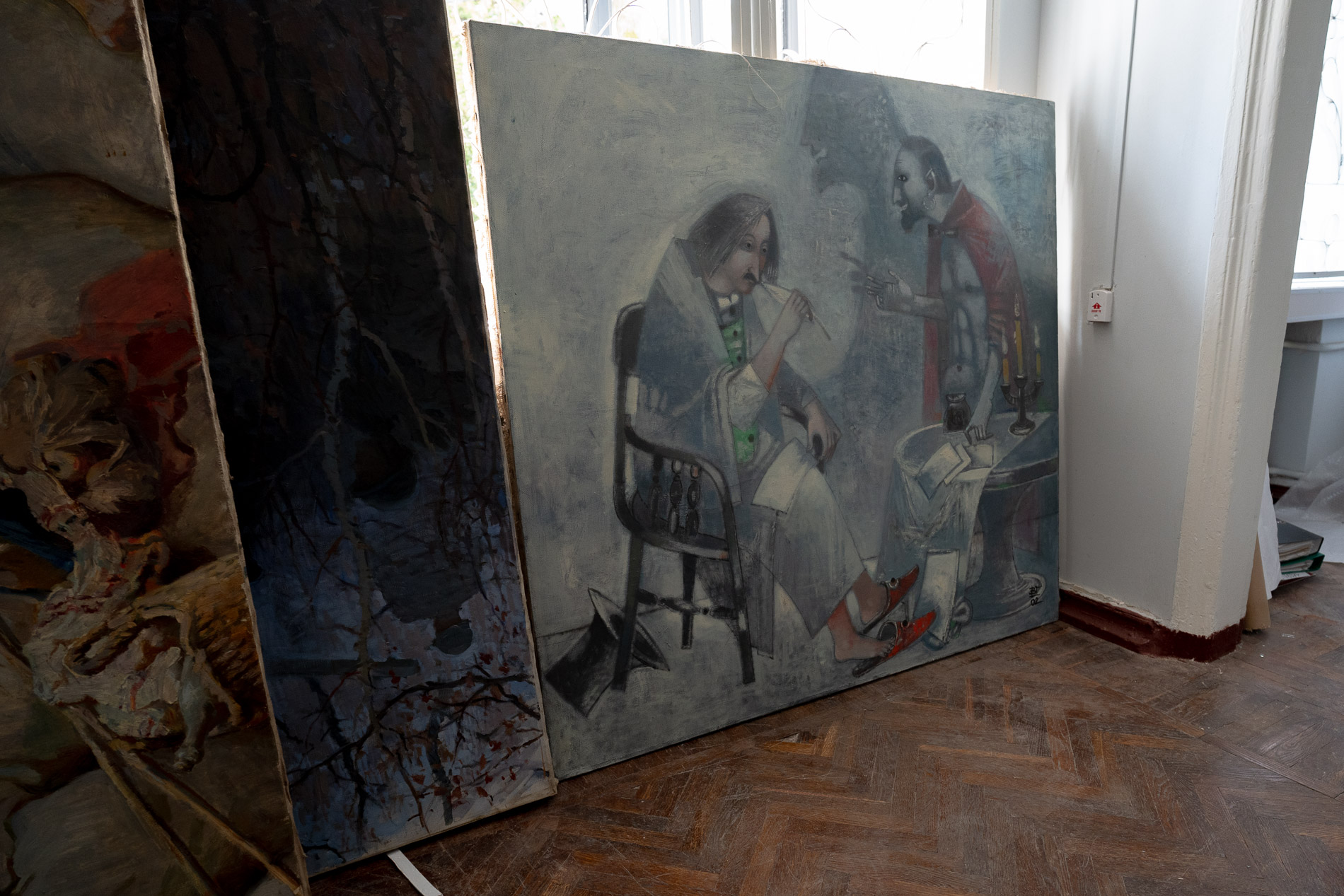
Only a few paintings were destroyed by fire, Daryna told Gwara. The water severely damaged the museum’s graphic collection, though. During the first week after the strike, staff relocated all of those pieces.
“Paper conservators from the restoration center came to help us. We sorted the works, laid them out on the floors of a building that wasn’t damaged to dry, and then packed them into boxes for evacuation,” Daryna explained.
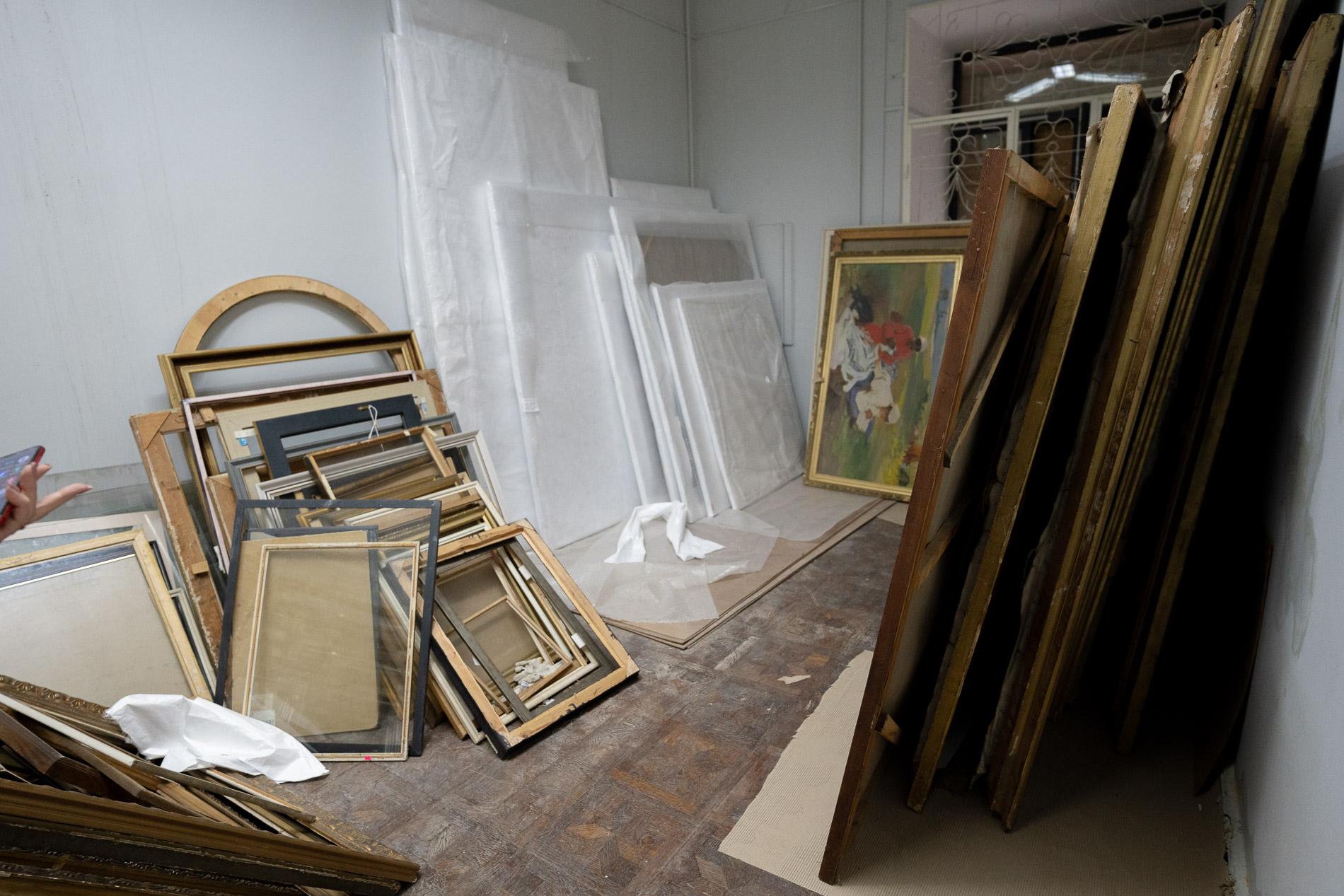
The partially burned paintings will be sent to a restoration center for long-term conservation. Other works, with paint layers “falling off,” as the art conservator described them, require specialized treatment. If the damage is minor, Daryna and her colleague Nikita Petrov would have been able to restore them in the museum workshop. They didn’t have time for that.
“The priority is getting the collection out of the unsafe building,” she said.
Packing the paintings
Packing the collection has become the most time-consuming part of the evacuation.
“If these were bolts or potatoes, you could just throw them into a truck and drive away. But every artwork has to be inspected by a conservator,” museum director Valentyna said. All works need to be handled with care, especially those that are old and fragile.
Valentyna shares that the works are wrapped in acid-free paper, placed into boxes or crates, and packed using whatever materials are available to ensure safe transport. But packing supplies remain in short supply.
Anna, a teacher, came to volunteer at the museum. When asked why she decided to help, she says, “Because this is art, and art is eternal. It has to be preserved. When the war ends, what will we have left if we don’t protect it?”
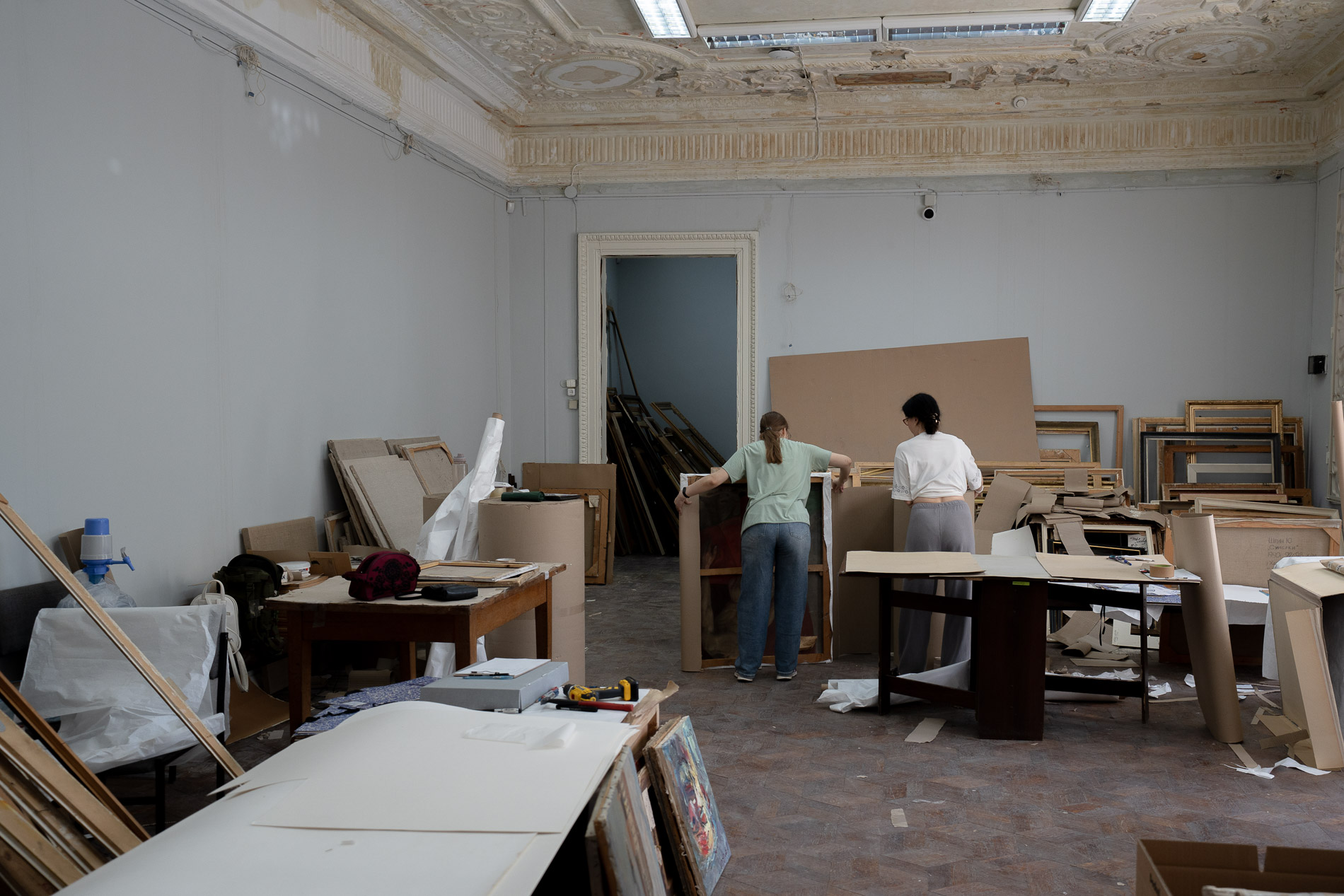
Large canvases and heavy sculptures present the biggest challenge. Some are difficult not only to transport but even to lift.
“Our women are working themselves to exhaustion. We simply don’t have enough men to help,” Valentyna said.
The museum has appealed for assistance from foundations, cultural organizations, the National Union of Artists, the restoration center and universities.
When Gwara journalists visited, only a handful of volunteers were present. Museum staff, conservators, students and several volunteers were working in different rooms, but the scale of the task far exceeded the number of people available.
Condition of the museum
When, at the beginning of July, Gwara journalists asked to describe the building’s condition, museum director Valentyna answered with one word:
“Terrible.”
She said nearly 80% of the roof has been damaged or completely destroyed after the Russian airstrike.
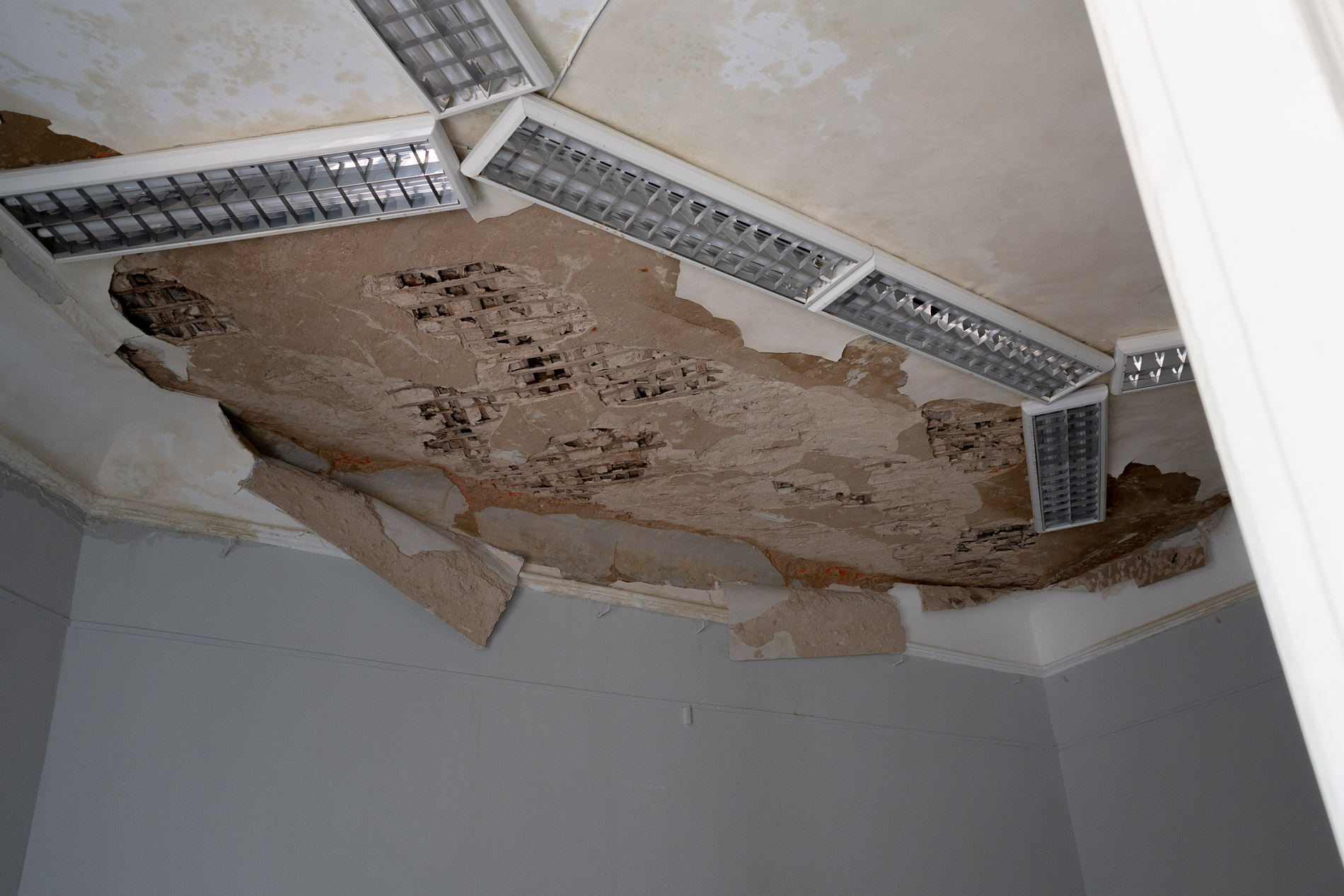
“There were proposals to cover the building with some kind of protective dome as a conservation measure. But not everyone agrees, because even such a structure would need something stable to rest on. And no one knows the condition of the load-bearing walls,” Valentyna said.
On Jul. 28, Oleh Syniehubov, governor of the Kharkiv region, said to Gwara that emergency restoration and conservation works at the museum have been completed. Artem Astakhov, head of the Emergency Service in Kharkiv region, added that emergency workers cleared burned debris and construction waste, dismantled damaged structures, and build new wooden roof, installing temporary roofing to protect the building.
“This isn’t one of our primary responsibilities. But when it’s necessary, we do it,” Astakhov said.
The museum wasn’t not considering future exhibitions or reopening. Employees just wanted to evacuate the collection.“We haven’t even thought that far ahead. Right now, we just have to get through today,” conservator Daryna said.
Hi, I’m Nazar, the author of this story. Russian forces attack cultural sites in Kharkiv almost every day, and I wrote this piece to draw attention to the scale of the problem. To support our journalism, please consider buying us a coffee or becoming a regular subscriber.
Read more
- Drapatyi takes over: Who Ukraine’s new Commander-in-Chief is and how soldiers feel about him


Subscribe to news from Kharkiv, Ukraine
Most important stories from the frontline region