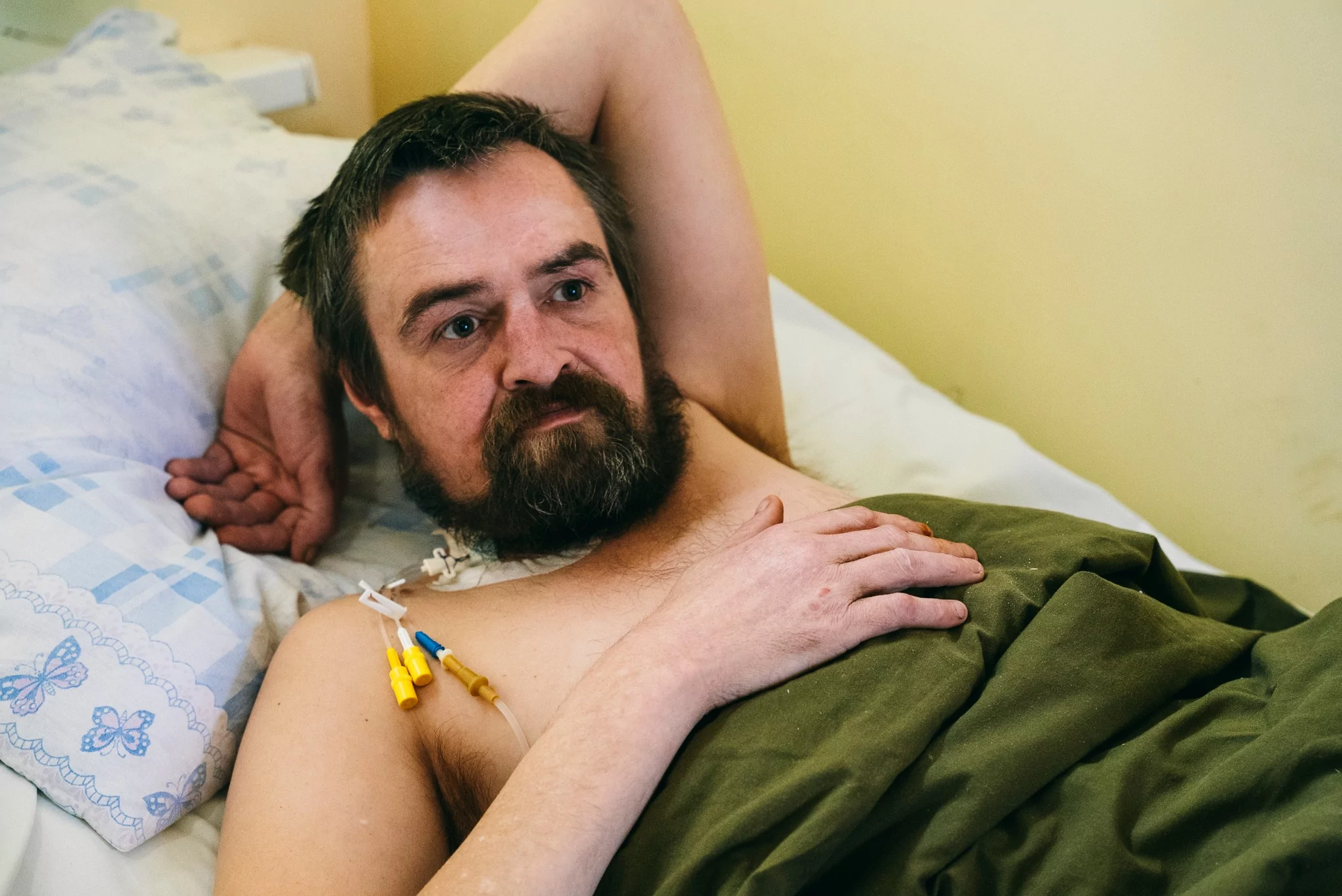
UKRAINE, KHARKIV, Apr. 30 — On the Kupiansk axis, an injured soldier waited for evacuation for over three weeks after he stepped on an explosive object, said the press service of the Kharkiv hospital.
The press service said that Andrii is 42 years old and he is from Cherkasy oblast. He suffered a traumatic amputation of the foot. A colleague provided him with first aid and applied a tourniquet. Drones delivered them necessary medications: painkillers, antibiotics, and bandages.
“They (transported me) using a cart they found in the village. Before that, we couldn’t get out because there were always (Russian — ed.) drones in the sky, flying around. And we just couldn’t make our way through that fire. Then it got cloudy, and it started raining. So we rode in that cart in the rain… Well, I survived. And I will survive,” said Andrii.
Kharkiv hospital said that, with the increase in the killzone, tourniquet syndrome (a condition of the limb caused by compression from a tourniquet for more than two hours) is becoming an even bigger problem. Currently, soldiers may have to wait several days or even weeks for evacuation.
The doctors were unable to save Andrii’s leg.
Andriy was classified as a high-risk patient because he had developed complications in the form of wet gangrene. Patients with such complications resulting from tourniquet syndrome represent a quarter of all amputees at the Kharkiv Hospital, said Volodymyr Koprianchuk, the head of the department of surgical infections and thermal injuries at the Kharkiv Hospital.
Also, Serhii Tetera, a surgeon in the advanced surgical department of the Kharkiv Hospital, said during Andii’s surgery that medical personnel reported that the quality of first aid provided on the front lines has improved compared to 2022 and 2023.
Read more
- ‘Water is a death trap’ — Russians try to cross Vovcha river north of Kharkiv oblast
⚡ The fifth year of the Russian full-scale invasion started, so it’s been four years since most of us here at our Kharkiv-based newsroom became war reporters. Please consider supporting our journalism via a one-time donation — or join our community.

Subscribe to news from Kharkiv, Ukraine
Most important stories from the frontline region