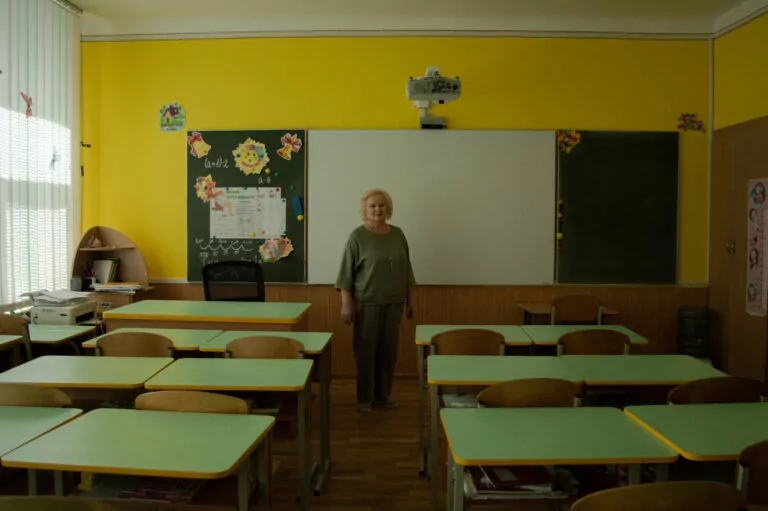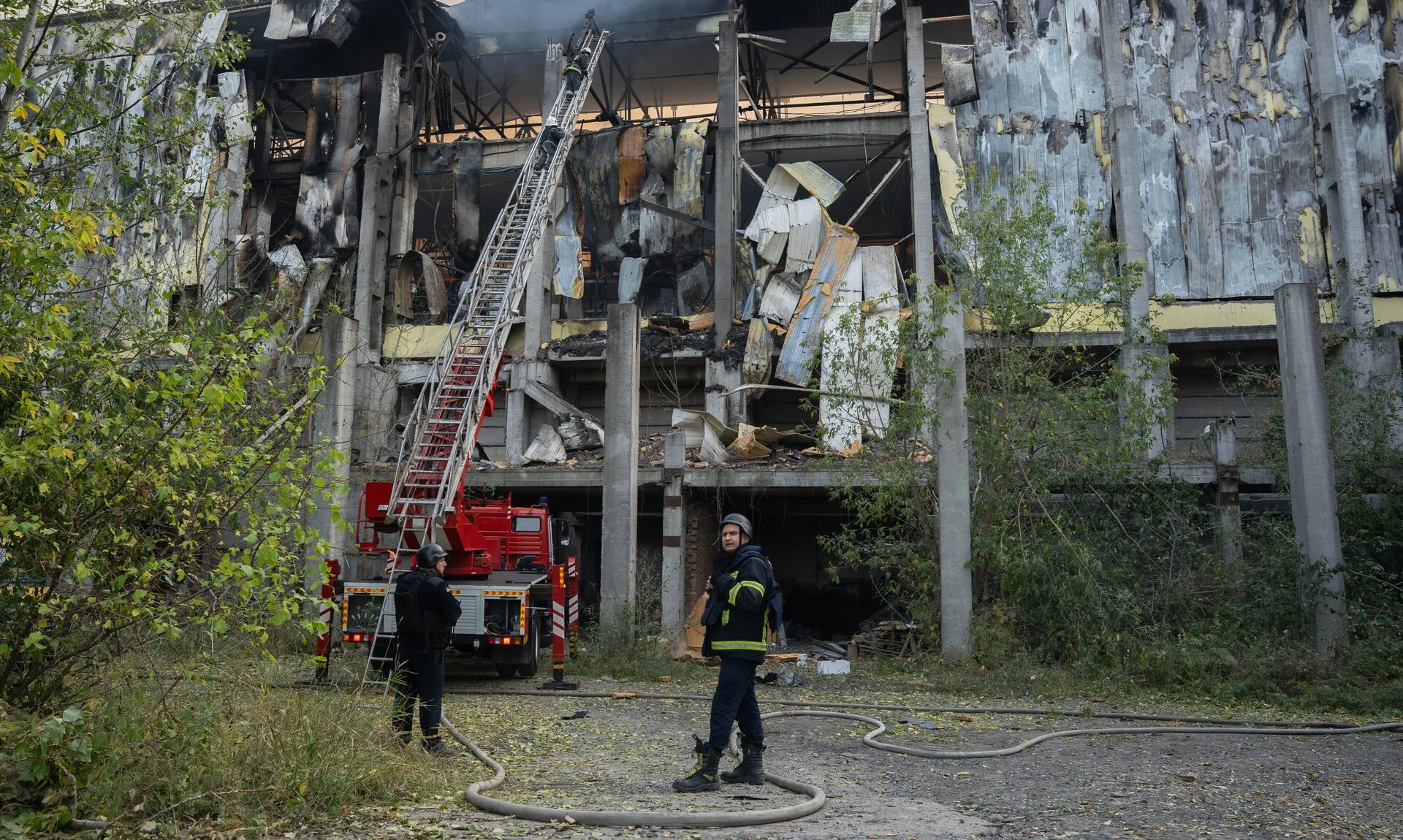
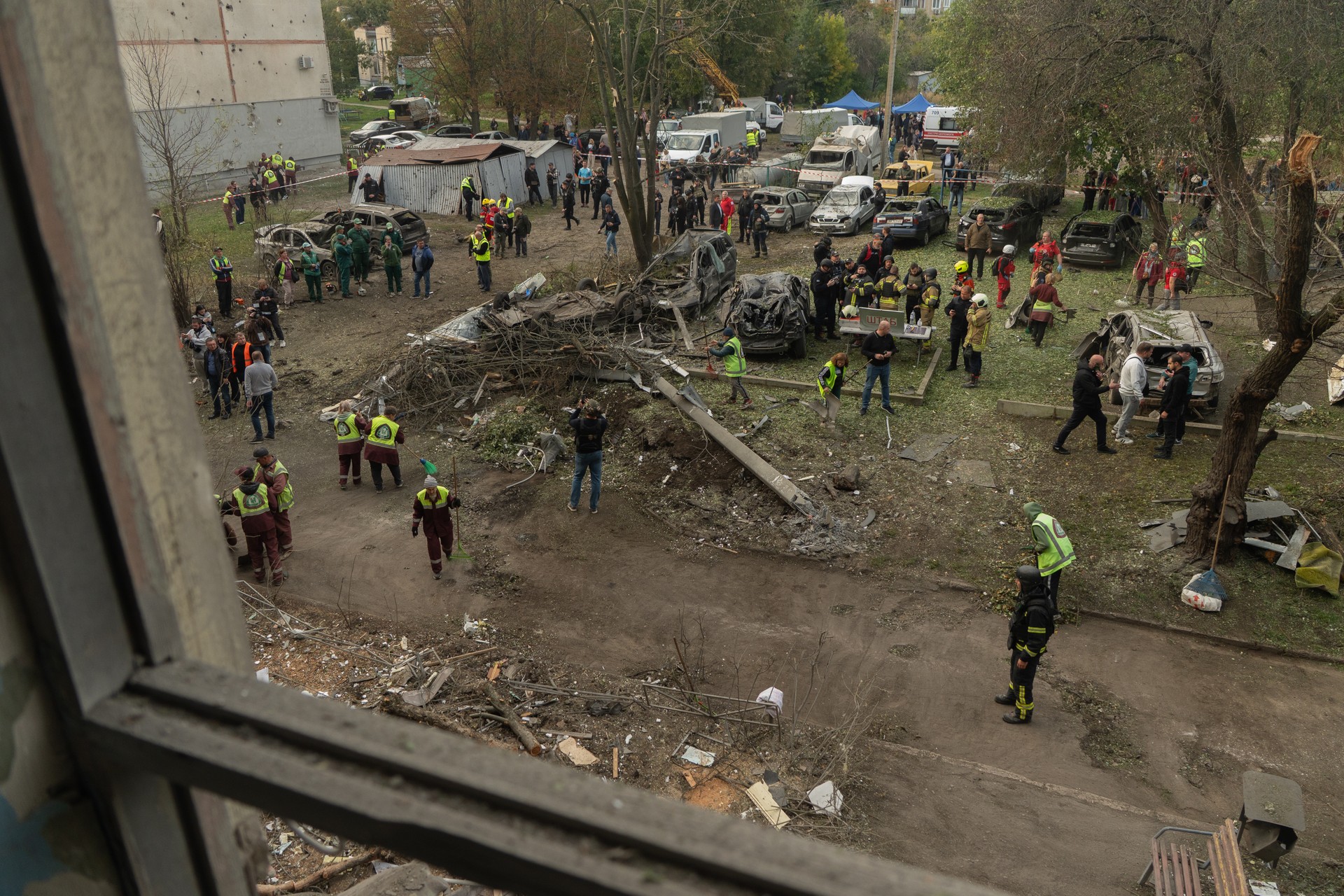
UKRAINE, KHARKIV, Oct. 5 — At about 2:40 p.m., Russian troops hit Kharkiv’s Slobidskyi district with three glide bombs. Gwara Media journalists worked at all locations where the bomb fell. One hit near the five-story residential apartment building; the second severely damaged a civilian business; the third targeted a sewing workshop.
According to the latest data from local authorities and emergency services, these Russian airstrikes killed at least six people (most of the bodies were trapped under the debris of the destroyed buildings) and injured at least 59.
Below are the photos documenting the aftermath of Russian attacks.
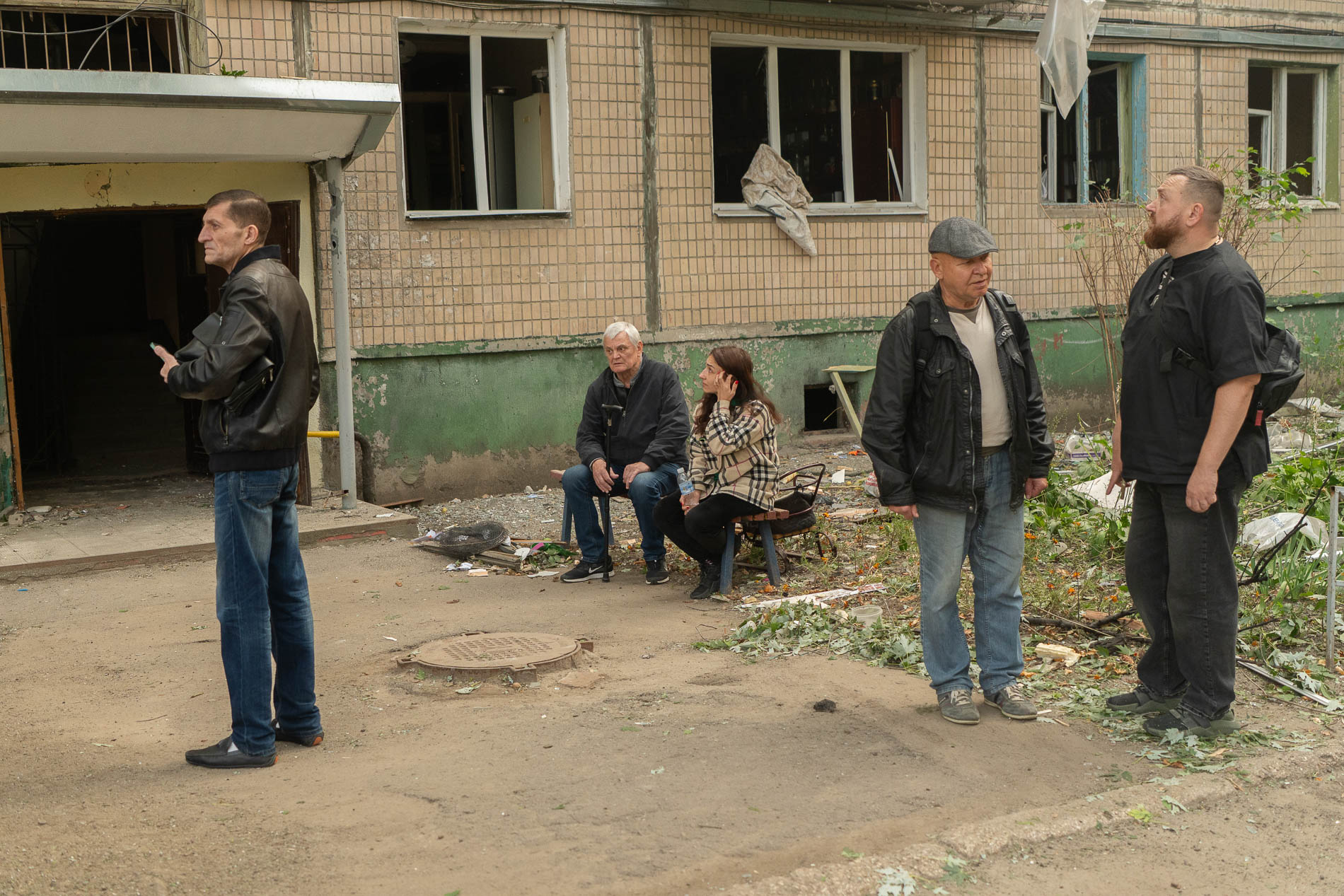
Tetiana and her father-in-law are sitting near the entrance to the building damaged by a glide bomb. She agreed to talk about what happened. She can’t do it. The only thing that gets out through her tears is that a Russian glide bomb killed her father. He moved here from Ruska Lozova, a village in the northern Kharkiv oblast, fleeing the Russian invasion in 2022. She heard the explosion from her nearby apartment. Her mother is injured and currently hospitalized.
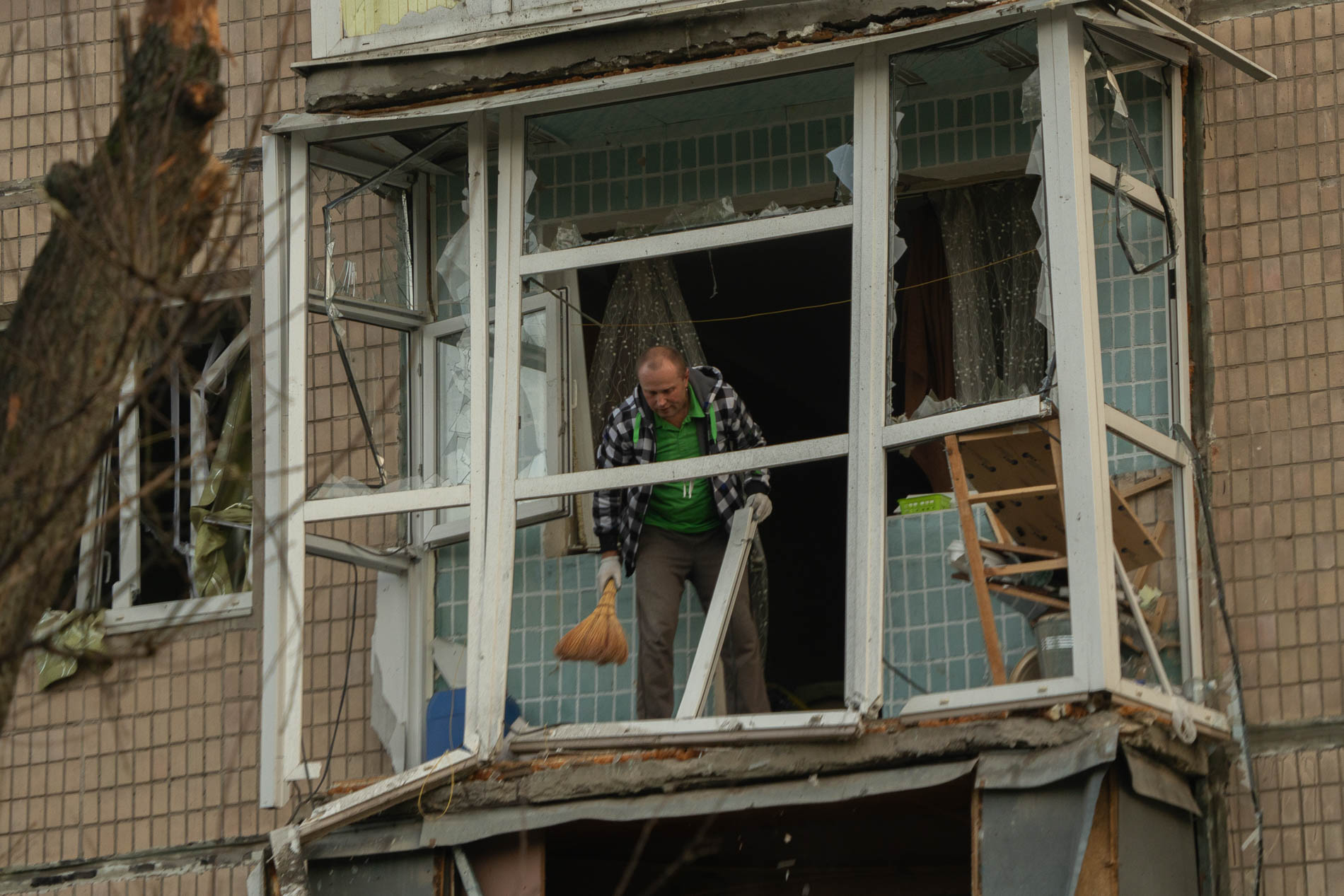
Raisa, who lives in the damaged apartment building, walked away from the attack with windows blown out by the explosion, a lost cat who’s scared and hidden somewhere, and an acute stress reaction.
“Where are the military objects here?” Raisa exclaims. “It’s just people who live here. It’s good my granddaughter wasn’t here (when the Russian bombs hit).”
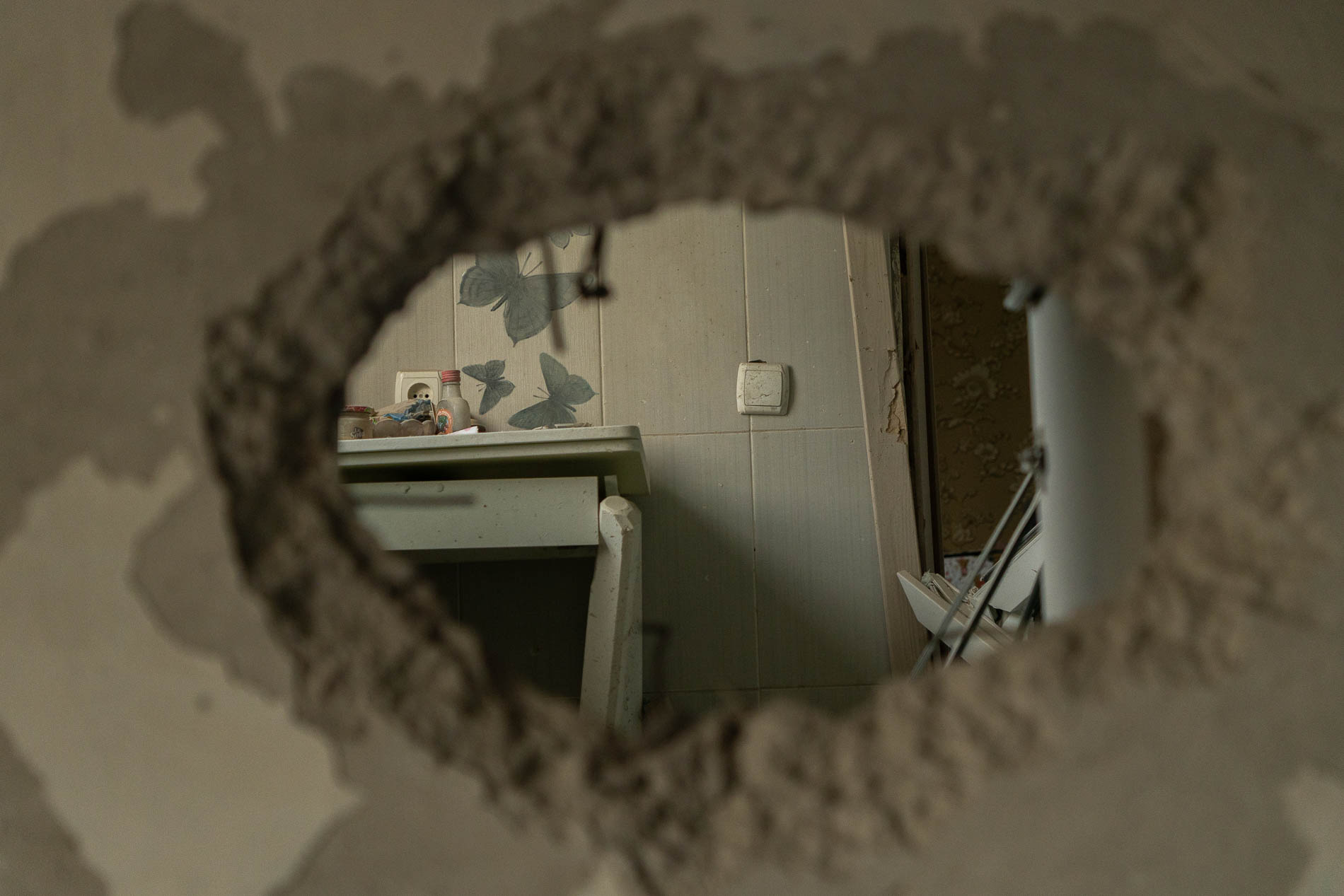
Oleksii’s doors got deformed in the explosion, so first responders are trying to cut them open with a circular saw. He laughs a bit as he observes the process: these are really reliable doors. You could see his kitchen from the hole in his flat.
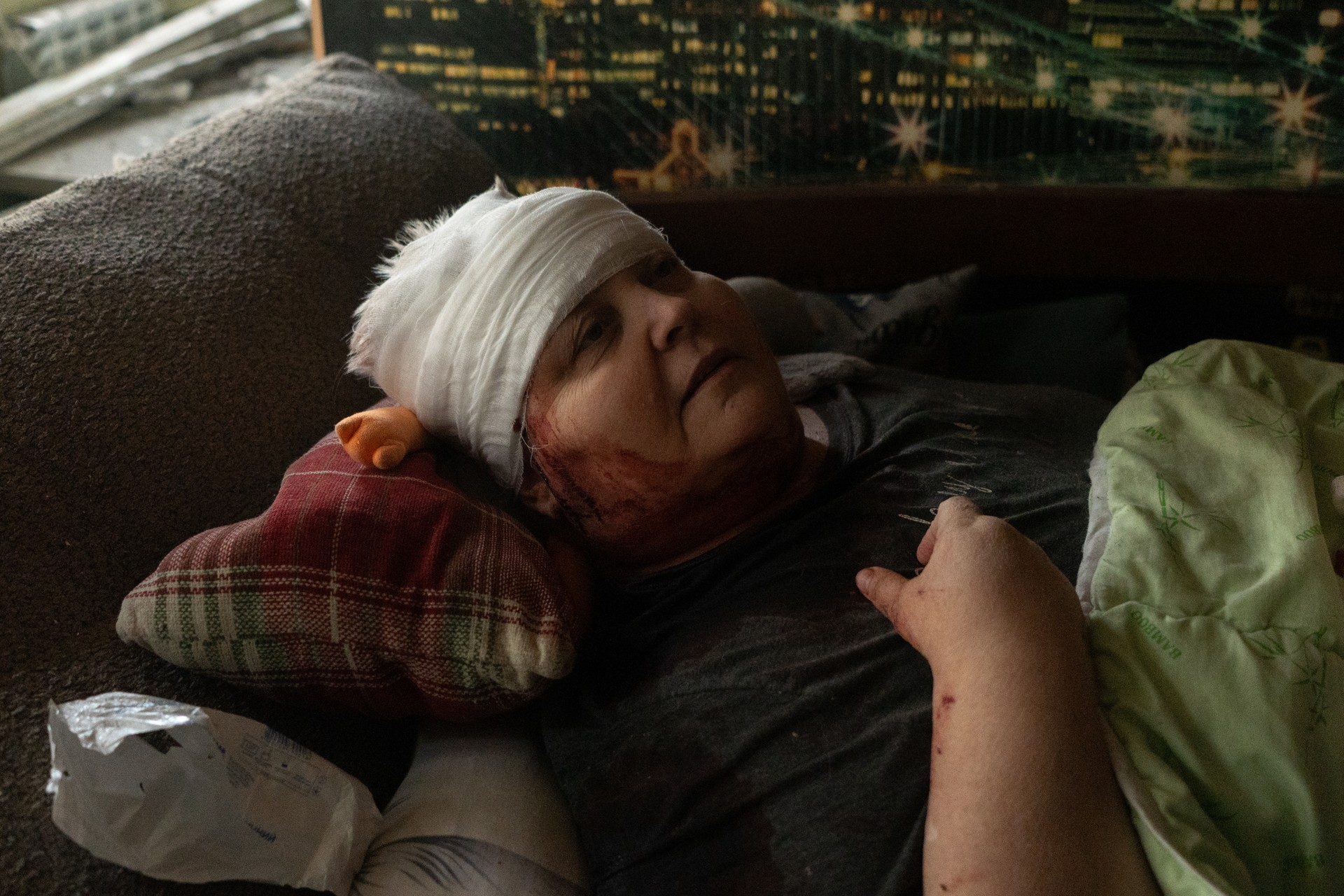
Olena, with one half of her body paralyzed after a stroke, got injured by broken glass shards. She has a headbandage. “I thought my phone exploded — I was watching TikTok. And the explosive wave was so powerful it threw the phone out of my hand and sent everything around me towards the wall.”
Olena lived with her daughter, son-in-law, and their kid. The mother and son are hospitalized — their injuries in the aftermath of the attack needed stitches. Olena herself refused hospitalization. She’s a former veterinarian, surrounded by loving pets. She doesn’t know where they are going to live now.
“Everyone who was injured was hospitalized,” Viktor Zabashta, the head of the center for emergency medicine in Kharkiv oblast, told Gwara Media. “We believe that even those with severe injuries will recover because they were aided in time.”
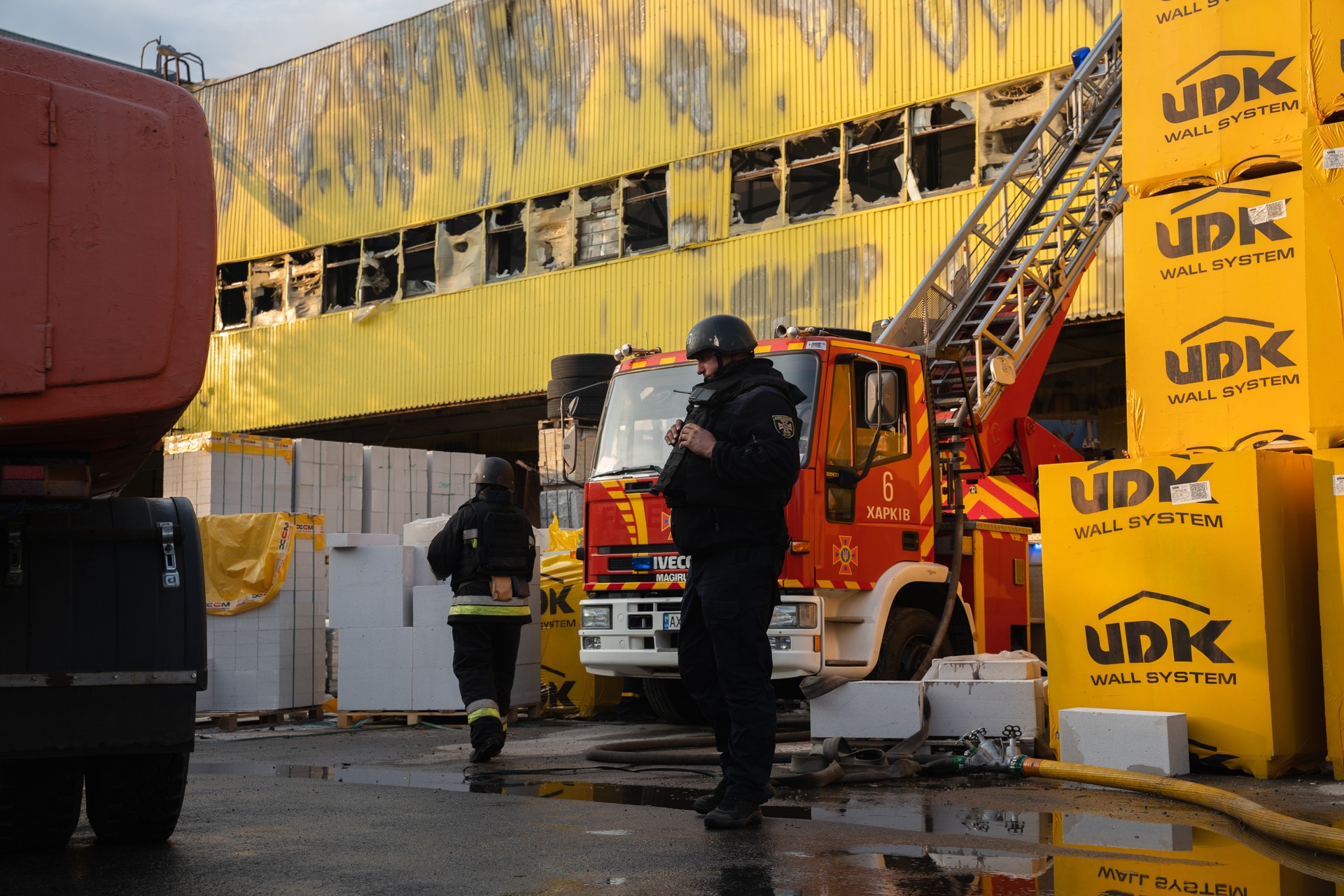
A civilian business at another location is still on fire when Gwara’s journalists arrive. The company’s name is DBN. According to the information from KharkivMediaHub, an organization that supports media in Kharkiv oblast, since the start of Russia’s full-scale invasion, they have produced materials necessary for the quick recovery of the buildings after the airstrikes. Their main products are drywall-made wall panels and plates. Kharkiv locals and municipal services used to quickly patch up schools, hospitals, and other public facilities damaged by Russian aggression across the region, including liberated territories.
“All our equipment got thrown around by the explosion, but the drywall foundation seems intact because the fire was localized quickly,” says Olena Koshtubina, the DBN’s director. “We don’t know yet what we can repair and what we’ll need to replace completely, so it’s hard to evaluate the extent of the damage and losses.”
None of this company’s employees were injured: people got to the shelter in time.
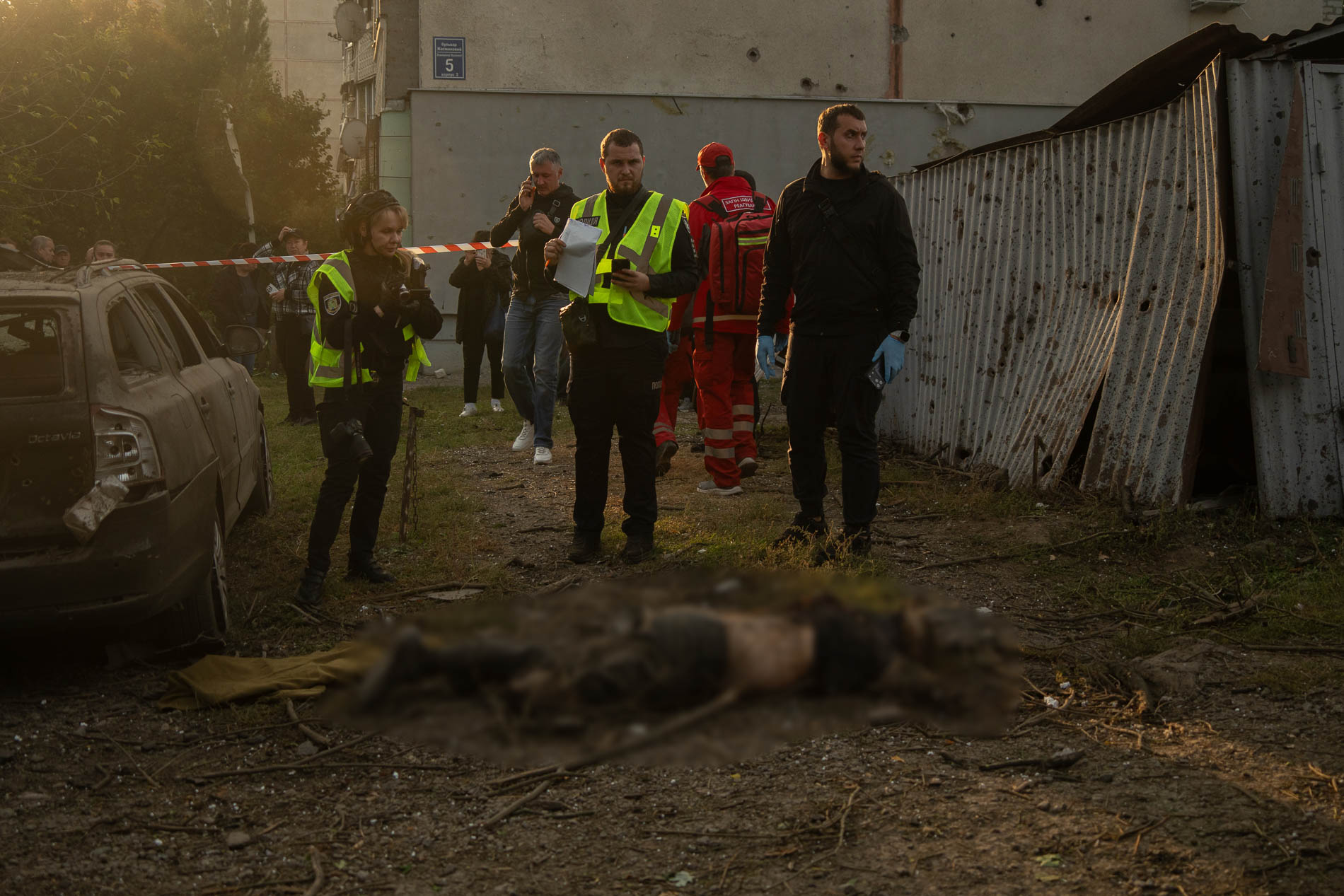
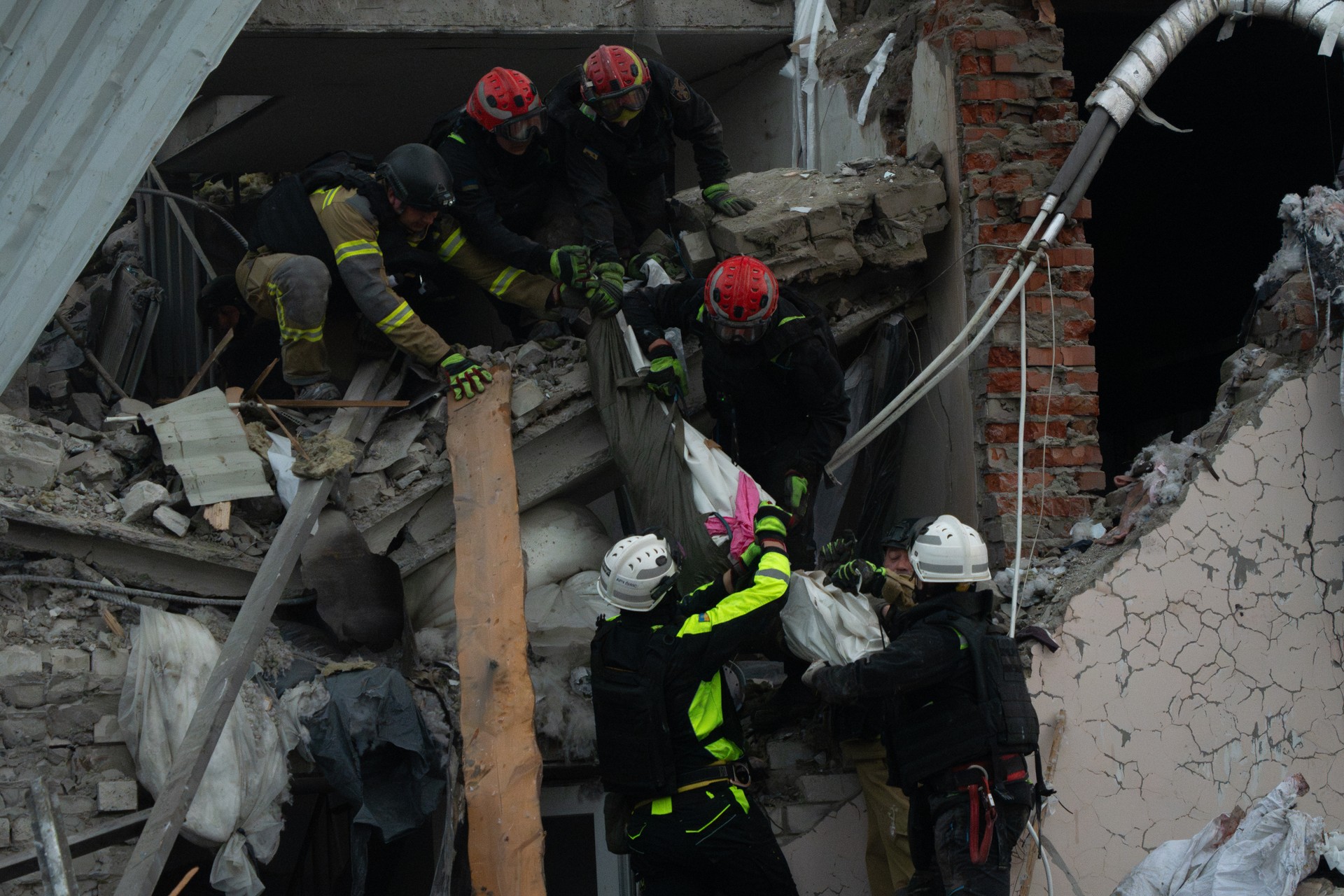
When we arrive at the sewing workshop, first responders are pulling the body of a dead person down from the rubble. Then, they uncover another one.
“Before that, we’ve rescued two people from under the debris,” says Yevhen Vasylenko, a spokesman for the State Emergency Services in the Kharkiv oblast.
As of 9:00 p.m., the rescue operation continues across all three impact sites. The number of killed and injured in the Russian bombardment might increase.


Subscribe to news from Kharkiv, Ukraine
Most important stories from the frontline region