This is a developing story. It will be updated as more information becomes available.
Mar. 6 — Andrii Sybiha, Minister of Foreign Affairs of Ukraine, called the Hungarian detention of seven Ukrainian bank workers on suspicion of money laundering in Budapest a part of “Hungary’s blackmail and electoral campaign” in preparation for the Apr. 12 parliamentary election.
In an interview with Kossuth, a Hungarian public-broadcasting radio station, Prime Minister Viktor Orban said that Hungary will block €90 billion of the EU-backed loan to Kyiv until Kyiv resumes oil transit through the Druzhba pipeline.
This statement is the only thing Sybiha can refer to as “Orban’s list of demands for Ukraine this morning” in his X post, when he talks about Hungarian “blackmail.”
“We will not tolerate this state banditism,” Sybiha said.
On the night of Mar. 6, the National Bank of Ukraine (NBU) reported that two of Ukrainian state-owned Oshchadbank’s cars were detained by Hungarian law enforcement. There were seven bank workers in the cars, and all of them lost cellular connection.
The NBU said that the bank crews were transporting “a significant volume” of foreign currency and precious metals under the contract between Austrian Bank International AG and Oshchadbank, and that the cargo was transported in accordance with international transit rules and current European customs procedures.
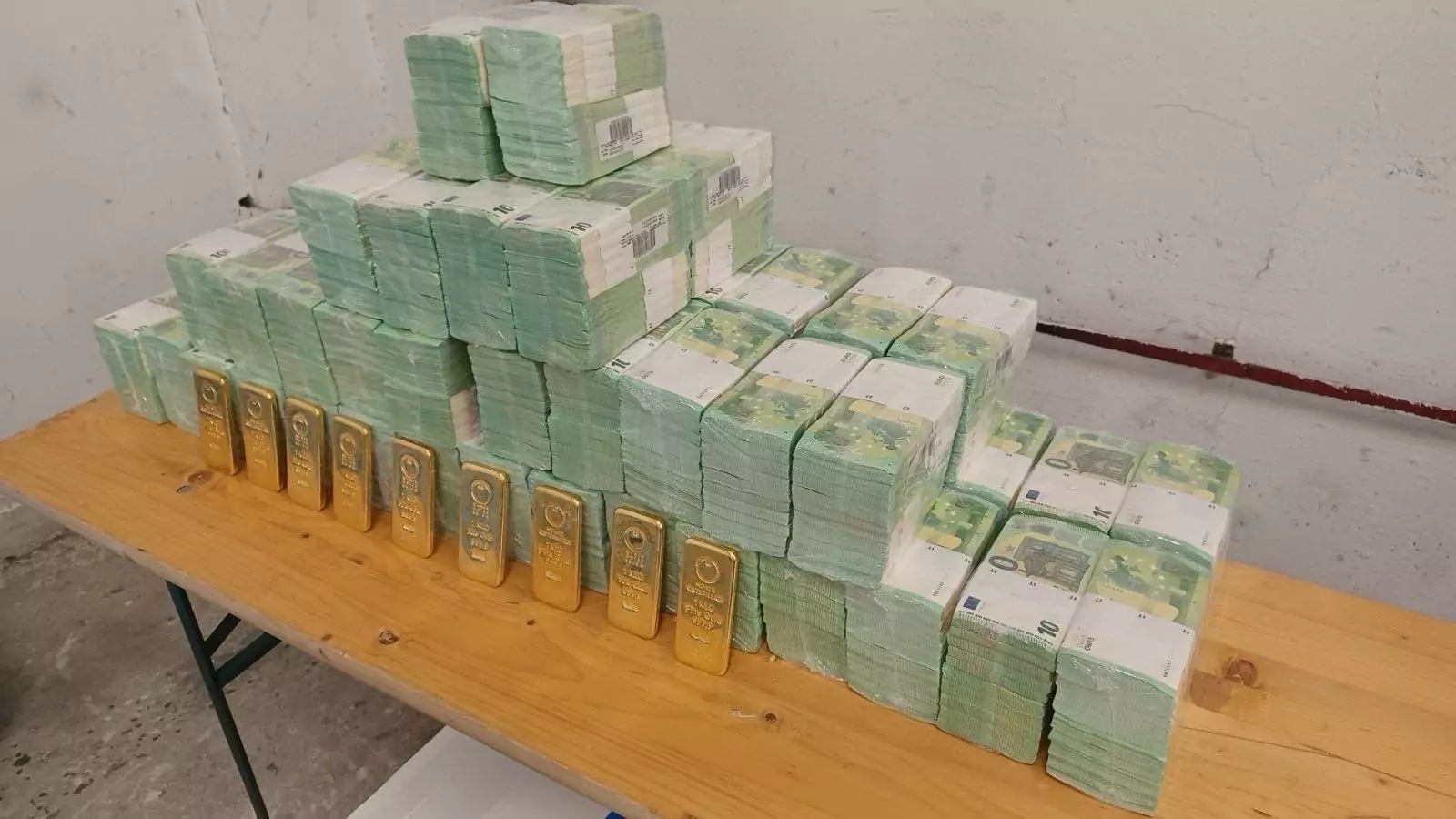
In response to NBU’s demand to release Ukraine’s citizens “immediately” and provide an official explanation of their detention, Hungary’s Tax Authority said that seven individuals carrying $82 million in cash and gold were detained on suspicion of money laundering.
“Authorities found the operation was supervised by a former general of the Ukrainian Security Service, with a former major of the Ukrainian Air Force acting as deputy, and assisted by individuals with military experience. Based on these findings, all seven individuals will be expelled from Hungary,” said Zoltán Kovács, Secretary of State for Public Diplomacy and Relations of Hungary, on his X account later on Friday.
The Hungarian government showed the currency taken from Ukraine’s bank workers and called it “Ukrainian gold convoy action.” They also released a video of bank staff detention.
After accusing Hungary of blackmailing and drawing Ukraine into the domestic politics, Sybiha claimed “everyone who is responsible for taking and holding our (Ukraine’s citizens) hostage will be held accountable. Ukraine’s National Police opened a criminal investigation into “abduction” and “taking hostage” of Ukraine’s citizens. Ukraine’s Foreign Ministry also advised Ukrainian citizens against traveling to Hungary.
Orban’s promise to break “oil blockade” by force
On Mar. 5, Orban promised that Hungary “will break the Ukrainian oil blockade by force”, adding: “Hungary’s energy will soon flow again through the Druzhba pipeline.”
Oil deliveries through the Druzhba pipeline have been halted since Jan. 27. Back then, Kyiv reported a Russian attack on the pumping facilities in western Ukraine, and on Mar. 3, Denys Shmyhal, the Minister of Energy of Ukraine, reiterated that Russia had severely damaged the Ukrainian branch of the Druzhba pipeline.
According to the sources of the Financial Times, Katarína Mathernová, EU Ambassador to Ukraine, asked Ukraine for permission to inspect the Druzhba pipeline, but her request was denied.
However, a senior Ukrainian official close to Zelenskyy told FT that technical experts from Naftogaz, Ukraine’s state-owned oil and gas company, have provided their European counterparts with evidence showing that Russia seriously damaged the pipeline.
Serhii Koretskyi, Naftogaz CEO, told the Financial Times that a Russian strike set fire to a tank holding 75,000 cubic metres of oil and it took 10 days to put it out.
“Numerous pieces of equipment, power cables, transformers and a leak detection system responsible for pipeline sealing were damaged,” he said.
Ukraine waits for “official request” to allow people to the pipeline
With the EU offering to help Ukraine repair the Druzhba pipeline, Volodymyr Zelenskyy said he personally wouldn’t repair the oil pipeline because “it’s Russian oil” during a briefing on Mar. 5. He added that repairs will be completed over 1-1.5 months.
In the same meeting, Zelenskyy said, “We hope that a certain person in the European Union will not block the €90 billion, or the first tranche from the €90 billion, and our defenders will have weapons. Otherwise, we will give that person’s address to our Armed Forces, to our boys, so they can call him on the phone and speak to him in their own language.”
Hungary called this statement threat and blackmail, with Zoltan Kovacs saying, “This is outrageous. Personal emotions have no place in matters like this.” Olof Gill, European Commission Deputy Chief Spokesperson, also condemned Zelenskyy’s words, saying “such vocabulary is unacceptable.”
“There should be no threats against EU member states,” he said, as reported by European Pravda’s journalist.
“If Ukraine blackmails Hungary, it cannot expect pro-Ukraine decisions in Brussels. Until order is restored, we will use every tool available. We have already stopped fuel deliveries, and we will continue applying pressure until oil supplies resume,” said Orban in a Kossuth interview on Mar. 6.
Hungary gave Kyiv three days to either resume the transit of Russian oil (until Mar. 10) or allow Hungary’s fact-finding mission “to visit and assess the current state of the Druzhba oil pipeline together with representatives of the MOL group (Hungary’s oil company — ed).” They added that they have sent an official inquiry to Ukraine’s Energy Ministry.
Oil transit through Druzhba will resume if EU countries don’t find another option rather than blocking money for Ukraine’s army because Ukraine “has to give Russian oil to Hungary and Slovakia,” Zelenskyy said on Mar. 5. “We’ll prepare everything, and the decision is theirs (EU’s).” Zelenskyy added that Ukraine is waiting for an “official address.”
On Mar. 5, Hungary and Slovakia’s foreign ministries sent another letter to the EU Commission, saying that Ukraine’s decision not to resume oil transfer through the pipeline “appears to be of a purely political nature” and that they find “shocking” Croatia’s refusal to let the Russian oil shipments through the Adria pipeline.
In April’s Hungarian Parliamentary elections, according to polls conducted by Zavecz Research and Publicus Institute, over 50% of respondents who decided on their candidate plan to vote for the TISZA party that opposes Orban’s Fidesz.
Read more
- Soldier from Kharkiv oblast returns home after 933 days in Russian captivity
- “Previous attacks cannot compare to what we went through last night.” Russian drone hit animal shelter in Kharkiv

Subscribe to news from Kharkiv, Ukraine
Most important stories from the frontline region