UKRAINE, KHARKIV — Local authorities began discussing the reconstruction of damaged or destroyed spaces and buildings in Kharkiv in April 2022. They said that a famous British architect Norman Foster would take part in designing the city’s rebuilding.
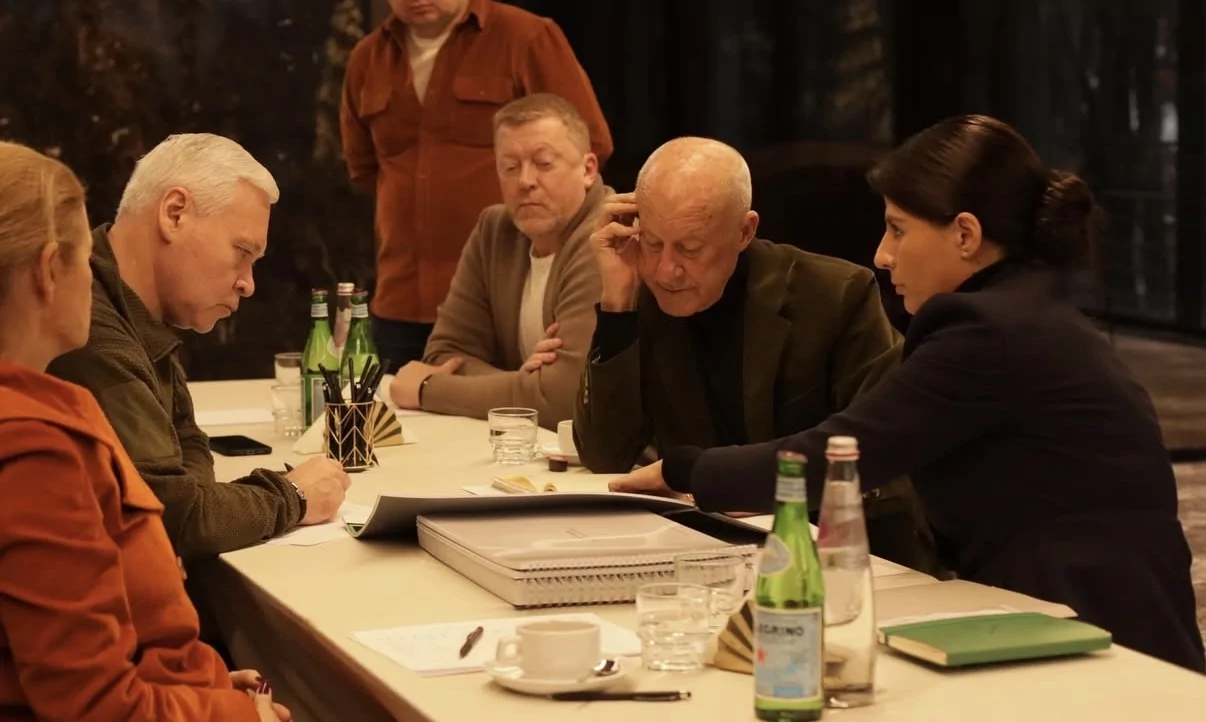
During these four years, neither Foster, nor his foundation’s team visited Kharkiv, instead communicating. They developed a masterplan for rebuilding of the city and several projects within that masterplan remotely, communicating online with the group of local architects and the Kharkiv mayor, Ihor Terekhov. The Kharkiv architectural community is rather skeptical about Foster’s and his team’s participation in the rebuilding.
“You can’t work like that. You can’t invite someone to come and make us happy. We have to do things differently, explore our problems, and draw on foreign experience,” said Olha Kleitman, one of the architects involved with the project, to Gwara Media.
“City of the future”
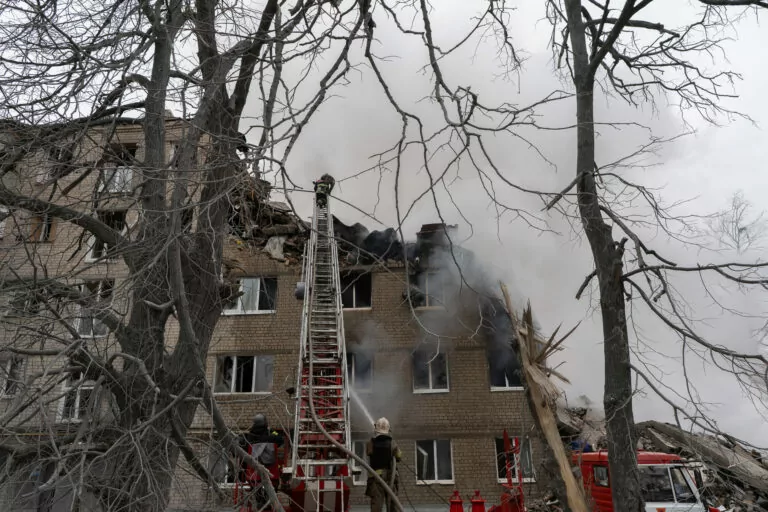
Kharkiv is one of Ukraine’s largest cities, located in the northeast, about 20 kilometers from the Russian border. As of November 2025, according to official data, 12,500 buildings in the city had been damaged or destroyed in Russia’s full-scale invasion. Other numbers show that Russia’s war damaged 8,200 residential buildings — a quarter of the city.
The scale of destruction increases with each Russian attack. The Kharkiv City Council believes that the city’s reconstruction will only be possible after the end of Russia’s war and estimates it taking up to two-three years.
On Apr. 4, 2022, during the International Mayors Forum organized by the United Nations, Terekhov asked Foster to assist with Kharkiv’s post-war rebuilding. The British architect agreed and, on Apr. 28, gave a speech at the UN.
“What if we bring together the best minds, the best talent, and we work with locals, with people who understand that territory… And together we can recreate the best of the past and project Kharkiv into a city of the future,” Foster recalled offering to Terekhov.
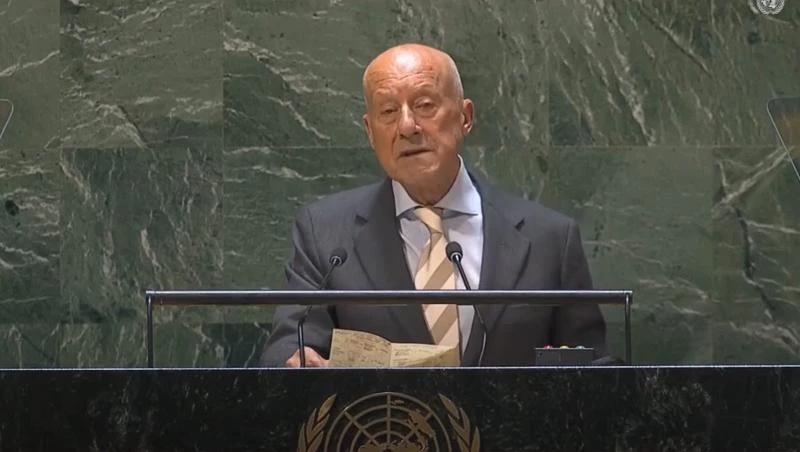
Norman Foster is the founder of the Foster + Partners architecture bureau and one of the pioneers of high-tech style in architecture. His most famous projects include the 30 St Mary Axe (The Gherkin) in London, the reconstruction of the Reichstag in Berlin, and the Apple headquarters in California.
Oleh Dorzdov, the founder of the Kharkiv School of Architecture, who Gwara talked to about Foster’s plan for Kharkiv, said that the concept of the “city of the future” the British architect envisioned is “incredibly complex, long-term, and powerful.”
But it required, Drozdov added, the involvement of many different resources and the cooperation among Kharkiv locals, government, activists, and international partners — and that cooperation is absent.
“Foster Foundation didn’t hear us”
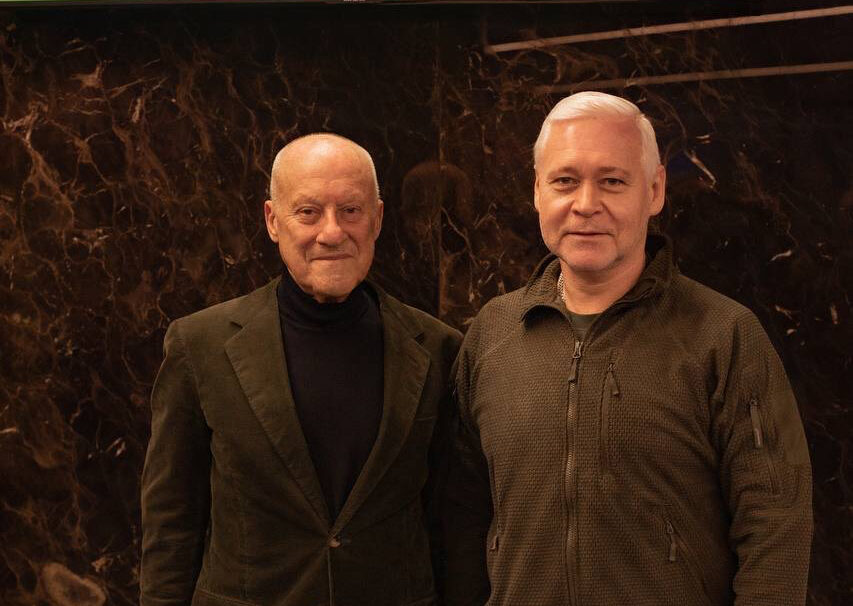
Locals were invited to cooperate. Dmytro Fomenko, a Kharkiv architect, created and headed a working group of Kharkiv experts to help foreign colleagues improve their understanding of the city and its context.
This working group reportedly included guide and architect Maksym Rozenfeld, the head of “Kharkivproekt” Institute Yurii Spasov, landscape architect Olha Kleitman, restorer Volodymyr Novhorodov, and practicing architects Serhii Ilchenko, Oleksandr Strulov, Kostiantyn Krytskyi, and Viktor Zaidenberg.
The group worked with Foster’s team via video conferences. Despite the invitations, foreign colleagues never visited Kharkiv. Ihor Terekhov, though, has met with Foster in person several times.
“Norman Foster visited Uzhhorod once, but Uzhhorod is not Kharkiv,” Olha Kleitman told Gwara Media. Kleitman believes it was a mistake to invite people who “have never been here and do not plan to visit the city as chief designers” to lead Kharkiv’s reconstruction.
“I think the Foster Foundation team didn’t hear us. Why do we call it the reconstruction of Kharkiv when it’s actually building from scratch?” said Kleitman. In her opinion, true reconstruction has to be focused on repurposing unused, abandoned spaces in buildings that stand empty in the city. “We need to focus on what people need right now.”
Kleitman also describes the way local authorities approach decision-making as “populist” and “having an inferiority complex.” She adds: local architects and other experts themselves must decide what is primary and what is secondary to reconstruction.
Foster’s masterplan for Kharkiv
In December 2022, the Norman Foster Foundation published the “Kharkiv Masterplan,” outlining the results of its cooperation with the Kharkiv team.
The foundation said it took more than 100 meetings to develop it based on the input from over 16,000 responses to public questionnaires from Kharkiv locals. The masterplan published on the website includes five pilot projects.
The heritage project’s task is to create a new architectural landmark in central Kharkiv. The river project aims to transform a six-kilometer (~3,7 miles) strip between the Kharkiv and Nemyshlia rivers into an “ecological space for pedestrians and cyclists.”
The industry project proposes converting a coal-fired power plant into a clean energy and food hub to “stimulate industrial development” across Kharkiv, and the housing project focuses on making existing buildings safe, modern, and energy efficient. Finally, the science neighbourhood project is about implementing “high-tech industries, research, and startups” that are expected to boost Kharkiv industrial base.
However, the press service of Kharkiv City Council in response to Gwara Media’s said that, as of February 2026, they developed seven, not five, pilot projects for Kharkiv masterplan. They were developed alongside the UN Economic Commission for Europe and the Norman Foster’s Foundation as part of the UN4Ukrainian Cities project with financial support of Germany’s Federal Ministry for Economic Cooperation and Development.
The Kharkiv City Council also said that cooperation with Foster on the post-war reconstruction in Kharkiv is financed without using resources from the municipal budget.
The council added that, in collaboration with Foster’s team, they also developed projects for transport and economic strategy. The former aims to develop and modernize the municipal transport system, manage priority of pedestrian and bicycle traffic, and restore transport infrastructure. The latter, according to the city council, is supposed to support local small and medium businesses, create new jobs, develop post-war economic recovery and Kharkiv integration to international economic networks.
What is done under Foster’s masterplan
City council has talked about collaboration with Foster’s team a lot, but Kharkiv doesn’t have too much to show for it. In September 2023, the Kharkiv:Restart forum was held in Kyiv. There, Mayor Terekhov presented the science neighbourhood project, which was developed together with Foster’s Foundation. In 2025, Kharkiv City Council announced once again that the Foundation designed it, now through their social media.
It’s one of the five (or seven) pilot projects developed by Foster’s team in collaboration with local experts. The city plans to build it in an area near the Barabashovo market, one of the largest markets in Ukraine, which was partially damaged in Russian strikes.
Foster said that it will be a large location with universities, residential buildings, shops, scientific laboratories, and recreational infrastructure.
At the same time, Olha Kleitman said that the science neighborhood is a very inappropriate idea for Kharkiv right now.
“In general, this park will simply be a competition for what we already have,” the architect explained.
She repeated that, because foreign experts hadn’t been to Kharkiv, it’s difficult for them to understand a local urban context. For instance, she said, before the full-scale invasion Kharkiv had 36 higher education institutions with spaces that could be now repurposed for science activities instead of building new ones from scratch.
“We can’t keep the students we have. And we are destroying the institutions that exist. Why? Just to build these boxes,” said Kleitman.
International competition for heritage project
Within the heritage project envisioned by Foster’s team, in September 2024, the Foundation announced an international competition for the design of the reconstruction of the Kharkiv Regional State Administration building and the public area of the nearby Freedom Square, one of the largest squares in Europe. Russia destroyed the building of administration in 2022, killing 29 people. Now, it was to be restored.
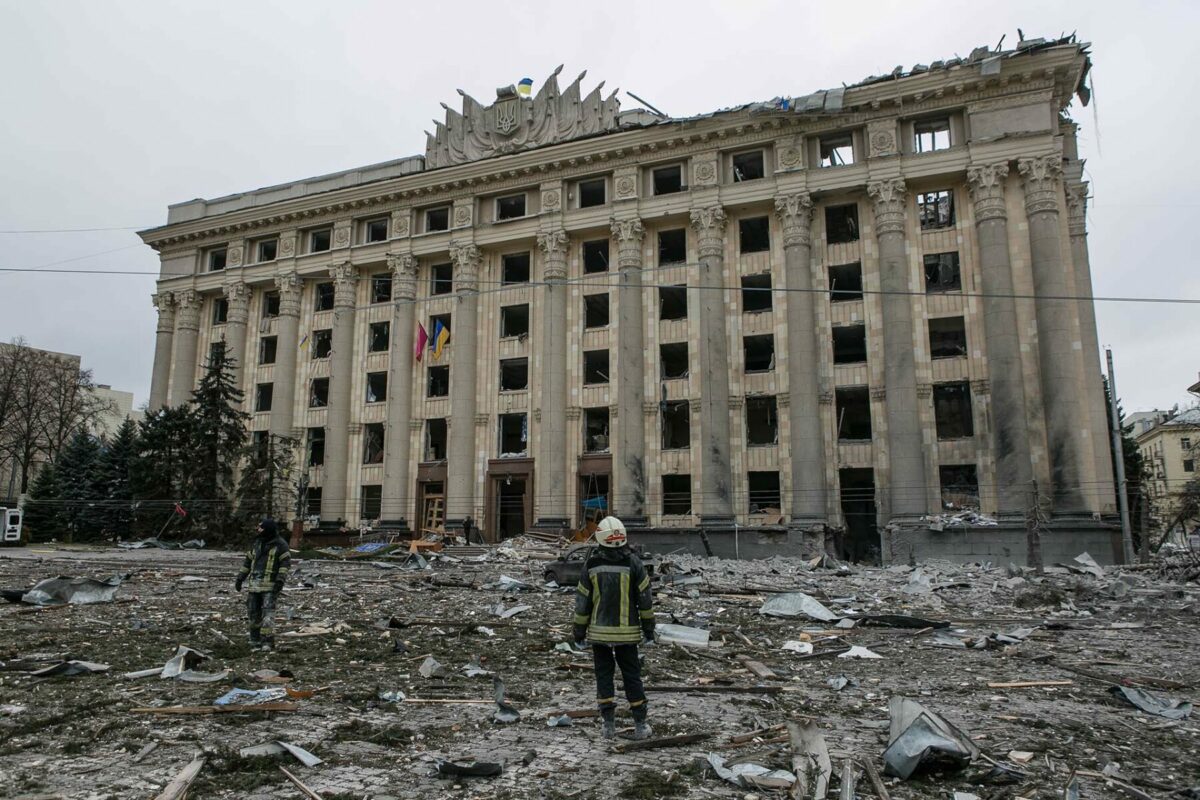
Mayor Terekhov’s idea was for the project to preserve as much of the historic exterior of the administration as possible, as Foster did with the Reichstag in Berlin.
“I advocated a competition that would be open to Ukrainian and international architects, the results of which have now been evaluated by a jury of ten local and global experts led by the mayor and myself,” said Foster in his letter on the competition’s website.
Projects from Australia, Israel, and India “won” the competition. However, the jury noted that none of the proposals fully “resolved the design challenge.” The main reasons why none of the projects satisfied the jury were the “overly ambitious goals.” Participants did not take into account the local context and characteristics of the site, and the threat to the monumental essence of Freedom Square nearby — a place that’s significant for Kharkiv locals, jury explained. Each project contained an excessive amount of details. The projects also failed to take into account technical limitations, for example, Kharkiv’s underground infrastructure.
Maksym Rozenfeld, member of the Kharkiv architects working group, said: “None of the projects were good enough. We awarded incentive prizes because there was a prize fund, and we had to do so. But there can be no final decision. We need time to think it over.”
The jury noted that this competition is a step for the next stages of planning the restoration of Freedom Square and the Kharkiv Regional State Administration building.
City’s own reconstruction projects
On Kharkiv:Restart in 2023, Ihor Terekhov also presented other projects of “city’s development” that were “attractive for investors.”
Mayor Terekhov’s press secretary Mariam Satuieva explained to Gwara Media that these projects were developed by “city and departments with (relevant) expertise” and are not connected to the Foster team’s pilot project list.
As such, the city developed plans to reconstruct areas along the banks of the Lopan river, which flows through the city center, reconstruct Pryvokzalna Square, and create a green zone in the Zhuravlivka hydropark. Terekhov has also proposed creating a modern transport hub and a shopping, entertainment, and cultural center on the territory of the Levada railway station. None of these places, to Gwara Media’s knowledge, were severely damaged by Russian attacks on the city.
In addition, they made plans to create a “microdistrict” in Oleksiivka, one of the most heavily populated areas of Kharkiv, with new housing, offices, and social facilities.
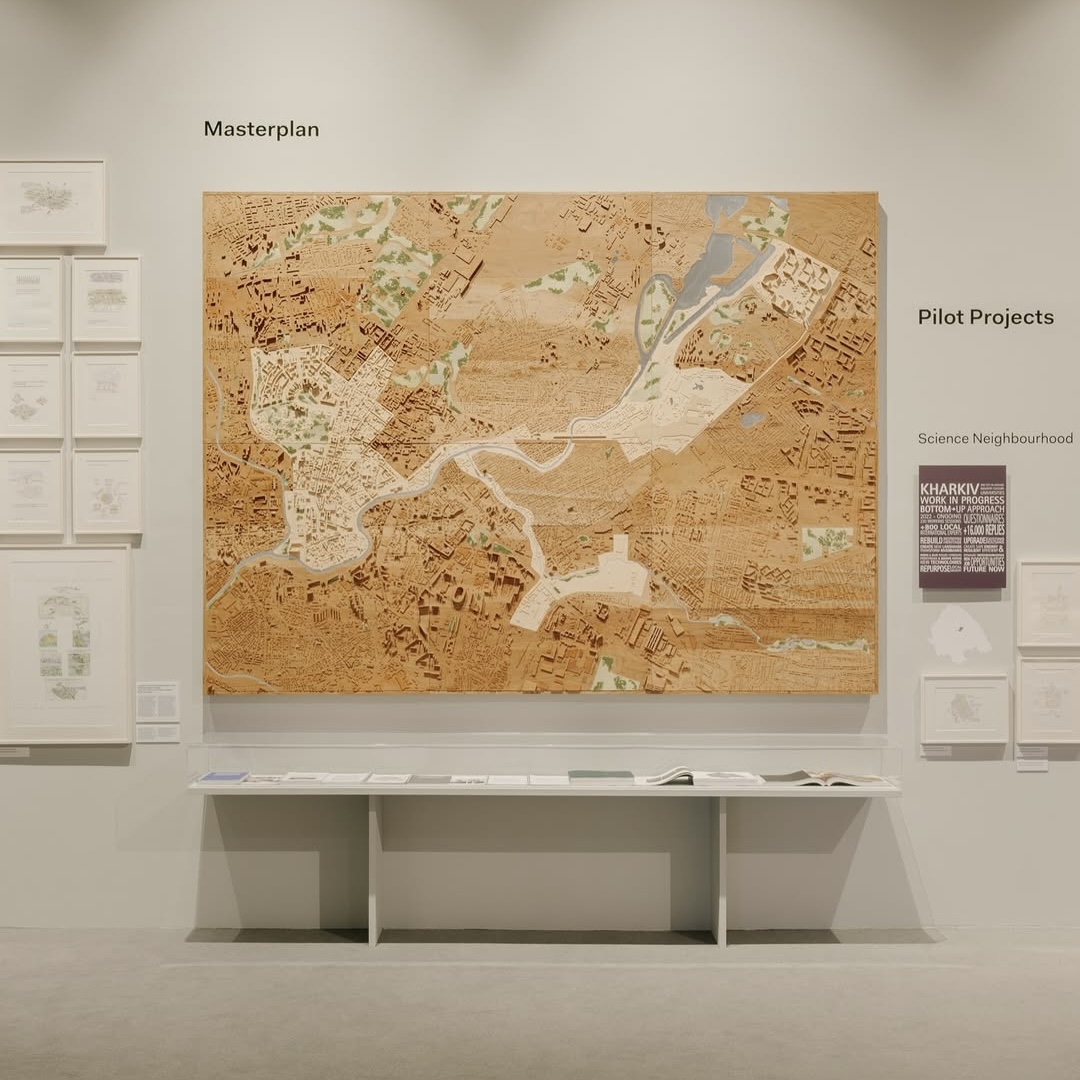
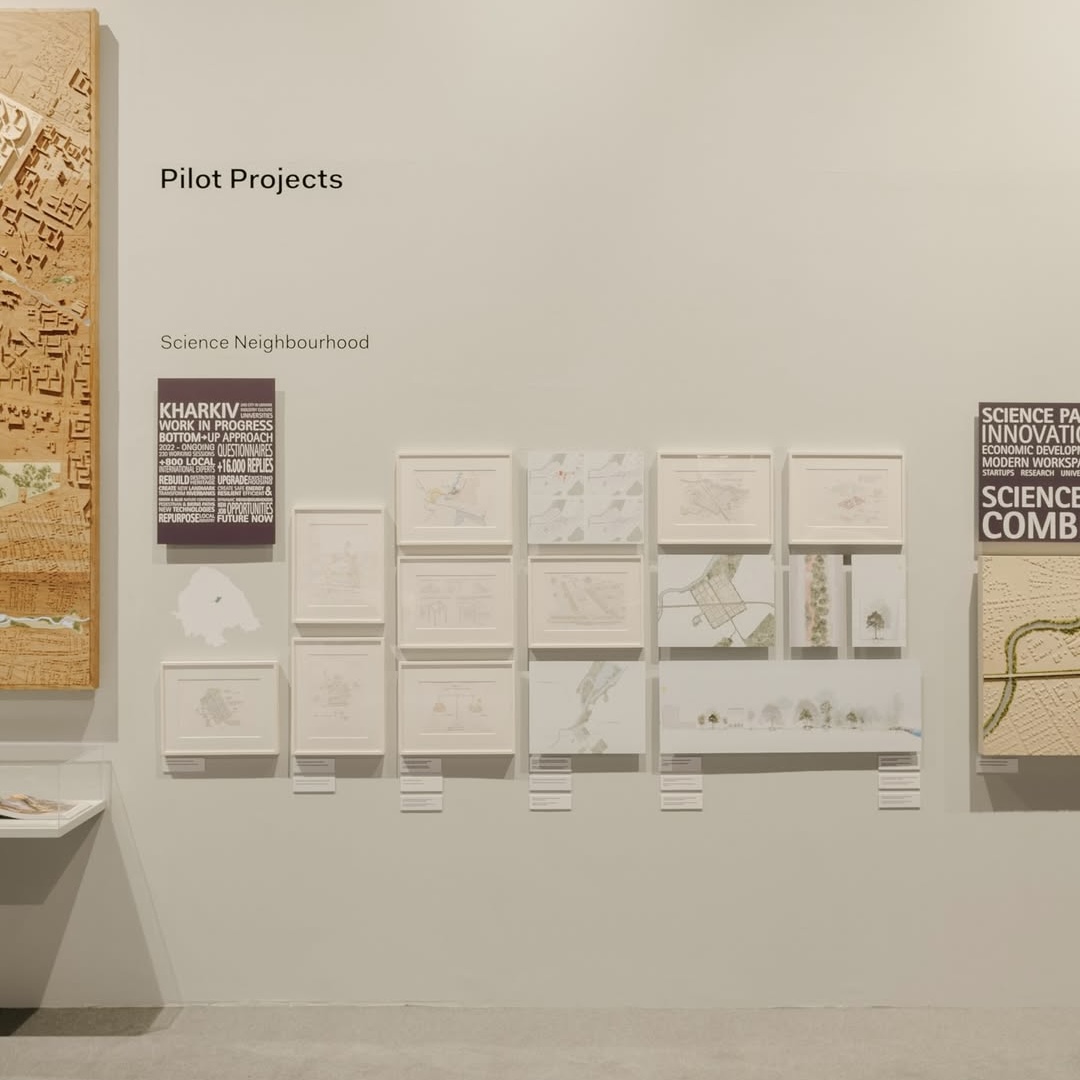
Separately, as part of reconstruction-related activities, an installation in the form of a map based on Norman Foster’s masterplan for Kharkiv was presented at the Triennale Milano exhibition in August 2025.
Current state of things
In 2023, Olha Kleitman informed the Kharkiv Anti-Corruption Center that cooperation with the Foster Foundation on the city’s rebuilding project had been halted and that the working group was no longer meeting.
Dmytro Fomenko said he hopes that pause won’t last long, adding: “It is important not to lose communication with Foster, not to lose his interest in Kharkiv.”
Gwara Media contacted the Foster Foundation with questions about the reconstruction and agreed to arrange a call, but they stopped responding after we sent a list of themes we wanted to talk about.
In December 2025, Kharkiv activist Iryna Kravchenko said that public discussions around a draft analytical report based on the results of urban planning monitoring. It was intended to serve as the basis for amendments to Foster’s masterplan for Kharkiv.
The Kharkiv City Council has published this report and announced that discussions will continue until Dec. 29, 2025. Shortly before the deadline, the council removed the announcement from its platforms.
The city council’s spokesperson Yurii Sydorenko answered to Gwara Media that they did hold a discussion but the results of it will be known at the end of January because of “controversial issues” that the compliance commission handles. As of Feb. 18, there’s no information on the results of a discussion.
Read more
- “I won’t go through occupation again” — life in Ukrainian village one mile from Russia
Hi! This is Elza, the author of this text. I saw many articles and news in 2022-2023 about Norman Foster’s involvement in the reconstruction of Kharkiv. Over time, there was less and less mention of this project. So, I wanted to find out what is happening with the reconstruction now and tell you about it. Please, consider supporting our newsroom by buying us a coffee or subscribing to our Patreon.


Subscribe to news from Kharkiv, Ukraine
Most important stories from the frontline region