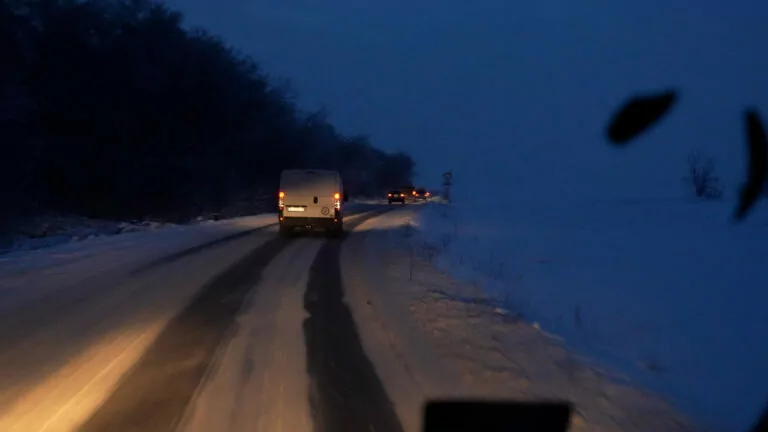
KUPIANSK DISTRICT, UKRAINE — Two police officers chuckle, nervous, as their white pickup passes a car destroyed by an FPV drone. They move toward the frontline to evacuate civilians. More wrecked vehicles line the road as they drive by.
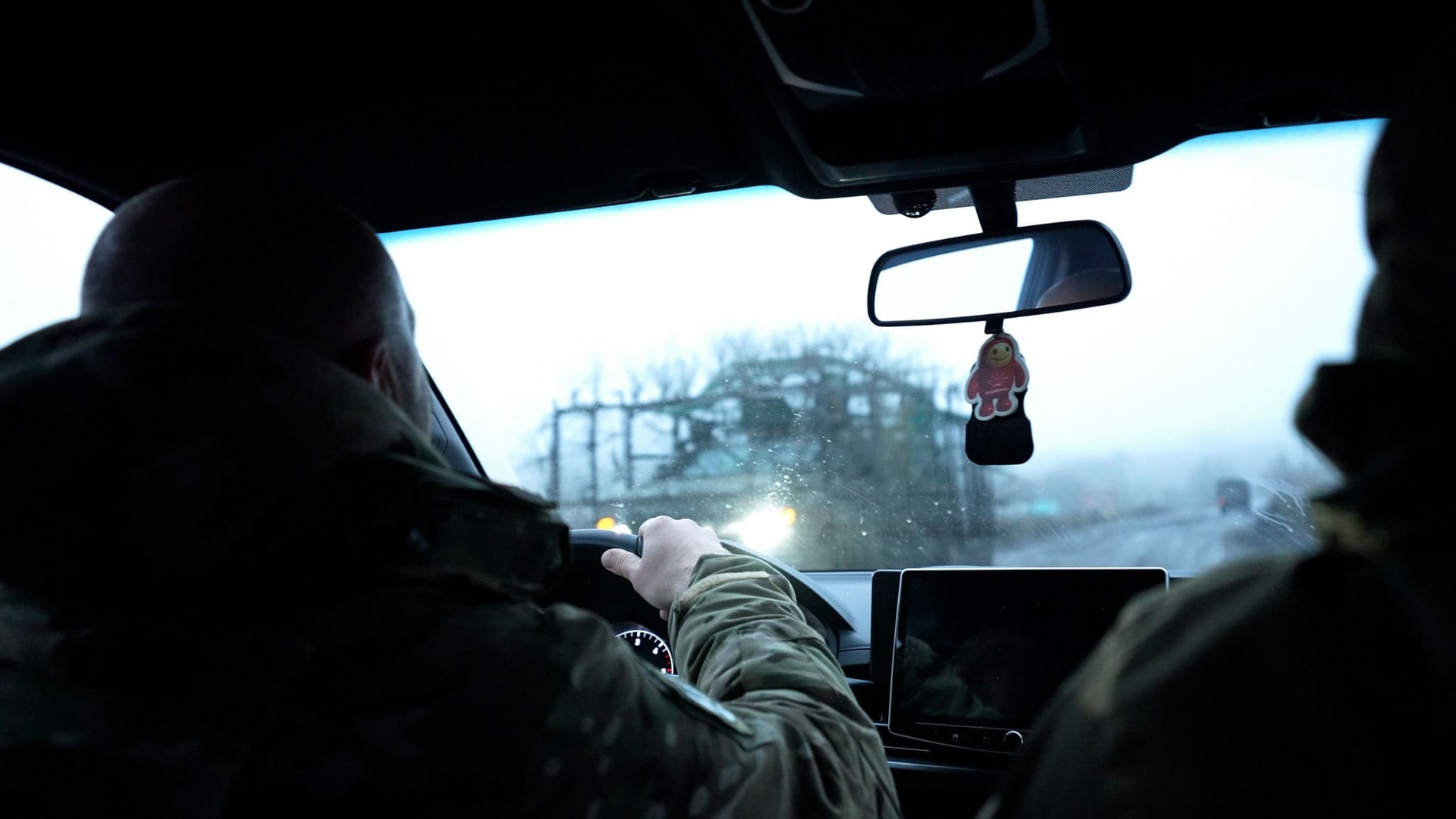
A couple of years ago, police and volunteers could, in relative safety, drive into the combat zone—the main danger was glide bombs or artillery. Now, it’s different. After the sign “Danger ahead: FPV drones,” the truck stops. Unit commander Andrii and his colleague Ihor don armor.
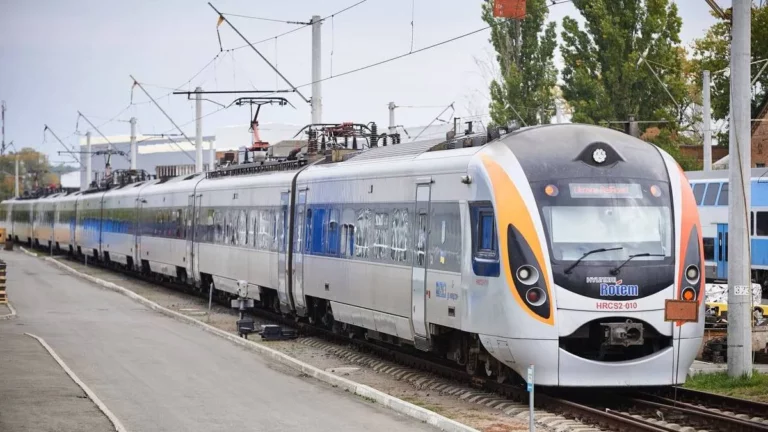
The White Angel police evacuation teams were established in 2022 in the Donetsk region, with similar units later forming in other frontline regions, including Sumy and Dnipro. Kharkiv’s group, established in September 2025, now has 14 “angels.”
Back in November, we accompanied some of them on evacuation missions to the Kupiansk district to understand why residents choose to leave or stay. Back then, it was the Kharkiv region’s most intense combat zone.
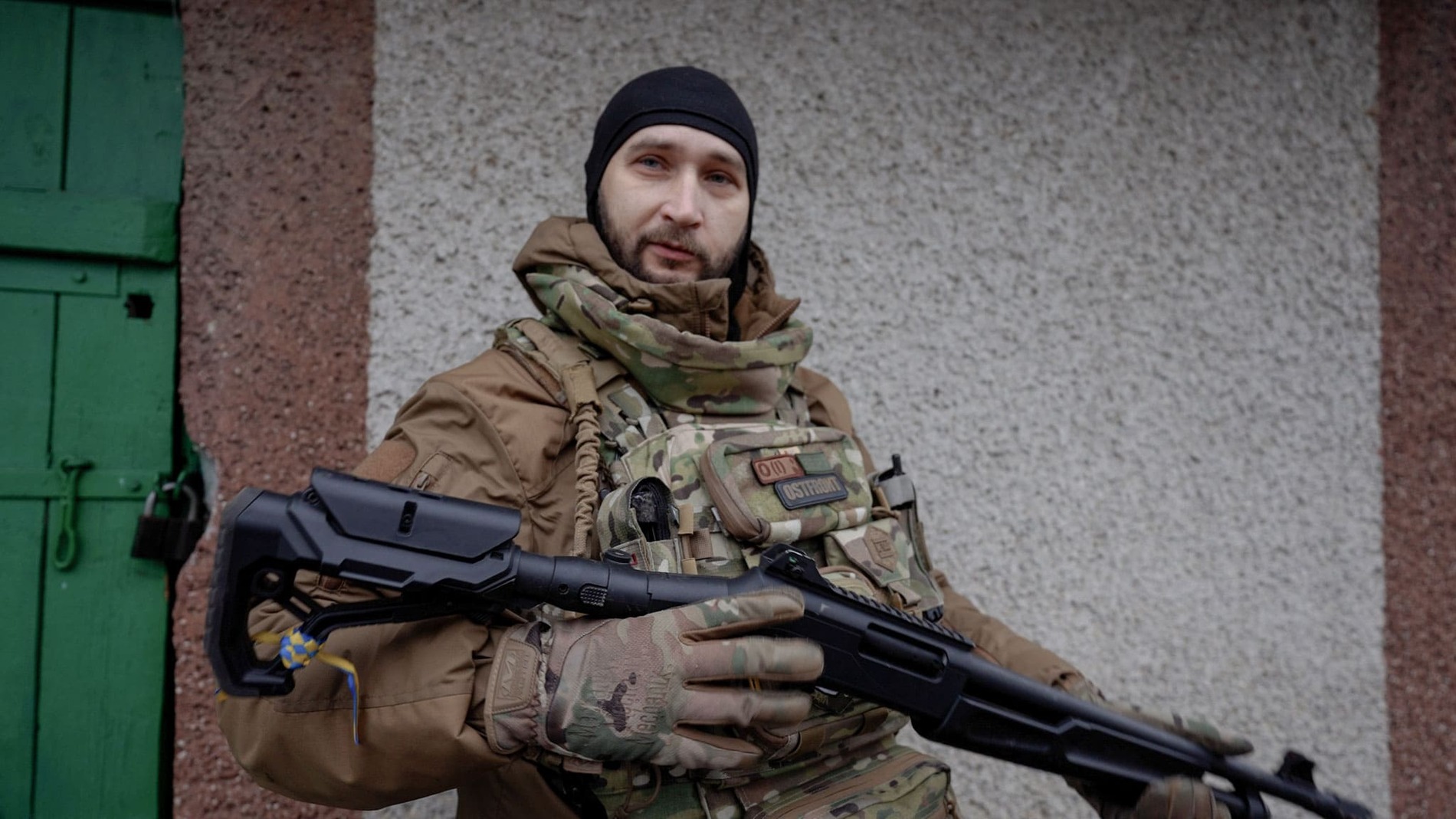
White Angel provide safer evacuations than volunteers because, unlike them, they have specialized equipment, Ihor says. They have drone detectors to find FPVs, pump-action shotguns to down them, medical kits and training for treating the wounded, and armored vehicles for protection.
Morning darkness becomes a “grey hour”—when drone pilots most want to sleep—so “angels” pick that time to go on their missions. Ahead: several miles of dangerous road through fog as Ukraine’s armored vehicles, like giant hedgehogs with drone protection, roll toward us.
Between hope and despair
Kupiansk was occupied in Russia’s full-scale invasion’s first hours but liberated during the autumn 2022 Kharkiv counteroffensive. Many residents stayed or returned because the rapid capture and retreat left the terrain largely intact.
Moscow has sought to retake this strategically important logistic hub ever since. In the summer of 2025, after months of slow advances, Russian forces made significant gains and captured surrounding villages to get closer to Kupiansk.
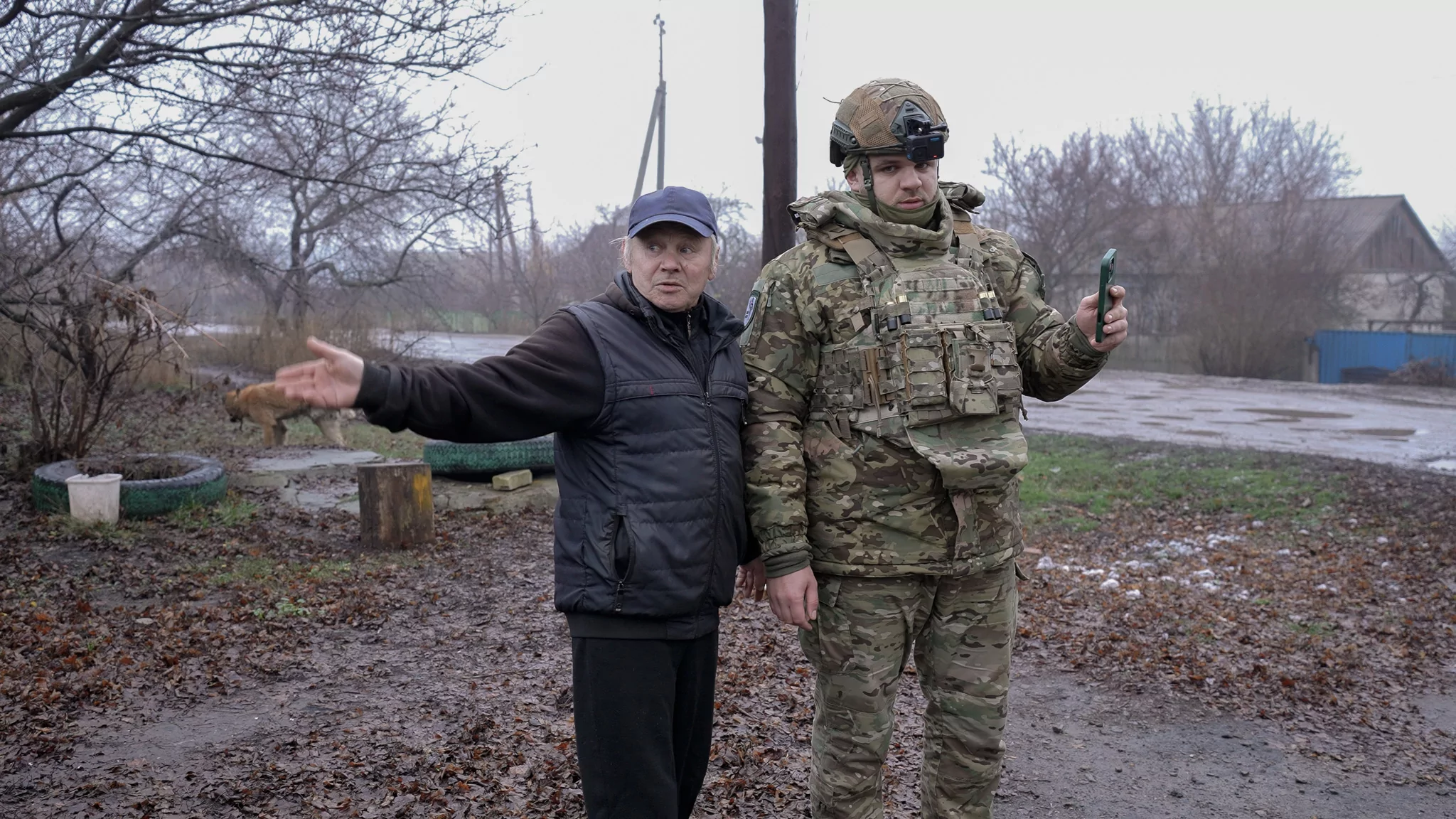
In the village seven miles from the front line, we wait for Oleksandr, who is leaving Kindrashivka north of Kupiansk. Since his home has become the gray zone — a battleground, but not the zero line — the man must walk six miles to meet the evacuation team.
Ihor, a veteran, impatiently grips his shotgun, angry at people who wait until the last minute to leave the danger. Since getting into Kupiansk is a suicide mission, police drive as close as possible and wait for people to walk to the meeting point.
Every evacuation is now a carefully planned operation fraught with risks: bad weather, off-road, and drones constantly overhead.
Wounded and demobilized, Ihor doesn’t want to work in the office. He says this dangerous job that echoes his wartime experience is “pulling him back.”
Barely visible fiber-optic cables cover the village’s rooftops like pieces of spider web — the sign of Russia’s war draining life from the environment that became common last year.
Like many places near the frontline, this village belongs to the drones, not people. Ihor saw it happen many times. He wants to save as many people as possible from the war.
He is the first to spot Oleksandr walking toward us in a black leather coat, carrying nothing.
How to survive on red line
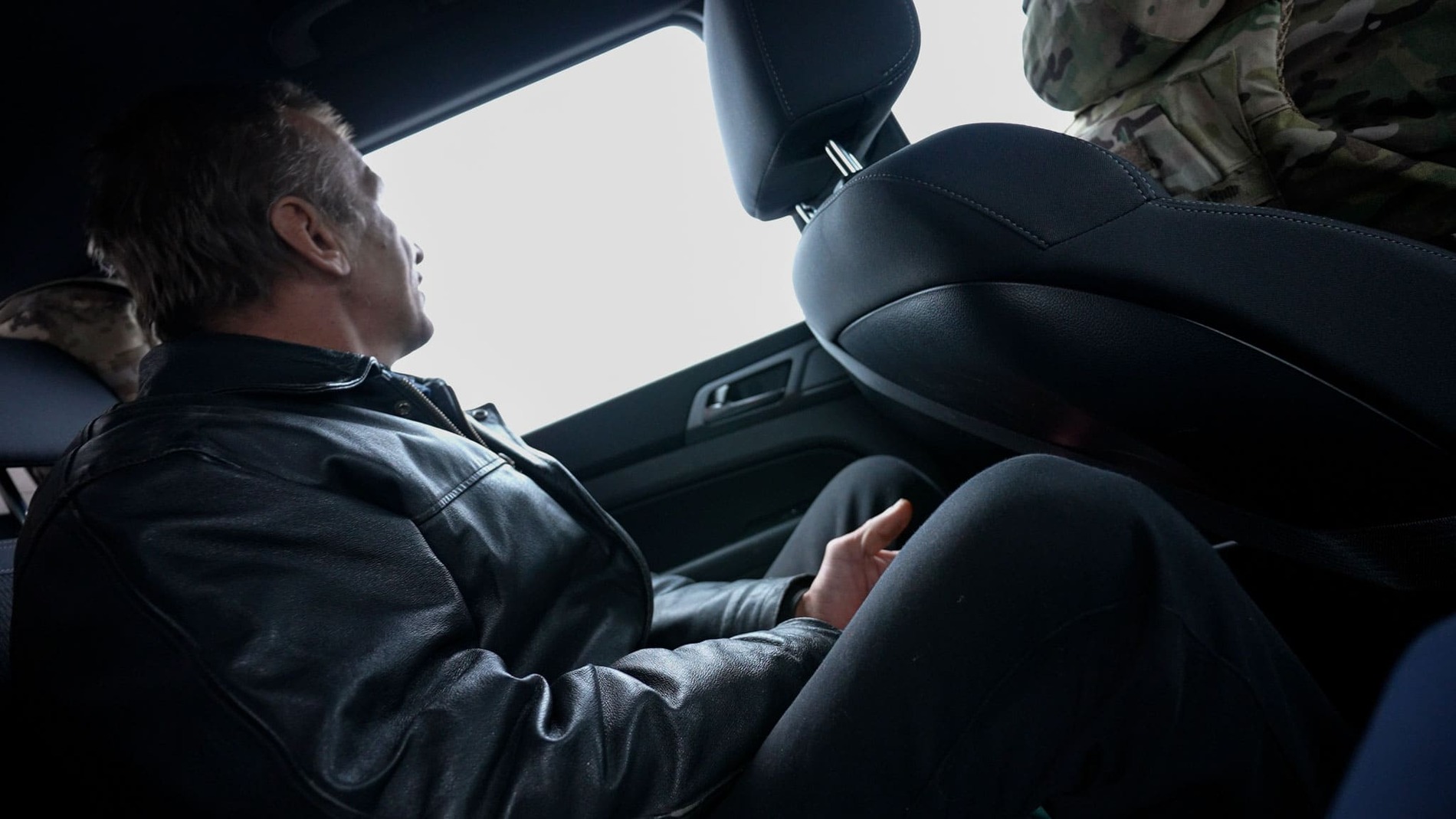
“The village now is a red line,” Oleksandr says as he gets into the police car. “I couldn’t go shit outside for four days—drone after drone flying overhead.” The smell confirms he’s been on the road for a long time. In his 50s, he fled Kindrashivka when the fog hid his departure. He only grabbed his documents.
Thirty-one villagers remained in Kindrashivka. Before departure, Oleksandr and his neighbors buried 32nd, killed by the Russian shelling. Most locals are elderly, hiding in basements from drones. Only a couple are young, Oleksandr says; they are afraid of being drafted.
“And they’re not afraid the other (Russian) army will draft them?” Ihor and Andrii ask in unison, bitterness in their voices. Russians forcibly mobilize Ukrainian men in occupied territories—each sixth Russian POW has a Ukrainian passport, with just under a third of those born in Crimea.
Oleksandr speaks into the void after a long silence: “Those who remain are either suicidal or fuckheads.”
He left his wife’s body lying in their house—he couldn’t bury her, afraid of drones. A Russian FPV killed her, he says, turning to the window to hide his eyes. She suffered for four hours with a piece of debris stuck in her lung. “If there had been a doctor…” Oleksandr sighs.
People stayed because they hoped Russia wouldn’t return, or they thought if it did, it would come quietly, not with shelling and drones. In the summer, villagers planted vegetable gardens—and this work made them hopeful for the future. “And now the Russians have appeared in the forest (near the village),” Oleksandr says. “There are constant skirmishes.” Oleksandr and his neighbors buried two bodies of Russian soldiers so they wouldn’t stink. Their documents said they were contract soldiers from Ryazan, both 42.
This evacuation came days before Ukrainian forces spoke publicly about an operation to push Russians from Kupiansk, cutting supply lines and liberating parts of the city and nearby villages, including Kindrashivka.
Oleksandr starts, “We had anarchy there—the mother of order. They (local authorities) abandoned us—”
“They didn’t abandon you. Authorities urged you to leave. What did you say? That you’ll wait—” Andrii objects, turning his greying head to look back from the windshield, as if he’s had this conversation dozens of times. He used to work in Kupiansk’s police force.
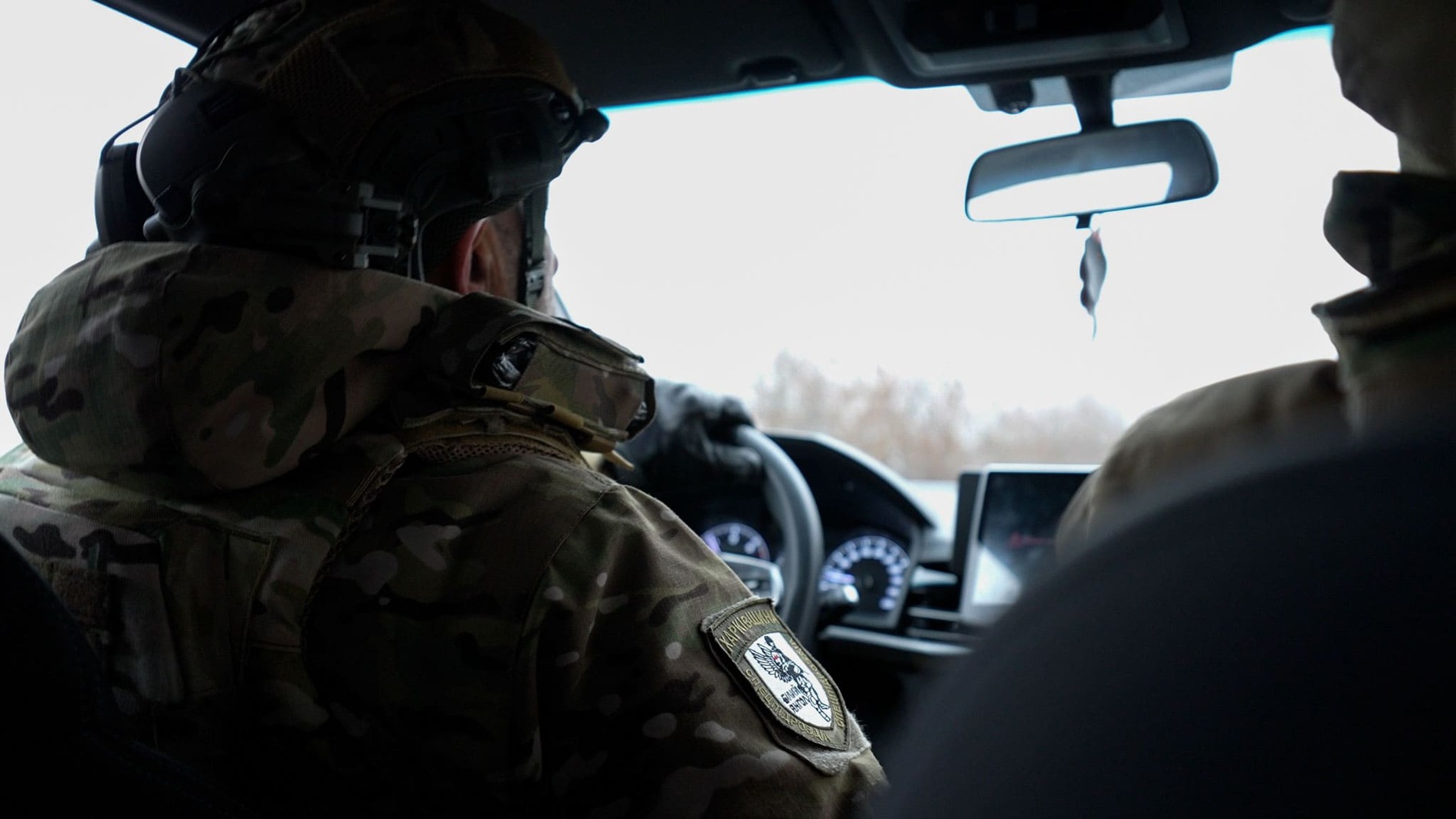
“What the hell is there on the road?” Ihor interrupts, and the car stops.
Something black lies ahead. Oleksandr knowledgeably proclaims that it’s a drone.
Ihor gets out, skillfully handling the rifle. A shot. He reloads. Second shot—nothing happens. The police officer approaches.
“Is that a trash bag?” Andrii shouts.
“Fuck knows. I shot the shit out of it,” Ihor says, returning. False alarm this time, but last time, in nearly the same spot, he saw a real fiber optic drone—Russians place FPVs on the roads, to wait until the car passes by and explode it.
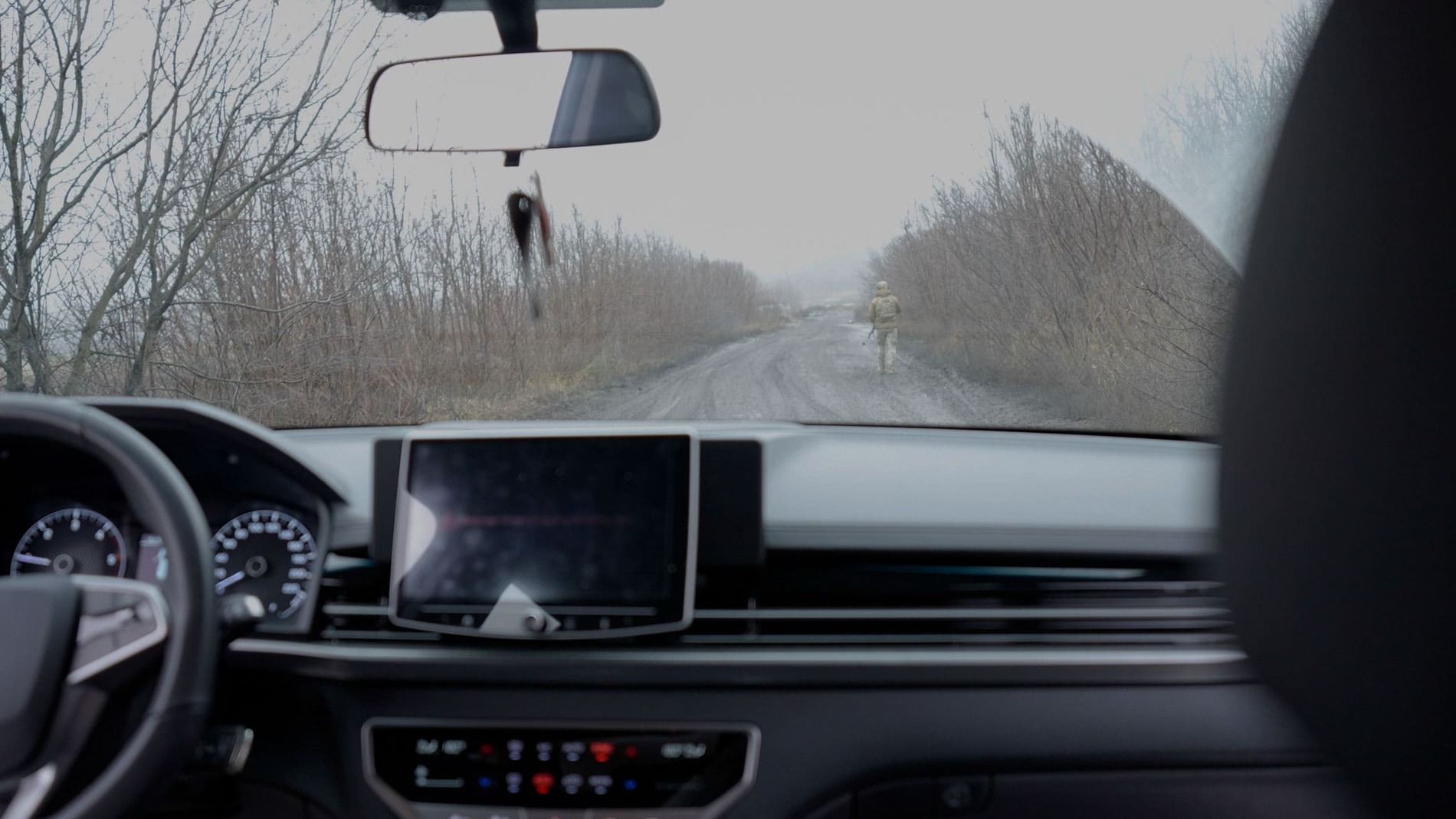
“Will they give me housing? Probably not for free?” Oleksandr asks as the White Angel’s crew drives up to the evacuation hub in Kharkiv. He hopes to get in touch with his mother, evacuated from Kindrashivka last spring when the shelling intensified. She lives in the city, somewhere in the dormitory for evacuees.
“Is that what Russian radio told you?” Ihor mocks. At the hub, he says, evacuees get everything they need for free. Ihor adds, “Like in the best houses of Paris.”
Out of luck
We spend a day in a basement café in Shevchenkove—the busy last stop for soldiers heading toward Kupiansk—waiting for evacuation requests. This is perhaps the first time in a while that White Angel did nothing during 24 hours, says Viacheslav Markov, who oversees evacuations for the regional police. Officers joke about our bad luck.
Off camera, police say all sane people have left—only deviants remain. Evacuation requests are rigorously verified. Viacheslav explains, “so we don’t go to evacuate a granny and find Russians standing there instead.”
The next day, “angels” finally have one evacuation request. It’s from a woman, Maryna, they couldn’t reach yesterday. Andrii and his colleagues, Roman and Svitlana, decide to check on her. We get in and drive towards Hrushivka—once a rear village, now threatened by Russian sabotage groups.
A white police van passes the last checkpoint into Kupiansk. The road feels nostalgic for the group leader and the commander’s namesake, Andrii—beyond Kupiansk lies his occupied hometown in the Luhansk region, which he left just before the full-scale invasion.
They find no one at Maryna’s address. Only barking dogs and a neighbor who appears from nowhere: “There’s no one there. They only come to feed the dogs.” He opens the gate. Dogs growl, then spin around the officers, happy. Washed laundry sways on a clothesline.
The neighbor is Valerii, 70, living alone with his poultry, afraid to leave his expensive power tools for construction work behind.
“Are they not bombing Kharkiv? There are more air strikes there than here. If my house is destroyed, maybe I’ll leave,” he says.
Andrii stands apart, rifle ready, growing nervous as the conversation drags on. The ever-present threat of Russian drones appearing grows. Still, no evacuee in sight.
“I’m from an orphanage. I was born alone, and I’ll die alone.” Valerii gazes away, exhaling cigarette smoke, as the police return to the van—he gave them an address where the woman might be.
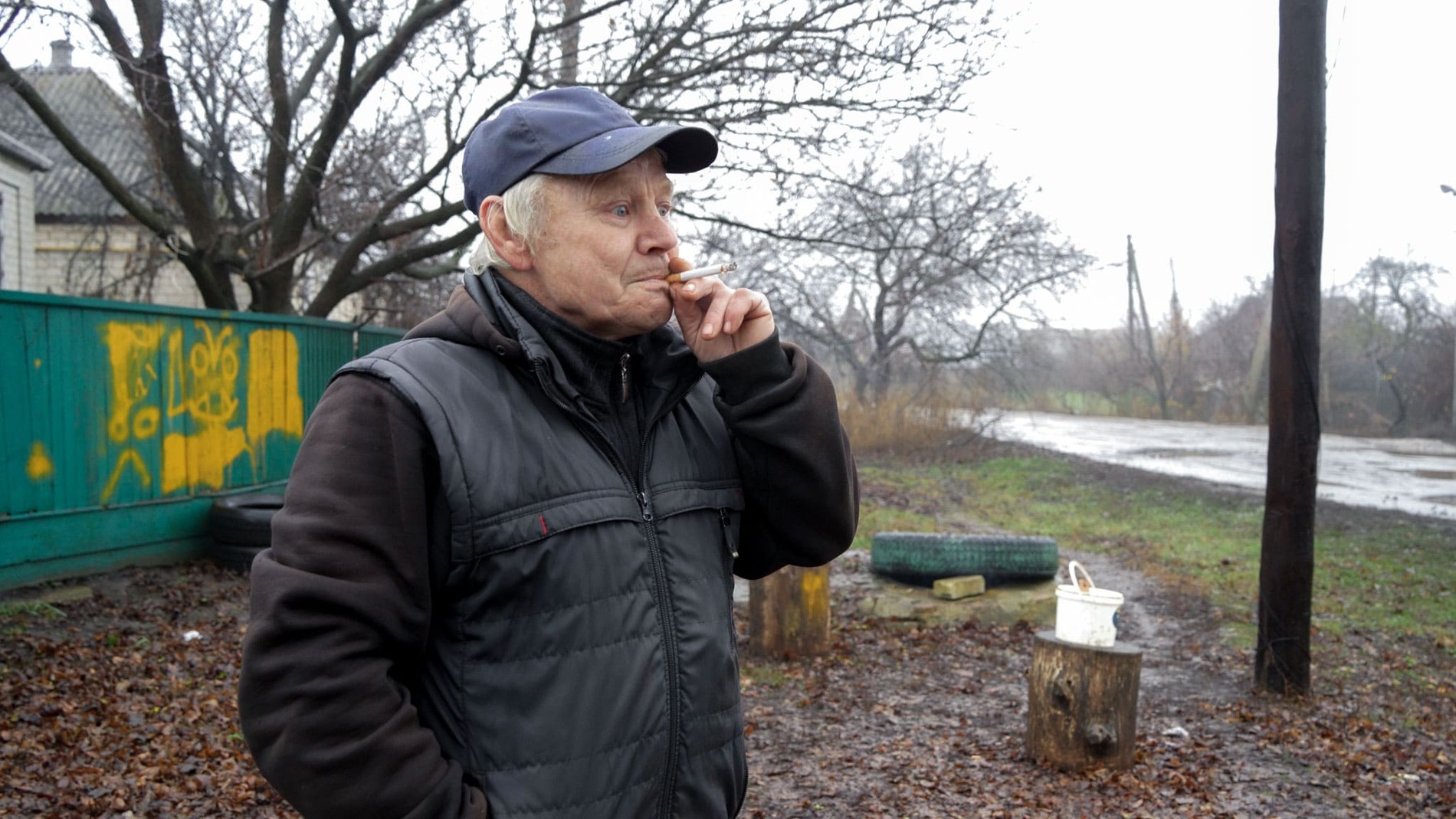
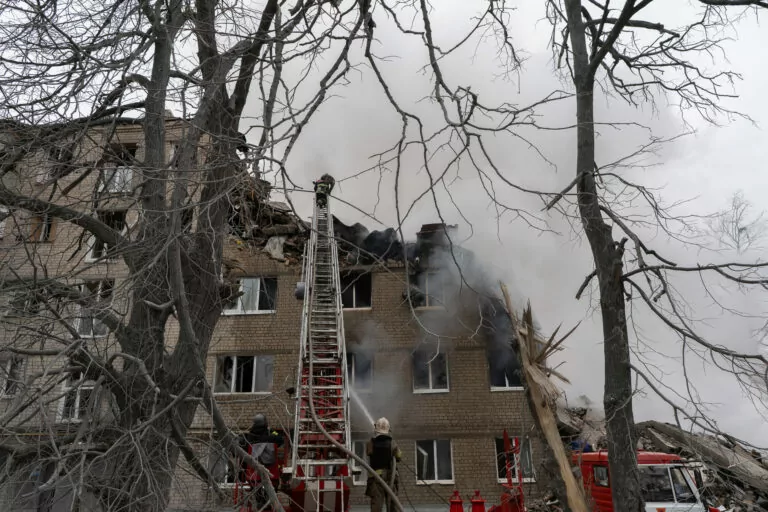
Andrii nervously asks for the exact address—they’re breaking protocol by staying too long—as the bus approaches a silent four-storey apartment building. Not a single window is intact; wind sways curtains in some.
Roman and Svitlana shout the woman’s name. Only abandoned cats answer.
It’s rare for people not to show up, Svitlana says on the way back. Usually, they’re packed and waiting. “Everything worked fine without you,” Andrii laughs, looking at us. Back at base, he’ll reprimand his colleagues for breaking rules for safety.
Later, we talk to Ihor about this case. “Let’s be honest, there are old fools staying and saying people shouldn’t leave because we won’t give you anything there. That we’ll tear them limb from limb.” At least, that’s what Maryna told him, peppering the words with more Russian propaganda, he shares. She didn’t show up for evacuation.
When war returns
“War does not forgive mistakes,” says Ihor, explaining his harshness with both evacuees and colleagues. “So let them learn from my mistakes.”
Some “angels” from the Kharkiv region learned from experienced colleagues in Donetsk, but training was mostly formal, officers say off camera. They hired people who had gone on evacuation missions before or worked in frontline territories. But not everyone is collected under stress.
Yuliia, a 23-year-old energetic woman from Vovchansk, evacuated people during Russia’s 2024 offensive on the city. Her partner was killed by a drone strike then. Officers don’t talk about it—the wounds are still raw.
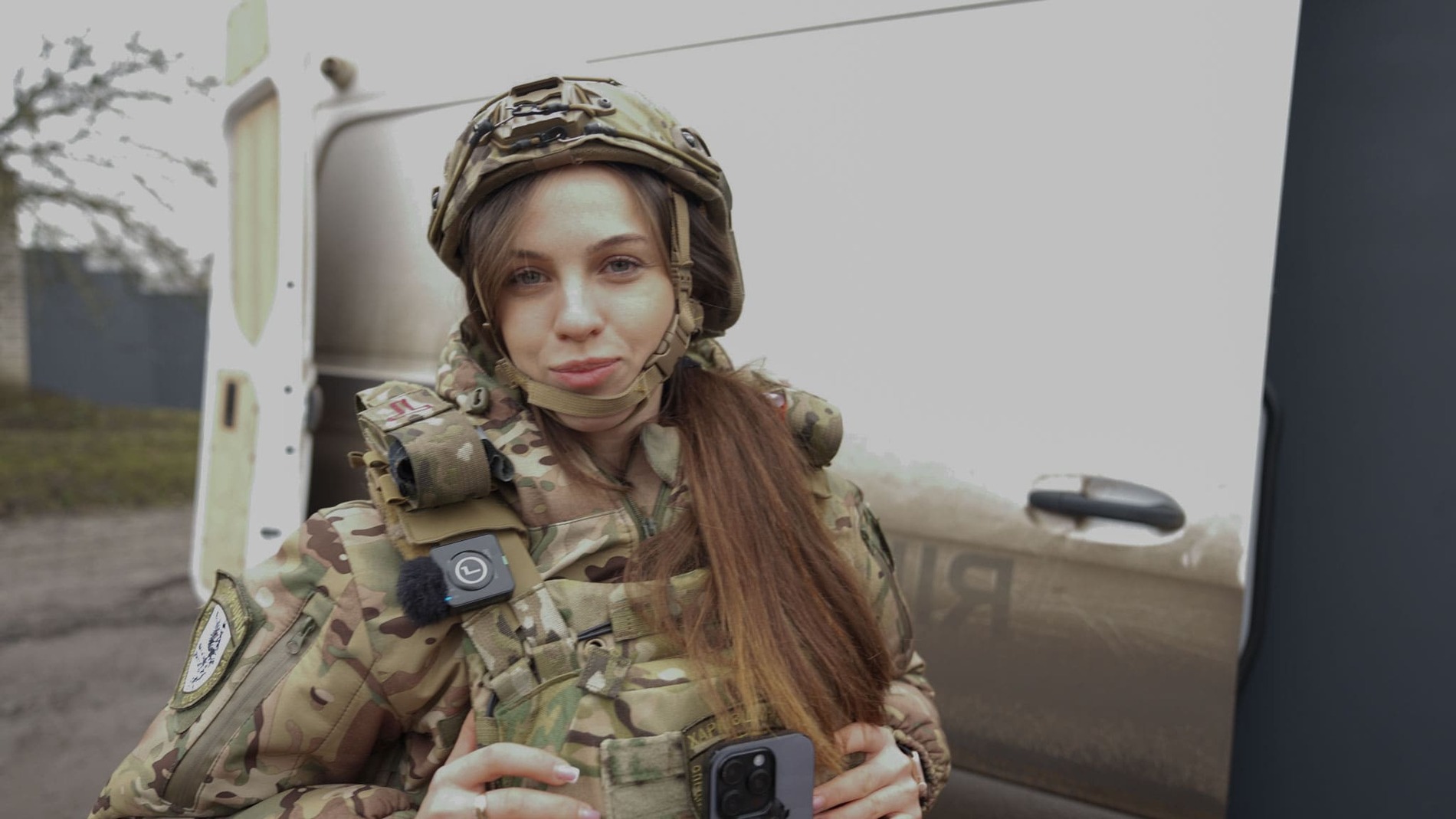
With Andrii and Ihor, she’s preparing to evacuate a family with children from Velykyi Burluk, a large village located 11 miles from the front line. In 2025, Russia broke through the border toward the village, slowly advancing to link up with their troops on the Kupiansk and Vovchansk axes.
The “angels” use an armored bus for evacuations with children. It can’t withstand a direct hit from powerful munitions but protects against shrapnel and FPV drones. Originally donated by foreign philanthropists to help people establish a DNA identification laboratory inside, it’s not well-suited to the rough terrain near the zero line. It’s the best they have, though.
For evacuations requiring better passability, police use a pickup truck—fast but vulnerable. According to Viacheslav, management promises safer vehicles in 2026.
The bus rolls slowly to the Russian-language song “Bunny” by Ukrainian pop band NIKITA, I call you bunny, my sweet bunny. My beloved bunny from the Playboy cover.
“I don’t want to be KIA listening to this song,” says Ihor.
“Bunny is a song about you,” Yuliia teases, and Ihor seems embarrassed.
Off camera, police officers share, “Leadership wants every crew to have a woman. But that’s not always practical.”
Arriving in the village, Yuliia greets two little boys and skillfully puts protective vests and helmets on them. She gets their grandmother into the bus while the men talk to the children’s mother on the street, helping her load their belongings into a vehicle.
“Do you have any weapons?” boys ask.
The family has evacuated several times, says the children’s mother, Natalia, in her 30s. They spent 2022 in occupation near Vovchansk, where they’d moved just before the invasion. “Russian soldiers threw candy at my eldest son from their car, and he ran into the bushes,” she says. She warned her sons “not to approach the occupiers.”
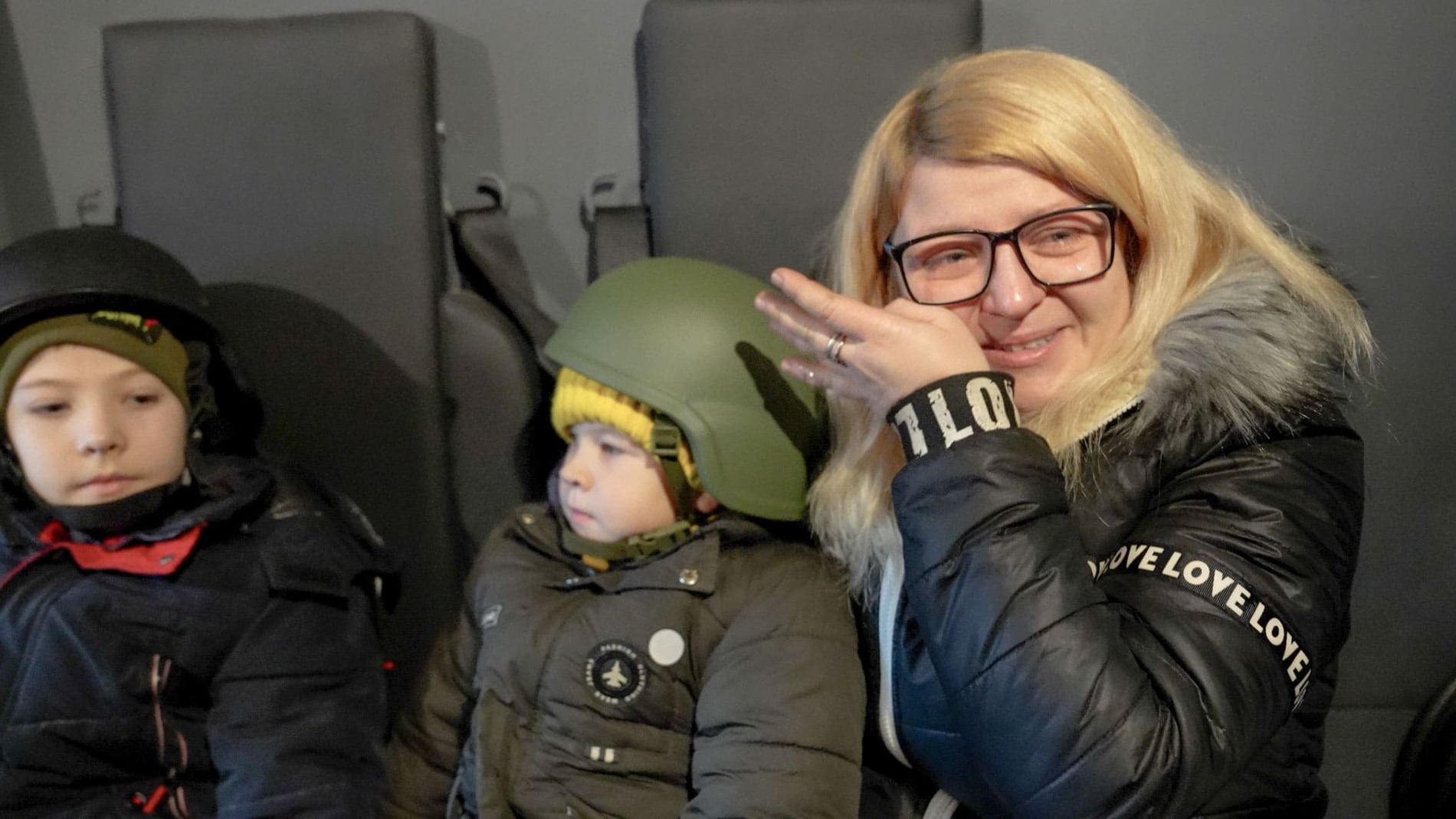
The family moved to Velykyi Burluk, acquired a house and farm. Then Natalia’s husband was mobilized. Now she’s evacuating for the second time, to Kharkiv, with her 4-year-old and 9-year-old sons and 86-year-old mother-in-law.
“If it weren’t for the children, I don’t know what I would have done,” she says, wiping tears and hugging her younger son, Mykola. She’s found an apartment in Kharkiv and hopes her children will quickly adjust and that the war will end soon.
Hi. I am Polina Kulish. I worked on this story along with Anna Veklych, our journalist. Management did give new armored pickups to the White Angels, but few things offer 100% protection from Russian drones. On Feb. 20, just as I was editing this article, a Russian Lancet drone targeted one of those vehicles and killed Yuliia Keleberda—the woman we worked with on these evacuation missions—and her colleague, a Russia-Ukraine veteran Evhen Kalhan. The attack also injured another officer—I currently don’t know who. One of Yuliia’s colleagues wrote, “Sorry we couldn’t save you.” Our condolences to the White Angels unit. We mourn alongside you.
Read more
- “Only hurt remains” — Bidding farewell to veteran, his three children killed in Russian drone attack on Bohodukhiv
- “I won’t go through occupation again” — life in Ukrainian village one mile from Russia


Subscribe to news from Kharkiv, Ukraine
Most important stories from the frontline region