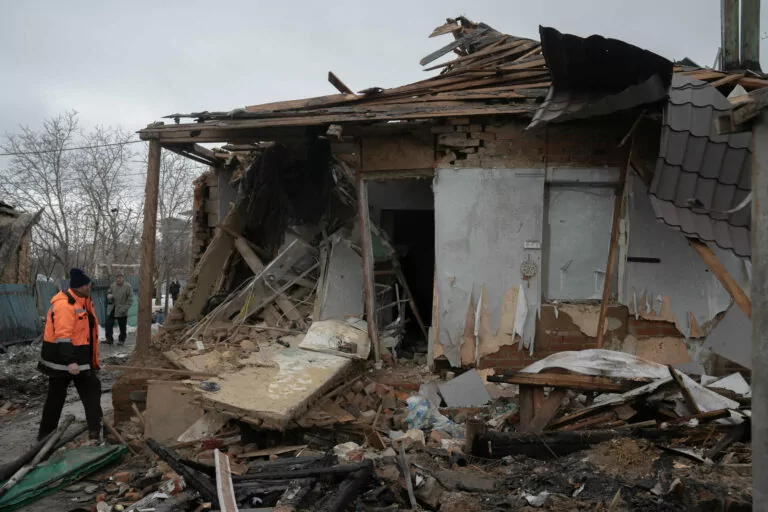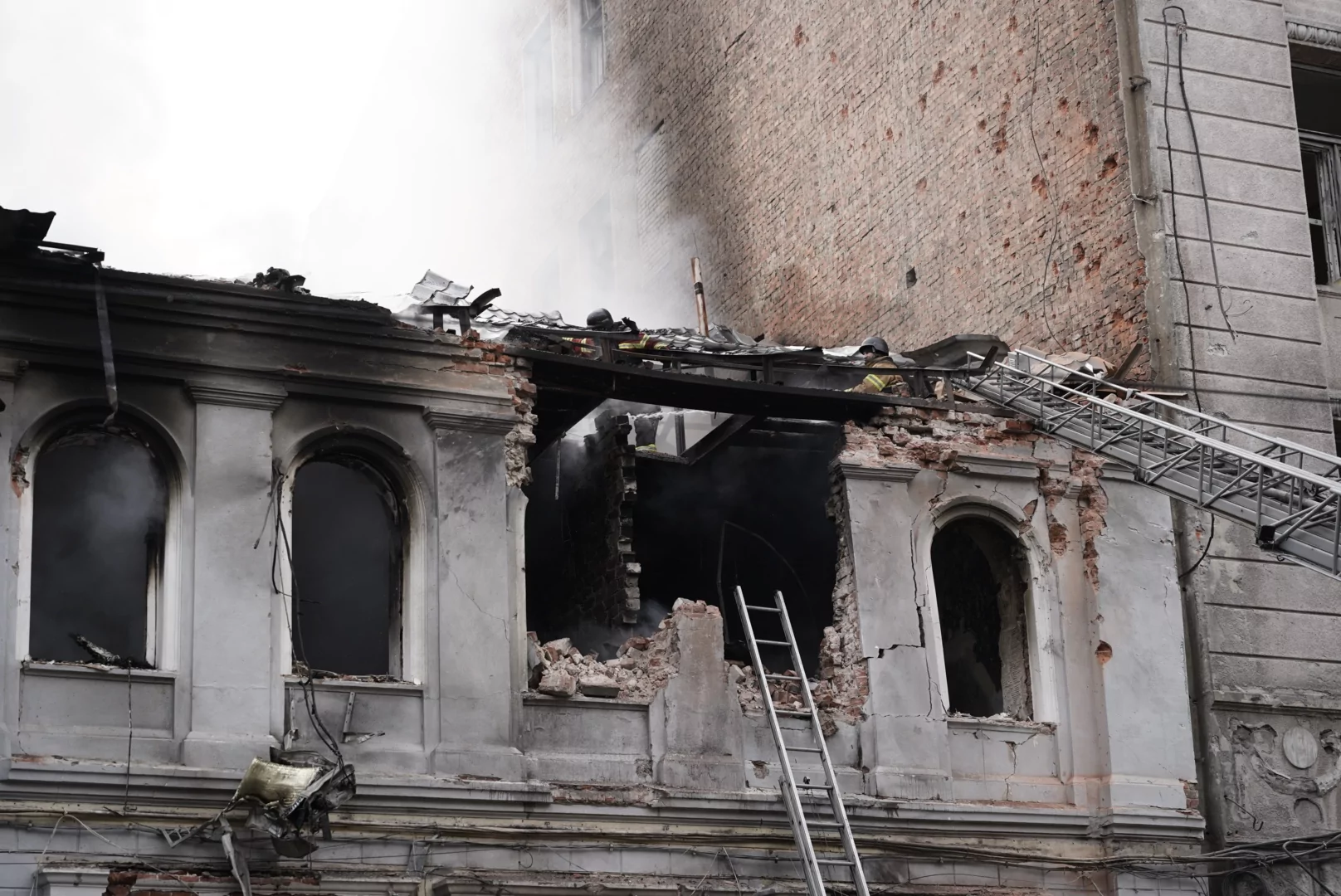
UKRAINE, KHARKIV — 10:38 a.m., October 22, 2025. Russia launches Shades drones at Kharkiv’s private kindergarten, Honey Academy. A three-year-old Tymofii hides with 47 other children, listening to the rumble of explosions. A rubble falls from the ceiling.
“Where are the children?” A firefighter asks a kindergarten tutor.
They are hidden by smoke in the far corner of the shelter. He picks up little Timofii and carries him to the nearby church in the old center of Kharkiv, a safe shelter closest to the impact site.
“Firefighters thought we were burned,” Tymofii will later tell his mother, Maryna.
Maryna learned about the Russian attack from the news when Ihor Terekhov, the mayor of Kharkiv, said that the drones hit the kindergarten. She immediately went to get her child, but the street to the kindergarten was already blocked off by police and emergency services. A phone call from her husband, who had managed to reach Timofii, reassured her, but she still needed to see him. “Please let me through, I need to go around the block, I just want to hug my child.” After hearing this, police finally let her through.
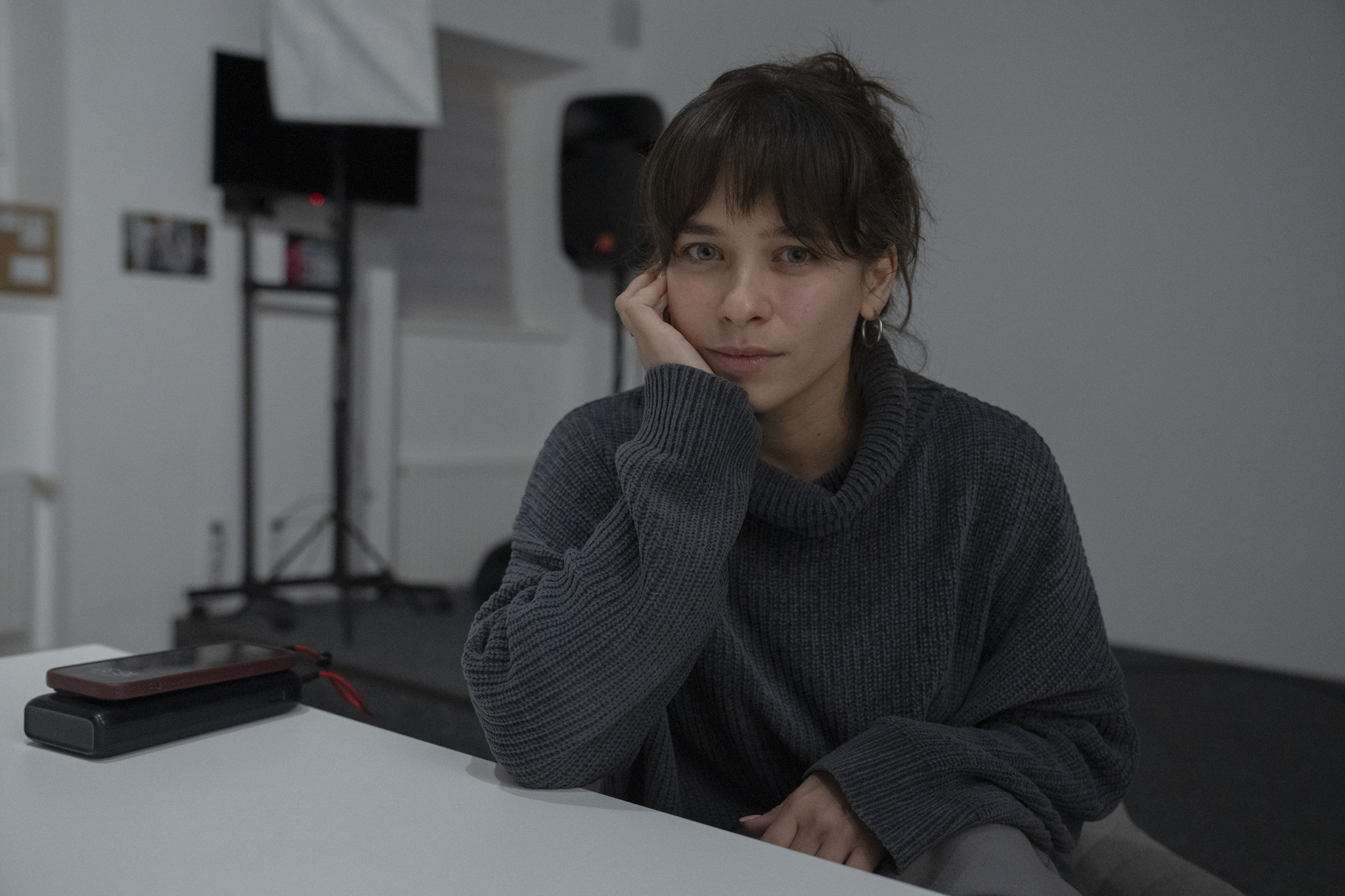
Tymofii is very fond of wolves. He had a wolf hat that he lost during the airstrike. His teacher called the family after the attack, saying she had picked it up somewhere in the aftermath. “I don’t know how the hat ended up with me. I was running around with it all day. For me, it’s a sign of invincibility.”
“It was difficult, but you’ve made it”
Maryna felt the need to be strong for her son, but when she started talking to him about the Russian drone strike, she realized that it wasn’t her who was truly strong. It was him.
He endured the experience with remarkable courage and told her about it. It troubled Maryna how Timofii kept insisting that he was brave and had nothing to fear. She didn’t know how to react to that at first, but, with time, figured it out.
Timofii loves to draw. He first admitted that he had been scared during the airstrikes through art. Three or four days after the attack, he told Maryna that he had cried, though only a little. He also mentioned that a firefighter had taken him, and when she asked if he had been afraid then, he said yes. He was scared of the firefighter. Imagined him as a thief of sorts. He clarified that the firefighter didn’t harm him; he had just taken him to safety.
Now, Maryna and her son talk about the Russian attack only when he wants to. She recalls a recent instance: Timofii drew the image of fire. Maryna understood that he wanted to process that entire experience through art.

“It’s normal for children to recreate traumatic events. A child’s consciousness heals itself in that way,” says Anna Lenchovska, a teen psychologist we’ve talked to.
Preschoolers, she explains, often see themselves as the center of the universe – think that it’s because of them that something bad happened – so they may feel guilty about that.
The best thing parents can do is not to leave them alone in this state, Anna says. To tell the child, “It was difficult, but you’ve made it, and we really respect you for that, for how strong you are.”
“It existed, but the city didn’t know about it”
When Maryna was choosing a kindergarten, the most important factors were safety and the availability of shelter in the kindergarten.
“The kindergarten administration took air raid alerts seriously, because this is a very important aspect in a frontline region.”
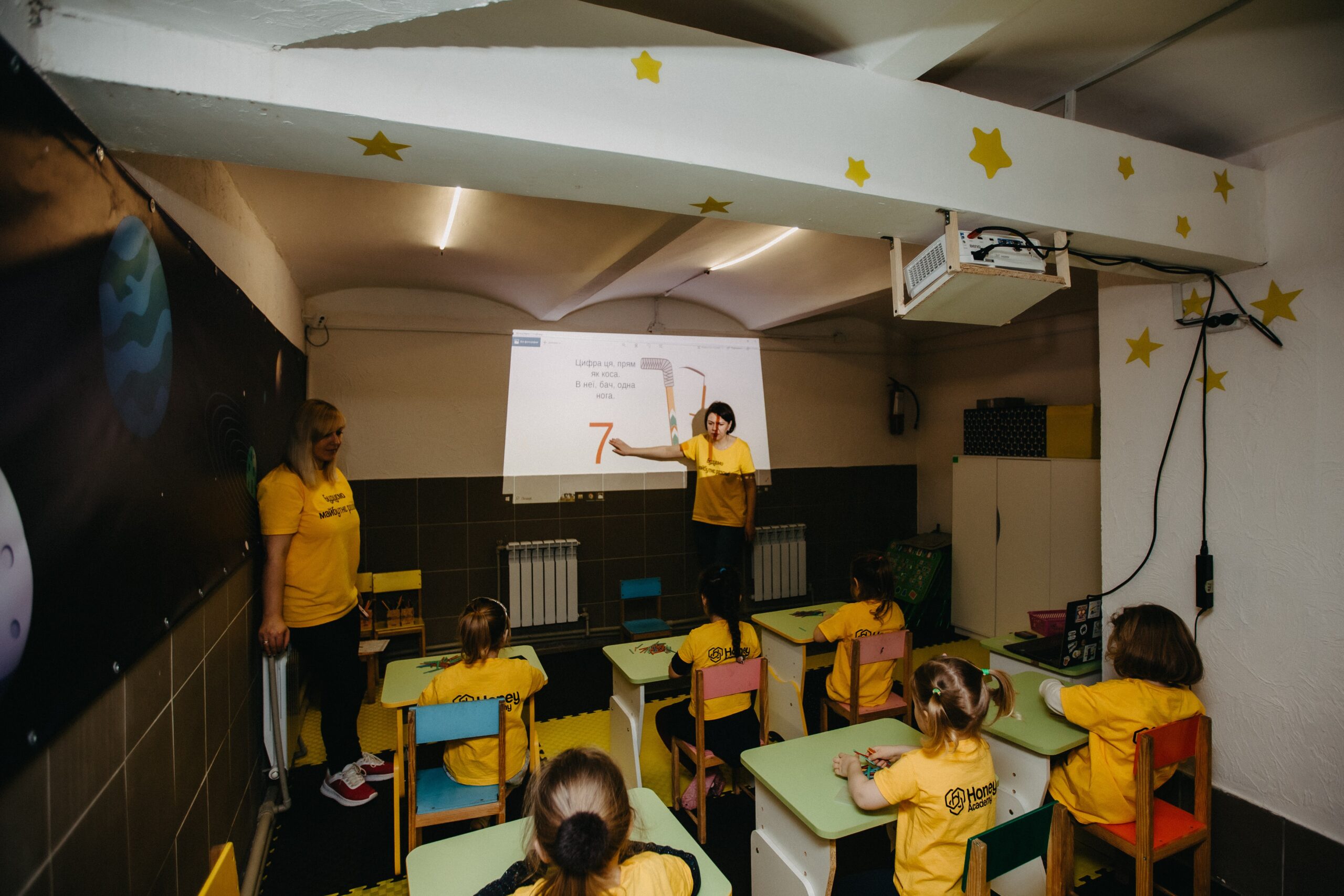
She liked the atmosphere of calm and trust in this kindergarten. The teachers stayed with the children for as long as necessary, and thanks to their skills, there were never any tears.
The kindergarten also had a creative atmosphere, Maryna says. Everything there was done outside the box, and Timofii loved the classes.
At the impact site on Oct. 22, Mayor Terekhov told Gwara that the kindergarten did not have a license to operate from the city council and that the authorities were unaware of its existence. The head of the Kharkiv regional Prosecutor’s Office, Amil Omarov, also present there, claimed they plan to investigate whether or not kindergarten’s operations were illegal.
Responding to an official media inquiry by Gwara Media, Kharkiv regional police said that, as of Nov. 26, no administrative cases have been opened against Honey Academy.
“It existed, but the city didn’t know about it?.. Well, that’s very strange, in my opinion,” says Maryna. She believes Honey Academy to be one of the best kindergartens in Kharkiv.
After Russian airstrikes, the kindergarten reopened in a new location. Maryna does not plan to send her child there yet.

“Like spring in the middle of an icy winter”
At the beginning of the full-scale invasion, Maryna didn’t know what to do or how to act. When she left Kharkiv, taking her younger eight-year-old sister, and brought her to Lviv. By March 8, Maryna learned she was pregnant. To her husband, she said she felt “like spring in the middle of an icy winter”: it was not a time to rejoice, yet there was life growing inside her.
Giving birth during the war was Maryna’s greatest fear and challenge. She came back from Lviv to Kharkiv with her son, and when the Russian missiles fell on the city with both of them there for the first time, it was “the scariest day” of her life.
Maryna is still processing the drone attack on the kindergarten and doesn’t know what to do next.
She had no plan for the future and did not consider leaving the country. It was important to protect Timofii while staying in Ukraine so he could identify as Ukrainian. This decision was not easy, Maryna admits. The alternative would have been leaving with the child, which would have meant he wouldn’t know his father, grandmother, great-grandparents. That he would not feel at home.
After her son was born, Maryna felt guilty for bringing him into a war and didn’t know what to do. But she finds joy in seeing Timofii understand his identity; he often says, “this is a flag of Ukraine — and I am Ukrainian,” which delights her deeply.
She recalls a story from Berlin, where she was working on a joint creative project with a German theater. People there often did not understand how others lived during wartime, but Maryna didn’t know that. Then, one woman approached her and explained, “You see, for them, Kharkiv is like bombed-out Berlin.”
Without children, Ukraine has no future, Maryna believes, and it’s essential that they are born into safety. She says the skies need to be protected to safeguard all.
Children after trauma
Anna Lenchovska works with teenagers who have suffered traumatic events. She says, most behave as if they just entered puberty — they are aggressive, avoidant, and alienated. Sometimes, it’s different: some teenagers became ultra-responsible and began to behave as if they were adults in their families.
“If a father goes to war and previously made all the decisions, the mother might struggle alone. In this case, their kid may begin to take on that decision-making role.”
In both cases, Anna believes it’s very important to work with the entire family, because the psyche of a teenager, like that of a child, is not yet fully formed.
It’s important for the family not to dramatize the situation, but also not to downplay it or dismiss what happened, Anna says. After an acute stress, the first task is to restore the continuity of daily events as quickly as possible.
Suppose a family had to move to a new place or stay with friends because their windows were blown out after the Russian attack. The child is accustomed to a particular routine, such as watching cartoons at a specific time or playing with a certain toy. It’s beneficial to restore this routine as soon as possible.

It’s also important to change the environment after traumatic events, Anna says, especially if the family lives in cities like Kharkiv, which is 30 kilometers (19 miles) from the frontline. If there is any possibility to go abroad or to a safer region of Ukraine for a few weeks or a month, where there are adults who do not live under constant threat, the child needs that experience. Children need permission to have a healthy childhood: to laugh, play, and be themselves. That should be the primary focus for both parents and those supporting them.
If a parent is sleeping very poorly, having problems with eating, or with their own health, they shouldn’t ignore it and should seek professional help, Anna adds. The more stable the parents’ condition is, the better it will be for the child.
Read more
- How Kharkiv and its locals prepare for fourth winter under constant Russian attacks
Hi, I’m Nazar, and this is my article. With this story, I want to show the threats that children face every day in Ukraine. If you’d like to see more articles about this topic, please consider subscribing to our Patreon or buying us a coffee.


Subscribe to news from Kharkiv, Ukraine
Most important stories from the frontline region