UKRAINE, KHARKIV OBLAST, Feb. 28 — “There are six children left in this village. We took all the others away,” says Yulia Honcharenko. She is an inspector of juvenile prevention at the Chuhuiv police department.
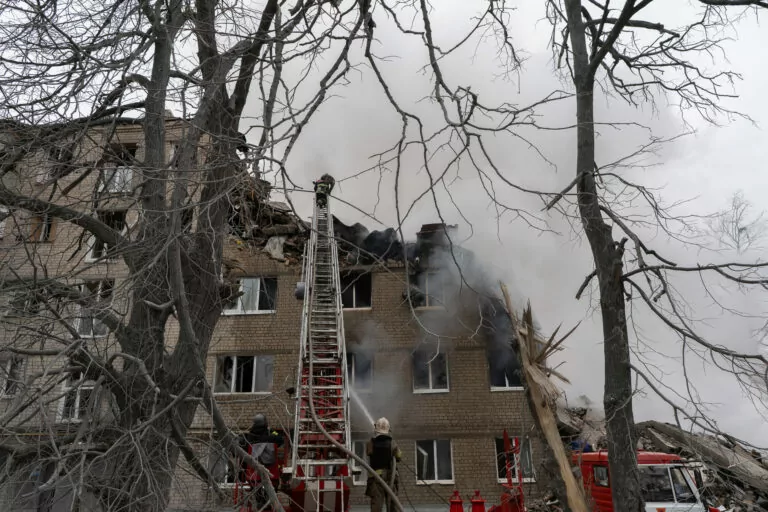
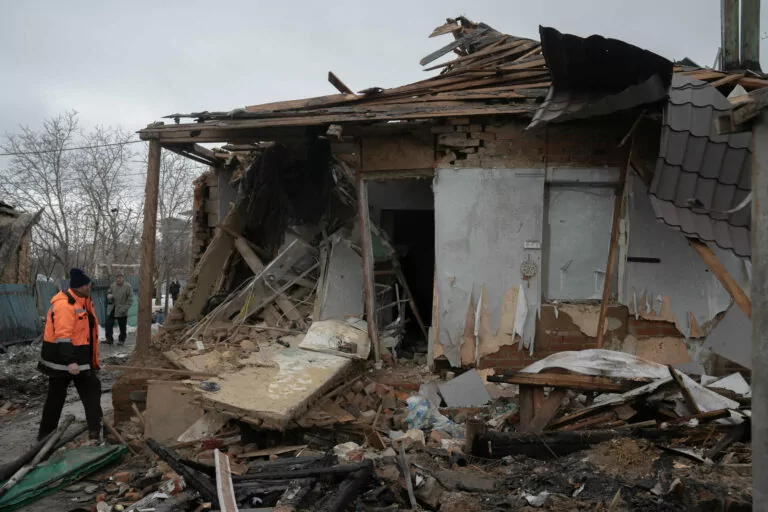
Today, along with the Rose on Hand search and rescue team, Yulia plans to help evacuate people from Hontarivka, one of the villages where Kharkiv authorities announced mandatory evacuation on Jan. 30. It’s another place that is being emptied out by frequent Russian drone strikes. Gwara joins their mission.
Weather and war conditions
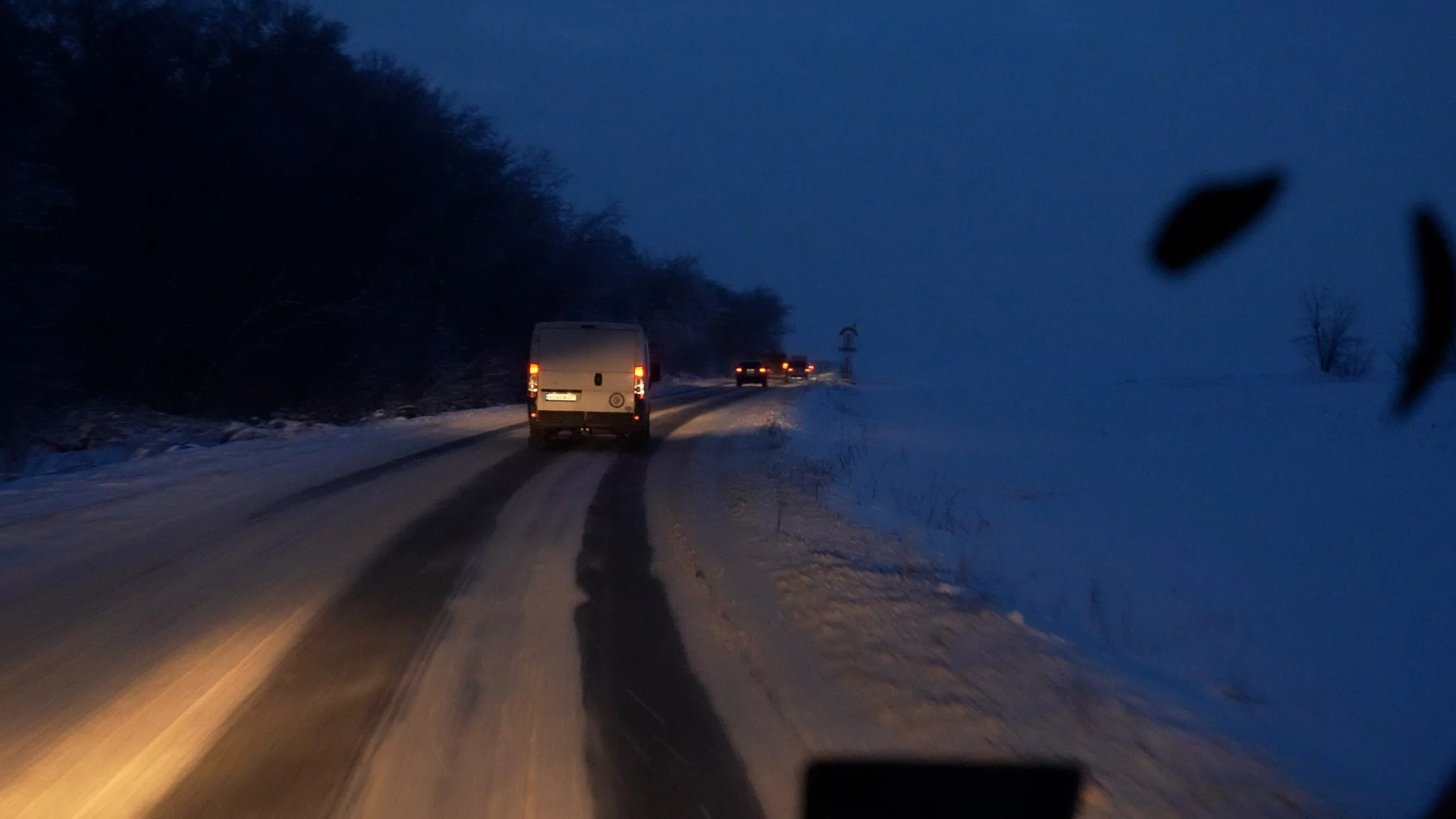
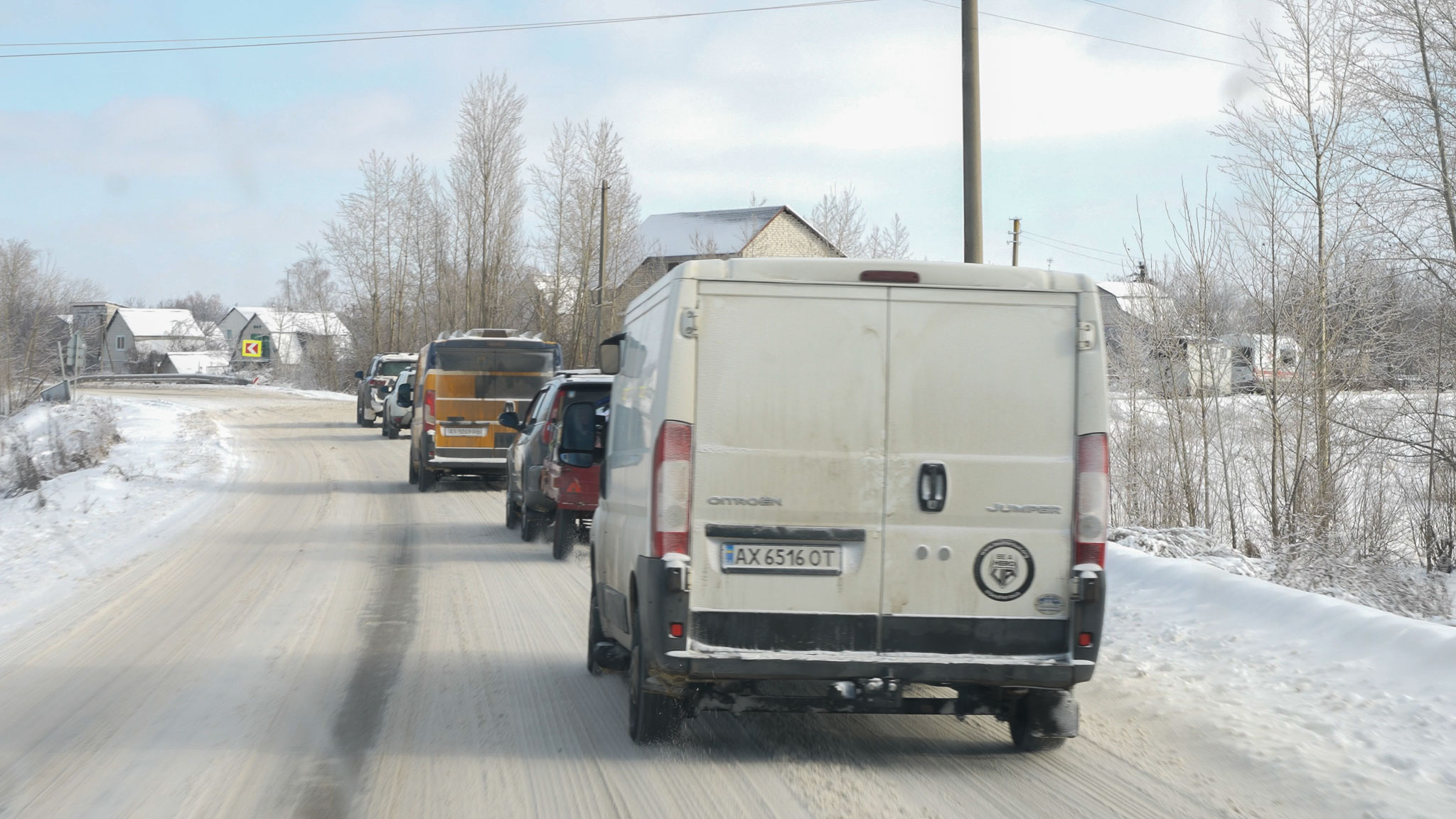
On Dec. 7, Russian forces attacked the dam of the Pechenihy reservoir and a bridge in Staryi Saltiv, causing a massive traffic disruption. To reach Hontarivka now, the team must take side roads. Taking the road less travelled means risking getting stuck on ice and snow, which we do.
“There’s a lot of snow. We can’t get through,” says Ivan Fomenko, deputy head of Rose on the Hand, as the cars halt.
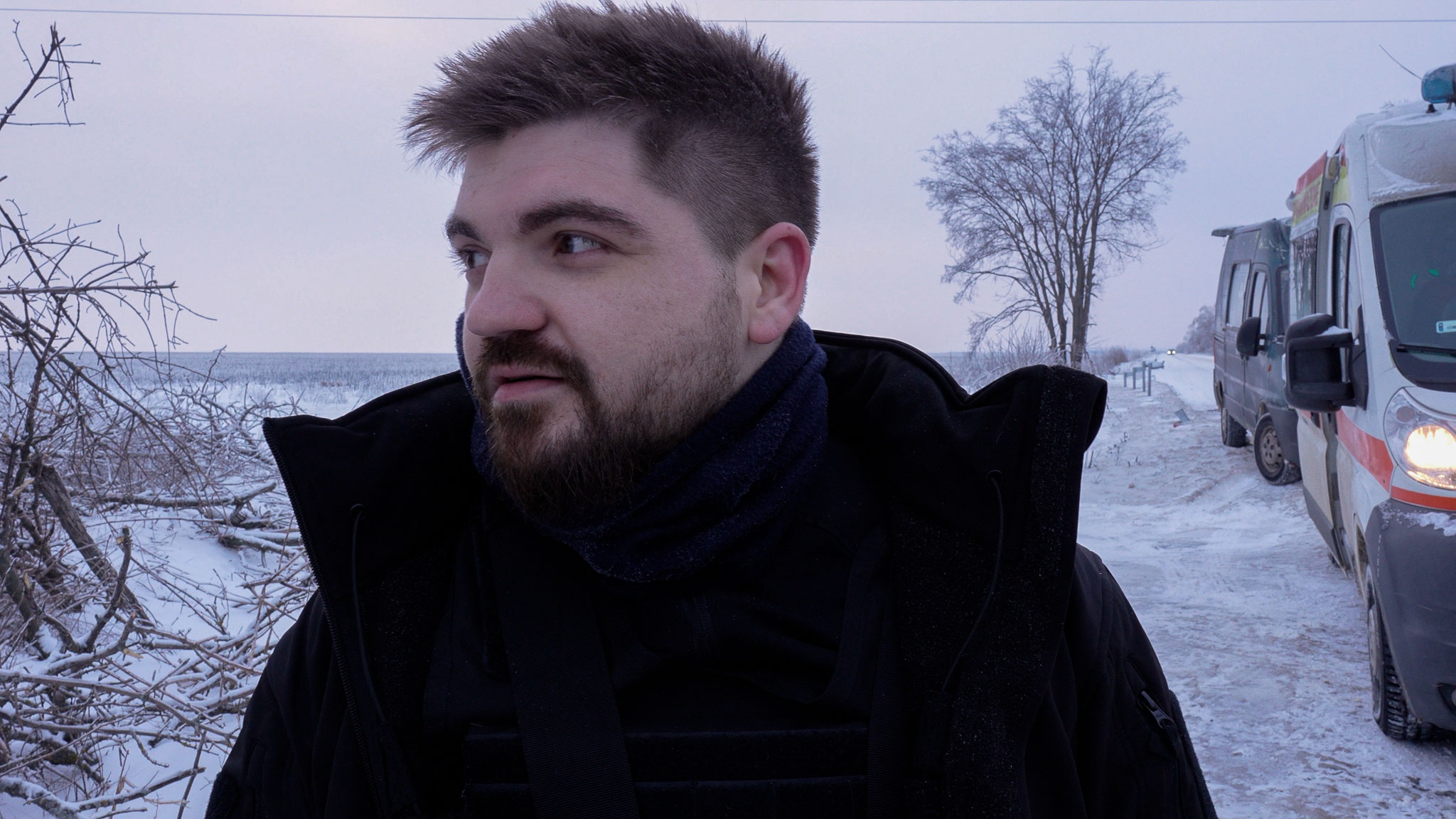
Everyone is trying to pull cars out of the snow traps as fast as they can. A total of five cars are involved in the evacuation. A four-wheel drive police vehicle went first, but even the torque on all four wheels couldn’t cope with the snow-covered road. Other civilian and military cars and an ambulance are now stuck around them. It’s a small, dangerous traffic jam. Such a gathering might become a target for Russian drones.
When cars can move again, a sense of relief washes over everyone.
“The main thing is that the armored car got out, because it is really hard to pull out 7 tons (15,432 pounds),” says Fomenko. He is driving the last car.
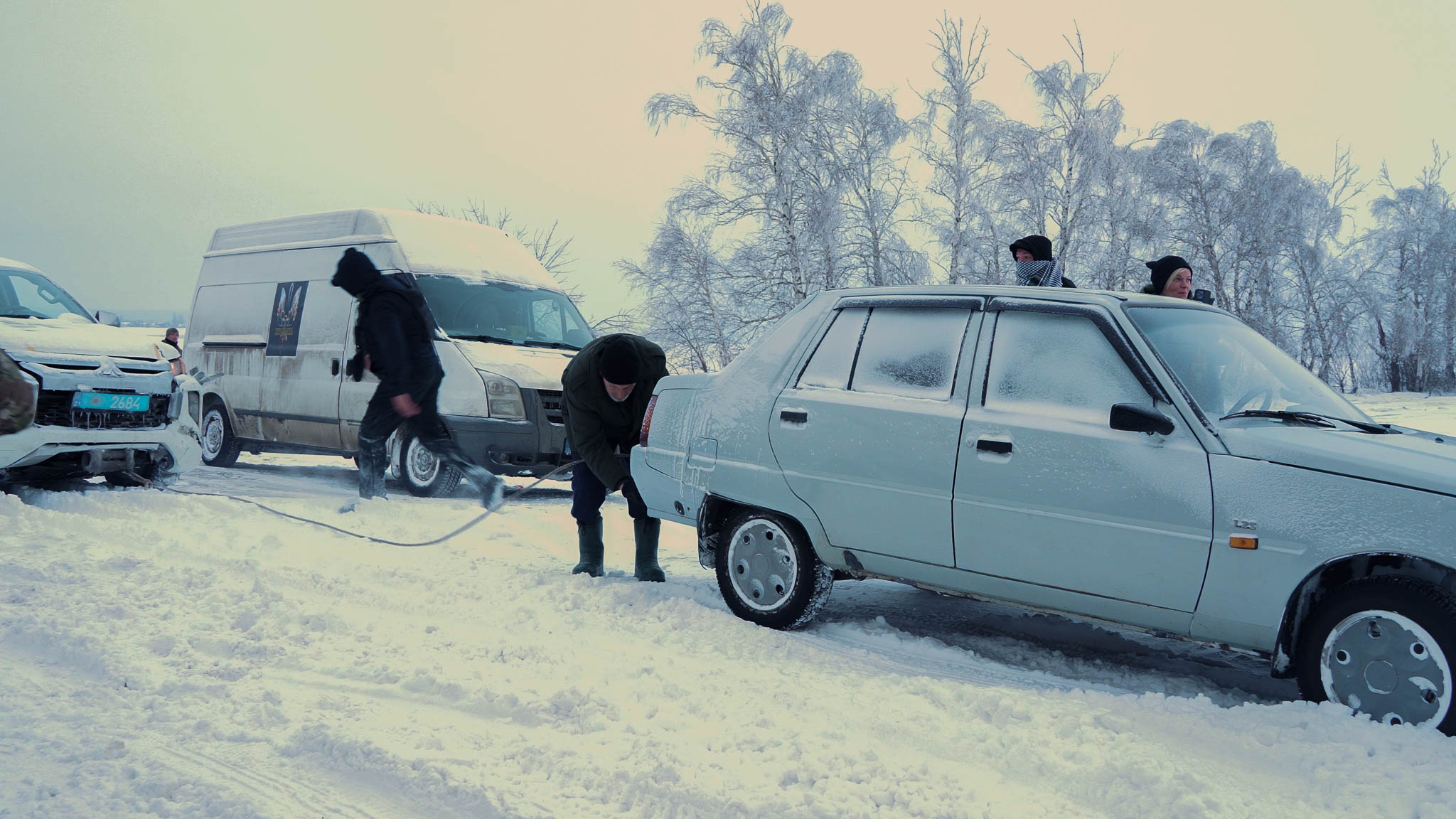
The team decides to split up: the police go to find a cleared road, and volunteers wait in the center of the Khotimlia village. Near the half-destroyed store the Russians targeted on Feb. 2, locals, having moved their business to a smaller shop, continue to sell coffee and food.
As volunteers partake in hot drinks on an unexpected break, they receive an alert. A Russian drone is circling near Staryi Saltiv, 7 kilometers (4.3 miles) away.
The command “disperse” is given: each person starts to their coffee cups in different directions, away from the cars and the shop. But a second later, police officers in the team report they found a clear road.
Volunteers decide to ignore the threat — they’d rather reach those who need evacuation in time.
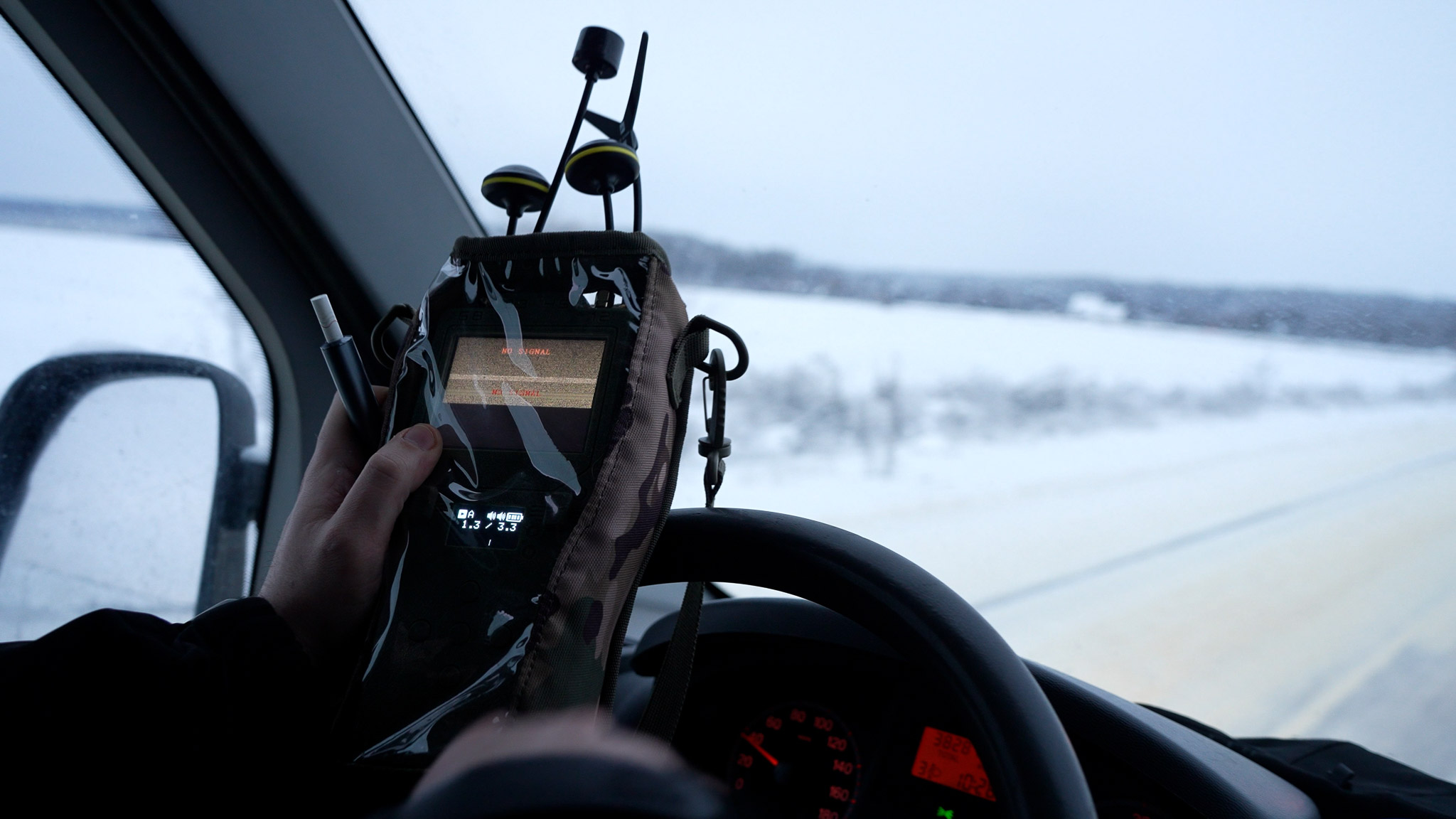
Drone detectors are among the most important tools in the volunteers’ arsenal. They have at least one such device per car, which allows them to detect FPV drone signals in real time.
“I see the image,” says one of the volunteers over the radio. That means the Russian FPV is so close that the device is picking up the drone operator’s video feed — and we see everything they see.
“Do you see us in this image?” asks another volunteer.
“No.”
“That’s good.”
Cars keep moving towards Hontarivka. Volunteers scan the sky and listen for the changes in the high-pitched signal that might indicate an approaching drone.
Calm evacuation
It’s not the first time our team has been in this village. On Dec. 6, 2025, on St. Nicholas Day, one of the winter holidays in Christian countries, we visited Hontarivka with the police and Czech volunteers to deliver holiday sweets to children. Two months before, this territory was considered safe.
“Then, we delivered gifts to kids, but now we are evacuating them to safer places, wearing bulletproof vests and helmets,” says one of the police officers.
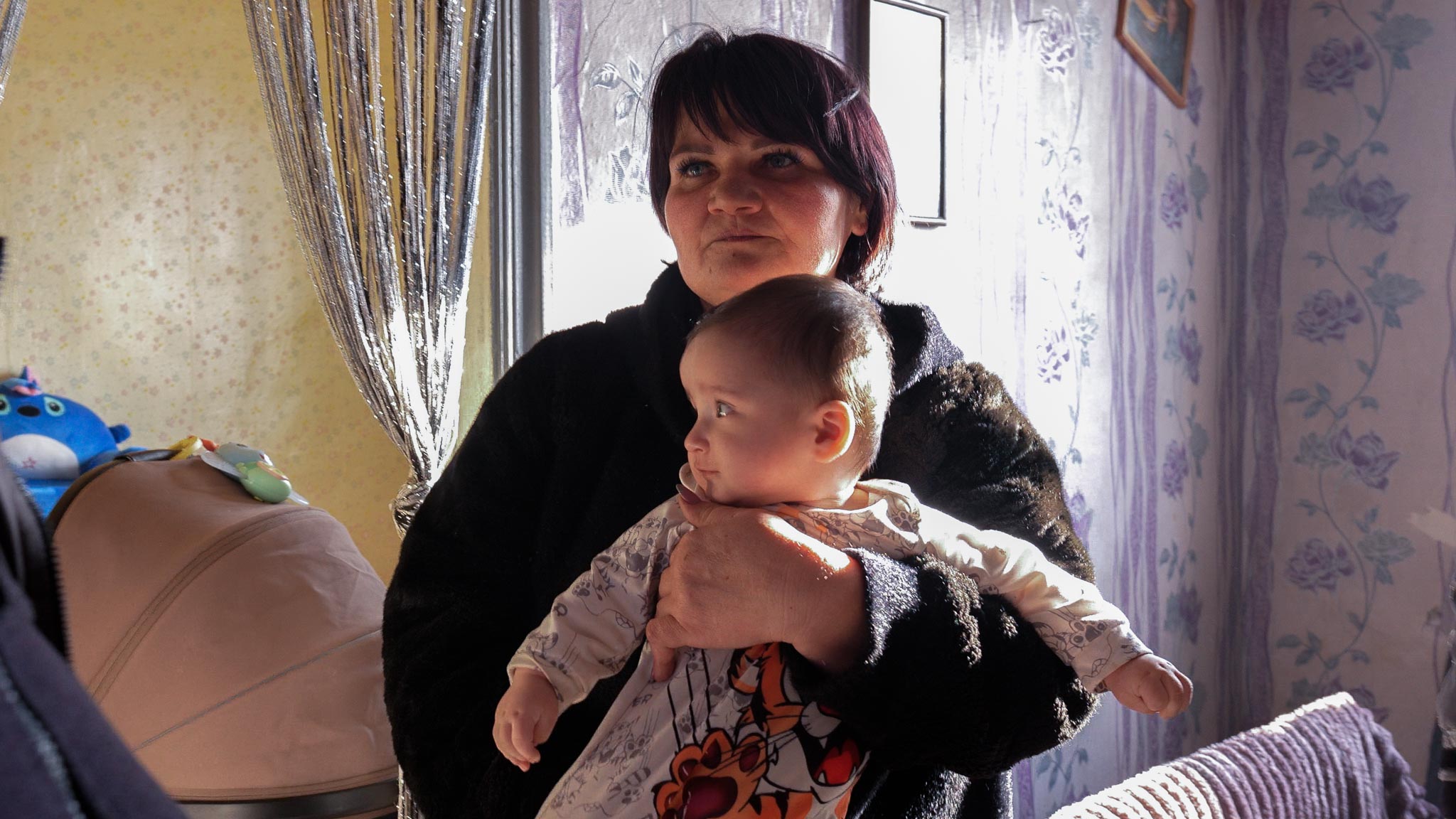
Natalia Sanina has a large family. Her children and grandchildren were born in Hontarivka, and they had no plans to leave.
Now, there is no communication or electricity in the village, and logistics have been a problem for a long time because of Russian attacks. It’s difficult to deliver food here.
“We have a stove to warm up the house, but we have been without communication for several days. We decided to leave because of the children. It is quiet in the village now, but who knows about the future?” said Natalia.
The family’s youngest boy, Oleksandr, was born just six months ago, and his sister Polina is four years old. These children are Natalia’s grandchildren. She herself has a 26-year-old daughter and two sons, 14 and 16.
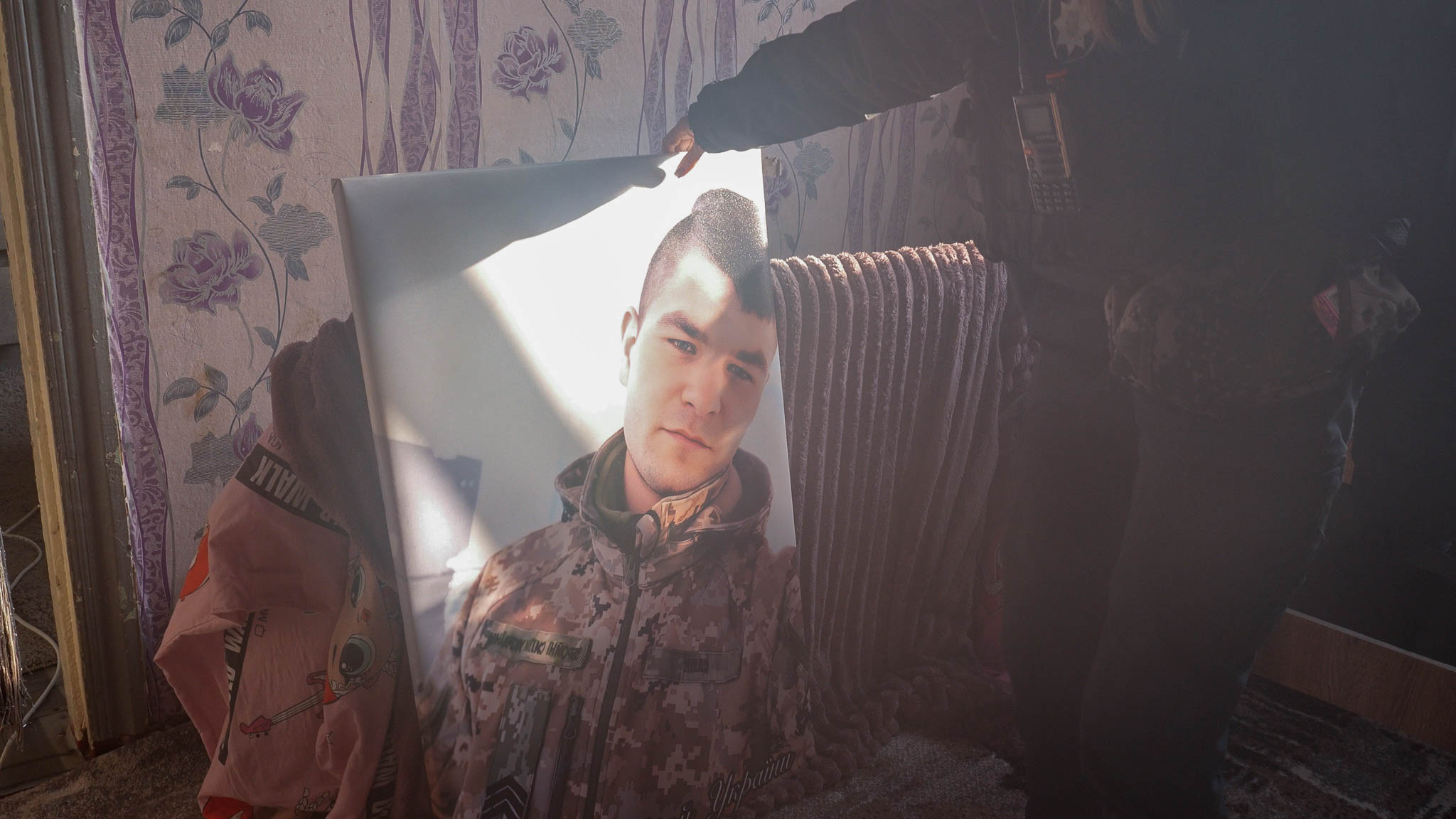
Her fourth son, Natalia lost to the war: he served in the Ukrainian army, and the Russians killed him when he was 21.
Volunteers call this type of evacuation “calm.” When it’s “calm,” families can gather most of their belongings and take furniture with them. That’s only possible if evacuees decide to leave right after the officials’ call.
“Sometimes people stay (in dangerous areas) until the last moment, and we have to evacuate them under fire. Then we drop everything and take only the people. There is no other choice,” says Fomenko.
Today, there is even enough time to prepare pets for the long road. Saniny take their dog and cat with them.
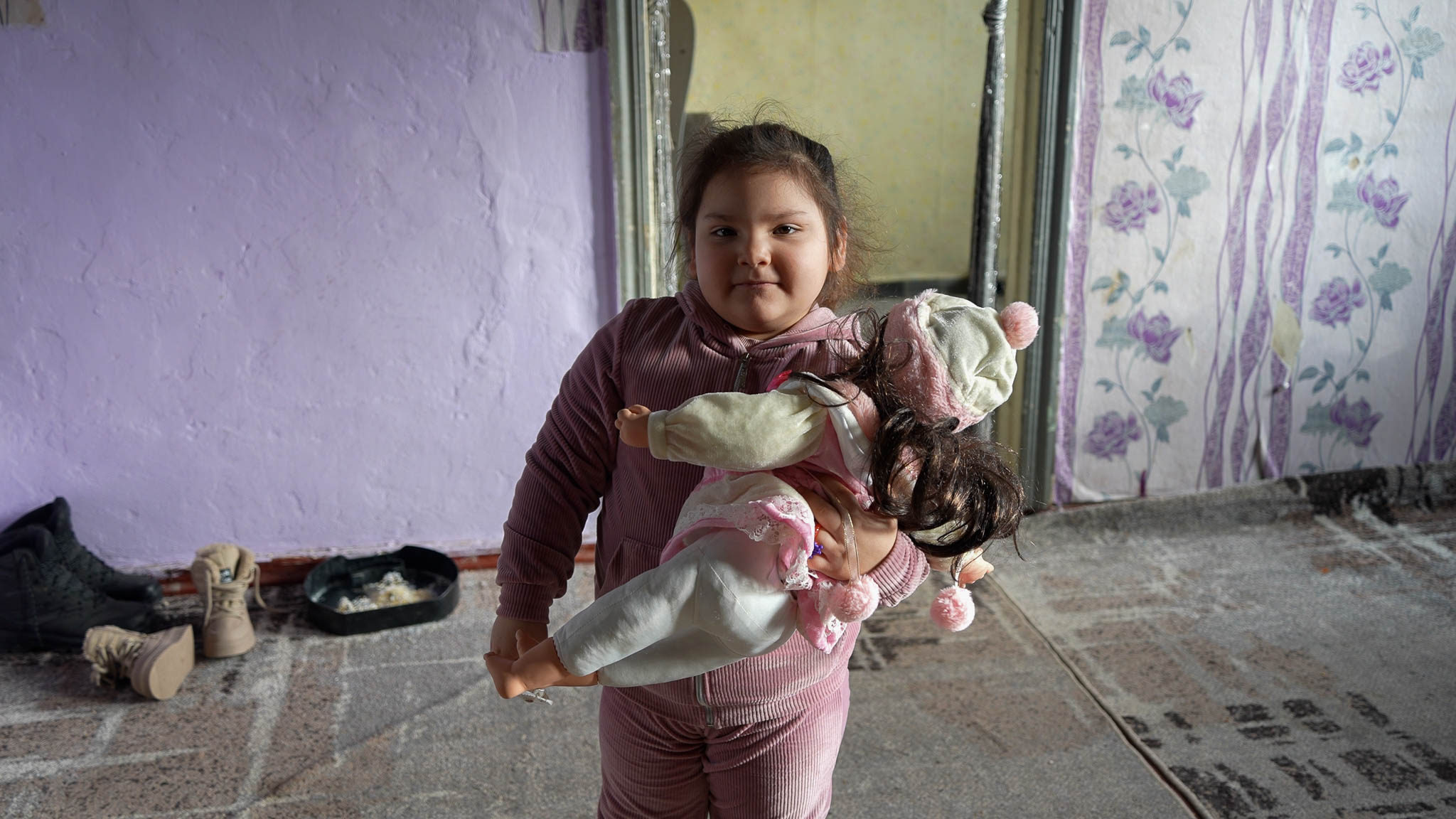
Four-year-old Polina is also packing her doll for the trip. She named the doll Solomiia. They love singing songs together. Polina squeezes the doll’s hand, and a melody begins to play as adults pack family photos into boxes.
The second war in her life
The team searches for the house of another family that requested evacuation a long time ago. Navigation in the village doesn’t work because there is no signal. Finding the right address is a matter of asking every local we meet for directions.
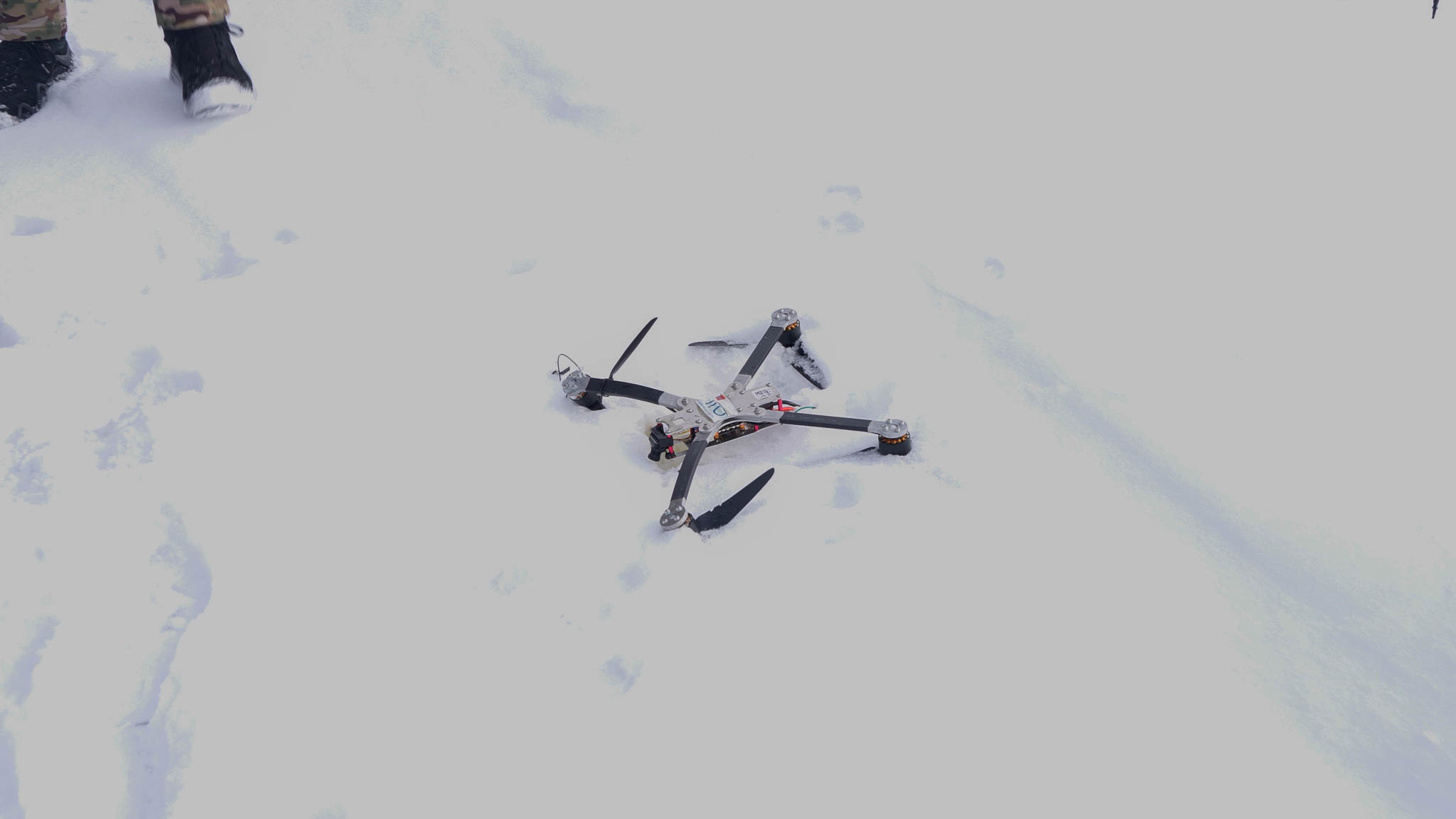
The movement stops. Volunteers see an FPV drone in the middle of the road.
Probably because of the severe frost, the drone’s blades froze, and it fell without exploding.
“Don’t touch it,” the police officer says. “We need to mark the area and call the sappers.” The call is made, but the team doesn’t find anything to mark the X with. The line of cars instead drives further down the street, circling the frozen drone.
Less than 50 meters away, a woman comes out of the house and waves her hand at the volunteers’ cars. She is a daughter of the evacuee, an 87-year-old woman with mobility issues. She’s not surprised when she hears about the inactive drone on the road. She refuses to give her and her mother’s names, so we refer to both as mother and daughter.
“We have already had two (Russian) drone attacks near our house. And, in Vyshneve (a neighboring village 3 kilometers or 1.8 miles away), I know that drones like these are hunting people,” she says, opening the gate so that the ambulance could drive into the yard.
The police and volunteers carry a stretcher into the house. An elderly woman, already dressed in her outside clothes, is sitting on the bed. The daughter explains that she has dementia and doesn’t understand what is happening. Everything has to be done quickly, she says, laser-focused.
The only information the daughter shares is that her mom’s birthday is in a few days.
“This is the second war in her life,” she adds, holding her mother’s hand in the ambulance. They plan to move to Kharkiv. There, like here, the daughter will take care of her.
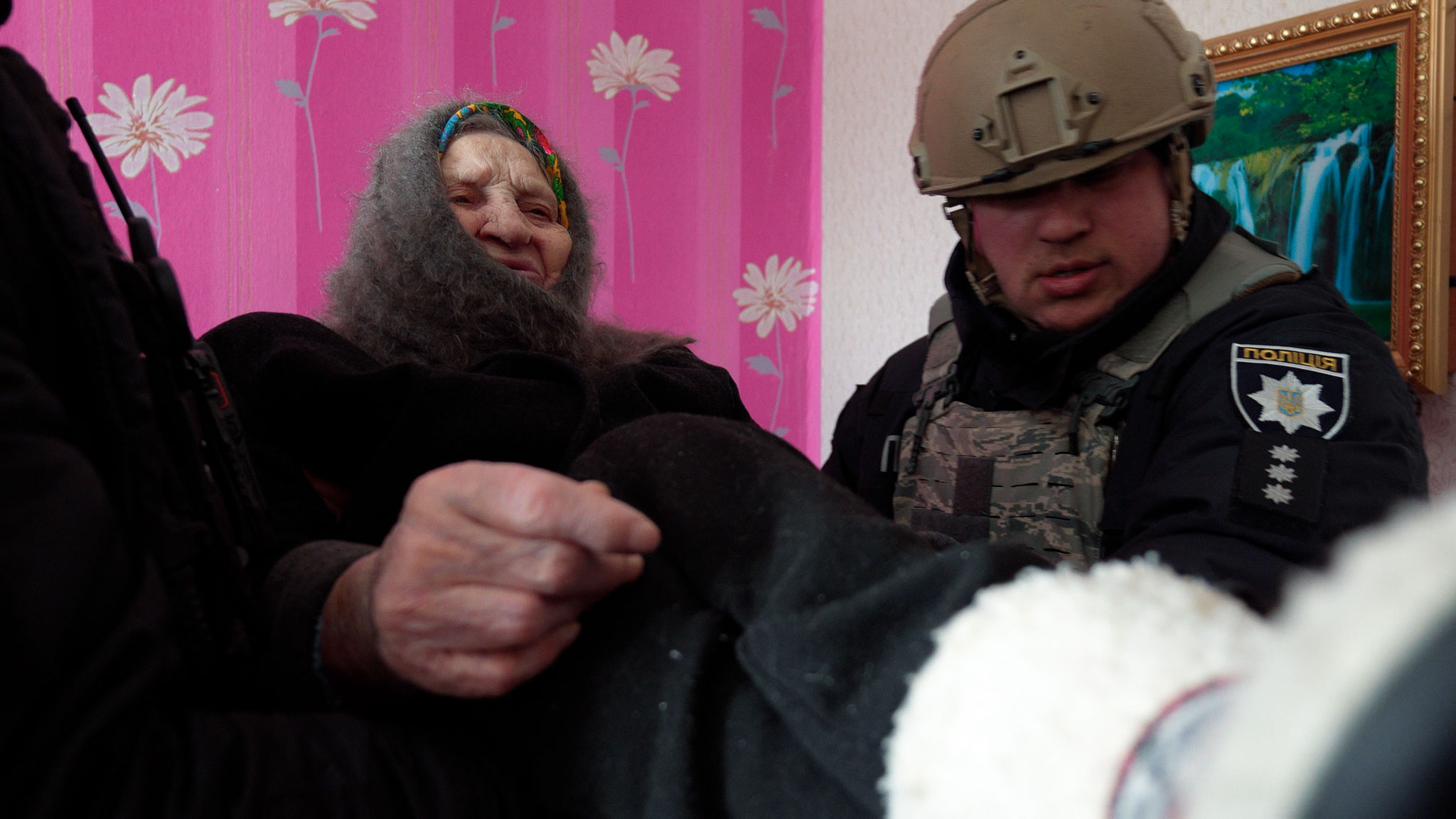
The weather gets sunny, and the environment gets more dangerous: Russian FPVs “see” better when the sky is clear. The drone detector catches the signal several times on the way back.
The cars move slowly because they are fully loaded, but everyone reaches the coordination center in Kharkiv before sunset. The next day, some evacuees will continue their way to safer places.
There is one child still in Hontarivka. Their family refused to evacuate. The police plan to investigate the case, speak with the parents, or apply for the child’s relocation from the dangerous zone.
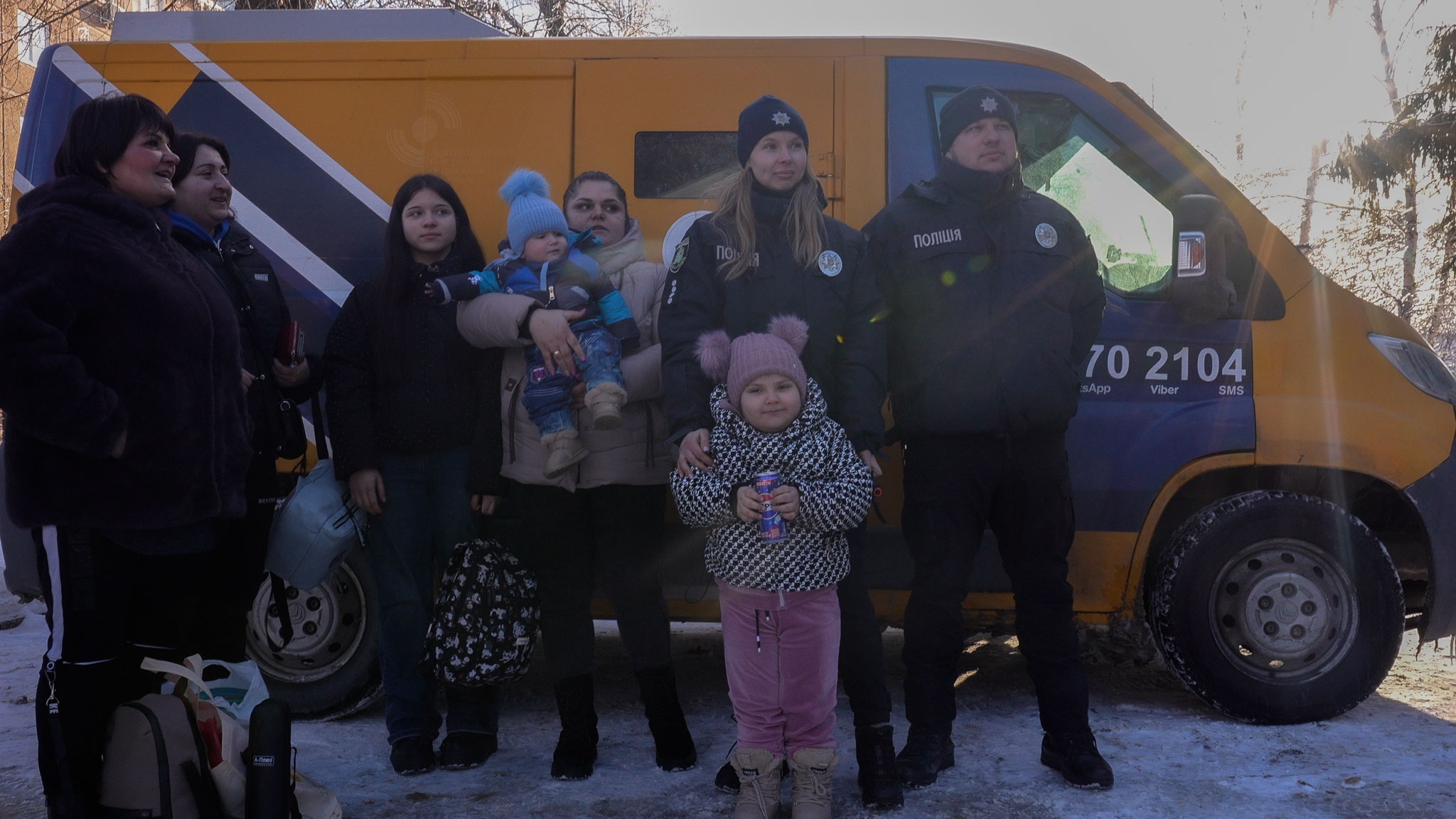
“Every day, evacuation becomes more dangerous. We see that Russian drone attacks are reaching much further (into the region),” Fomenko says.
On Feb. 20, the Russian Lancet drone hit the car of the White Angel evacuation unit (“Bilyi Yangol” in Ukrainian), killing police officers 23-year-old Yulia Keleberda and a 39-year-old Yvhenii Kalhan during their evacuation mission from the Kupiansk district.
This case made volunteers from the Rose on the Hand team and other organizations temporarily limit evacuation trips. Now, as this article goes live, evacuation missions are already renewed.
Hello from Kharkiv! It’s Elza. I joined the evacuation mission to tell you about the people who are rescuing children from dangerous areas of our region. This evacuation went calmly. But every day, going to the frontline becomes more and more dangerous because of Russian drones. If you want to help us tell these stories, please consider giving us a one-time tip or becoming a member of our community.
Read more
- “We didn’t even have time to get scared.” Kharkiv recovers after another overnight Russian drone, missile attack
- Kharkiv locals mourn those killed in Russia’s war against Ukraine as the 5th year of full-scale invasion begins


Subscribe to news from Kharkiv, Ukraine
Most important stories from the frontline region